Wednesday, July 18, 2007

Well, That's Another Fine Isolated Verisimilitude Youve Gotten Us Into

In The End of the Mind: The Edge of the Intelligible in Hardy, Stevens, Larkin, Plath, and Gluck, DeSales Harrison credits Larkin with "pledg[ing] allegiance to the rhetoric of verisimilitude." By this he means that Larkin's
obligation is to preserve, to keep the experience "from oblivion for its own sake." This is the positive aspect of the obligation, the obligation to do something. There is a negative aspect as well, an obligation not to do something else.The poet can do no more than preserve. He cannot, Larkin implies, elevate, extrapolate, mythologize, etherealize, or transcendentalize.


Odd to define "negative" as "an obligation not to do something else." and then directly follow it with a reference to Keats. If Harrison is extrapolating from Larkin's obligation, he's extrapolating pretty far away from Keats' Negative Capability.

But Harrison is pretty much on the other side of the fence from me -- as it seems everyone else is. He puts the inability to remain content with half-knowledge on the same shelf as irritable searching after fact and reason, and says that "one reaches for those at the expense of the 'fine isolated verismilitude.'"

Franklin R. Rogers, in Painting and Poetry: Form, Metaphor, and the Language of Literature, also says that Coleridge's need for total knowledge renders him incapable of being in uncertainties, mysteries and doubts.

And I suppose there's something to these gentlemen's point. Negative Capability isn't incapability, which Coleridge apparently has. But that fine isolated verisimilitude still bothers me. Where's the Negative Incapability in letting an isolated verisimiltude, however fine, go by? Who's to say you have to irritably reach out grab every isolated verisimiltude that comes along?

This verisimilitude is isolated. If one grabs it too quickly, one loses the chance to find out if it will resonate with other verisimilitudes, maybe even some truths. "Verisimilitude" to me is still a counterfeit, something that has the appearance of truth.

Sunday, July 15, 2007

Penetralia, the Verisimilar, and Sookie

I'm not sure that being taught to live in doubt and uncertainty is a significant social function, any more than Saturday morning cartoons where the villain gets blown up have an educational function in teaching kids right from wrong.

But I'm all in favor of a certain amount of doubt and uncertainty. As Keats said,

...at once it struck me, what quality went to form a Man of Achievement especially in Literature & which Shakespeare possessed so enormously--I mean Negative Capability, that is when man is capable of being in uncertainties, Mysteries, doubts, without any irritable reaching after fact & reason--Coleridge, for instance, would let go by a fine isolated verisimilitude caught from the Penetralium of mystery, from being incapable of remaining content with half knowledge.


This is probably a better guide to poetry than to a social contract, but it's as good a guide to poetry as one can ask for, and you hardly need me to point that out. It's the second half of it that has always intrigued me, the part about Coleridge. I had always interpreted that to mean that Coleridge was uniquely capable of remaining in in uncertainties, Mysteries, doubts, without any irritable reaching after fact & reason -- I guess that would make him uniquely . That he would not accept an isolated verisimilitude -- which I defined as something that has the appearance of truth, but not necessarily the substance. That rather than be content with half knowledge, he could maintain his equilibrium longer in doubt and uncertainty.

I have since found out that this not the accepted reading of these famous lines. The accepted reading is that Keats was criticizing Coleridge.

Here's Dan Simmons on the subject:

A lesser poet like Coleridge, Keats goes on to explain, “would let go by a fine isolated versimilitude caught from the Penetralium of mystery,” because a lesser poet (or novelist, or filmmaker, or visual artist) insists on – well, actually has no other choice -- impressing his own limited interpretation on reality.


Thomas McFarland, in The Masks of Keats: The Endeavor of a Poet, talks about "the charge [Keats] makes against [Coleridge], and I know these people are better Keats scholars than I am, and know more about the relationship between Keats and Coleridge at this point in their lives. When you get right down to it, I didn't even know that "penetralium" isn't a real word, in either English or Latin.

But I still like my reading of it. I'd better, since I've based my aesthetic on trying as much as possible to let fine isolated verisimiltudes go by. If they've escaped from the penetralium of mystery, then they're no longer one with that mystery or part of that penetralium, and I'd agree with Heisenberg here. If you catch one on the wing and measure it, you'll never measure all of it, and you'll alter it by the catching of it.

I looked up "verisimiltude." Merriam Webster Online says it's "the quality or state of being verisimilar," which I find a trifle odd, in that "verisimiltude" is a word I've actually heard or seen in a real context (I mean other than Keats), but "verisimilar" is a total unknown. Anyway, "verisimilar" means "having the appearance of truth : probable," which is pretty much what I thought. The penetralium is where the truth remains unreachable, like the Grail. The verisimilitudes that escape from it only have it's appearance.

Anyway, here's what my muse, Sookie, has to say about it.

SOOKIE’S PENETRALIUM

Yesterday
Sookie let a fine
isolated
verisimilitude
slide right by

I was not too pleased
it left a wake
of clear light
it might have come from the
penetralium

of mystery
and I could have used it
isn’t that
her job? But there’s no
use fighting it

Sookie only believes
in her own
penetralium
which she lets me
near on rare occasions

never all
the way in but it’s
what I’ve got
Sookie’s speed rack brand of
half knowledge

Sunday, July 08, 2007

First Saturdays with Krista

My opening/poetry reading at the Kingston First Saturday Art Walk was yesterday. I didn't use Lowell or Brancusi, but I did put up a few Poetry Portraits (Billy Collins, H.D., Sylvia Plath, and Carolyn Forche) along with two pages from my illustrated "La Belle Dame Sans Merci." The rest were -- are, you can still go see it? -- the usual gang of nudes and animals.

Alternative Books in Kingston is maybe not the ideal place to showcase one's art. The wall space is about two feet up near the ceiling. but it does have a charm all its own. There is virtually no walking space among the overflowing boxes of collected but not yet sorted out books. In the back room, they had set up a bunch of couches and easy chairs -- perfect for an audience of about ten people, which was actually optimistic.

Dr. Henriquez, the proprietor, had also scheduled a singer/songwriter for the same time, so I arrived with a certain amount of puzzlement. About 15 minutes after I had sorted out the poems I was going to read from the ones I wasn't, the singer/songwriter came in. Her name was Krista Weaver, and she combined a sort of Rocky Mountain High blonde and sunny energy with an East Coast sense of purpose. Two attributes I have in short supply. We introduced ourselves, and Dr. Henriquez wandered in, said "Well, I'll let the two of you work it out," and wandered back out.

While we were waiting to start, she took a quick look through one of my books, and said "I can't relate," Which got things off to a good start. Not that I expect people, especially singer/songwriters who sing the innermost secrets of their heart, to relate to what I write. Since I never sing the innermost secrets of my heart, on the theory that they'd bore me to death, so why should I expect them to have a different effect on anyone else? I said, "That's OK, my poems are on the outside edge of anyone being able to relate to them."

Of course, given how rotten my hearing is, she could well have said "I can relate."

A question I had cause to pause and consider, as the evening went on.

Anyhow...there we were, and what we were going to do next had been left to us. So I asked - "Well, what are we going to do? Who should go first?"

She said -- "I thought maybe we'd alternate -- you read a poem and then I'll sing a song that somehow relates to it."

I thought, Well, since she can't relate to my poetry, this will be a bit of a challenge, but I said "Sure, let's try it."

So 5 o'clock came and no one was there. Except for Pat (Krista had asked what the secret of a 20-year marriage was, and I told her for my part, it was simple. I was just as crazy in love with Pat still, as the day were married.)

I said, "Shall we wait a little longer?"

She said, "No, let's start."

This was another odd idea. I'd never considered reading to an audience of no one, but what the heck. So I led off with a poem. I wish I could remember which one. But in any event, she listened carefully, thought for a moment, and began a song (all the songs she sang were her own) that was an uncannily perfect commentary on my poem.

I'd done something similar to this once before. I was reading at a Saugerties art gallery with Nancy Willard, and the setup, instead of the usual chairs to the side of a lectern, was a couch in the front of the room. Nancy suggested that we do a kind of tag-team reading, answering each other back and forth. It was a magical evening, as befits a joint reading with our premiere North American magical realist, and we really did keep the ball in flight for the whole evening, each finding poems that would echo the other. We each completely changed our normal rhythm and pacing, and actually changed our repertoire -- both of us found ourselves going to poems we hadn't planned to read, or that we never read.

This evening with Krista was a little different. It wasn't so much like tennis as skeet shooting. I fired a poem up, she followed it and bagged in flight,

Which she did. Every time. I found myself varying my pace as a good skeet launcher should, sending up a poem that might be easy to connect to, then a poem that I couldn't imagine how she could lock in on.

I remember one -- I said, "This might seem like an easy subject, because it's about a girl with a guitar, but maybe not..."


WEEKEND

When she stopped
making chords angled like
compound fractures
bone shards protruding
from ripped skin

and spun notes like long strips
of gauze dipped in
vaseline she had
left her first
husband and the guy with

the cigarette
burns on his hollow
body Gretsch
which he left behind but
she never played

but took with her to
a cabin
in the Catskills along
with a box of
hollow point bullets

the weekend
of her second wedding
katydids sang
only five more weeks
of summer


She bagged that one, with a song that had music and guns, joy and pain.

She bagged them all. She was great. We left vowing to stay in touch and do it again, and I sincerely hope we will. Anyway, here's Krista's home page, and here's a link to some of the regular Wednesday and alternate Saturday singer/songwriter jams that she hosts in Red Hook, and that I will certainly be dropping in on, -- and a complete list of her local gigs.

Monday, July 02, 2007

Delving Into the Penetralium

Jeff Newberry posts on the NewPo list, the following definition of poetry (NewPo is big on "what poetry is?", which is actually one of the things I like about it), and Anny Ballardini has collected a wealth of definitions on her Fieralingue website:

" . . . one of poetry's chief aims is to illumine the walls of mystery, the inscrutable, the unsayable. I think poetry ought to be taught not as an engine of meaning but as an opportunity to learn to live in doubt and uncertainty, as a means of claiming indeterminacy. Our species is deeply defined by its great surges of reason, but I think it high time we return to elemental awe and wonder."

--Major Jackson, "Does Poetry Have a Social Function," Poetry, January 2007
I'm not sure I think poetry should be taught any one way. I kinda like it as an engine of meaning, but of course, it's also an engine of ambiguity, so none of the meanings fired up by its internal combustion are going to be definitive, and one can continue sputtering along in doubt and uncertainty.

I was going to continue this blog entry on Keats' thoughts about doubt and uncertainty, but that last metaphor reminds me of this wonderful poem by my great mentor, Donald Finkel, so I think I'll close with it and save Keats and the penetralium for next time:

Concerning the Transmission

You might say the same of poetry:
you've sunk too much in it
to quit now, driving
good hours after bad
too much of you wound
round the wires and the hoses.

You might stop addressing
this absence beside you,
cursing through the intricate
cities, singing in high passes,
tooling down freeways,
minding the numbers,
ears pricked for oracular
tappings, limping past fields
of sullen junkers, eyeholes crawling
with nettle and goldenrod.

If you let go now, the bearings
will scream from their orbits,
the rocker arms clang in their cylinders
and the needles return to their various zeroes,
as if your hands had never clenched
this sweaty wheel.

Friday, June 29, 2007

Reading and Art Exhibit


Next Saturday, July 7, there'll be an opening of an exhibit of my art at Alternative Books, 35 N Front Street in Kingston, NY. The reading is scheduled for 5 pm, as part of Kingston's First Saturday art walk.

I'm still mulling over what to exhibit, but since it's a bookstore, I'm thinking I'll devote at least some of the space to my arts portraits -- poets, musicians, artists.

Tuesday, June 26, 2007

Les Fleurs du Mal

Today is the 150th anniversary of the first edition of Baudelaire's "Les Fleurs du Mal." This is Charles Baudelaire, not one of Lemony Snicket's unfortunate orphans, and here is a website devoted to the book.


Here's a sampling in English.

The Jewels

Naked was my dark love, and, knowing my heart,
Adorned in but her most sonorous gems,
Their high pomp decked her with the conquering art
Of Moorish slave girls crowned with diadems.

Dancing for me with lively, mocking sound,
This world of stone and metal, brittle and bright,
Fills me with rapture who have always found
Excess of joy where hue and tone unite.

Naked she lay, suffered love pleasurably
To mould her, smiled on my desire as if,
Profound and gentle as the rising sea,
It rode the tide toward its appointed cliff.

A tiger, tamed, her eyes on mine, intent
On lust, she sought all strange ways to please:
Her air, half-candid, half-lascivious, lent
A new charm to her metamorphoses.

In turn, her arms and limbs, her veins, her thighs,
Polished as nard, undulant as a swan,
Passed under my serene clairvoyant eyes
As belly and breasts, grapes of my vine, moved on.

Skilled in more spells than evil angels muster
To break the solace which possessed my heart,
Smashing the crystal rock upon whose luster
My quietude sat on its own, apart,

Her waist, awrithe, her belly enormously
Out-thrust, formed strange designs unknown to us,
As if the haunches of Antiope
Flowed from a body not yet Ephebus.

Slowly the lamplight sank, resigned to die.
Firelight pierced darkness, stud on glowing stud,
Each time it heaved a sharply flaming sigh
It steeped her amber flesh in pools of blood.

Translated by Jacques LeClerc .

Saturday, June 23, 2007

Jazz Labels


In my youth (well, not my extreme youth, because I only started listening to jazz when I was about 18), I used to confuse the names Ira Gitler and Rudy Van Gelder, I guess because I saw them so often in the same place -- on the back of so many jazz albums on Blue Note and Prestige. Of course, there was no other connection between the two, other than that their names started with "G" and ended with "R." Ira Gitler was a good jazz critic, and Rudy Van Gelder was a great recording engineer.

I say "good" for Gitler because there are no great critics, unless you count people like Samuel Taylor Coleridge and Benedetto Croce, and today maybe Umberto Eco. Van Gelder, praise be to the Almighty, is still working, remastering some of his great vinyl triumphs to digital, finding a way to preserve the warmth of the originals.

If I'm grouchy about critics, it's not Ira Gitler's fault, at least not at the moment. I've been reading some books about jazz recently, including Castles Made of Sound, Larry Hicock 's excellent biography of Gil Evans; and Blue Note Records: The Biography by Richard Cook and The Making of Kind of Blue: Miles Davis and His Masterpiece by Eric Nisenson (not to be confused with Kind of Blue: The Making of the Miles Davis Masterpiece by Ashley Kahn, which I haven't read). Anyway, both of the books with Blue in the title (that I've read) contain a lot of good research and interesting historical stuff, and I'm glad I read both of them, even though I had to grit my teeth when the authors got into their supercilious jazz critic mode. In addition to the fact that I don't care what they think are subpar solos by the giants of jazz on some of the greatest records ever made, their vocabularies of criticism are kinda limited. I thought I might well throw "The Making of Kind of Blue" out the window if I read about "fragile lyricism" one more time.

Maybe I should try Kind of Blue: The Making of the Miles Davis Masterpiece, which is published by Da Capo, which is pretty much the gold standard of books on jazz.

But anyway, Blue Note Records: The Biography has a very nice section on Rudy Van Gelder and his importance to Blue Note, and to the whole jazz scene, and all of this got me thinking about Blue Note and Prestige, and thinking about what were the greatest of jazz labels?

I decided to limit my thinking to indie labels that really specialized in jazz, and I also decided to write this from the top of my head, without going back and researching stuff I wasn't sure of, which is not the way I generally write, but it's the way Miles Davis generally made a record, mistakes and all, so how bad can it be?

So that meant post- WWII, which was really the birth of the indie label. There were small labels in the 20s and 30s that were hugely important, like Vocalion and Okeh, but they were really subsidiaries of the big labels. There was Black Swan -- the first black-owned label, and here's where it starts to hurt that I've vowed not to look anything up...who owned Black Swan? It was someone important...W.C. Handy? Anyway, it couldn't compete with the big ones. It wasn't until after the war that small entrepreneurs really cracked the record business, because before that the big labels had a stranglehold on the pressing plants.

So...after the war. Dial and Savoy are the first ones -- they did all those great Bird sides. I don't know what happened to Dial. Savoy stayed around through the 50s, largely as a rhythm and blues label, and one of the best. Mercury put out some great records -- Dinah Washington, Clifford Brown -- but they were a major, as were Capitol and Decca, who also both did some important jazz -- Decca with Milt Gabler, who also had his own pioneering small jazz label, Commodore.

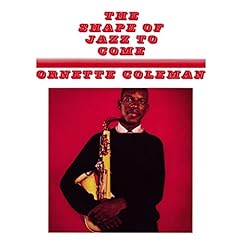
The Fifties. Blue Note and Prestige. The greatest jazz labels ever? Well, not to get ahead of myself, but the answer is yes. Riverside did those great sides with Monk, but I don't think of Riverside as having the same centrality. Atlantic? Atlantic was the greatest of all independent labels, bar none. And they did some incredible jazz, Mingus. Giant Steps. Ornette. And with all those amazing Lee Friedlander album cover photos. But I'm excluding them from the game because their main focus wasn't jazz. I was a charter member of the Jazztone Society, a sort of Book-of-the Month Club for jazz records. They didn't last, but they were kinda neat. I remember a Marylou Williams album, and Bird with Red Norvo and Slam Stewart. And a Sidney Bechet. So they weren't cutting edge, but they were good and they should have had a longer life. Norman Granz's labels, Verve and Clef (and I think there was another one) were important but idiosyncratic. Granz liked to mix and match, like putting Buddy Rich on a Charlie Parker session.

The West Coast -- West Coast jazz gets sneered at, but it's a bad rap. One of my first jazz albums was Gerry Mulligan, Chet Baker, Larry Bunker, Chico Hamilton on World Pacific. Fantasy had the early Brubeck stuff.

Columbia entered the modern jazz world late, although they had John Hammond and a rich history, but they entered with Miles Davis and some of the most important recordings ever. But...they're a major. They weren't a jazz label.

Impulse! came later, and did some important Free Jazz, including so much of Coltrane's catalog. A lot of labels like Black Saint carried the torch in the days when jazz was really at a low ebb of recognition, but people like James Blood Ulmer and Sonny Sharrock were still burning brightly.

My friend Peter Jones and I have talked about that era. It was all good. You go over the Blue Note, the Prestige, the Savoy, the Riverside, the Atlantic jazz, the World Pacific catalogs, and you're not going to find anything you wouldn't want to own.

And Blue Note and Prestige were right at the center of it. Maybe more than anyone else, they defined what jazz recording should be.

Can we pick a winner? No. Blue Note not only was there at the beginning of the 50s jazz era, but it's still around, and still important. Hard to pick against it. But for me, it's Prestige. So many of my early, and most favorite albums were Prestige. The ones that started me collecting jazz. Mose Allison -- Back Country Suite, Local Color, Creek Bank. King Pleasure/Annie Ross. John Coltrane with the Red Garland Trio, the album that brought me to jazz.


OK. Prestige.

Thursday, June 21, 2007

What English Professors Do

On Aantares, the news discussion bulletin board I administer, there's an ongoing lively discussion between liberal and conservative voices, with the conservs, as they are wont to do, often citing David Horowitz (I'll pass on linking to him) and railing against the lib stranglehold on academia.

With that in mind, I recently started a thread called What Libs Really Do In Academia, and I linked to a blog by AcadeMama, who discussed an assignment she'd given to a class in the Southern college where she teaches, where homophobia is pretty much a fact of life. The assignment was

to attend the not- too- far- away Gay Pride Parade in Very Large Town. They weren't given any agenda. Go. Check it out. Talk to people if they wanted. Observe. That kind of thing. Then, the only thing they had to do was to write thoughtfully and critically about the event (8 pgs. or so), how it reinforced/changed any previous assumptions they may have had about the queer community, straight people, consumerism, political activism (these are just a few of the prompts I provided, but they were free to take their own line of questioning).


She describes some of the approaches taken by her students:

One of the main comments was how "corporate sponsored" the event was. Many of them - and these are 18 & 19 yr old straight kids from small-ish country towns - said that it seemed like much of the purpose and political goals of the event were overshadowed by the fact that it was just another event at which to party and spend lots of money.

Another student commented, in response to one of the writing prompts that addressed hatred/discrimination, that she'd seen two lesbians holding a small girl (presumably their child), and the girl's hair had been buzzed and she was wearing the rainbow shirt. In the student's response, she suggested that this instance was no different than watching two parents take their child to a white pride rally, because the child was in effect being "brainwashed" from the start. She wasn't really being given the option of not supporting the event, and for the student, this was a problem.


Academama states that "Now, these responses received no feedback from me. As long as the writing was complete, thoughtfully, organized, etc. the student got the extra credit."

One of the Aantares regulars commented,

Now, Tad... a question for you... really the question the AcadeMama raised but didn't answer... should she have responded to the the students' writing?

If I were in her position, I'm not sure I could have limited my remarks strictly to the mechanics of the writings... but if I were one of her students, I'd be plenty displeased to put together 8+ pages of writing and receive only a, in effect, pass/fail feedback.

What would you have done...?


My response:

If it were me, and I'm sure it was the same for this professor, I would give feedback on a bunch of things. I'd start with the lead paragraph, because I always do. Is it well-constructed? Does it state the thesis? Is it well-written, because if people don't like your first paragraph, they aren't going to read the second. I would hold my students to the standard I always set for them in a writing class -- you have to establish yourself as a trustworthy guide. You have to let the reader know that you are the person to whom he/she should be listening, in regards to this subject. That means don't start out by saying something like "A Gay Pride parade is a very interesting subject to observe."

I'd critique them on their ability to stay on subject, to keep developing the subject, to avoid repeating themselves.

I'd critique them on the way they presented their observations. This is a paper on a live, first-person observation of an event, so I'd want to see real details of observation. Did it appear to be corporate sponsored, and a way of getting people to spend money? What were some of the corporations represented? What were some of the things for sale? Were they overpriced? Did the event seem -- on the basis of observation of the participants -- to be primarily drawing upscale, money-spending guppies?

And since this an 8-page paper, I'd probably want them to do some background research. What are the kinds of criticisms that are leveled at parents bringing their kids to a white power rally? What are your sources? Are you documenting those sources in proper MLA style? What parallels can you draw between one event and the other, and what's your logic?

Did these students just observe from the sidelines, or did they interview people? What do you think of the corporate sponsorship of this event? How is bringing your child to this event different from bringing her to white power event?

And I'd talk about the quality of the writing, especially redundancy, because that's a huge problem in student papers -- padding them by saying the same thing over and over, rather than developing them.

One thing I would not do, ever, is to tell them that their theories based on observation are wrong -- this event is about Gay Pride, not consumerism; there's no connection between bringing a child to a Gay Pride event and a white power event, and I'm giving you a D for suggesting it. Never ever. And I have no respect for any teacher who would. And I know they're out there. I hear about them, from other students.

Here's a little horror story from years ago. A freshman comp instructor - colleague came to me, in a state of high dudgeon, and asked me to read a paper a student had turned in to her. The subject was "My Most Memorable Experience" -- not a subject I would ever assign, but that's neither here nor there. Anyway, if you ask a bunch of 18-year-olds to write about their most memorable experience, there's always the chance that they'll tell the truth. And this one boy had done just that. And he'd done it tastefully, not bragging, not exploitive. His language was appropriate to a paper for school. Anyway, she had given him a D, and didn't I think she was right?

Well, what was I going to say? I stood up for the kid as best I could, but she sure didn't want to hear it. And -- I'm not sure that this should make any difference, but this particular instructor looked like a hippie earth mother type, with the long black hair and peasant blouses and beads and so on...well, as I say, I don't know if it should make a difference. But everything makes a difference.

Students learn this pretty quickly. There are some professors you can be open with, and some whom you have to give what they want, whether it's an interpretation of "The Mill on the Floss" or a theory of feminist history. And there are others who aren't that rigid.

Thursday, June 07, 2007

Witter Bynner, You're Going To Have a Bitter Winter


Or so Hart Crane, in his cups, told Bynner one night. And it seems that the Academy of American Poets is ready to hasten him into it.

Why is there no mention of either Bynner or the Witter Bynner Foundation on the New Mexico page of their Poetry Map?

A little background -- this is a new feature of the Academy's website, and a kinda cool one. As they describe it:

Take a journey through the country's vast array of poetry resources and discover local landmarks, evocative poems, neighborhood celebrations, and hometown heroes. With countless new information added, each state page now features local conferences, festivals, event listings, poetry-friendly bookstores, journals, presses, as well as state-specific poets, poems, and poetic history.

But the journey has a few holes. Marvin Bell is not listed in Iowa, and his importance to the state (he's an ex-poet laureate) and to the Iowa Workshop cannot be overstated.

I'd have liked to see Victor di Suvero included among the New Mexico poets -- one of the founders of PEN New Mexico, the new Mexico Book Association, and the Poetry Center of New Mexico, he helped put the New Mexico poetry scene on the map, and he should be on AAP map.

But mostly...how can they have left off Witter Bynner. From the time of his arrival in Santa Fe in 1922 to his death in 1968, no one -- with the possible exception of D. H. Lawrence -- was more important in establishing New Mexico's literary presence. The foundation he endowed continues to do important work for poetry.

Here's the foundation:

Through a bequest from Witter Bynner in 1972, The Witter Bynner Foundation for Poetry perpetuates the art of poetry. The foundation promotes poetry in American culture and encourages grant proposals that expand awareness of the positive effects of poetry on society.

Here's a poem by Bynner:

I COME AND GO

I come and go
And never stay.
I pick and choose
A night, a day,
I find, I lose,
I laugh along,
I will not know
Right things from wrong.

I pity those
Who pity me,
I ask no boon,
But being free . . .
And so the moon,
My polished stone,
Shines and shows
I lie alone.

Wednesday, June 06, 2007

Don't Drive Your Mama Away

My friend Linda from Frogville alerted me to this -- Shirley Caesar on YouTube.

Monday, June 04, 2007

I've been tagged by Jeff Newberry to list "Five Songs That Knock My Sox Off." Since I kinda shy away from "interesting stuff about my life" on this blog, I've tried to come up with five songs that not everyone who ventures in here will necessarily have listened to -- but everyone should. I've also kept it to songs with vocals, because otherwise it would just be too hard.

Parker's Mood
, by King Pleasure.

I want this one played at my funeral. It's evocative, yearning, and ultimately about that last journey alone. Bird probably did not want it played at his funeral. His waxing of lyrics set to one of Parker's most haunting melodies (and a tune that Parker only recorded once) came out in 1952, at a time when Bird was increasingly strung out and facing the bitter end of his own mortality. he did not want to hear what could have been his obituary blaring out of every jukebox.


Don't Drive Your Mama Away, by Shirley Caesar.

I heard this song once, on the radio of a cab in New Orleans, and could not rest until I had tracked it down. I haunted gospel music bulletin boards on Prodigy, describing the song as best I could, until someone was able to identify it for me.

Once heard, never forgotten. It sears, it soars, it has all the feeling that only the greatest gospel singers can put into a song, and a powergul story -- a variation on the Prodigal Son story, set in modern times, with a bittersweet twist. Composed by Shirley.


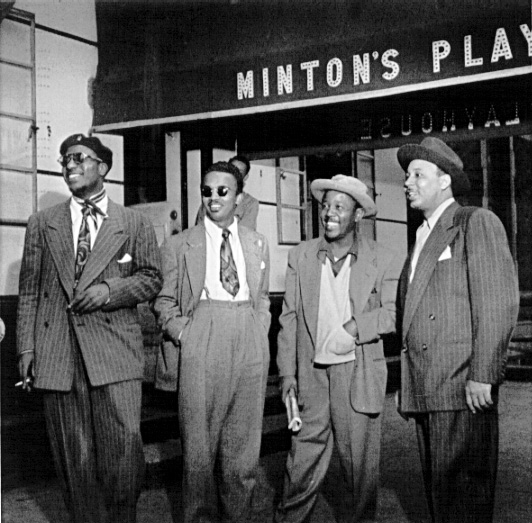
Lover Come Back, by Dinah Washington. "Parker's Mood" is a brilliant example of "vocalese," the technique of setting words to a jazz solo, but King Pleasure is still a vocalist. Dinah Washington, on this cut, is an instrument. Dinah jams, here, with Clifford Brown, Max Roach, Richie Powell, Clark Terry, Harold Land, and others. The session was recorded live in front of an audience that I would have given an arm and a leg to be part of. When people play the "what era would you like to have been born in?" game, for me it's always ten or fifteen years before I was actually born. And I would have liked to be born hipper than I actually was, so that I could have been on 52nd Street, and up at Minton's, to bear witness at the birth of bebop.

Voice as instrument -- I could have chosen Sarah Vaughan's Shulie a Bop just as easily...or anything by Louis Armstrong. The trouble with Armstrong is that there are so many great titles competing for one's attention, how can you choose one. But I'm happy to go with Dinah for this pick.


Banks of the Hudson
, by John Hall. I take enough pride in my own work that I'll choose one of my songs here -- lyrics by Tad Richards, music by John Hall, now The Honorable -- freshman Congressman from Dutchess County. Partially inspired (not the first time this has inspired me) by Thomas Cole's great "Voyage of Life" paintings, partly by love of my native soil, and the river that runs through it.

Ballad for Americans, by Paul Robeson. The greatest and most thrilling of American voices. I first heard "Ballad for Americans" as a child, and though some of the concepts of Americanism in it are a little dated, I wouldn't change one word of it, or one note of Robeson's magnificent voice. I interviewed Earl Robinson not long before he died, and he told me that he had deliberately written a melody simple enough that schoolchildren would sing it. I asked him if it was a surprise, then, to hear it sung by the greatest voice of his era. He said it was, and a pleasant one.


How could I leave out...? But I did. Had to leave out something. Anything by Ray Charles, I wouldn't know what to choose. Maybe "What'd I Say?" "Blue Suede Shoes" by Carl Perkins, which has much of a claim as anything I can think of to the title of The Great American Song. I hated to leave out doo-wop - maybe "When You Dance," by the Turbans, "Church Bells May Ring" by the Willows, "That's My Desire" by the Channels, "I Promise to Remember" by Frankie Lymon and the Teenagers. "Please Send Me Someone To Love," by Percy Mayfield, the Poet of the Blues. Specialty Records owner Art Rupe said of Percy that he suffered from a terrible self-image -- if he'd had the right encouragement, he could have been another Langston Hughes. I believe it.

I will tag someone new.

Saturday, May 26, 2007

New Growth


One of the most life-affirming moments in the movies comes in the otherwise-grim Ingmar Bergman classic, The Seventh Seal. An actor, who is resting for the night in the sanctuary of a tree, looks below to find Death sawing the tree down. He pleads, to no avail. His engagements have been cancelled, his contracts have been annulled. The tree crashes to the ground, and as the echoes of the crash still float on the air, a tiny squirrel scampers up onto the stump.

No squirrel here, but our masterful grounds and landscaping guy, planting a new tree where the old one grew. John scoured nurseries from here to Albany to find just the right tree -- about six fee tall, healthy enough to grow strong, slightly flattened on the side that faces the path. bushy out over the water. As time goes on, he'll prune it from the bottom so that it grows tall rather than wide.

Here's the new tree going into the ground.

Wednesday, May 09, 2007

...and down

i


I'll post the planting of the new tree, and follow its progress, as those events occur.

In Youth It Sheltered Me


Here's the tree c
oming down.


all photos by Pat Richards

Monday, May 07, 2007

Say Goodbye


Say goodbye to this wonderful old tree, that's been a part of Opus 40 forever. We've kept it going on life support and nutrients for the last decade or so, but there's no life left in it now.

Tomorrow it comes down, and a new tree will be planted in its place, thanks to the generosity of the Richards/Jessup family of Santa Fe, as a gift in honor of their daughter Alexandra's wedding, that will take place this June.

Trees go...it's a fact of nature. An environmental sculpture, unless it's a temporary piece like the ones Christo and Jeanne-Claude make, is always a work in progress, and always a collaborative work. Your collaborator is Nature, and you collaborator doesn't always like you very much, and she rarely has the same ideas you do.

And if you don't keep up your end, Nature may just decide to scrap the project altogether, as was the fate of many of the earthworks of the 1970s. We're dedicated to making sure that doesn't happen to Opus 40. We have said that Opus 40 could stand for a thousand years, and it could, but not quite in its present form -- all kept up for viewing, and for walking on. That takes a lot of work, and a lot of money. We're good on the first, always struggling on the second.

Thursday, April 26, 2007

Seasons at Opus 40


We had Spring Friday and Saturday. By Sunday it was summer. Now it's regressed a little, but the forsythia is blooming along Fite Road, and here's Opus 40 with blue skies behind it.

And here we are getting the flower boxes ready, and checking on the return of the goldfish from hibernation.


Wednesday, April 25, 2007

Thrusting Metaphors

From the NY Times:

Edward Albee likes to tell about the time when, at 18, having fled his adoptive parents’ stiflingly conservative household to begin a more expansive self-education in Greenwich Village, he knocked on W. H. Auden’s door. Mr. Albee, frequently referred to as America’s greatest living playwright, thought himself a poet then.

“I thrust my poems in his hand and said, ‘I’ll be back in a week,’ and then I ran,” he recalled. “A week later I showed up, and he invited me in. He spent two hours talking about my poems.”


And from Comedy Central, this battle of metaphors between Stephen Colbert and Sean Penn, with Robert Pinsky playing the role of game show host.

This is the funniest poetry bit on TV since LA Law's "Poetry Expo" show, which featured Mamie Van Doren reading "Howl." Unfortunately, this does not seem to have been preserved on YouTube.

Sunday, April 22, 2007

Jazz in the Fifties

Still reading Blue Note Records, by Richard Cook, and thinking about my jazz experiences in those years. People love to play the game of "What era would you like to go back to, if you could travel in time?" and mine, oddly enough, is so close to the era I was born in, I could reach out and touch it. I'd like to have been 25 in the 1940s --( well, 30 and 4F, but it's my time travel, and I'm being selective in my wishes). I'd like to have been around at the birth of bebop, to hear Charlie Parker playing on 52nd Street. I picked 30 because that would make me old enough to have some artistic experience and sophistication, young enough to stay out all night, to go up and catch the jam sessions at Minton's and Monroe's. And of course, in this fantasy, I'm totally hip, hipper than I ever was in real life (though not too hip, like Terry Southern's character).

In real life, here are my recollections of jazz in the 50s. The drinking age back then was 18, so these recollections are 1958-59.

My very first time in a jazz club...Smalls Paradise on 135th St. There was no cover, and one drink minimum. One drink for me meant a bottle of beer, which cost 75 cents, and which you could nurse all night. The first band I heard there was led by Donald Byrd and Pepper Adams. Pepper Adams played a gig at Opus 40 not long before his death, and I made sure to tell him what an honor it was to present the first jazzman I'd ever heard live. "Yeah, I remember that gig," he said.

Al Cohn and Zoot Sims at the Half Note, on Spring Street, with my friend Lenny Rosen. Mose Allison was the piano player in the band -- Back Country Suite had been released by then, and maybe Local Color too, but he hadn't gone full bore into his career as a leader/vocalist yet. At any rate, Lenny and I were huge Mose fans, and it was exciting to hear him in another context (Mose discusses his years with Al and Zoot here).

Less than a year later, I was married, and I remember Lenny telling me I'd made the right decision: "Just remember two lonely guys down at the Half Note." Well, a failed marriage is a plethora of memories, some good and some bad, but I remember those nights at the Half Note with unalloyed pleasure.

Henry "Red" Allen at the Metropole, in Times Square. Strangely, there's very little on the Web about the Metropole, though I did find these memories. No pictures. And it was an oddly picturesque spot. I didn't appreciate it enough at the time. I was young and bebopper, and I wish now I had listened more to these great traditional musicians. But the oddness of the place, in part, worked against a young would-be hipster appreciating it. It wasn't in the Village, or Harlem -- it was right there in Times Square, you could see the musicians from the street, through the window, you could just pop in, listen for a few minutes, and pop back out. They played in the daytime. The bandstand was long and narrow, behind the bar -- it looked more like a strip club, which it later became.

Count Basie at Birdland.

And the main memory of all.

About 15 years ago, I was in New York, walking near NYU, and I ran into a friend of mine, Bill Petkanas, younger than me, then an NYU graduate student. We decided to go for a beer. "I know a place over on Cooper Square," he said. "It's a thrash punk club, but the music doesn't start till late, and we can get a beer and talk now."

We went in. It was a punk club, all right, with black spray painted graffiti on the mirror behind the bar, and all over the bandstand. But I knew that bar, that bandstand. "I've been here before," I dold Bill. "But not to hear a thrash punk band. The last time I was here, Ornette Coleman and http://en.wikipedia.org/wiki/Don_Cherry_(jazz) were on that bandstand."

Yep, it was the Five Spot. And that's the last reminiscence in my "I'm Not So Old" poem. I went there a lot in that winter of 1958-59, but once Ornette started his gig there, I went there all the time. I may not have been around for the birth of bebop, but I was there for the birth of Free Jazz, and that was as thrilling as it sounds. The white plastic sax, the tiny B-flat trumpet, and music like nothing anyone had ever heard.

Thursday, April 19, 2007

I'm Not So Old

I'M NOT SO OLD

I was just fifteen when Charlie Parker died
My older brother took me aside
And said, Kid, it's a bad day
It's a sad day
Well, I didn't know why and I had to be told
Hey, but I grew up
And I learned my stuff
And I learned enough
And I'm not so old

When I was a kid just starting to move
I filled my soul with that rhythm and blues
And I listened to the Clovers
And the Coasters
And I couldn't get enough of that rock and roll
I was growing up
And the beat was mine
And it still sounds fine
And I'm not so old

Then one night I turned on the radio
Looking for some of that rock and roll
And I heard some bebop
Brought me to a full stop
Didn't know what it was but it moved my soul
I was almost grown
And they said it was Miles
I still dig his style
And I'm not so old

I saw Monk dance around the Five Spot floor
And a cat from Texas made the Five Spot roar
His sax was plastic
His sound fantastic
And I went back again to hear Ornette blow
I was all grown up
And he made jazz free
Still sounds good to me
And I'm not so old

Once they said that jazz had passed away
But I go down to hear the young cats play
They play in the tradition
They've got a mission
They play sweet and strong and free and bold
Well, I may be grown
But the cats blow on
And the music's young
And I'm not so old


Most of this is true…the first part isn’t. There was no older brother to tell me about Charlie Parker, and when he died, I didn’t know about it. Actually, neither did much of anyone else. He died on March 12, 1955, and the New York Times obituary didn’t appear till the 15th, at which time it listed the 35-year-old Bird as “about 53,” which was the coroner’s best estimate. My favorite story of that sad ending: Bird died in the Stanhope Hotel apartment of the “jazz baroness” Pannonica de Konigswater, while watching the Dorsey Brothers’ TV show (not Elvis -- he wouldn’t appear with the Dorseys till the following year). Nica called her Park Avenue physician, who arrived at the Stanhope to find a desperately ill and disreputable black man, dying of pretty much every excess known to man. As he began his examination, he asked,

“Mr. Parker…do you drink?”

“Sometimes I have a glass of sherry after dinner.”


From Wikipedia's entry in Nica, a followup that I hadn't known. Because of the negative publicity surrounding the death of this Negro in her apartment, she was asked to leave the Stanhope.


The other part that’s not quite true…it wasn’t Miles. But otherwise, it happened just like that. I was a sophomore at Bard, coming in from a late night of drinking at Adolph’s. Now, what you have to remember about those days is that we had a sort of paranoid protectiveness
about rock ‘n roll. That’s why you heard songs like “Rock and roll is here to stay/It will never die.” Because we weren’t so sure. The popular press kept telling us that rock 'n roll was a fad, doomed to die out like the hula hoop or Davy Crockett caps -- that we'd all outgrow it as we had the King of the Wild Frontier. And for all we knew, it was true. Something would happen to us when we turned 21, and we'd be listening to Jackie Gleason's Music For Lovers Only.

I knew that jazz existed, but I had never listened to it. I had, by that time, fallen thoroughly under the spell of rhythm and blues, which remains my passion to this day. So I came home from Adolph's, and, like the poem says, I turned on the radio. AM, of course, in those days. Alan Freed was gone in the payola scandal. You could sometimes pick up Jocko, your Ace from Outer Space upstate; mostly, we went for George "The Hound" Lorenz, out of WKBW in Buffalo. But this night, turning the dial, looking for the real rhythm and blues, I was literally brought to a full stop. I stood and stared at the radio. Music had never gone through me like that.

As I said, it wasn't Miles. That's a little poetic license. But close enough. It was John Coltrane, with the Red Garland Trio, on Prestige. It became the first jazz album I ever bought, followed by Gerry Mulligan and Chet Baker on World Pacific, King Pleasure/Annie Ross on Prestige, and Mose Allison's "Back Country Suite." The radio station, if I remember correctly, was CKLW, from Detroit and Windsor, Ontario. The disc jockey was Speed Anderson, seemingly completely forgotten today...a Google search turns up nothing.

All of this comes to mind because I've just started reading Blue Note Records: The Biography, by Richard Cook, a fascinating book. More about it, and about me and jazz in the 50s, later.