Showing posts with label 1965 recordings. Show all posts

Sunday, January 18, 2026

Carmell Jones-Nathan Davis


Listening to Prestige: Chronicling Its Classic Jazz Recordings, 1949–1972, my history of Prestige Records, can be ordered from Amazon or through your local independent bookstore.


LISTEN TO ONE: Carmell's Black Forest Waltz


 Carmell Jones had taken up residency in Germany when this recording was made, where he would remain until 1980. There he made the acquaintance of Nathan Davis, a Kansas City musician who had played with Jay McShann and, remarkably, with the great all-woman band the International Sweethearts of Rhythm, during their later year when they would, very occasionally, hire a man to fill out a section. 


Davis came to Germany not with a touring "ambassadors of jazz" group like the Lionel Hampton big band, but by the same route as another young musician -- a guitar player named Elvis Presley. Like Elvis, Nathan was drafted, and shipped overseas to Berlin. Unlike Elvis, he stayed.

He had more reason too -- no Hollywood/Vegas superstardom awaiting him back home, plenty of racial prejudice awaiting him back home, and an international cultural life that was burgeoning in Berlin, including a jazz scene and the kind of appreciation for jazz that its practitioners would not always find in their home country. So after he mustered out in 1962, Davis stayed in Europe.

It was most likely in Berlin that he first met fellow expatriate Kenny Clarke and his musical partner, the Belgian pianist Francy Boland, with whom he struck up a musical fellowship, although he does not appear to have been a part of their big band. But when he connected in 1965 with newcomer Carmell Jones, an old schoolyard pal and early bandmate from Kansas City, it was Clarke, Boland, and their bass player, expatriate Jimmy Woode, whom he brought in for a recording session deep in the Black Forest.

That Black Forest studio, SABA-Tonstudio, had already begun to develop a reputation, one that would only grow through decade. It was most famous for the legendary solo and trio recordings by Oscar Peterson released as Exclusively for my Friends.  The studio, built by Hans Georg Brunner-Schwer, a gifted engineer who was also an audiophile and jazz lover, was widely acclaimed for the excellence of its sound reproduction, and it certainly did right by this quintet.

The session is considered a high point in the careers of both. Their Kansas City background shows (and don't forget a Kansas City/Jay McShann background includes an early exposure to Charlie Parker). They are both soulful and modern, as demonstrated in the aptly titled "That Kaycee Thing." It's a Davis composition, as are most of the tunes from the session. One exception is a Jones tribute to Herr Brnner-Schwer's studio and its exotic location, "Carmell's Black Forest Waltz."

The quintet recorded seven tunes that day, all of which appear on the German release, The Hip Walk, credited to the Nathan Davis Quintet Featuring Carmell Jones. Prestige licensed four of them for its 1969 release, Carmell Jones In Europe; 1965-66. The other two tracks were recorded at a jazz festival in Frankfurt the following year with a group including Jimmy Woode and featuring Pony Poindexter and Annie Ross, singing her hit composition "Twisted." 

 Nathan Davis, who held a Ph.D. in ethnomusicology. returned to the United States in 1916 to become professor of music and director of jazz studies at the University of Pittsburgh, where he was also was also founder and director of the University of Pittsburgh Annual Jazz Seminar and Concert, the first academic jazz event of its kind in the United States.

Friday, December 19, 2025

Chet Baker


Listening to Prestige: Chronicling Its Classic Jazz Recordings, 1949–1972, my history of Prestige Records, will be published in January 2026. Order in advance from Amazon or through your local independent bookstore.


LISTEN TO ONE: Madison Avenue

If this seems reminiscent of Miles Davis’s Contractual Marathon sessions, that’s because it’s supposed to. That is to say:

 First: The Baker sessions are nothing like the Davis sessions.

 Second: They were absolutely marketed to mimic the Davis sessions.

 Why are they nothing like?

 The Davis Contractual Marathon sessions are actual Prestige recording sessions, supervised by Bob Weinstock, recorded at Rudy Van Gelder’s studio in Hackensack. The Baker sessions were recorded somewhere or other, supervised by Richard Carpenter, and licensed to Prestige.


 The Davis Contractual Marathon sessions were recorded in three sessions over the better part of a year: November 1955, May 1956 and October 1956. The first was solid six-tune session, a good day’s work by most standards. The second and third were something else again: two full days of work, with eight tunes in May and 12 in October. But this was a half-marathon at best, compared to the Baker sessions – 32 tunes in three days, all in the same week.

 The Davis sessions utilized his newly formed ensemble that came to be known as the First Quintet, one of jazz’s greatest groups, with their leader at a creative peak. The marathon nature of the sessions was necessitated by Davis’s new contract with Columbia Records, which couldn’t take effect until he had fulfilled his obligation to Prestige. The Baker sessions featured four excellent musicians who had been gigging together when they could get work, with their leader at a low ebb creatively and reputationally. He still had a name with drawing power, but he was associated with the West Coast school which was pretty much passé by 1965. And heroin had left him such a wreck that a marathon may have seemed a good idea—who knew how much longer he’d he around? In fact, a couple of years later he was badly beaten in a drug-related incident, destroying his embouchure. He did gradually relearn the trumpet, and make a comeback of sorts. I saw him in a small club in New York in 1978; he played sitting down, and while he had some nice musical ideas, there was no energy at all.

 Davis had to make a lot of music in a short time, so he and his group relied on standards. It was music that they knew how to play, but they were great tunes, and Davis had an unparalleled way with ballads. Baker had to make a hell of a lot of music in a very short time, so he and his group relied on…the Richard Carpenter songbook? But there was no Richard Carpenter songbook. Or rather, there was, but it was amassed in an unorthodox way, by Carpenter erasing the name of the actual composer, substituting his own, and submitting it for copyright that way. The Chet Baker sessions featured a bunch of skilled hard bop professionals, who knew how to improvise on a riff or a standard blues lick, and with a tape recorder running, and a nimble finger on the “composed by” line of the lead sheet…that Richard Carpenter, he sure can write!

 The standards Miles Davis recorded meant royalties to the composers. The “Richard


Carpenter”compositions…well…

 And how is the music? Well, it’s pointless to compare it to Miles Davis’s marathon, so we won’t try.

 The music holds up very well. Baker, after this session was completed, returned to the scene of his former glory, the West Coast and World Pacific Records, to make some 1950s-style West Coast jazz recordings that lacked inspiration and were later dismissed by Baker himself as “a job to pay the rent.”

But these are New York musicians, some of the best working in New York at the time; and hard bop, as a genre, has proven to wear better over the years than the West Coast sound. This might better be described as a George Coleman-Kirk Lightsey group, with special guest Chet Baker. Coleman and Lightsey play some solid jazz throughout. Baker sometimes lags a bit, but mostly he shows that he can play hard bop and adapt it to his style.

 The Baker-Coleman-Lightsey sessions were released as Smokin’ with…Groovin’ with…Comin’ on with… starting to sound familiar? It’s not hard to imagine Richard Carpenter’s sales pitch to Bob Weinstock -- "Here’s a big batch of hard‑bop, quintet Chet – with the right kind of marketing, you could have another Miles Davis marathon."


It didn’t work. The Baker recordings sank without a trace. Down Beat doesn’t seem to have reviewed any of them – they’re not even mentioned in Billboard. Prestige was releasing a lot of product in the late 1960s – earlier recordings by artists who had moved on, stuff that had been sitting in their vaults. And Baker wasn’t a real Prestige artist – just a guy passing through on his way from his real home in Europe to his real home on the West Coast.


You can find them now on YouTube, but the albums didn’t get much distribution, and the only CD reissues were in Europe. Too bad. They’re worth seeking out on YouTube, partly as sort of a curiosity – yes, Chet Baker really could play hard bop! – but mostly for some outstanding work by George Coleman and Kirk Lightsey, a couple of musicians who deserve much more acclaim than they have ever gotten, especially Lightsey.

Thursday, December 18, 2025

Sylvia Syms

Listening to Prestige: Chronicling Its Classic Jazz Recordings, 1949–1972, my history of Prestige Records, will be published in January 2026. Order in advance from Amazon or through your local independent bookstore.


LISTEN TO ONE: More Than You Know

Sylvia Syms was in mid-career when she came to Prestige in 1965. A native New Yorker, she found the jazz clubs on 52nd Street as a teenager, and became a protégé of Billie Holiday’s. In 1941, she made her own debut on 52nd Street, performing at Kelly’s Stable. In 1948, Mae West, who was heading up a revue that played the swanky end of New York night life – the Copacabana and the Stork Club – heard Syms and signed the hard working singer for her revue. That led to future cabaret work, and an appearance on Eddie Condon’s Floor Show, believed to be the first live jazz show on network television. 

Atlantic Records signed her in 1952 and she got her first record release, a 10-inch LP with a trio led by Barbara Carroll, also just starting on Atlantic. After a couple of records with Atlantic, she moved over to Decca, where she sang with an orchestra conducted by Sy Oliver, and her one big hit. My Fair Lady’s “I Could Have Danced All Night,” which won her a gold record. But her talent was best suited to a more intimate setting – Frank Sinatra had called he “the ultimate saloon singer” and Decca next put her with a jazz quartet led by two guitars, Mundell Lowe and Barry Galbraith. 


As the decade rolled over, she recorded one-shot albums for Columbia, Kapp, and 20th Century Fox Records, the less successful arm of the entertainment conglomerate (although they were responsible for that Christmas staple, the Harry Simeon Chorale’s “The Little Drummer Boy”). Her recordings were generally praised for their intimacy and emotional honesty, though critics tended to find her improvisational skills limited. 

  Prestige signed her in 1965, and brought her to Englewood Cliffs for two sessions. The first, on August 11, matched her with a trio led by Kenny Burrell. The second, two days later, added Bucky Pizzarelli as a second guitar and Willie Rodriguez on percussion. This was an ideal setting for her, capturing the saloon-singer intimacy, and giving her the support she needed for some very satisfying improvisation. 

 The trio session featured mostly standards. “More Than You Know,” written by Vincent Youmans, lyrics by Billy Rose and Edward Eliscu, sounds as though it could have been written for Syms, although virtually every other cabaret and torch singer seems to have felt the same way about it. First recorded in 1929 by Helen Morgan, it has been taken into the studio more than 400 times. 

“I’m Afraid the Masquerade is Over” (Allie Wrubel, Herb Magidson) is another often-recorded standard, but Syms and producer Cal Lampley weren’t wrong in picking them. The yoking of a good song and a good singer is always going to be welcome, especially with the tasteful and inventive backing of Burrell, Hinton and Johnson. “God Bless the Child” is going to be a tribute to Billie Holiday no matter who sings it, even if you secularize the lyrics (“So the Bible says” becomes “so the wise man says” in Syms’s version). 


The second session, two days later, added the second guitar of Bucky Pizzarelli and the percussion of Willie Rodriguez, and song choices go a bit farther afield. The addition of Rodriguez opens the door to some Latin rhythms. “Brazil” was already a chestnut by the time Syms took it on, but the other Latin tune, “Cuando te Fuiste de Mi” (When you left me) is one that Syms, Lampley, Burrell and Rodriguez plucked from obscurity – at least, from mainstream obscurity. It had originally been recorded by Cuban singer Vicentico Valdes for the Seeco label, one of the more prominent independent New York labels specializing in Latin music (Celia Cruz was one of their artists). The bolero – romantic, melodic, gently rhythmic – is a nice fit for a cabaret singer, although not too many non-Latin artists incorporated it. Syms, with sensitive percussion work by Rodriguez, makes it work. “Cuando te Fuiste de Mi” would be rediscovered in the next decade by Charlie Palmieri, who reworked it with a salsa rhythm, and gave it new popularity, The two Prestige sessions became one album, Sylvia Is!, released in 1965 with testimonials on album cover from such notables as Woody Allen, Errol Garner, Tony Bennett – and Hollywood producer Ross Hunter, whose Wild is the Wind was the source of a song Syms included in the second session. 

This was her only Prestige album, but she continued working and recording, mostly for smaller labels, with one notable exception: a 1982 album for Reprise, backed by an orchestra conducted by Frank Sinatra and called Syms by Sinatra. She sang her last note on May 10, 1992, when she was struck down by a heart attack in mid-performance – appropriately enough, in one of New York’s most iconic supper clubs, the Oak Room at the Algonquin Hotel.


Saturday, June 07, 2025

Listening to Prestige 720: Charles McPherson


LISTEN TO ONE: Chasin' The Bird

 This is McPherson's second Prestige album, and he hasn't lost his love for pure bebop. In fact, he never did, and although he may have seemed a little retro in 1965, both he and his mentor Barry Harris came to be recognized as national treasures for keeping alive the inventive musical style brought to life by McPherson's hero, Charlie Parker. 

In a 2019 80th birthday tribute to twin octogenarians McPherson and McCoy Tyner at Lincoln Center, Jazz at Lincoln Center's also saxophonist Sherman Irby paid this tribute: “The bebop master is a true alto saxophonist. He plays the instrument with fire, passion and precision. He can pull your heartstrings with one note, and dazzle you with virtuosity and


imagination. There is only one Bird, one Stitt, one Cannonball—and one Charles McPherson.”

In 2020, McPherson laid to rest the old canard that you can't dance to bebop with a striking new album. Jazz Dance Suites, which led the British jazz blog Bebop Spoken Here to enthuse:"Magnificent sounds somewhat inadequate! I doubt there will be a better album released this year. It is just so listenable, so danceable, so everything …"

And Mark Stryker, writing about his 2024 release, Reverence, said "More than six decades into a remarkable career, few command and deserve our reverence quite like Charles McPherson.”

So...in 1965, they may not have been talking about McPherson as the newest sound in town, but he was making music that people still wanted to hear, as evidenced by his six Prestige albums in four years -- and as evidenced by the fact that over six decades, he has never been far from the recording studio.

And if this session doesn't exactly bring you back to 1965, it does something much more important--it brings you into the heart of jazz. McPherson has assembled a cohesive group with Clifford Jordan joining him as his companion saxophonist, Harris on piano, George Tucker on bass, and Alan Dawson on drums.

They tip their hats to the progenitors of bebop, with compositions by Charlie Parker ("Chasin' the Bird"), Dizzy Gillespie ("Con Alma:), Thelonious Monk ("Eronel") and Dexter Gordon/Bud Powell ("Dexter Rides Again"). There's one original composition, "I Don't Know."

It's hard, from a distance of years, to imagine the reception McPherson got in 1965. Was McPherson irrelevant? Was he trying to pretend it was still 1955, or even 1945? Or was he a refreshing antidote to the dumbing down of bebop by the soul jazzers, or the incomprehensible navel-gazing of the free spirits?

It's hard to imagine from a perspective of today's listeners, for most of whom what 1945, 1955 and 1965 have in common is that they all happened before they were born. No one is likely to sit down on a rainy afternoon and play, in succession, albums by Jack McDuff, Albert Ayler and Charles McPherson. Conversely, not many contemporary listeners are going to listen to a few bars of Con Alms, rip it off the turntable (my imagined listener is a technological purist), say "What is this shit? Give me the real thing!" and put on a 78 of Bird on Dial.

Today it's just the music, and interpretations of Bird, Diz, Monk, Duke and Dexter, if they're played by someone good, are going to sound good, which is the best you can hope for from a piece of music. 


 I'm back! Listening to Prestige the book -- a history of Prestige Records -- is in production, and will be published this winter by SUNY Press. So I'm back to the blog again, and will continue my mission to listen to, and respond to, every Prestige session.


Wednesday, April 03, 2024

Listening to Prestige 719: Richard "Groove" Holmes


LISTEN TO ONE: Misty (hit version)

 Richard Holmes had found his groove by the time he arrived at Prestige. Although he came from southern New Jersey and the soul organ cauldron of Philadelphia, he found his initial siccess in California, with a series of successful albums for Pacific Jazz in the early 1960s, including one with Prestige stalwart Gene Ammons, recorded at the Black Orchid, a Los Angeles jazz club where Holmes was the house organist and Ammons the visiting headliner.  

Holmes had first recorded in 1960, with West Coast jazz legend Teddy Edwards on tenor sax, backing up Jimmy Witherspoon, although the record was not released until 1964, on Chicago's Constellation label. Holmes and 'Spoon remained close friends, and Holmes's last appearance, shortly


before his death from cancer in 1991, was with Witherspoon at the Chicago Blues Festival.

His first session for Pacific Jazz featured Ben Webster and Les McCann (on piano!); a big band led by Gerald Wilson that included Buddy Colette, Harold Land, Teddy Edwards and Mel Lewis; a blues session backing Bumble Bee Slim with Joe Pass and Leroy Vinnegar; Joe Pass joining him again on sessions featuring Holmes as leader. Still on the West Coast, he backed up Lou Rawls on a session for Capitol, and played with Earl Bostic on a couple of albums for King.

But coming east, and signing with Prestige, proved to be the biggest bonanza of his career -- and one of Prestige's biggest hits.

For that first session, he used guitarist Gene Edwards, another California transplant who had been with him on many of his West Coast sessions, and who would stay with hin for most of his Prestge sessions; and drummer Jimmie Smith, a Prestige veteran whose credits include work with Larry Young.


He and producer Cal Lampley settled on a group of mostly familiar tunes, calculated to showcase Holmes's soulful, crowd-pleasing, mainstream style. There was Clifford Brown's "Daahoud," well on its way to becoming a beloved jazz standard. There was Horace Silver's soul anthem "Song for My Father." There was Jule Styne's dreamy "The Things We Did Last Summer," and two Holmes originals, "Groove's Groove" and "Soul Message."

And there was Errol Garner's "Misty." surely one of the most beloved tunes in the jazz/pop catalog. Holmes recorded a six-minute version of it with the Slide Hampton arrangement which had previously been used for a vocal version by Lloyd Price. It was was included on his debut Soul Message album. But the brain trust at Prestige must have thought they heard something more there, and how right they were. Re-edited down to 1:53, "Misty" was included as the title cut on Holmes's second Prestige album, and also released as a 45 RPM single, and that was the smash. It went to #44 on Billboard's Hot 100, #12 on its rhythm and blues chart, #7 on its Adult Contemporary chart. It became Holmes' signature, and the beginning of a fruitful relationship between artist and label.

"Soul Message" and "Song for My Father" were also released on 45. And a few years later, a four-minute edit of "Misty" was released.

Listening to Prestige 718: Don Patterson


LISTEN TO ONE: Satisfaction

 This is the first example of a jazz cover of a contemporary rock sone by a Prestige artist, and Don Patterson was the right guy to attempt it. And the liner note, by the great Bob Porter (soon to become one of the leading soul jazz producers for the label, and author of Soul Jazz: Jazz in the Black Community, 1945-1975) is refreshingly unapologetic about it:

"Satisfaction" was a big hit for the Rolling Stones during the summer of 1965. The Stones are closer to the authentic big city R&B feeling than any of the British groups and it is not surprising that one of their tunes fits well in a jazz context.


That's it. 'Nuff said. One cannot imagine this from a previous generation of jazz writers.

And Porter is right. "Satisfaction," in Don Patterson's hands, becomes pure soul jazz. The Stones' drummer, Charlie Watts, always thought of himself as first and foremost a jazz drummer, and I'm sure if he heard this version, he approved of how Billy James set the rhythmic pattern.

Patterson gives Miles Davis the soul jazz treatment too, and as with Mick, Miles emerges none the worse for it. Patteson is having fun with these tunes, and they're fun to listen to. "Walkin'" is from the Prestige Contractual Marathon sessions. Composer credit is given to Richard Carpenter -- not Karen Carpenter's brother, but the music publisher/thug. Secondhandsongs gives this account of the song's composer credit:

Written by Davis, the composition royalties for "Walkin'" were credited to his friend Richard Carpenter. Not a performing musician himself, Carpenter took the simple outline from the 1950 single "Gravy" by Gene Ammons, and structured a blues number around it as "Walkin'"; Miles Davis first recorded the arrangement in 1952 as "Weirdo" for Blue Note, crediting himself as composer, but decided to re-record the tune for Prestige on April 29, 1954, with Carpenter now receiving composer credit.

Which quite likely doesn't tell the whole story. Miles certainly was no stranger to claiming credit for music, the most famous example being "Dig," written by 19-year-old Jackie McLean for an early Prestige Miles Davis session, claimed by Miles as his own. Years later, when asked if McLean really wrote the song, Miles replied, "Yeah. So?" 


But Miles was the leader of the session that McLean brought "Dig" to, and it wasn't unheard of for a session leader to claim composer credit for a piece that was brought in by a sideman and developed during the session. Richard Carpenter was another story. His songwriting technique was an interesting one. He would take a tune written by someone else, apply whiteout to the composer's name, and write in his own. He was one of the real bad guys of the jazz profession in those days.

So anyway, "Walkin'" by someone, most likely Gene Ammons, is a great tume, and Patterson does it just fine.

This was Jerry Byrd's first recording on a label of any significance. As a young musician in Pittsburgh, he had made a record on a local label with Gene Ludwig, He had hooked up with Rahsaan Roland Kirk when Kirk was in Pittsburgh, and played in his ensemble. He was a protege of Wes Montgomery, and also played with Jack McDuff and Sam Rivers.

"Satisfaction" was, unsurprisingly, the first 45 RPM single off the album, with a Patterson composition, "Goin' to Meeting" (how's that for a soul title?) on the flip side.

"John Brown's Body," a nontraditional reimagining of the traditional Civil War marching tune, is divided into parts 1 and 2 on another 45, and retitled "John Brown's Soul" on the label.

Satisfaction! with an exclamation point is the album title. Cal Lampley produced.


Thursday, March 14, 2024

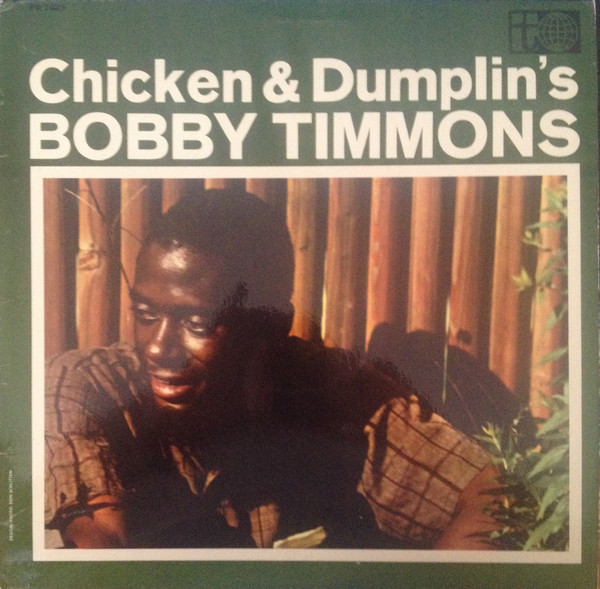
Listening to Prestige 717: Bobby Timmons


LISTEN TO ONE: Chicken & Dumplin's


Bobby Timmons is remembered largely for two things: a handful of compositions, most notably "Moanin'" and "Dat Dere," which rank among the most tuneful and popular numbers in the jazz canon; and a life sadly lost to drugs and alcohol. By the mid-1960s, things weren't good for him. His Wikipedia bio states that "Timmons' career declined quickly in the 1960s, in part because of drug abuse and alcoholism, and partly as a result of being typecast as a composer and player of seemingly simple pieces of music." The same bio notes that Timmons's live performances at this time were cited by reviewers as being undermined by his hiring of sidemen of inferior quality.


None of this seemed to affect his marketability as a jazz recording artist. His Prestige years were 1964-66, during which time he recorded seven albums (this was his fifth). But the writing was already on the wall. After leaving Prestige, there were two more albums for Milestone, and that was it. His last recording was 1968; he died in 1974.

The sidemen he's working with on this recording are not the musicians he played his club dates with, the ones who were found wanting by reviewers, and although they may not have been Prestige's A-list of supporting players, they certainly aren't chopped liver. Drummer Billy Saunders has no other recording credits that I could find. But bassist Mickey Bass had an impressive resume of gigs (Sonny Rollins, Charles Mingus, Chico Freeman, John Hicks) and his recording dates,which would mostly come in the 1970s, included Art Blakey, Philly Joe Jones, Curtis Fuller, and Hank Mobley. He also spent many years as an educator, numbering trumpeter Wallace Roney among his students. Both of them contribute on this album, giving Timmons the support he needs. 

Tinmons calls on another composer to lead off this album--Ray Bryant, best known for "Cubano Chant," "Little Susie," and his big 1960 hit, "Madison Time." Bryant's "Chicken & Dumplin's" had first been recorded by Art Blakey in 1959, when Timmons was in the group, with boppish solos by Lee Morgan and Hank Mobley, and an excellent one by Timmons. 


"Chicken & Dumplin's" is certainly a soul food/soul jazz title, in a tradition going back to early rhythm and blues hits like Hal Singer's "Cornbread" and Frank "Floorshow" Culley's "Cole Slaw," and continuing through the kitchen classics of Eddie "Lockjaw" Davis and Shirley Scott on Prestige. Timmons gives it the full soul jazz treatment here, eschewing his own melodic improvisations and those of Mobley and Morgan, in favor of a solid groove. 

In his own composition, "The Return of Genghis Khan," Tinmons appears to be setting out to prove that he was more than just simple melodies and basic soul jazz improvisation, and to these ears he succeeds. This is a nervous and nervy album, worth listening to.

Cal Lampley produced, and Chicken & Dumplin's was the name of the album. The title cut b/w "The Telephone Song" was the 45 RPM release.

Saturday, January 27, 2024

Listening to Prestige 716: Benny Golson / Jimmy Witherspoon


LISTEN TO ONE: Love Me Right

 Benny Golson and a full orchestra had backed Jimmy Witherspoon in Stockholm in 1964, and now in London in 1965, Golson was ready to round up a new orchestra and do it again. In fact, he was ready to recapitulate his entire Stockholm syndrome--he had done sessions with both Witherspoon and jazz singer Carol Ventura in Sweden, and so again in London. Golson, producer Lew Futterman and Prestige Records had something of a hit-and-miss record as predictors of popularity. The jazz chanteuse sank remarkably quickly into an undeserved oblivion; the blues, pop-blues, soul-blues crooner-shouter remains one


of the most popular representatives of his genre to this day. 

Crafting hit records, and careers, is guesswork at best, as witness, on the one hand, Decca's decision to pass on the Beatles, and on the other, the mega-bucks and extravagant promotional campaigns devoted to Jobriath (who?) Making good music, on the other hand, is frequently as simple as getting some really good people together and giving them some creative freedom.

And such is the case here. Benny Golson clearly felt there was more to do with jazz singers and a full orchestra, and he was right. I spent an exhaustive amount of time and space on the previous Golson-Witherspoon collaboration, so I won't go into it all again, but this is a delighful album, the kind you'd put on again and again. 

I don't know where they got the songs from. None of them are familiar to me, and few of the songwriters are even vaguely familiar to me. All of the titles sound vaguely like something you've probably heard before. None of them became standards, even though eight of them were released on 45 RPM singles. But they're good enough songs. and they fit Spoon's voice, and Golson's arrangements.

The singles were:

Make This Heart Of Mine Smile Again / Love Me Right   

Oh How I Love You / One Last Chance   

I Never Thought I'd See The Day / If There Wasn't Any You    

Two Hearts Are Better Than One / Come On And Walk With Me

The album was titled Spoon in London. Lew Futterman produced. Baxking vocals were done by the Ladybirds, a British trio soon to become known for their work on the Benny Hill Show.

Friday, January 19, 2024

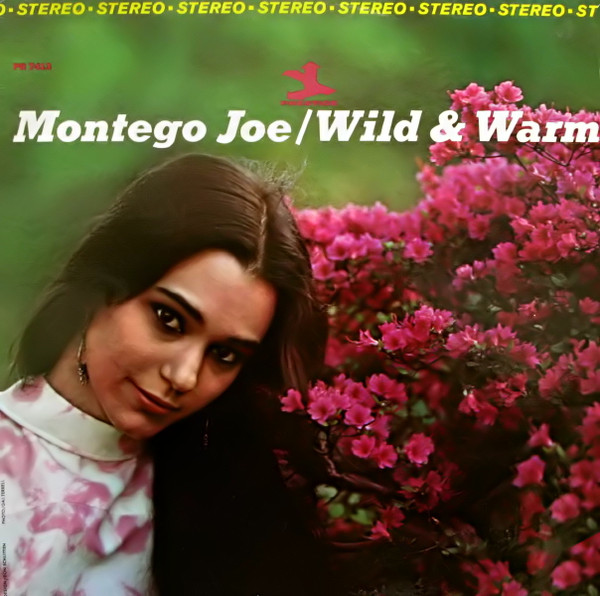
Listening to Prestige 715: Montego Joe


LISTEN TO ONE: Haitian Lady

Montego Joe's two albums for Prestige were his only two as a leader, though he continued to be in demand as a percussionist through the 1960s and '70s. This second album leans toward what appears to be an attempt to move Joe into the mainstream of 1960s pop instrumentals. The tune that was selected for 45 RPM release is "Ouch," which uses the popular device of a repeated catch phrase, in this case "You shouldn't do that!" This is the device most successfully used in "Tequila," and "Ouch" is pretty good proof that it isn't always successful.


The session log includes a credit as arranger/conductor for tenor sax man Al Gibbons. Gibbons had a solid career without ever quite breaking through to the top ranks. He played in the orchestras of Earl Hines and Woody Herman, and also in the avant garde Jazz Composer's Orchestra. He worked with Stanley Turrentine and the Manhattan Transfer. And here his job seems to have been to create a Montego Joe for the masses, although one suspects that producer Lew Futterman's may have been the heavier hand.

Prestige, especially in the soul jazz era, was not a label to shy away from popular success, but neither was it a label to court it too assiduously, and the liner notes to this album, by Francis Squibb, seem to reflect that ambiguity. Are we courting the young crowd? Well, yes and no...
The music presented here is rhythmically akin to the rock 'n' roll and rhythm 'n'  blues of the discotheques and teen hops--but with a difference. The "big beat," with which almost everyone is familiar, has been seasoned generously with a variety of twists and turns from African tribal musical traditions and from African-American music of Latin America and the Caribbean.

In short, like "Tequila." Or like Perez Prado. As someone who lived through that era, I can't help but follow the twists and turns of Mr. Squibb's attempts to find a balance. The rhythm 'n' blues of discotheques? For a start, who used the 'n' of rock 'n' roll to talk about rhythm and blues? But if you were young and representing yourself as a hip aficionado of jazz, you couldn't admit to liking rock 'n' roll...but it was sort of OK to like rhythm and blues.

Sorry, I can't help myself. Squibb's discomfort in being a jazz purist writing about impure music reveals itself in his compulsive need to put words into quotation marks, that familiar device that signals "I'm really better than this, I'm not really saying this":

The music of Wet and Wild was designed to get people to "shake that thing"--and not just that thing but everything [until] you are no longer "doing" the dance...but are  a creature of the music and--perhaps--of something beyond music as we know it. [Perhaps you have seen them] "doing" the Frug, the Monkey, or the Swim.

The tunes on this LP, intended to emphasize the "commercial" aspects, have been selected with "the younger crowd of dancers" in mind.

Montego...continues to demonstrate...the ways in which supposedly "alien" melodic and rhythmical material can be combined with "native" jazz and pop material...

So Montego Joe and producer Lew Futterman set out to make a commercially successful pop album. It was certainly something that Futterman proved good at, in his work with Jack McDuff and George Benson, and his later work with rockers like Ted Nugent. He would also become even more commercially successful as a real estate developer.

Why didn't it work with Montego Joe? Who knows why things do or don't take off commercially? But also, perhaps, Joe's heart wasn't one hundred percent in it. Although he continued to work as a percussionist on a number of jazz (and a few pop) sessions, his heart was more and more with education and youth work, as described in the notes to his previous Prestige album.


Al Gibbons, trumpeter Leonard Goines, and drummer/percussionist Milford Graves all appeared on the previous album. New for this session are Arthur Jenkins, piano; Ed Thompson, bass; and Sonny Morgan, miscellaneous percussion, suggesting that the budget may have been tighter this time around, or that for a more commercial dance sound, they didn't really need Chick Corea and Eddie Gomez. Jenkins, who during this period was primarily working with pop/reggae singer Johnny Nash, would go on to become a much-sought-after accompanist, working with John Lennon, Harry Belafonte and Bob Marley, among others. Sonny Morgan worked with Milford Graves on his first album as leader, and later with avant-garde vocalist Leon Thomas, among others. Less is known about Ed Thompson.

"Ouch" and "Give it Up" were the two sides of the only 45 RPM single release. Wild & Warm was recorded at Futterman's preferred Regent Sound Studios in Manhattan. I've selected "Haitian Lady," composed by Harold Ousley, as the most interesting track for me. But the whole album is pretty good for "dancing."


Sunday, January 14, 2024

Listening to Prestige 714: Morris Nanton


LISTEN TO ONE: Something We've Got

 Next up in the Prestige chronology we have the debut album by a pianist-composer who has fashioned one of the more impressive careers in American music, who has recorded over 250 albums, worked with "everyone from Ellington to Elvis, Joni Mitchell to Barbra Streisand, and Quincy Jones to Yo-Yo Ma" (from the bio on his web page), garnered a Grammy and an Oscar nomination, who has written the scores for 20 movies including the Streisand remake of A Star is Born; and a mid-career album (fourth out of a total of six) by a performer whose career is mostly bounded by the town of Perth Amboy, New Jersey,


where he and his trio were local favorites for over five decades, including a 22-year stint at one local club. The former's debut album was not long ago rereleased on CD; none of the albums by the latter seem to have been rereleased.

Unfortunately, I was only able to locate and listen to one of these albums on a streaming service--and it wasn't the guy with the truckloadfull of credentials. The Roger Kellaway Trio was actually Kellaway's second album, but the first was done for a tiny local label, so this was his debut on the national stage, produced by Jack McDuff's guiding hand Lew Futterman. I can't give you a first-hand response to the music by this "lean, bearded, intent young jazz musician" of 26 (from the liner notes; I was able to find them, but no music), but I wish I could have. It sounds fascinating, from "one of the good tunes penned by Beatles John Lennon and Paul McCartney" to a four-note melody written for "prepared piano," the adaptation of a traditional piano pioneered by John Cage. 

No jazz musicians were recording Lennon-McCartney tunes in 1965--in Arthur Taylor's seminal interviews with his peers a few years later, collected as Notes and Tones, the interview subjects are unanimous in dismissing the musical value of the two Beatles' compositions. And certainly none were experimenting with Cage's prepared piano, although Dave Brubeck did record one tune with a modestly prepared instrument, laying copper strips across the strings. Bizarrely, the easy listening piano duo of Ferrante and Teicher did try a number of these experiments during the course of their careers.

Kellaway prepared his piano by "fastening objects to the strings, including washers, nuts, bolts, and wooden pegs. 'The choice of which notes to prepare was purely individual,' Kellaway noted. 'Besides the melody notes I prepared mostly the lower level of the piano.'"

But for now, for me, these experiments remain tantalizingly out of reach. So I turn my attention, instead, to the May and June sessions which comprised Morris Nanton's second of three Prestige albums. and which I was able to listen to.

First, I can't resist quoting a little from Jack McKinney's album cover notes, starting with the "many forces" which shape the identity of the trio: "It is music that evolves from Art Tatum through Oscar Peterson; it has ties to the 'space movement' of Ahmad Jamal ('freedom within form'); in its more reflective moments it becomes an extension of Bill Evans' introspective analysis." But where McKinney really gets going is his of all the things the Nanton trio is not: "These are not cocktail sounds for lifeless zombies pouring more Manhattans into bored executives. They are not forays into obscurity in which erudition becomes an end and confusion a means. They are not essays on the psychotic by the introvert who is playing to magnify his egomania."

Well, thank goodness for that, I guess. The May 13 session consisted of four songs, two of which did not survive the cutting room. Of the two that did, the first is "Mood Indigo," a 6:34 treatment that doesn't exactly follow the melody line or the arrangement suggested by Duke Ellington and Barney Bigard, but which, as it extends further in time and further into its own improvisational world, paradoxically starts to feel more and more Ellingtonian. 

"Mood Indigo" is one of the lovelier jazz melodies, and "Taboo" one of the cornier, but Nanton and his guys defy expectations again by giving us a good deal more of melody of "Taboo," also stretched out to six and a half minutes. To what end? It's hard to say. They're certainly not playing to its cocktail-exotica strengths, although there's some of that. They're not hipster-satirizing it either, although there's humor in their version. On one of their Perth Amboy club dates, this would have been a delight--having some fun with a tune you're perhaps a little embarrassed to admit that you recognize so readily, and at the same time giving some real musical depth of exploration to it. On an album--and it's the last tune on side B--it's still a delight.


The June 16 session begins with a blues, "Something We've Got," the only Nanton original, the longest track of the two sessions, the title cut and the leadoff cut for side A of the album. What to say about a blues? One could go with McKinney, once again, and say what it's not: "a listless and hopeless essay on futility." Well, thank goodness for that, I guess. It is a pleasure all the way through, a workout in different moods and tempi by musicians attuned to each other. 

Three shorter pieces finish out the session, and the album. "Any Number Can Win" is a moody number by French film composer Michel Magne for the Jean Gabin/Alain Delon gangster flick of the same name. Jimmy Smith had also recorded it. Two songs from the 1930s, Allie Wrubel's "The Masquerade is Over" and George Gershwin's "My Man's Gone Now" (from Porgy and Bess) are also of an appropriate length for a 45 RPM single, but that honor went--and appropriately--to "Something We've Got," split into a part one and part two.

Cal Lampley produced both sessions. The rest of the trio is Norman Edge (bass), who was Nanton's musical partner for over 50 years, and Al Beldini, drummer and vocalist (not here) probably best known for his work with Don Elliott.


Friday, November 24, 2023

Listening to Prestige 713: Carmell Jones


LISTEN TO ONE: Flyin' Home

 Another one of those definitely worthy figures who made a brief name for himself and faded into oblivion. You won't find him on any of the various internet lists of the 50 greatest jazz trumpeters of all time. Where will you find him? I dug a little deeper, starting with the forum section of organissino.com, where no one is so obscure that some coterie of fans haven't gathered to discuss him or her. I found one discussion of Jones, with all the entries dated 2003, when Mosaic released a box set of all his recordings. The reviews were there were all glowing, with several comparing him to Clifford Brown, and one mentioning that the set had been reviewed on Fresh Air. Nothing since 2003;


I found a really neat jazz blog called Curt's Jazz Cafe, which has, among other treasures, profiles of "Obscure Trumpet Masters." Jones is number four -- they're not ranked; he's number four in alphabetical order, and blogger Curtjazz (I can't find any other name for him) introduces him with:

He plays on one of the most famous straight-ahead jazz songs ever recorded, yet today people are more likely to confuse him with a film character played by Dorothy Dandridge, than they are to know the titles of any of his six albums.

The "most famous" is Horace Silver's "Song for My Father." Jones had come east from Los Angeles, where he had recorded three well-received albums for Pacific Jazz, to join Silver's group. He played on two albums with Silver, and did quite a lot more sideman work with excellent musicians (incuding Booker Ervin and Charles McPherson for Prestige), and made this one Pretige album as leader, for which he received Down Beat's "New Star Trumpeter" award.


But as was the case with so many black artists of his era, the racism -- and the lack of appreciation for jazz as an art form -- in the United States weighed too heavily on him, and he moved to Germany, where he would spend the next fifteen years, and would disappear from view as far as the American jazz public was concerned.  

This would be his USA swan song, at least for the time being. He would return in the 1980, and make one more album for the West Coast label Revelation. It was titled Carmell Jones Returns, although by that time the reaction would have been not so much "Wow, he's back!" and more "Who's Carmell Jones?"

His later years were spent in his almost-home town of Kansas City, Missouri. His actual home town was Kansas City, Kansas, but the Missouri side of the state line was more hospitable to music.

For those who remembered him and those who happened on him for the first time with the Mosaic box set, his work was a welcomed pleasure, as well it should have been. What this session captures is a man who loved what he did, even if he didn't love the country he was doing it in. That love comes through in every note he plays.

New to Prestige is Horace Silver veteran Roger Humphries. Don Schlitten produced, and the album was entitled Jay Hawk Talk, a tip of the hat to Jones's home state. The title cut was also released as a two-sided 45 RPM single.