Showing posts with label Addison Farmer. Show all posts

Saturday, January 20, 2018

Listening to Prestige 303: Mal Waldron

Left Alone (Bethehem) and Impressions were the two albums that Mal Waldron made in 1959 to commemorate his two-year association with Billie Holiday, who would enter the hospital for her final illness on May 31, and die on July 17. Left Alone was recorded on February 24, Impressions on March 20.

Holiday's death was famously chronicled in Frank O'Hara's poem, "The Day Lady Died," in which O'Hara recalls a moment at the Five Spot when:

She whispered a song along the keyboard
to Mal Waldron and everyone and I stopped breathing
The memory of the song, and the moment that took O'Hara's breath away comes back to him the news of Holiday's literal last breath. But in the poem, that transcendent moment reaches Mal Waldron first, before it spreads to everyone else in the club and finally to O'Hara, leaning on the door to the john. An perhaps more than that. To Waldron, her closest collaborator in art at that moment, and through him to Lester Young, her soulmate in art, dead just a handful of weeks earlier, and to all artists touched by art as perhaps no one else can be, and then to everyone in the club, and then to everyone, touched and moved and changed by art being in the world whether they know it or not, whether they care or not, whether they've heard of Billie Holiday or not, and finally to Frank O'Hara, who can only record that she stopped breathing on an ordinary day, and stopped breathing because for a moment her artistry made the universe stand still.

In O'Hara's poem, Mal Waldron is the conduit, and as his two-year-association with Billie Holiday drew to a close, Waldron was thinking, musically, about that that meant.

Both Left Alone and Impressions are unique as tribute albums in that they don't, on the surface, have very much to with the artist they're paying tribute to. Left Alone has one song, "You Don;t Know What Love Is," associated with Holiday. Impressions has three songs that were written for vocalists, but only one of them, "All the Way," was recorded by her, on her strings album with Ry Ellis, but surely that song would fit more comfortably onto a Frank Sinatra tribute album.

Trumpeter Webster Young recorded a Holiday tribute album that was all songs she had made famous,  but Waldron's approach really makes as much sense. Jazz is jazz. Once Young has played the melody of "Don't Explain," he's off into his own improvisation, and the version quickly becomes his.

Waldron is thinking about what he's learned from his two years with Holiday, and in fact one track of Left Alone is Teddy Charles interviewing Waldron about precisely that.

One thing, Waldron stresses in the interview, is that he learned from Holiday to listen to the words. This is advice passed down to the younger musician from an older one, with Holiday as the conduit: Lester Young said that he always had the words to a song in his mind when he played. I've always wondered if this could also be retrofitted--did Lester think of King Pleasure's lyrics to "Jumpin' With Symphony Sid," written to his solo, when he played it?

A bit of transient whimsy, but interesting to consider in that Waldron was one of the best composers of his era, and as such played a lot of original material that had no words. But I have to believe that Holiday's influence was strong here, too: the way that she listened to, and sang, and created musical patterns for words.

Three of the pieces on Impressions are a suite: "Les Champs Elysées," "C'est Formidable," and "Ciao," inspired by a European tour that he and Holiday took together. You can actually hear the spectre of lyrics in "Ciao," the frenzied conversations, trying to get everything in before departing for America. Waldron would return to Europe to live, after losing a few years to a heroin overdose triggering a near-total mental breakdown, and he would often say in interviews that if Holiday had been able to make the break to expatriate living, it could have added years to her life.

The other non-original songs that Waldron includes on Impressions are "With a Song in Heart" by Rodgers and Hart, and "You Stepped Out of a Dream" by Nacio Herb Brown and Gus Kahn. "All About Us" is credited to Elaine Waldron, Mal's wife. She's received composer credit on his work before, and it may be some sort of publishing thing.

When John Coltrane came back to New York from Philadelphia, clean and sober and ready to record again, one of the players he brought with him was drummer Albert "Tootie" Heath, who stayed in the Big Apple and returns to Prestige here.

As of this blog entry, "Tootie" is still with us, and he talked about jazz then and now in a recent interview:
 I come from an era where...“jazz” was not considered a music that was sophisticated. It was always happening in some place where everybody was drunk, the room was full of smoke, and it wasn’t on the concert stage.

Once jazz was presented on the concert stage and introduced to festivals all over the world, the people that play it don’t necessarily represent people from my era anymore because we’ve died out.

I consider myself one of those people who came from the area where the blues was important and the RnB was important, and church gospel music was important. It’s not a part of what people call “jazz” anymore. People ignore that, they are not intellectual forms of music. That is not taught at the universities, they don’t teach you nothing about no blues. How to play an 8 bar or 12 bar blues, they don’t teach you that at the universities.

They teach you about sequences and how to go from this kind of change to that kind of change. We didn’t even know what that was, most of us.

Duke Ellington said, “one foot in the future, and one foot in blues would make the music unique.”
I started this project partly on a whim, partly out of the realization that this was an important era in American culture, and the idea that I could maybe get a sense of the totality of it through looking at one record label. Prestige because I thought it had been a little overlooked in jazz history, and because it was such an important part of my early jazz record collecting.

Bob Weinstock said that he sold the label in 1971 in part because the jazz he loved was no longer the jazz that was being made. Choosing Prestige meant starting to look at jazz in 1949, which is good because there's no right date, and this way the choice was made for me.

The music of these two decades was made by musicians born in the teens, in the 20s, the 30s, the 40s--musicians who matured and made their mark in the heart of the American Century in Music, that unparalleled artistic flourishing that came from the blues and developed in so many astounding ways. Maybe jazz, building from " the area where the blues was important and the RnB was important, and church gospel music was important," is the fullest expression of that music. Not the best, because there is no best, but the fullest, and the music that so many who started in more basic forms aspired to.

There are lots of reasons why the American Century wound down, or maybe just one reason. Because things do. No one is composing baroque music any more, or writing Elizabethan drama. That doesn't make the interpretive art of a Yo-Yo Ma or an Ian McKellen any less wonderful. But maybe "Tootie" has his finger on it.

There's another explanation, and that is that I'm wrong. That the Duke is right, and we still have one foot in the blues, and the other in the future. That "Tootie" got old, and I got old, and it's natural for us to live in the past.

Impressions was released on New Jazz. In spite of being hailed at the time as Waldron's best work to date, it seems to have never made it over, in whole or part, to a Prestige release.


Listening to Prestige Vol. 2, 1954-1956 is here! You can order your signed copy or copies through the link above.


Tad
Richards will strike a nerve with all of us who were privileged to have
lived thru the beginnings of bebop, and with those who have since
fallen under the spell of this American phenomenon…a one-of-a-kind
reference book, that will surely take its place in the history of this
music.

                                                                                                                                             
--Dave Grusin

An
important reference book of all the Prestige recordings during the time
period. Furthermore, Each song chosen is a brilliant representation of
the artist which leaves the listener free to explore further. The
stories behind the making of each track are incredibly informative and
give a glimpse deeper into the artists at work.
                                                                                                                --Murali Coryell

Saturday, January 06, 2018

Listening to Prestige 299: Mose Allison 

I wonder if Bob Weinstock didn’t exactly know what to do with vocalists. In a late interview, looking back at his career, he mentions in passing that vocals were always the records that sold best, and he gives King Pleasure and H-Bomb Ferguson as examples. But he only produced one session with Ferguson, and only released one 78 from that session. 

His history with Pleasure is perplexing. “Moody’s Mood” was one of his biggest hits, but he didn’t make an effort to get behind Pleasure’s career. The “Moody’s Mood” session consisted of a band led by Teacho Wiltshire, playing some instrumentals and backing a couple of singers—Pleasure happened to be one of them.

And OK, he may not have known Pleasure was something special going into the session, but he surely knew coming out of it, especially as “Moody’s Mood” began to climb the charts, eventually reaching number two in rhythm and blues. But Weinstock’s next session with him was listed in the session log as the “Charlie Ferguson Quintet,” and it was mostly an instrumental session, with Pleasure called in to do a couple of vocals.

Obviously Weinstock knew he had something good with “Moody’s Mood” (it’s hard not to noice when your record reaches number two on the charts) because he ran into the young Annie Ross at a party and asked her if she could do something like it. She came back the next day with two classics, “Twisted” and “Farmer’s Market,” But that was the only session he ever booked with her. When the LP era came into its own, and jazz labels were re-releasing collections of their old 78s, Prestige did not have enough of either Pleasure or Ross to make a full 12-inch LP.

And what about the two young female vocalists that Pleasure brought in with him to help out—Blossom Dearie on “Moody’s Mood” and Betty Carter on “Red Top”? Didn’t he see the promise there?

This is not really a criticism. If Weinstock had focused on following the hits, Prestige would have been a very different, and likely much less interesting, label.

And how does this connect to Mose Allison? I’m not sure, really. Allison had a long and brilliant career in a field he almost invented for himself: jazz singer/songwriter. He could be called a cult favorite. If that term has negative connotations for you, then he wasn’t. If it has positive connotations, he was. His albums were never huge sellers, and I don’t believe he ever scored very high on Down Beat’s male vocalist poll. But the people who loved him, loved him passionately.

I loved him, and passionately, from the first time I heard Back Country Suite. But the most passionate fandom probably came from the later singer/songwriter work. So why wasn’t he exploring this side of his talent in his early Prestige albums? Or for that matter, in his Columbia albums? He really didn’t become the quirky, funky, literate troubadour until he began with Atlantic in 1962. Was it Weinstock’s limited vision when it came to the possibilities of jazz vocals, or an unwillingness to mess with a formula that was working pretty well? Or did it really take Allison another five years to find that voice? Could be.

  In any event, vocals were always a part of what Allison did on Prestige, and the vocals were the ones that Weinstock released on 45. And Weinstock certainly liked what he was doing enough to bring him back over and over. We have five albums over two years, and people are still listening to them, even though they’ve been somewhat eclipsed by the later work, and the Mose Allison Sings double LP compilation is by far his best seller on Prestige.

There are three vocal tracks on Autumn Song. Two are Chicago blues, one is Ellington. All become Allison.

“That’s Alright” was written by Muddy Waters’ guitar player Jimmy Rogers. Recorded by Rogers in 1950, it became a hit for Little Junior Parker in 1957, and has since become a beloved blues standard. Rogers, who retired from the music business right around the time that Parker’s version of “That’s Alright” was breaking, would mount a comeback in the 1970s, and shortly before he died in 1997 would record his own cover of his own song, with Eric Clapton.


It’s not hard to see the continuing appeal of the song, the bittersweet aching loss of a lover who insists that everything is all right, and forgives his faithless lover. Allison’s wry reserve only deepens the emotion.

Sonny Boy Williamson’s “Eyesight to the Blind” is another blues that’s gone on to become a classic, this one with an unusual twist.

Williamson recorded “Eyesight to the Blind” in 1951, and a doowop cover version by the Larks came out the same year on the Apollo label, making a a strong showing on the R&B charts. The Larks put another Williamson song, “Fattening Frogs for Snakes,” on the flip side. One can tell just from these two titles how imaginative Williamson was as a songwriter, and that had to appeal to Allison. In his version of “Eyesight,” he picks up the tempo and gives it his own crisp piano styling.

The unusual twist to “Eyesight to the Blind”? The Who’s Pete Townshend, always an Allison fan, took the lyric, created his own melody, and  made the song a part of his rock opera Tommy, about a deaf, dumb and blind kid. He gave Williamson full credit for the composition.

If there was ever a lyric suited to Allison’s fine-tuned sense of irony, it’s Bob Russell’s “Do Nothin’ Till You Hear From Me,” to a tune by Duke Ellington, in which a lover vows his fidelity to his distant partner while more or less admitting that he’s fooling around on her. From the plaintive melody of Rogers’s betrayed lover to the Ellington sophistication of Bob Russell’s cad, Allison gets an opportunity to show his range.

Allison’s final Prestige album was released as Autumn Song. “Do Nothin’ Till You Heat From Me” was the first single release from the session, as the flip side of “Seventh Son.” It would be followed by “That’s All Right” / “Eyesight to the Blind.”  Then there’d be the three albums for Columbia (the third on Epic) before the long association with Atlantic, where his first album included “I Don’t Worry About a Thing” and “Your Mind is on Vacation.” Whether he had only just started writing this way, or whether the Ertegun brothers saw a side of him that had always been there, and encouraged him to express it, who knows?

But we’re grateful for what we have. Bob Weinstock might not have realized that Miles Davis could be a superstar I f he put together an identifiable quintet and created a brand, but because of that, we have all those fascinating recordings of Miles in different contexts. And the Allison albums on Prestige give us Mose the important composer-piano player, with a little trumpet, a little singing. We can only be grateful.


Order Listening to Prestige Vol 2 


Listening to Prestige Vol. 2, 1954-1956 is here! You can order your signed copy or copies through the link above.


Tad Richards will strike a nerve with all of us who were privileged to have lived thru the beginnings of bebop, and with those who have since fallen under the spell of this American phenomenon…a one-of-a-kind reference book, that will surely take its place in the history of this music.

                                                                                                                                                --Dave Grusin

An important reference book of all the Prestige recordings during the time period. Furthermore, Each song chosen is a brilliant representation of the artist which leaves the listener free to explore further. The stories behind the making of each track are incredibly informative and give a glimpse deeper into the artists at work.
                                                                                                                --Murali Coryell


,


Monday, November 20, 2017

Listening to Prestige 287: Mal Waldron

This is the fourth Prestige session Mal Waldron presided over as leader, and he'd appeared on a whole bunch more as a sideman (I have 28 different references to him in this blog), so I've listened to a lot of his music, with growing admiration of his musicianship, his technical and emotive range, and with growing awe at his abilities as a composer. Looking back on those years, in a 2000 interview (he died in 2002) with jazz writer Ted Panken, Waldron did see himself in exactly the same light (all the quotes from Waldron in this essay are from Panken's interview). To Panken's suggestion, "Your music certainly had its own sound by 1960.  You’re recognizably Mal Waldron ...no one could mistake you for anybody else, Waldron demurred.
Well, I’m not quite sure about that, because I was still learning and putting it together.  I was halfway through the tree.  In other words, I started out with a big tree and I tried shaving and shaving and shaving try to find the perfect toothpick, but I wasn’t there in 1960 — definitely.  I was nowhere near the toothpick at that moment.
This is a startling and original metaphor for an artist trying to find his or her own voice. I've really never read anything like it, and it rings deeply true. Michelangelo may or may not have said (almost certainly did not say) that he took a block of marble and chipped away everything that didn't look like "David." Many teachers of writing, myself among them, have counseled that the most important part of revision is cutting. But this different, and I will be thinking about it for quite a while.

A large part of Waldron's goal of shaving that tree down came from Charles Mingus, who caught him trying to play like Bud Powell and gave him a tongue-lashing, telling him never to try to sound like anyone except himself.

But the first clumsy strokes at that tree are always going be taken with borrowed axes, and one of Waldron's first--he had grown up being forced to practice the piano, and hating it--was Coleman Hawkins. It was "Body and Soul" that first made him fall in love with music, and he immediately went out and bought a saxophone:
...An alto.  I couldn’t afford a tenor.  I got a big, hard reed and an open lay on the mouthpiece so it would sound like a tenor, and I got the music for “Body and Soul” from “Downbeat” and I read it, and for 5 minutes I was Coleman Hawkins!
And after that, of course, with an alto:
I was trying to emulate Charlie Parker!  But I couldn’t arrive, so I hocked the horn and went back to the piano.  Because I found my basis on piano was strong enough at least to enable me to play the changes right.
His enforced training on the piano as a child had been classical, which he found too constraining--"I had to do it the same way every time, otherwise I got my knuckles rapped"--nevertheless remained a part of his musical awareness, as did studying composition at Queens College with the eminent German émigré composer Karol Rathhaus. He discussed the importance of the classical influence with Panken:
TP: Did those lessons stay with you in your composition?

MW: Definitely.

TP: Your classical background never left you, your sense of harmony and shading…

MW: And form and development, how to develop themes, sure.

TP: I think people aren’t aware of how deeply classical music studies permeated musicians of your generation, who then created a lot of home-grown resolutions and utilizations of it.  Can you address that a bit.  I guess the G.I. Bill helped a lot of people.

MW: Sure.  Well, it had to do with the concepts of Bach.  Bach is very basic.  The way he moves from V to I, that concept is very instrumental in how the musicians grew.  They moved from V to I, and they made it with a flat fifth and putting in stuff like extra notes in the chords and changes like that.

TP: In your circle of friends with Randy Weston and Herbie Nichols, etc., were you talking a lot about classical music and listening to…

MW:Yes, we discussed things like “Rite of Spring” and the sounds and things like that.
Waldron is very much of a generation I've discussed a lot. The early beboppers grew up on swing, on Kansas City blues, on the territorial bands, on Basie and Ellington and Lunceford and Erskine Hawkins as well as Goodman and Shaw; Waldron's generation grew up on bebop. But Panken and Waldron make an important point here about this generation that came of age post-World War II, with college and conservatory studies thanks to the G.I. Bill. We know that Charlie Parker listened to everything, and responded strongly to the compositions of Bartok. The fictional Dale Turner, in Round Midnight, speaks for many of his generation when he acknowledges his debt to Debussy.

The last Waldron session I wrote about was one with Gene Ammons, for which Waldron composed all of the tunes, and I began by imagining a conversation with Bob Weinstock:
"Mal, you're playing a gig with Gene Ammons this Friday. Come up with some tunes that'll suit him."

"On it."
And this is probably pretty close to how it went down (including the Friday part: that was Prestige's day in Hackensack).
MW: The way the setup was in those days, they’d tell me who was on the set and then they’d tell me to write six or seven compositions for the date.  So I had to stay up all night long and write the changes, and next morning I’d come in to Hackensack, N.J., and make the records, then I’d go home and write some more music for the next date.

The way I’d write the tunes, the first important thing was to be able to solo on it.  So I’d make my  changes first, nice blowable changes that you could solo on beautifully, and then I’d write a tune over the changes.

TP: Write your melody…

MW: Over the changes, yes...my life was consisting of thinking about the melodies in the daytime, writing them at night, and then recording them the next day.

TP: You’d get a phone call, you’d write some music, a bunch of charts or tunes…

MW: Right, and bring them in.  We’d run them through maybe for ten minutes, or just talk about them, and then we’d make the record.  They were usually all first takes, too.

TP: If you had a date with Gene Ammons and composed “Ammon Joy,” was that based on his…
MW: Yes, on his sound.  They’re all connected.

TP: Or writing for Thad Jones or Frank Wess or John Coltrane.  In each case you had their sound in  mind.

MW: Their sound in mind, sure.  That’s the way you write. 
On many of these dates, like May 2 with Ammons, Waldron was called upon to write the entire session. Here, he only contributes three of eight, the rest being standards. But that's another part of the Waldron story. He was already working as Billie Holiday's accompanist, and he would go on to work with Abbey Lincoln, Jeanne Lee, and other vocalists, so he was spending a lot of time with standards, and that, too, relates over to his work in an instrumental jazz context. As he told Panken:
[Internalizing the lyrics] really helps me to improvise, because the words give it a completely different atmosphere to improvise on.  You can improvise the words alone, instead of just improvising on the changes and the harmony and the melody.
In a way, this is exactly what Eddie Jefferson did with "I'm In the Mood For Love."

Waldron takes four songs from what we now call the Golden Age of American song, and the fifth from the era that surrounded him. Sammy Davis Jr., or his spirit, must have been tap dancing through Hackensack in the summer of 1958, because this is the second "Too Close For Comfort" we've had (Eddie "Lockjaw" Davis/Shirley Scott providing the first), along with one "Mr. Wonderful" (per Red Garland).

Kenny Dennis is new to Prestige with this recording. He broke into the jazz scene with junior high classmate Ray Bryant, played with many of the greats, and is still active as the assistant director of the Lab Band at the Los Angeles County High School for the Arts. Among his numerous recording credits is a session with Langston Hughes.

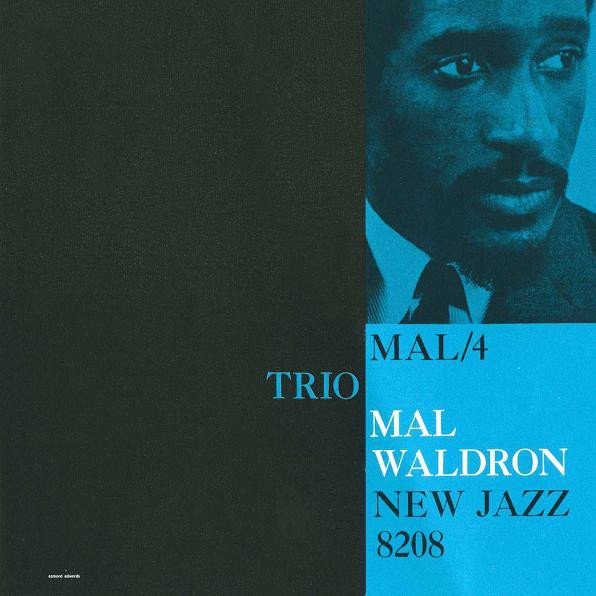
This came out from New Jazz, with Prestige following its pattern of numbering Waldron's albums. This one was Mal/4--Trio.


Order Listening to Prestige Vol 2


Listening to Prestige Vol. 2, 1954-1956 is here! You can order your signed copy or copies through the link above.


Tad Richards will strike a nerve with all of us who were privileged to have lived thru the beginnings of bebop, and with those who have since fallen under the spell of this American phenomenon…a one-of-a-kind reference book, that will surely take its place in the history of this music.

                                                                                                                                                --Dave Grusin

An important reference book of all the Prestige recordings during the time period. Furthermore, Each song chosen is a brilliant representation of the artist which leaves the listener free to explore further. The stories behind the making of each track are incredibly informative and give a glimpse deeper into the artists at work.
                                                                                                                --Murali Coryell

Monday, November 06, 2017

Listening to Prestige 281: Mose Allison

Once again, listening to the Prestige recordings by Mose Allison, I'm reminded that the later recordings, which made him justly a cult legend as a singer-songwriter, are not the whole story. Allison was a brilliant composer, and this album, though it went a long way toward establishing his reputation as a vocalist, both with his own and other songwriters' material, is an excellent place to reflect on just how good he was. "Creek Bank," in particular, is a gem, one of my favorites of his jazz compositions.

But the whole group of composed pieces, the Creek Bank Suite, as it could legitimately be called, although he only gave the name of "suite" to his Back Country compositions from his first album, is worth many listenings. Back Country Suite is a suite because the interlocking compositions are short and gain their power by accumulation. Here, as in Local Color, we have a series of pieces tied to back country Mississippi by their titles and by a certain feeling, to New York by the bebop influence of Bud Powell and George Wallington and Allison's own musical sophistication.

As to the titles, "Dinner on the Ground" is so back country that would be easy for a picnic-fancying Easterner, perhaps accustomed to listening to Mose while spreading a repast on the ground at a jazz festival. I might not have gotten its significance without having listened to Merle Haggard's account of an impoverished family in his song "Daddy Frank":
I don't remember ever going hungry,
But I remember Mama cooking on the ground.

Unlike Back Country Suite and Local Color, this album, as it was pressed, does not lead with the instrumental sequence, although the session log has the  four tunes recorded first. That's relegated to the "B" side, not that "A" and "B" sides are a particularly important concept on an LP. But "The Seventh Son," which did lead off the "A" side of the album, was also the "A" side of two different 45 RPM singles, where the hierarchy of sides does matter, "If You Live," Allison's self-penned song, was on the other side of the first release, and "Parchman Farm" was on the second. Both of these songs are favorites of Allison fans and collectors, and both of them were gradually dropped from his performing repertoire. As he would explain to an interviewer in later years, he started to find that he couldn't really sing about cotton sacks any more, in a world where even the deep South was all mechanized mega-farms. "The Seventh Son" is by Willie Dixon, perhaps the first bluesman to become famous primarily for writing songs for others, in this case Chess recording artist Willie Mabon.

Another difference -- no trumpet track on this one. I miss it. I liked the trumpet tracks. But the trumpet was not Mose's strongest card.

Addison Farmer and Ronnie Free both get some well-deserved solo space here. Farmer, by this time, was primarily playing with Allison, although he did continue to work on and off with twin brother Art, including the first Jazztet album. He would continue with Allison until his death in 1963.

Creek Bank was the name of the album. Allison's material, especially his songs, made it onto various compilation albums. One, of sort of random instrumentals, was called Mose Allison Plays for Lovers, which seems to have been a mid-1960s marketing notion of Bob Weinstock's. He had Yusef Lateef and John Coltrane playing for lovers, too, although in the movie Jerry Maguire, Tom Cruise vehemently rejects Trane as an aid to lovemaking.


Listening to Prestige Vol. 2, 1954-1956 is here! You can order your signed copy or copies through the link above.


Tad Richards will strike a nerve with all of us who were privileged to have lived thru the beginnings of bebop, and with those who have since fallen under the spell of this American phenomenon…a one-of-a-kind reference book, that will surely take its place in the history of this music.

                                                                                                                                                --Dave Grusin

An important reference book of all the Prestige recordings during the time period. Furthermore, Each song chosen is a brilliant representation of the artist which leaves the listener free to explore further. The stories behind the making of each track are incredibly informative and give a glimpse deeper into the artists at work.
                                                                                                                --Murali Coryell

Tuesday, September 26, 2017

Listening to Prestige 273: Mose Allison

A friend asked me for help compiling a master playlist of acoustic music. I wasn't much help.

It was a question of definition. By acoustic music, he meant what Bob Dylan got booed for not playing at Newport. I kept pointing out that there was a lot more acoustic music at Newport than what was played at the Folk Festival.

Most jazz is acoustic. For that matter, up through the 1950s, nearly all if not all country music was acoustic. But he wasn't interested in adding Louis Armstrong or Jack Teagarden, Bob Wills or Spade Cooley or Hank Williams to his playlist. And so we went our separate ways (and I hadn't even gotten to classical music).

But the one artist from my bailiwick that he could accept was the genre-bending country boy/college English major from Tippo, Mississippi, Mose Allison.

That, of course, was Mose Allison the singer-songwriter, which was a label he understood, and we're not quite there yet. At Prestige, although he had been widely praised for "Blues" (later "Young Man Blues") and "Parchman Farm," which was also a blues, in the traditional 12-bar format and with a traditional prison/murder theme, the full range and individuality of his gift for lyrics had not asserted itself yet, and his gifts as a jazz composer had.

His debut on record had been Back Country Suite, a series of linked musical vignettes that captured, in a way that was witty and still basic, the flavor of the back country he had come from. The suite, instrumentals and one vocal, took up one side of the LP, and the other was devoted mostly to standards and blues, including one number that he played on trumpet. That became the pattern for the rest of his Prestige output, and was pretty much the pattern for the Columbia sessions that followed. The Allison that a second generation of fans would take to their hearts really emerged with his Atlantic recordings.

So this is a good thing. Allison the singer/songwriter was only one part of the total package. He came to New York as a working musician, a protégé of George Wallington, a piano player who was good enough, in the competitive jazz cauldron of New York, to gig and record with Stan Getz, Al Cohn and Zoot Sims. Getz never recorded any of his compositions, but did play a couple in club dates. Wallington did; he was the first to record a Mose Allison tune. These albums might not get played as much as I've Been Doin' Some Thinkin' (Atlantic) or Back Country Suite, but they're significant, and  importantly, they're enjoyable.

Ronnie Free makes his wax debut on this session, and he also had what it took to make it in the cauldron of New York jazz...briefly.

In that brief time, he made people sit up and take notice. He was adopted by Hall Overton, David X. Young and W. Eugene Smith of the famous jazz loft on 6th Avenue: he slept on their couch and was the unofficial house drummer for many of their legendary loft jazz jam session. He was hired by Marian McPartland, a frequent visitor to the loft, for her long-running trio at Hickory House. "I was thrilled to have Ronnie working with me in my trio at the Hickory House," McPartland recalled later.  "He was considered the great young hope among drummers on the scene, a really wonderful player. He had a different style, more swinging, very subtle. Free is a good name for him. He didn't play bombastic solos like many drummers did. Ronnie was one of the best I ever saw."

He and Mose, one August day in 1958, walked from the pianist's 106th Street apartment up to 126th Street, where they had heard that jazz musicians were gathering for a photograph. If you don't remember seeing them in "A Great Day in Harlem," it's because they weren't there. They arrived too late.

That isn't the only place that Free wasn't. As McPartland remembers, "Then one night he just disappeared. We had a gig and he didn't show up. Nobody saw him after that. Thirty or thirty-five years later, in the early 1990s,1 was walking down the street in Columbia, South Carolina, and I couldn't believe my eyes, but Ronnie Free was walking right toward me, looking exactly the same. My first words to him were, 'What happened to you that night you didn't show up for the gig?"

A sudden disappearance is never a happy story, and it wasn't for Free. Heroin played a part in it, of course. Ronnie Free didn't make the Hickory House that night because he was in Bellevue. Maybe he had hit the jazz scene too young, too vulnerable.

When he was released, he left New York, never to return. He went home to South Carolina. He did some moving around. Mose Allison ran across him in the 1980s in San Diego, where he was driving a cab. "Ronnie hadn't been playing and didn't even own any drums," Allison recalled later. "We found him some drums, and he played the gig as beautifully as always. He hadn't lost a thing. It was amazing. He still has that great, natural touch."

But mostly, he stayed close to home, first in South Carolina and then in Virginia, leading a healthy life, playing two-man beach volleyball, hiking with his dog, playing music with a local trio. He is still with us.


"I Got a Right to Cry" is the one vocal on the album. It's by Joe Liggins, a rhythm and blues bandleader from the 1940s and 50s. Liggins had one big hit, "Honeydripper," but for the rest, while he had popularity in the rhythm and blues world, you'd have to be a real R&B fan to know his songs, which Allison clearly was. He had good ears, and "I've Got a Right to Cry" fits him perfectly.

On the other hand, everyone knew "Old Devil Moon." It was the biggest hit from the successful Broadway musical "Finian's Rainbow," and has been widely covered by both jazz and pop artists.

"Stranger in Paradise" was Allison at his most postmodern, and since there really wasn't a postmodernist movement back then, certainly not in jazz or pop music, one might call it proto-postmodern. A classical composition by the Russian Alexander Borodin, turned into a Broadway musical number by Robert Wright and George Forrest, given a blues reading by Allison.

"You Belong to Me" is one of those post-Great American Songbook numbers from the 1950s that were in the process of being overrun by rock 'n roll. Jo Stafford had the hit with it, others recorded it, but it had a more interesting pedigree than one might think. It was written as a country song by Chilton Price, who worked as a music librarian at a Louisville radio station, as a woman's plea to her soldier boyfriend not to forget her while he's stationed in exotic places around the globe. Country stars Pee Wee King and Redd Stewart heard it and told her that if she gave them co-writing credit, they'd get it recorded. They did actually tinker with it some, taking out the soldier references to give it more universality. In this, they followed the exact opposite pattern from Shirley Alston of the Shirelles, who came into the studio to record a song called "I'll Be True to You," and on the first take, ad-libbed an intro where she promises to be true to her soldier boy. "Soldier Boy" it became, and a huge hit. Price also wrote "Slow Poke," which King and Stewart also added their names to, and which became a big hit for King.

"I've Got a Right to Cry" would have made a nice jukebox single, but it was never released that way. Ramblin' with Mose came out in 1959, and some of its songs were eventually repackaged in
 various ways.


Order Listening to Prestige Vol 2

Listening to Prestige Vol. 2, 1954-1956 is here! You can order your signed copy or copies through the link above.


Tad Richards will strike a nerve with all of us who were privileged to have lived thru the beginnings of bebop, and with those who have since fallen under the spell of this American phenomenon…a one-of-a-kind reference book, that will surely take its place in the history of this music.

                                                                                                                                                --Dave Grusin

An important reference book of all the Prestige recordings during the time period. Furthermore, Each song chosen is a brilliant representation of the artist which leaves the listener free to explore further. The stories behind the making of each track are incredibly informative and give a glimpse deeper into the artists at work.
                                                                                                                --Murali Coryell


Wednesday, July 26, 2017

Listening to Prestige 264: Mose Allison

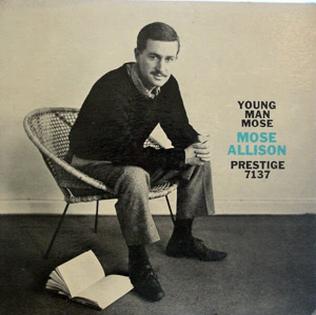
I had sort of remembered Creek Bank as being the third Mose Allison album for Prestige, creating a sort of Back Country Trilogy of what would later be called concept albums, and would suddenly be thought of as a daring innovation in music when 60s rockers made them. But there were a couple of albums in between, and in fact there was a fourth concept album, The Transfigutration of Hiram Brown. But that was a little different in that Hiram Brown leaves the back country and comes to his city home. And it was on Columbia, which meant that the cover art was markedly different, so it felt different.

My first thought was that maybe Prestige didn't exactly know what to do with Allison. Why suddenly come out with an album of standards and sort-of-standards, with only one Allison original? But I think they did know what to do with him, and his Prestige years are an important part of his legacy. Young Man Mose shows off his roots as much as Back Country Suite does, but a different set of roots. This is the Mose Allison who came to his city home in New York, the serious jazz musician, influenced by Bud Powell and George Wallington, who played gigs with Stan Getz, Gerry Mulligan and Phil Woods, recorded with Al Cohn and Zoot Sims.

For all the different musical emphasis, Young Man Mose follows a pattern set out in his first two albums: a bunch of piano trio instrumentals, a couple of vocals, and one cut featuring him on trumpet. As his recording career went on, he would lose the trumpet, start featuring more vocals, and develop a reputation as one of the important songwriters of his era, combining witty, sophisticated lyrics with his rootsy piano and vocal style -- a sort of funky Dave Frishberg. He was already becoming known as a songwriter from his first two albums, but those songs--"Blues" and "Parchman Farm" were both blues, and didn't even really hint at the range he would develop.

So what about these songs? I started, in a recent entry on Gene Ammons, musing about the body of material that in literature is known as the canon, and in popular music has come to be called The Great American Songbook, and which was mostly being kept alive by jazz musicians during the 50s.. In the top forty radio era, otherwise known as the rock 'n roll era, certain artists and songs came to be pigeonholed as "one-hit wonders," and there was always a derogatory edge to this, though there shouldn't have been. If someone produces one memorable song, that's one more than most of us will ever do.

But there are one-hit wonders in the Great American Songbook, too. Those songs weren't all written by Gershwin and Kern and Porter. Allison touches on a few of them here.

"Somebody Else Is Taking My Place" was a trio effort: bandleader Russ Morgan, who contributed to one other notable song ("You're Nobody Till Somebody Loves You"), and (Bob Ellsworth  and Richard Howard, who had none, unless you count Howard's "Shut the Door, They're Coming Through the Window."

Fred Hamm was a cornet player who took over the leadership of the Edgar Benson Orchestra, and neither Hamm nor Benson is much remembered today, though the Benson Orchestra did hire the young Frankie Trumbauer and Gene Krupa. Hamm and three bandmates wrote "Bye Bye Blues," which is remembered.

"I Told Ya I Loved Ya, Now Get Out" isn't exactly a standard, but it's had a few covers, and was written by three Jimmy Dorsey orchestramates, one of whom was Herb Ellis. "I Hadn't Anyone Till You" is by Ray Noble, probably mostly remembered as a radio bandleader, but his contribution to the GASB is not negligible: it also includes "Cherokee" and "The Very Thought of You."

Ellington, the Gershwins and Richard Whiting represent the Olympians. The GASB is circumscribed by time: the 20s, 30s and 40s. Ray Charles falls outside its purview, and not many progressive jazz musicians would have added him to the canon in 1958, but time has shown that he's second to none in importance. Good call by Mose to include him.

If I'm going to choose a favorite on this album, I guess it'll be Messrs. Morgan, Ellsworth and Howard. It's not the best song on the album, but I love what Mose does with it.

"Don't Get Around Much Any More" was issued as a single, on the flip side of the iconic "Parchman Farm," and it was also tapped for double duty on LP when Prestige put together a compilation album of Mose's vocals, titled, appropriately enough, Mose Allison Sings.

Listening to Prestige Vol. 2, 1954-1956 is very close to release. Order your advance copy from tad@tadrichards.com


Tuesday, May 09, 2017

Listening to Prestige 258: Mose Allison

All it took was Back Country Suite to get me hooked on Mose Allison. I bought all his subsequent Prestige albums as soon as they were released, and most of his later albums, on Columbia, Atlantic and Blue Note.

So many jazz greats got their first break with Prestige, then moved on to other labels. Miles, Monk, MJQ, Sonny Rollins, Billy Taylor, just to name a few. Of course, one of the main reasons for moving from a small label to a bigger one is money. Another is creative differences and career management--Monk moved from Blue Note to Prestige to Riverside, all small labels, and stayed with Riverside for years. But money doesn't come easily to jazz musicians, and it never came easily to musicians who recorded for Prestige. I recall reading an interview with Allison some years ago, in which he said that he'd never seen a royalty from Prestige for Back Country Suite. But apparently this was not a rare experience for Mose. In a 1998 interview with Blues Access Magazine, he says that he never got royalties from any of his labels, meaning Columbia and then Atlantic, which in 1962 was an independent on the verge of becoming a major. Allison remembers the first real money he ever made from a recording:

I got a check in the mail from Jazz Editions for $7000. I thought, ‘Man, what the hell is this? This must be some mistake.’ I’d been gettin’ 20 dollars and 30 dollars, and I couldn’t figure out what had happened. I didn’t know anything about ’em [the Who]... the first time I ever made any money off a record.
 The Who had recorded Allison's vocal vignette from Back Country Suite on their album Live at Leeds as "Young Man Blues." Jazz Editions was George Wallington's publishing company, and yet another source for money that did not come to Allison. Most musicians didn't really understand the concept of publishing rights in the 50s, which is why so many of the early rhythm and blues, rock and roll and doo wop performers, as well as jazz musicians,  found that most of their money wound up in the pockets of whoever had taken the publishing rights to their songs. But Wallingford did bring Allison to Prestige, and got his career started.

Local Color was sort of like Back Country Suite, a series of pieces by Allison that reflected his own unique perspective on the blues. Back Country Suite had been short interconnected vignettes, in part inspired by
Bela Bartok. At LSU I heard him for the first time, one of his things, the piano suite, "Hungarian Sketches," or somethin’, just a piano playin’ fairly simple tunes. But they were so evocative. That gave me the idea. I said, "Well, hell, I can do that. With my background, the music I grew up with, I ought to be able to come up with somethin’ like that."
 The Local Color tunes have the same quality, but they're worked out at full length, as opposed to the vignettes of the first album. And again, the second side of the album is given over mostly to the work of other composers. There's a traditional blues credited to New Orleans musician Richard M. Jones, and songs by Percy Mayfield, Bennie Benjamin/George David Weiss, and Duke Ellington.

The blues is "Trouble in Mind," and Allison plays trumpet on it. He would record a few more trumpet pieces on subsequent albums, but eventually, as he became more and more a singer, it dropped out of his repertoire. I'm not qualified to discuss the technical merits of Mose's trumpet playing. It sounds good to me. And it sounds very much of a piece with his piano and voice.

A while back, I was teaching a course in public speaking at a New York State prison, and one of my students, who I'll call M____, was extraordinary. I had a lot of good students, but M____ had a naturally academic mind. In another, perhaps fairer world, he would have been getting a Ph.D. someplace. When he gave his last speech of the semester, I told him there was nothing I could offer in the way of criticism: subject matter, research, development of argument, delivery. Just one thing, perhaps: maybe it's time you paid attention to conventional subject-verb agreement, and got away from formulations like "he say" and "he be." That sparked a discussion, with good and thoughtful points being made on both sides. At one point, another student in the class said "I want to hear the real M____, not M_____ the intellectual." I said, "I have to disagree with you. I think M_____ the intellectual is the real M_____."

And so with Mose Allison. His trumpet, his piano, his voice -- all carried the down home authenticity of his background in rural Mississippi and the literate sophistication of his degree in English from LSU. That was Mose, and that was Mose. And there was no contradiction.

"Lost Mind" is one of the two vocal performances on the album, and it's the recording that turned me on to Percy Mayfield, known as "The Poet of the Blues." I had heard and loved "Please Send Me Someone to Love," but it was Allison's version of "Lost Mind" that really made me focus on Mayfield, who, according to Specialty Records head Art Rupe, could have been, with the right encouragement, another Langston Hughes.

"Lost Mind" is great, but it was the other vocal, Allison's own "Parchman Farm," that made his reputation as a singer and songwriter. "Blues" (later known as "Young Man Blues") from the first album had been a vignette from the suite, but "Parchman Farm" was full length, fully realized, and ready to me marketed on 45 RPM. Which it was, twice. Once with Duke Ellington's "Don't Get Around Much Anymore (from Young Man Mose) and once with Willie Dixon's The Seventh Son. It became his most popular song, although he eventually stopped doing it, perhaps because it was criticized for being politically incorrect (although on those grounds you'd have to throw out at least three quarters of the blues), perhaps because it just stopped seeming relevant. From an interview in Nine-O-One Network Magazine, quoted in Wikipedia:

I don't do the cotton sack songs much anymore ["One Room Country Shack" also features one]. You go to the Mississippi Delta and there are no cotton sacks. It's all machines and chemicals.


The vocals are so good that sometimes people forget that Mose was first a jazz piano player, discovered and encouraged by Al Cohn and George Wallington. So I've put up one of the instrumental pieces from Local Color as my listening choice for today.


Order Listening to Prestige, Vol. 1 here.

Tuesday, February 14, 2017

Listening to Prestige 244: Prestige Jazz Quartet

There are many things that can be said about this meeting of four minds, but let's start with asserting that it's a composer's album. This should be stated at the outset, because it's important, and its importance is one of the reasons why I continue to believe that looking at the history of jazz in the 1950s through the lens of one label is worth the undertaking.

So let's start with the jazz figures who made a major contribution not just to jazz, but to composed music of the 20th century. You know the names. Duke Ellington, of course, heads the list--the same Duke Ellington who was not awarded the Pulitzer Prize for Music in 1965 by a pusillanimous committee that knew he deserved it but didn't dare nominate him. Instead, they recommended a "special citation," which the Pulitzer Board, having the courage of its racism and cultural snobbery, rejected.

The composers who did win Pulitzers in those days were people like Gian Carlo Menotti, Elliot Carter, Samuel Barber, Walter Piston--names that even I'm familiar with. And people like Ernst Toch, Norman Dello Joio, John La Montaine, names that mean nothing to me, but I'm sure they mean something to people who really follow contemporary classical music. What''s more, I'm sure they cared passionately about the music they were making, and they were creating work of value.

So, never having met a digression I didn't like, I looked up John La Montaine, and I'm now a fan. For one thing, he took and passed the New York State licensing exam to become a stockbroker, theorizing, "what can I do that will make me the most amount of money in the least amount of time, so I can stop earning money and just write music?" For another, he never did become a stockbroker.

For another, his music is beautiful. I listened to his piano concerto No. 9, and couldn't help thinking how much he, Teddy Charles and Mal Waldron would have enjoyed each other's company.

And so it goes. John La Montaine is not necessarily a household name even to people who know who Samuel Barber was, and just because jazz listeners of today can name Duke Ellington and Thelonious Monk as major jazz composers, there's no guarantee that they'll come up with Mal Waldron or Teddy Charles.

Anybody who's read any of this blog knows how I feel about both of these guys, particularly Mal Waldron. These are major composers. That they are not more widely recognized as such can probaby be attributed to the reality that no one cares about jazz composers. Jazz...oh, yeah. It's that music where guys improvise on a bunch of show tunes. Or else they make up a riff and improvise on that. Or on the blues, and the blues is the blues, right?

Well, this is a recording session featuring the compositions of two of the principals and one of the acknowledged masters of twentieth century composition, and for all that you want to listen to the playing, and the improvisation, and the immediate creativity that jazz offers, you have to listen to what these guys wrote.

"Friday the Thirteenth" was a spur-of-the-moment, in-studio composition for a 1953 Prestige session featuring Thelonious Monk and Sonny Rollins, and it took its title from the day of the session, one of the Prestige Fridays With Rudy. That kind of spur-of-the-moment work can be a one-off: good for the date, but then you go on to other things. Or, if the composer is Monk, maybe there's more to it, and it doesn't just get forgotten. Teddy Charles picked it up for this session four years later, and in 1959, it was one of the compositions that Monk and Hall Overton developed for Monk's orchestral concert at Town Hall. What strikes me most, listening to the Charles/Waldron version, is how close Waldron sticks to the melody, which fits right in with Monk's classic advice to musicians, as strange and original and insightful as Monk's own music. Here's a selection from that handwritten list of instructions:
PAT YOUR FOOT & SING THE MELODY IN YOUR HEAD, WHEN YOU PLAY.
STOP PLAYING ALL THOSE WEIRD NOTES (THAT BULLSHIT), PLAY THE MELODY!
And one more:
DON’T PLAY THE PIANO PART, I’M PLAYING THAT. DON’T LISTEN TO ME. I’M SUPPOSED TO BE ACCOMPANYING YOU!
Chances are, Charles and Waldron never saw Monk's instructions, but they're spot on anyway. Waldron is with the melody all the time (and he's playing the piano part); Charles is always aware of it, which doesn't mean he's playing it. He's probably listening to it, but not in the limiting way Monk warns against.

Neither of Waldron's compositions have been picked up by other performers, but Waldron wrote so much (he's credited with over 400 compositions) that anyone looking to showcase his work as a composer would have a lot to choose from (and someone should, in the way that Philly Joe Jones created an ensemble to play the works of Tadd Dameron). Thom Jurek, in his perceptive review of the album at AllMusic.com, cites the "odd meters and drastic melodic interventions" of the two Waldron compositions.

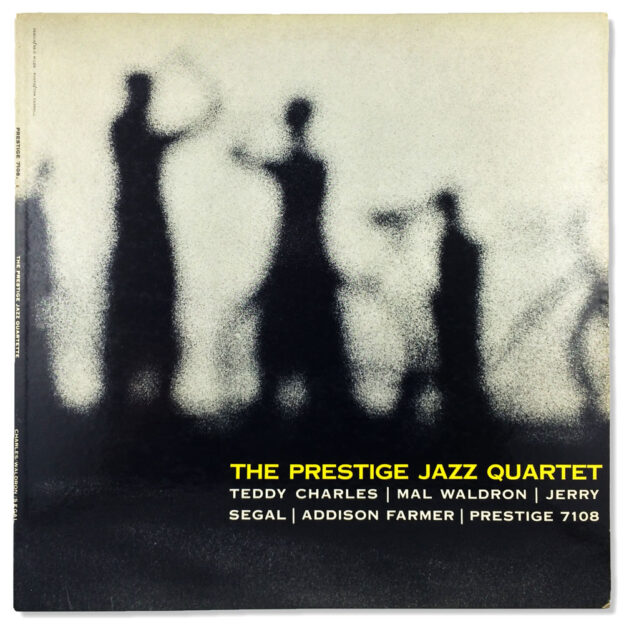
But "Dear Elaine" and "Meta-Waltz" were written with this quartet in mind, and this quartet was a very particular one. You can't say that the instrumentation hadn't been tried before -- piano, bass, drums, vibes, making up the (something) Jazz Quartet -- where have we heard that before? But that was a large part of the point--to go where the MJQ had not gone.

Jurek referenced Ira Gitler's liner notes to the album,
 while the players in the PJQ are as influenced by classical music as the MJQ, they are interested "in the more contemporary developments...with more regard to devices and spirit than actual form." Sure, but what he is really saying is that these cats are pure jazz players who understand the understated dynamic of the MJQ and can make it just as seamless, just as smooth, just as adventurous, and still make it swing like hell. 
He went on to say that Waldron
may indeed have had ideas of the piano pieces of Webern in his head when he was
composing, but it's more likely he was thinking of Art Tatum and Bud Powell. 
It is, for whatever reason, hard to talk about contemporary composed music without talking about classical composers. Even I did it, which may undercut my argument about composers in the jazz realm being judged on their own merits, but I hope not. They should be.

Teddy Charles's "Take Three Parts Jazz" is a particularly ambitious piece, a three part suite measuring fourteen and a half minutes. It's been recorded by others, including Booker Ervin and the Australian Jazz Quartet, and parts of it have held up when recorded separately. John Coltrane recorded "Route 4," the first movement. The second, "Lyriste," was done by the Prestige All Stars group led by Curtis Fuller and Hampton Hawes.

The group made a second trip to the studio to cut "Meta-Waltz," but all were included on the self-titled LP. 


 Order Listening to Prestige, Vol. 1 here.