Showing posts with label Julian Euell. Show all posts

Wednesday, January 30, 2019

Listening to Prestige 376: Little Brother Montgomery

Where were the blues in 1960? The country blues artists who had recorded in the 1920s and to a lesser extent the 1930s were pretty much forgotten. That would change when Columbia Records gathered some of Robert Johnson's 1936-37 recordings in 1961, and a new audience began to take an interest. Charley Patton's recordings were first issued on LP by the tiny Origin Jazz Library record label, but the larger independent Yazoo Records didn't pick him up till 1967. Virtually the only way to hear any of these legends-to-be, at this point nearly forgotten old time bluesmen, was on 78 RPM records, if you could find them.

Harry Smith's seminal 6-LP collection, Anthology of American Folk Music, came out in 1952, and was an important spur to the folk music revival of the 1950s. Most of it was given to the folk music made by whites in Appalachia and other rural settings, but there were some blues as well: Charley Patton, Furry Lewis, Jim Jackson, Blind Willie Johnson, Blind Lemon Jefferson, Sleepy John Estes and a couple of others.

Samuel Charters' now-classic study, The Country Blues, was published in 1959, but there were few ways to  hear very much country blues. Folkways put out an LP companion to Charters' book.

Son House, who had played with Patton and was still alive, would not be rediscovered until 1964, although he wasn't hard to find. He was living in Rochester, New York, and he was re-introduced to the new and still tiny audience for traditional blues in coffee houses and at festivals --folk festivals. There were no blues festivals until the Ann Arbor Blues Festival in 1969 (at which Son House was one of the performers).

Folkways recorded a few blues singers: Lead Belly, Big Bill Broonzy, Sonny Terry and Brownie McGhee--the ones who had migrated to New York. Urban leftists had adopted folk music as a people's music, and the blues to a lesser extent. The problem with the blues was that it was rarely a music of political protest. The blues was a music of intense realism--life was hard, and it was going to stay that way. Triumphs--sexual conquest, getting drunk, killing a rival--were fleeting. The leftists wanted to believe that the world could be changed and made a better place. Lead Belly did what people who sing for their supper had always done. He adapted. He started writing songs about not wanting to be mistreated by no bourgeoisie. But musicians already in their graves, like Patton and Jefferson and Johnson, would be writing no new songs.

The blues singers who had migrated to the Midwest, to Chicago and Detroit, were creating a new kind of blues, and a few performers like Chuck Berry, Little Richard and Fats Domino were finding ways to take that music to a larger audience, but of course no one called that the blues any more.

The white imitators of traditional bluesmen, like John Hammond Jr. and Koerner, Ray and Glover, were still a couple of years out on the horizon, and the white imitators of Chicago blues, mostly from Britain, were a couple of years behind them.

So what this adds up to is very little demand for a Little Brother Montgomery album, as seems to have been the case with so many of the Bluesville releases. Columbia Records may have thought they were in the vanguard of a new craze when they released King of the Delta Blues Singers, the first Robert Johnson compilation. The title suggests it, and Columbia's big-budget promotion department suggests it. But Weinstock probably had no such grand notions. To whatever extent he was motivated to start Bluesville and Swingville by bookkeeping and tax considerations, he seems to have really wanted to get some interesting blues out there, with the Prestige touch.

The Prestige touch was engineering by Rudy Van Gelder, and often some very fine contemporary jazz musicians, as was the case here, with Julian Euell on bass.

The very interesting blues musician was Little Brother Montgomery. Born in 1906 in Louisiana, where Jelly Roll Morton was a family friend, he made his first record in 1930 for Paramount, itself an interesting story.

Paramount Records was founded in 1917 by a company in Wisconsin that made chairs, and had begun making wooden phonographs. Edison invented the phonograph in 1877, but he did not originally think of it as device for recording and playing music. Phonograph records did not come along until a number of years, which makes sense. You have to have the hardware before you worry about software. But since phonographs were originally marketed as upscale pieces of furniture, it makes sense that a furniture company should go into the record business, and that phonograph records were originally sold in furniture stores.

Montgomery recorded "Vicksburg Blues" for Paramount. It became his signature song. He continued to record sporadically through the 1930s, mostly for Bluebird.

Three things happened to the musicians of his generation. They died young, like Charley Patton and Robert Johnson. They dropped out, like Son House. Some of them, like House, were rediscovered during the blues craze of the 1960s, others never resurfaced. Or, like Little Brother Montgomery, they hung on. They moved north, to Chicago or Detroit or Los Angeles, or even places like Cincinnati, home of King Records. Not as many as you'd think to New York. They found places to play, mostly the new amplified blues that would eventually make stars out of Mississippi emigrants like Muddy Waters and Howlin' Wolf. Montgomery had a successful five-piece band at a Chicago club, the Club Hollywood, for twelve years.

Montgomery signed on in the 1950s with Ebony Records, a tiny independent and one of the few black-owned labels of the era. Ebony and a handful of other labels had been started in New York by J. Mayo Williams, composer of "Corinna Corinna" and "Fine Brown Frame," who would later move it to Chicago. Williams was one of the first to record Etta Jones, on his Chicago label (out of New York). He recorded a few sides throughout the 1950s with Ebony, but the label had almost no distribution. He also made some recordings with Sunnyland Slim.
But although he had stayed active, and stayed employed, he was pretty much an unknown when Prestige signed him up for this recording, with Euell on bass and Lafayette Thomas, a West Coast guitar player (though he had recorded, with fellow Californian Jimmy McCracklin, for Chess) who was temporarily living and working in New York. Thomas had previously worked on the Memphis Slim session in April.

So although Little Brother Montgomery could be found, if one looked really hard, on 45 RPM records, and he would go on to make several more LPs for Folkways, this was an important recording, and an important step in the documentation of the blues. Frank Driggs, in his liner notes, says that Montgomery "has always refused to buckle under to the rock and roll, rhythm and blues trend" (displaying the anti-rhythm-and-blues bias that was so universal at the time in the jazz world), "despite many offers to take out rock and roll bands." Well, there were a lot of great rhythm and blues bands throughout the 1940s and 50s, but not too many who carried on that Leroy Carr tradition of piano blues.

This is a lovely selection of traditional blues, including a couple of his most tried and true numbers. He has sung "Vicksburg Blues" many times over four decades--hell, he's recorded it many times--and he's developed some nifty variations to the piano part. "No Special Rider" is another of his old favorites, and "Satellite Blues" applies some classic blues styling to a very contemporary subject. The Russians had beaten the USA to outer space in 1957 with Sputnik, and had sent a dog into outer space the same year (Muttnik). Sputnik II burned up before it could return to earth, and still today, with my little Sydney curled up beside me as I write this, I can't help but think of poor Laika, alone and doomed in that early spacecraft. In 1959, the USA sent up two monkeys and retrieved them alive, and it's those two monkeys that Montgomery asks to serve as his proxy, looking for his woman who has left him so utterly and completely that she must have gone into outer space. Montgomery pays tribute to Leroy Carr with an instrumental version of "How Long Blues," here called "How Long, Brother."

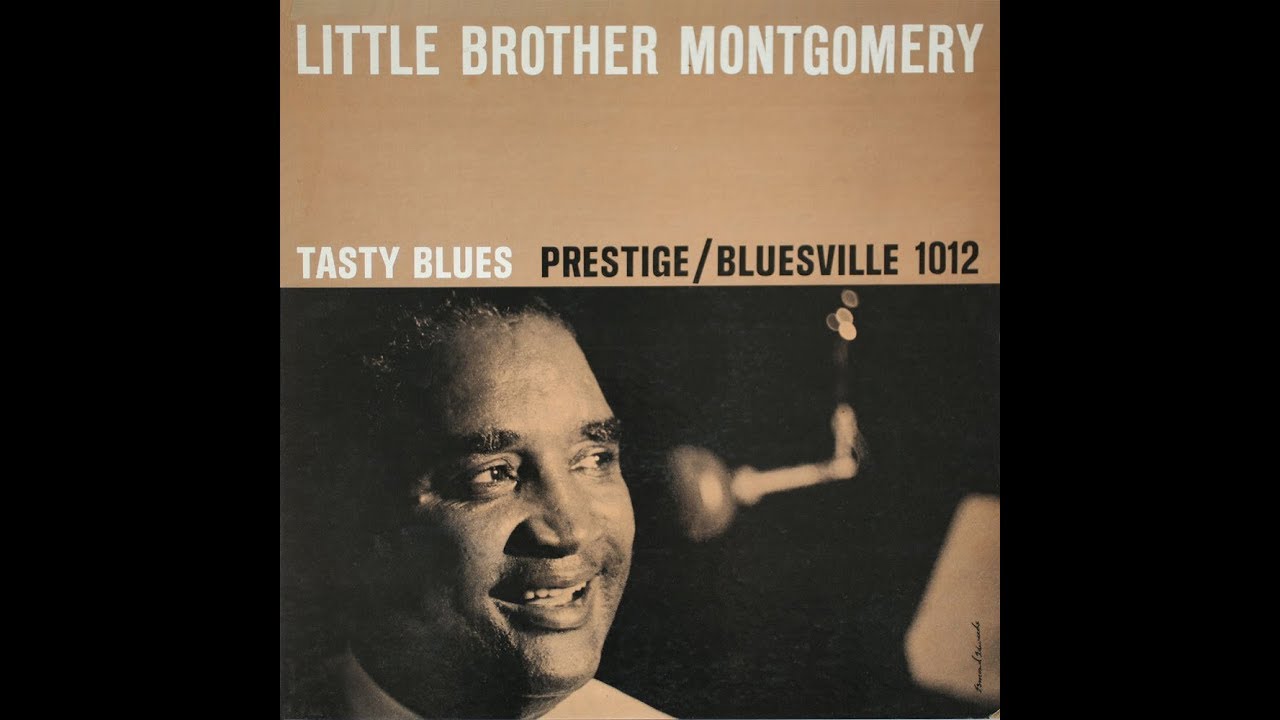
Bluesville released the album as Tasty Blues.


Listening to Prestige Vol. 3, 1957-58 is now available!


and also:

Listening to Prestige, Vol. 2, 1954-56


Listening to Prestige, Vol. 1 1949-53


Thursday, January 10, 2019

Listening to Prestige 371: Gigi Gryce

Two of the tunes on this Gigi Gryce album were written by Norman Mapp, a new name to me. His Wikipedia entry mostly quotes from his obituary, and most of what people have to say about him is what a great guy he was. This is standard fare for an obituary, of course, and maybe Gryce recorded two of his tunes out of friendship (or maybe Gryce has signed him to his back-owned, musician-friendly publishing company).

Or maybe the tunes were really that good. I listened to
Mapp's original of "Blues in Bloom" (with Clark Terry, Seldon Powell, Tommy Flanagan, George Duvivier, Dave Bailey) and I was impressed. More than impressed. I've added it to my 100 Songs for Driving playlist. Mapp has a voice reminiscent of Joe Williams and King Pleasure, but his songs are the real attraction. They're so fluid, the long looping lines and sudden changes of direction reminiscent of vocalese, but "Blues in Bloom" seems to be entirely a Mapp composition. It's no wonder that Gryce decided to record it. It's a wonder that it hasn't become a jazz
standard. Or that Mapp didn't become a star in the jazz world. I guess he was working the same side of the street as Joe Williams and Jon Hendricks. But surely there was room for one more.

That being said, Gigi Gryce does a wonderful job with "Blues in Bloom." He's working again with the group he's had together for the last few albums, and if there's something to be said for throwing guys together and letting them (see my Lem Winchester entry, just before this one), there's also a lot to be said for musicians working together and developing a rapport. I love the way Gryce and Richard Williams work together. And Richard Wyands--listening to the way three of them parcel out the head to the other Mapp composition, "Monday Through Sunday," is a treat. And they keep that closeness as they head into the improv and get farther out.

The Bryce compositions are excellent, not among his best known. "The Rat Race Blues" is a tour de force. If you think Wyands is playing fast on his first solo, wait'll you hear Gryce and Williams. And this isn't bebop fast; it's something different. It's rat race fast--bursting with nervous energy. "Boxer's Blues" is a lovely blues, at back to a more normal tempo.

The final cut, "Strange Feelin'," is by Sam Finch, about whom I could find nothing at all except a mention in a 1959 Billboard that Sam Finch is starting his own record label, Finch Records, and its first release would be a recording by Sam Finch. The search was complicated not only by the fact that there's a contemporary musician named Sam Finch, but there's also another label called Finch Records, started in Cincinnati in 1957, with quite a decent catalog of gospel music, and a handful of blues, including one by a Prestige alumnus, H-Bomb Ferguson. So maybe Sam ran into copyright problems and couldn't get his label off the ground.  Perhaps he was a publishing client of Gryce's. It's a decent tune, very mainstream bebop, and a satisfying listen.


Listening to Prestige Vol. 3, 1957-58 is now available!


and also:

Listening to Prestige, Vol. 2, 1954-56


Listening to Prestige, Vol. 1 1949-53


Sunday, December 02, 2018

Listening to Prestige 359; Gigi Gryce


This is the second of Gigi Gryce's three albums for Prestige, all with essentially the same group (Julian Euell replaces Reggie Workman on bass). Gryce clearly liked playing with these guys, and they are a classroom lesson in guys you haven't heard of, or have barely heard of, who never broke through to the top ranks.

It makes a difference if you can get your name attached to an album as leader, and Richard Williams only managed that once, on the Candid label.
Candid might have been a successful small jazz label. It was started recording exec Archie Bleyer, who had a good thing going with Cadence Records, and he got Nat Hentoff to run it. Williams brought in Gryce-mates Richard Wyands and Reggie Workman, and Hentoff himself produced the session, but in spite of being recorded at the Nola Penthouse Studio on the top floor of the Steinway building, the record never got off the ground, and Wiliams was never able to repeat it. He continued work regularly, most often with Charles Mingus and the Thad Jones-Mel Lewis big band, and his versatility not only got him work in Broadway pit bands, but on some classical recordings. He gives a good accounting of himself here, especially on the Gryce composition, "Minority."

Richard Wyands was another who worked regularly, including a ten-year stint with Kenny Burrell, but also managed to stay under the radar of public acclaim.He was originally a Californian, born and rised in Oakland, where he got his firat musical experience, and his first major expoaure as the intermission pianist at San Francisco's Black Hawk club. He recalled, in an interview with Ted Panken in 2000, learning from the great pianists like Art Tatum who played the Black Hawk:
He told me, “You can’t compete with me anyhow, but keep it up.”  He encouraged me a lot.  No one can compete with him, no one in the world!  But he was very nice about it.  In fact, he was glad I was there, because he would talk to me while he was playing.  I’d sit right up there by the piano and he knew I was sitting there, even though he couldn’t see too well at that time, and he would tell me what he was doing and what key he was going into.  But when he came off the bandstand, I had to get on, so we really didn’t have much time to talk in between — not really.  But just sitting there watching him was quite an experience.
Leaving California for New York, he played some gigs and got a few recordings before hooking up with Gryce, a time he remembers fondly:
Somehow I met Gigi Gryce, and he was organizing a band along with Reggie Workman, Richard Williams and Mickey Roker.  We rehearsed and we worked at the old Five Spot, different places in Brooklyn... the group with Gigi was a great group.  I really loved it.  We had so much fun.  It was a happy group.  Extremely happy.  I’d never been in a group like that before ever, anywhere, where everything was just so happy and musical.  Happy musically and otherwise.  Everybody got along with each other, there was no arguing and fighting, no egos.  One of the best groups I ever worked with.  Then Gigi disappeared from the scene and we were all on our own.  So I just freelanced around New York.
There are only two Gryce originals on this session. The others are familiar standards, and one odd duck: the old folk song, "Frankie and Johnny." This is not usual fare for a modern jazz group, though we have seen it before, with Gil Evans and "Ella Speed." They have some fun with this one, starting out playing the melody in almost a honky tonk style, then opening up with the improvisations.

The Gryce originals are "Nica's Tempo," one of the many tributes the jazz baroness who nurtured Charlie Parker and Thelonious Monk, a nice tune that's still played and recorded, and "Minority," one of Gryce's most famous compositions. This session was his third recording of it, and there have been close to 200 others, including landmark versions by Cannonball Adderley and Bill Evans that preceded this one.

Esmond Edwards produced. The Hap'nin's was released on New Jazz.

Tuesday, August 15, 2017

Listening to Prestige 265: Mal Waldron

It's hard to say how many compositions came from the imagination of Mal Waldron, but they certainly numbered in the hundreds. Any session that hired Waldron as pianist was more than likely to want one or more original compositions from him, and he wrote most of the material on the albums he recorded as leader. If you're that prolific, one of two things is likely to happen. You're going to start repeating yourself -- not necessarily bad thing, if you're finding new ways to do things you've done before. Or you're going to keep finding new ground.

Waldron wasn't one to stay still. He had a wide range of passions and influences. He was still part of that generation, slipping away as the 50s played themselves out, that got its start in rhythm and blues. He was a lover of classical music, and recorded several pieces by classical and modernist composers. He worked with beboppers and the avant garde, and he was Billie Holiday's accompanist during the last two years of her life. And he brought all of that experience, and his own restless genius, to bear on his work as a composer.

When one starts to categorize music, one immediately runs into the futility of categorizing music. A jazz recording session in 1957-58: is it bop? Hard bop? Cool? Neo-swing? Third stream? The lion lies down with lamb, Mulligan meets Monk, and Dizzy Gillespie plays a duet with Louis Armstrong. And that's just jazz. What do we call that other music that was composed earlier in the 20th century by Charles Ives and Aaron Copland, later on by John Cage and Philip Glass and LaMonte Young? Contemporary classical music? That's not only moronic, it's oxymoronic. What else? Composed music? Duke Ellington composed his music, and so did film scorers from Korngold to Elmer Bernstein, not to mention Leonard Bernstein. Cage and Glass were avant garde, but so was Ives in his day, and nobody stays avant garde. So we're probably stuck with contemporary classical music.

And how is that different from what Mal Waldron is doing in this early 1958 session? It must be jazz,
because it's got that swing without which, the Duke tells us, it don't mean a thing? Elvin Jones, on drums, had that swing, and Waldron was already teamed up with Billie Holiday, who out of the era for which Swing was the name, not just a characteristic. But listen to the beginning of "Tension." The number will move into jazz improvisation, with great solos by Art Farmer and Eric Dixon, but the opening section -- I'm not even sure you'd call it a head -- has a lot of the tonality and feeling that we associate with what we call classical, oxy and moronic though we may be, and not just in what Waldron and Farmer and Dixon are doing -- Jones is very much a part of that stance.

"Ollie's Caravan" has a head that's very much in the bop tradition--and an arresting melody--but then it goes different places. Putting a caravan in the title can't help but make one think of Duke Ellington and Juan Tizol, but while Eric Dixon's flute solos have an Eastern tinge, they make one think of Yusef Lateef's experiments more than "Caravan." And all the above ingredients come together again in "The Cattin' Toddler" -- a striking drum intro by Jones, a catchy riff head, Eastern-tinged flute by Dixon, plus a wonderful extended solo by Farmer and the kind of work one expects of Waldron in improvising off one of his own compositions--which is to say, something completely unexpected.

"Portrait of a Young Mother" provides a space for a wordless vocal by Waldron's wife Elaine, although the piece is by no means a song, or even primarily a vehicle for voice. At ten minutes long, it gives room for solos by everyone, including a wonderful pizzicato cello by Caio Scott. This and "The Cattin' Toddler" suggest a devotion to family life that Waldron, sadly, was not able to entirely sustain. In 1963, a heroin overdose led to a major breakdown that finally responded to shock treatments and a spinal tap. His marriage to Elaine did not last. But perhaps there was a happy ending after all, for which I am very glad. These folks give so much to us, it's good to know when they get some happiness back. Mal and Elaine had two children. He had five more with his second wife, and in 1995, to celebrate his 70th birthday, he took both wives, all seven children, and two grandchildren with him on a three week tour of Japan.

These were released on New Jazz as Mal/3 -- Sounds.


Listening to Prestige Vol. 2, 1954-1956 is very close to release. Order your advance copy from tad@tadrichards.com


Sunday, January 29, 2017

Listening to Prestige 238: John Coltrane - Paul Quinichette

In general, I try not to look ahead, but to consider one recording session at a time. This isn't exactly a rule, but it's a general preference, and in this case, it's one that I held to. In my last blog entry, on the Mal Waldron sextet with John Coltrane, I wondered if one could chart the seeds of progress toward the revolutionary changes to come -- Giant Steps, My Favorite Things, A Love Supreme, Ascension. And now, in the very next session, or perhaps a continuation of the same session, since they happened on the same day, Trane is paired with swing giant and Lester Young acolyte Paul Quinichette.

So--is Coltrane moving on a steady course toward a more advanced, avant-garde approach to music? Or how about this for an alternate question -- did Trane ever care about that? In 1961, during his Impulse years, when we was making his most advanced music, he recorded an album of ballads, and two years later, in 1963, he collaborated with Billy Eckstine acolyte Johnny Hartman on another album of standards. Coltrane was one of the most important developers of modal jazz, the definitive break from the improvisation around chord changes that was the hallmark of bebop, but his best known modal album--probably his most popular album of all time--was built around one of schmaltz kings Rodgers and Hammerstein's schmaltziest songs. and if he didn't exactly deliver it in a brown paper package tied up with string, he certainly knew that was where it came from.

In other words, Coltrane moved wherever the spirit moved him, and if it moved him to find a groove with the Vice Pres, that's what he was going to do. And there's no star heirarchy in this session. It's two cats blowing together, and finding that groove, and sharing the experience. Neither of them concede anything stylistically, and neither of them has to--Coltrane with a hard-edged, driving sound, and Quinichette sweeter and gentler. It really does give you a sense of what it would have been like if Trane and Lester Young had ever played together, especially on "Cattin'."

Again, Mal Waldron is called upon to supply most of the music here, with four originals and some wonderful solos--again, especially on "Cattin'."

I should, if I haven't recently, stop and give credit to the anonymous scholars who have created so many Wikipedia pages for individual albums. That's where I get most of my information on composer credits for jazz originals, hard to come by anywhere else on the web.

All the tunes from this session except "Tea for Two" came out on album called Cattin' with Coltrane and Quinichette, which for some reason was delayed a couple of years before release. "Tea for Two," where Quinichette takes the lead, eventually surfaced on the Body and Soul compilation album on Status that seems to have handled a lot of the overflow from other sessions.


 Order Listening to Prestige, Vol. 1 here.

Friday, January 27, 2017

Listening to Prestige 237: Mal Waldron

This is the second of two sessions featuring Mal Waldron and a sextet, with basically the same instrumentation but different players. Idrees Sulieman and Sahib Shihab replace Bill Hardman and Jackie McLean, with Shihab doubling on baritone sax.

One of my real joys in the recent era of Prestige releases has been a rediscovery of Mal Waldron. I knew him as a pianist, but I hadn't realized the extent of his contributions as a composer. Virtually every Prestige album he's appeared on has featured at least one of his compositions, generally more, and they've all been striking.

Interestingly, of the three tunes on this session, only one is his. The other two are standards by outstanding composers: Jerome Kern ("The Way You Look Tonight") and Cole Porter ("From This Moment On"). So he wasn't afraid to match himself up against the best. Nor would he need to. All three of these cuts are stellar.

At this point, any Prestige session involving John Coltrane is as important in the history of John Coltrane as it is in the history of Prestige records -- and there will still be a few more. Coltrane left Prestige for Atlantic in 1960, and recorded the groundbreaking Giant Steps. That album, Miles Davis's Kind of Blue, and Ornette Coleman's first albums changed jazz.

And as Giant Steps was a break from jazz past, it was
a break from Coltrane past. So these 1956-59 albums are important because they show the development of one of the most important talents in jazz, as he distinguished himself from the rest while still working within the context of the jazz of that era, whether you call it hard bop or anything else. Can we hear the seeds of the change to come? I'm not good enough to answer that. I know that when I first heard Giant Steps, it sounded like nothing else I'd ever heard.

Meanwhile, here's Coltrane with two other fine horn players, and I love what they do together, especially Coltrane and Sulieman. And with Mal Waldron. If it's a couple of steps short of Giant Steps, it's still important music, and it's an important part of the Mal Waldron story.

The three cuts from this session became part of Mal-2, issued under Waldron's name. They were never specifically rereleased under Coltrane's name, as were a lot of the Prestige sessions Trane took part in,


 Order Listening to Prestige, Vol. 1 here.

Friday, December 30, 2016

Listing to Prestige 225: Mal Waldron

We're really getting into the Coltrane era at Prestige now. As with Miles, Bob Weinstock seems to have wanted to present Trane in a variety of settings, which is good. Unlike the Miles recordings, however, the Trane sessions did not necessarily present him as the heavy hitter of whatever group had been gathered.

Here's a quick rundown of his post-Miles oeuvre with Prestige, up to this current session.

  • Elmo Hope All Star Sextet, May 7, 1956. This was actually issued two different ways, at the same time and with the same catalog number, but with two different covers and two different billings: as Elmo Hope - Informal Jazz and as Hank Mobley/John Coltrane - Two Tenors. He would finally get top billing in a 1969 re-release: John Coltrane - 2 Tenors With Hank Mobley. Wikipedia's entry on the 1969 release comments: "As Coltrane's fame grew during the 1960s long after he had stopped recording for the label, Prestige assembled varied recordings, often those where Coltrane had been merely a sideman, and reissued them as a new album with Coltrane's name prominently displayed." But "merely a sideman" only describes the billing on the album cover. In a quintet or sextet album of jazz masters, there's no merely. Everyone contributes.
  • Sonny Rollins Quartet With John Coltrane, May 24, 1956. Trane gets featured billing on the session notes, not on the album cover. There it's Sonny Rollins - Tenor Madness, and on the reissue, Sonny Rollins - Taking Care of Business. But there's a reason for this. The title cut, "Tenor Madness," is an epic duet -- the only one between these two tenor legends. But it's also Coltrane's only cut on the session.
  • The Prestige All Stars, September 7, 1956. I don't think any of the Prestige All Stars sessions were actually packaged as "Prestige All Stars." Generally, the album cover had the whole cast, sometimes omitting the rhythm section, with each musician getting equal billing. Such was the case here. This was two of the original Four Brothers, Al Cohn and Zoot Sims, with two new brothers, Coltrane and Hank Mobley. The album was titled Tenor Conclave, and listed the brothers (Mobley - Cohn - Coltrane - Sims) on the cover. The order isn't alphabetical, and it isn't by seniority. Maybe they just flipped a coin. Two later reissues were under Coltrane's name, the first keeping Tenor Conclave and the second including a Tadd Dameron session and titled On a Misty Night.
  • Tadd Dameron Quartet, November 30, 1956. Booked as a Dameron session. there was co-billing on the album cover: Tadd Dameron/John Coltrane - Mating Call. It would be rereleased as On a Misty Night, under Trane's name alone, and the "On a Misty Night" track would also be put on another Trane repackage, John Coltrane Plays For Lovers --misnamed, if you ask Tom Cruise. In Jerry Maguire, Cruise's friend gives him a Miles Davis and John Coltrane tape to play during lovemaking, but when the moment comes, Cruise listens to a few bars, says "What is this shit?" and throws it out.
  • The Prestige All Stars, March 22, 1957. Released as Interplay For 2 Trumpets And 2 Tenors, with the usual equal billing for all musicians. The two trumpets were Idrees Sulieman and Webster Young, the two tenors were Trane and Bobby Jaspar. This was reissued as Jazz Interplay, but never got a reisssue under Coltrane's name. 
  • Art Taylor's All Stars. March 22, 1957. One cut, from the same date, this one a quartet with Taylor, Coltrane, Red Garland and Paul Chambers, for inclusion on a different Taylor session that didn't quite fill out an album.
  • The Prestige All Stars, April, 1957. Just the day before the current session, and released as Tommy Flanagan / John Coltrane / Kenny Burrell.
Up to this point, no sessions with Coltrane as leader, although that will come, and a marvelous potpourri of musicians.

I basically approve of the democratic approach to billing on the All Stars sessions, and as stated above, I take issue with the Wiki writer's "merely a sideman." None of the were merely anything. And I suspect this is an echo of the condescension contemporary writers show toward Prestige -- in a addition to sloppy and unrehearsed, Weinstock's label is also put down for the frequency of its repackagings. You know how I feel about all of these criticisms. The hell with them.

And speaking of marvelous potpourris, the tune that Mal Waldron wrote for an earlier session with Thad Jones, Frank Wess and Teddy Charles makes its reappearance here.

"Potpourri" is pure bebop, and surely one of the reasons why bebop retains its vitality well into the 1950s is the emergence of composers like Waldron,

The other Waldron originals: "J. M.'s Dream Doll," and that must have been some dream, or some doll. Some great solos here, but Waldron's is really outstanding. And "Blue Calypso." Remember the
mambo bebop craze of a couple of years back, with Joe Holiday and Billy Taylor as its champions, but also contributions from James Moody, Sonny Rollins, Sonny Stitt, Kenny Graham (mambo bebop from England!). Well, it turns out you can do it with calypso, too. Sonnny Rollins, from island-born parents, would make calypso his own, but here in 1957, with Harry Belafonte topping the charts with one of the most popular albums of all time, Waldron, Coltrane et al. show how its rhythms can be assimilated into the language of bop.

"Don't Explain" was written by Billie Holiday and her frequent collaborator Arthur Herzog, Jr., and covering a song associated with Billie inevitably means finding a correlative to the intensity of feeling that she put into everything. "Falling in Love with Love" is by Rodgers and Hart, and nothing Lorenz Hart wrote was entirely sentimental, but this song is often given a sentimental treatment by crooners. Not here.

"Potpourri," "J. M.'s Dream Doll" and "Don't Explain became part of Waldron's Mal-2 album, Mal-2, released in 1957. "Blue Calypso" and "Falling in Love With Love" had something of an odder fate. In spite of whatever sales potential a calypso may have had in 1957, both were left off and not released until 1964--and then only on the short-lived Prestige subsidiary Status, which was definitely a budget label, pressed on cheaper quality vinyl and marketed straight to the budget bins. That album, which put together outtakes from two Waldron sessions, was called The Dealers. The session was ultimately released under Coltrane's name in a much later CD box called Side Steps, a title which suggests "like Giant Steps but less important." Well, maybe so. Very few things touch Giant Steps. But great stuff nonetheless.


 Order Listening to Prestige, Vol. 1 here.

Saturday, July 09, 2016

Listening to Prestige 193: Mal Waldron

Being a jazz fan in the 1950s conferred a certain mantle of hip on one, and I say that unapologetically, and without fear of contradiction, since no one ever comments on this blog.

In that decade, probably in every decade, the hip stance was to be quiet about it, because too many people weren't. Norman Mailer, in 1957, explained how to be hip in excruciating detail in his essay "The White Negro." Mailer's main point was something like this: to be hip you (you, of course, being white) had to act like a Negro, and the quickest way to think and act like a Negro was to listen to jazz.

Leaving out the colonialist racism of the essay, he was also probably wrong about the shortcut. As Nelson George points out in his classic book, The Death of Rhythm and Blues, the average African American was more likely to be listening to rhythm and blues. (I won't get into a discussion of the contemporary misappropriation of "hipster" and "R&B.")

Allen Ginsberg, in 1956, wrote of angelheaded hipsters who hung out in the supernatural darkness of cold-water flats and contemplated jazz. Ginsberg used jazz more as a metaphor than anything else, and when the angelheaded hipsters gave way to acidheaded hippies he switched his allegiance to rock.

Herbert Gold, in a Playboy essay on the Beat Generation, advised me that if anyone were to come up to me at a party and say "Hey, man, you dig Bird? Zen? Proust?" the correct answer was an inscrutable "I'm hip." Alas, no one ever did, although years later, I was at a party where, I was told, I had just missed Neal Cassidy, who had split ten minutes earlier.

Someone else, or maybe it was Mailer or Gold again, wrote that if hip could be studied and learned, Robert Kennedy would study it and learn it. "But it can't."

Playboy, in those days, was setting itself up as the Bible for all those who thought that hip could be studied and learned...or learned without much studying, just by following Playboy's guide. "The magazine of sports cars and seduction," Mort Sahl labeled it. "The sports cars in front under 'science,' and the other...science fiction?"

Sports cars and Italian tailoring and...jazz. And this isn't a putdown of Playboy or its readers. They bought jazz records. And when Brubeck brought jazz to college, he opened up new audiences, and created new venues, even if those venues were't on the cutting edge of hip. When The Jazztet played SUNY New Paltz in 1965, my first year teaching there, I bought a ticket to the concert but was denied admission to it by the Greek organization that sponsored it, because I wasn't wearing a tie.

The Playboy reader knew about Miles Davis and Horace Silver and Stan Getz and Dave Brubeck, and the major label stalwarts like Stan Kenton and Errol Garner.

But he didn't know about Mal Waldron.

Mal Waldron, with the evocative, slightly sinister name, the New York vibes (born in NYC), the somewhat secretive personality (he switched from saxophone to piano because he didn't think he had the personality to be out front of a band), the attitude (the London Jazz Collector says that you won't find a Waldron album cover without a cigarette dangling from his lips (an exaggeration), and if that sounds uncool now, it didn't then).

 You'd really have to have been hip, in 1956, to bea Mal Waldron fan. And by "you," I don't mean me. I didn't even start listening to jazz until 1957.

And you would have needed to be hip enough to recognize rhythm and blues as a first cousin to bop, which I might have done. I was already a serious rhythm and blues fan by 1956, although still a country kid, and with very little access to urban record stores.

Not that any amount of access would have helped very much. Rhythm and blues records were issued on 45 (or 78), without personnel listings. And in Waldron's case, they weren't necessarily issued at all. Jazzdisco.com (how do they research these things?) has Waldron doing two songs for Atlantic in 1949, which were never released. Then in 1952 he hooked up with a band that featured Ike Quebec on tenor, backing a singer named Frank Price for Hi-Lo records, cutting two songs that were not released. Hi-Lo did release a single by Emmitt Davis with the same band, and then an instrumental single led by Quebec. Then a couple of R&B sessions for Savoy, which was a bigger label, but those were mostly unreleased too, even though one of the dates featured Varetta Dillard.

Waldron came within range of the hip jazz fan's radar in 1954, when he recorded an album with Charles Mingus, also for Savoy. He spent a couple of years with Mingus, appearing on a live album from 1955, released on Mingus's own Debut Records, and one of Mingus's best-known albums, Pithecanthropus Erectus, for Atlantic, in 1956.

Mingus put him on the jazz musicians' radar, and through 1956 the serious fan would start seeing his name: on a Teddy Charles album for Atlantic, and perhaps on a recording with Donald Byrd and Jackie McLean  for the tiny Ad Lib label. With Byrd and McLean he was knocking on the Prestige door -- or walking through the door, in a way, since the session was laid down at Rudy Van Gelder's studio. Prestige then signed him on for a Jackie McLean / Gene Ammons session in July. followed by two more with Jackie, and then in November this first session under his leadership.

The session features two Waldron originals, one of which, "Dee's Dilemma," had been his contribution to the August Jackie McLean date he had played on. Waldron would go on to become an important jazz composer.There's a Jerome Kern standard and a Benny Golson tune, "Stablemates," which had already been recorded by Paul Chambers and John Coltrane, then by Miles Davis, and was well on its way to becoming one of the most popular jazz standards of all time, with recordings by Stan Getz, Chet Baker, Tito Puente and others. Idrees Suleiman contributed a tune; and I was surprised to see that with a composer as formidable as Gigi Gryce on the session, they wouldn't have included anything by him, until I discovered that "Lee Sears," composer of "Transfiguration," was actually Gryce (Lee Sears was his wife's name).

Of particular interest to me, listening to this album, was the unfamiliar-to-Prestige rhythm section: no Paul Chambers, no Doug Watkins, no Art Taylor, no Philly Joe Jones. And I was interested to note what a difference it made.

Waldron was at the beginning of a long and distinguished career, though not one that would win him any Playboy jazz polls. Prestige titled this album Mal-1, signalling a longer commitment to this new artist, which they were to keep, through Mal-4.


 Order Listening to Prestige, Vol. 1 here.