Showing posts with label Montego Joe. Show all posts

Friday, January 19, 2024

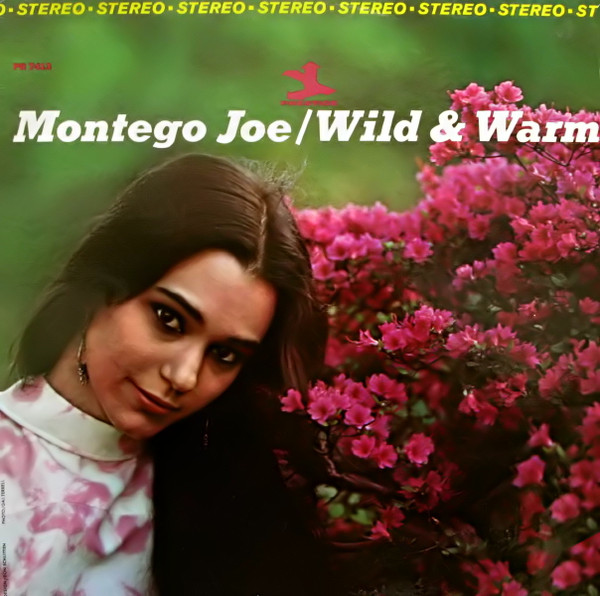
Listening to Prestige 715: Montego Joe


LISTEN TO ONE: Haitian Lady

Montego Joe's two albums for Prestige were his only two as a leader, though he continued to be in demand as a percussionist through the 1960s and '70s. This second album leans toward what appears to be an attempt to move Joe into the mainstream of 1960s pop instrumentals. The tune that was selected for 45 RPM release is "Ouch," which uses the popular device of a repeated catch phrase, in this case "You shouldn't do that!" This is the device most successfully used in "Tequila," and "Ouch" is pretty good proof that it isn't always successful.


The session log includes a credit as arranger/conductor for tenor sax man Al Gibbons. Gibbons had a solid career without ever quite breaking through to the top ranks. He played in the orchestras of Earl Hines and Woody Herman, and also in the avant garde Jazz Composer's Orchestra. He worked with Stanley Turrentine and the Manhattan Transfer. And here his job seems to have been to create a Montego Joe for the masses, although one suspects that producer Lew Futterman's may have been the heavier hand.

Prestige, especially in the soul jazz era, was not a label to shy away from popular success, but neither was it a label to court it too assiduously, and the liner notes to this album, by Francis Squibb, seem to reflect that ambiguity. Are we courting the young crowd? Well, yes and no...
The music presented here is rhythmically akin to the rock 'n' roll and rhythm 'n'  blues of the discotheques and teen hops--but with a difference. The "big beat," with which almost everyone is familiar, has been seasoned generously with a variety of twists and turns from African tribal musical traditions and from African-American music of Latin America and the Caribbean.

In short, like "Tequila." Or like Perez Prado. As someone who lived through that era, I can't help but follow the twists and turns of Mr. Squibb's attempts to find a balance. The rhythm 'n' blues of discotheques? For a start, who used the 'n' of rock 'n' roll to talk about rhythm and blues? But if you were young and representing yourself as a hip aficionado of jazz, you couldn't admit to liking rock 'n' roll...but it was sort of OK to like rhythm and blues.

Sorry, I can't help myself. Squibb's discomfort in being a jazz purist writing about impure music reveals itself in his compulsive need to put words into quotation marks, that familiar device that signals "I'm really better than this, I'm not really saying this":

The music of Wet and Wild was designed to get people to "shake that thing"--and not just that thing but everything [until] you are no longer "doing" the dance...but are  a creature of the music and--perhaps--of something beyond music as we know it. [Perhaps you have seen them] "doing" the Frug, the Monkey, or the Swim.

The tunes on this LP, intended to emphasize the "commercial" aspects, have been selected with "the younger crowd of dancers" in mind.

Montego...continues to demonstrate...the ways in which supposedly "alien" melodic and rhythmical material can be combined with "native" jazz and pop material...

So Montego Joe and producer Lew Futterman set out to make a commercially successful pop album. It was certainly something that Futterman proved good at, in his work with Jack McDuff and George Benson, and his later work with rockers like Ted Nugent. He would also become even more commercially successful as a real estate developer.

Why didn't it work with Montego Joe? Who knows why things do or don't take off commercially? But also, perhaps, Joe's heart wasn't one hundred percent in it. Although he continued to work as a percussionist on a number of jazz (and a few pop) sessions, his heart was more and more with education and youth work, as described in the notes to his previous Prestige album.

Al Gibbons, trumpeter Leonard Goines, and drummer/percussionist Milford Graves all appeared on the previous album. New for this session are Arthur Jenkins, piano; Ed Thompson, bass; and Sonny Morgan, miscellaneous percussion, suggesting that the budget may have been tighter this time around, or that for a more commercial dance sound, they didn't really need Chick Corea and Eddie Gomez. Jenkins, who during this period was primarily working with pop/reggae singer Johnny Nash, would go on to become a much-sought-after accompanist, working with John Lennon, Harry Belafonte and Bob Marley, among others. Sonny Morgan worked with Milford Graves on his first album as leader, and later with avant-garde vocalist Leon Thomas, among others. Less is known about Ed Thompson.

"Ouch" and "Give it Up" were the two sides of the only 45 RPM single release. Wild & Warm was recorded at Futterman's preferred Regent Sound Studios in Manhattan. I've selected "Haitian Lady," composed by Harold Ousley, as the most interesting track for me. But the whole album is pretty good for "dancing."


Wednesday, July 06, 2022

Listening to Prestige 631 - Montego Joe


LISTEN TO ONE: Dakar

 Montego Joe spent most of his life closer to Sheepshead Bay than Montego Bay, but he was in fact Jamaican-born, and his first percussion experiences were on that island, where he drummed on every flat surface he could lay his hands on, and was inspired by the playing of the brilliant and short-lived percussionist Chano Pozo. 

Moving with his family to New York when he was six, he heard the drum styles of Gene Krupa, Art Blakey and Buddy Rich. But focusing on the Latin percussion instruments, he developed quickly, and as a teenager he was already playing with some of his percussion idols, including Blakey, Max Roach


and Olatunji. He made his Prestige debut in 1962 with Ahmed Abdul-Malik in a session that blended the approaches of three very different percussionists--Joe on congas and bongos, Rudy Collins on a Western trap drum kit, and Chief Bay on African drums. In the next couple of year he would get some regular work with the label, appearing with Willis Jackson (twice), Ted Curson and Jack McDuff / George Benson.

When it came time to make his debut as a leader, Joe tapped a group of musicians who had not recorded for Prestige before, nor did they have extensive credits on the jazz scene, but they seemed to fit Joe well, because the core of them -- trumpeter Leonard Goines, reed man Al Gibbons, drummer / percussionist Milford Graves -- would be back for Joe's second and final Prestige session a year later. And, like Joe, several of them would go on to make significant marks in the fields of education and youth work.

Leonard Goines grew up in Harlem a few blocks from the Apollo Theater, where his teenage chops and ability to read music attracted sufficient notice that when the house band was short a musician, he would be called on short notice to sub. After playing professionally with Ella Fitzgerald, Donald Byrd, Duke Pearson, Yusef Lateef and Buddy Johnson in addition to Montego Joe, Goines entered academia as a visiting professor in the Black Scholars program at Pennsylvania's Lafayette College, teaching jazz history. And Goines's academic credentials went beyond his instrumental skills. According to an article in the Morning Call, Lafayette's newspaper:

Goines' background includes degrees in anthropology, psychology, counseling, political science, music education and ethnomusicology - the study of music and its relationship to culture. He's studied with Margaret Mead, the anthropologist and Nadia Boulanger, perhaps the most famous composition teacher of the 20th century.

Milford Graves, who would become a professor at Bennington College in Vermont, was another polymath. He studied to become a medical technician and  worked in a veterinary lab, where he set up and ran clinical tests to investigate new medicines. The basement of Jamaica, Queens, home became a dojo where he taught yara, a martial art of his own devising, and a laboratory, where he studied cardiology, acupuncture, and herbalism, His study of medicine and his understanding of the workings of the human body may have extended his life for a couple of years when he was diagnosed with amyloid cardiopathy in 2018 and given six months to live. He died in 2021.

Graves's extramusical interests and accomplishments should not distract one from his contributions to music. He was one of the first drummers to separate the drums from the responsibility for keeping time, a musical philosophy which he brought to the free jazz of the 1960s, playing with Albert Ayler and the New York Art Quartet, among others,

Montego Joe. after making his second album for Prestige in 1965, threw himself into youth work, with the Arts and Culture division of HARYOU-ACT (Harlem Youth Opportunities, Unliniited---associated Community Teams. He was able to record the teenage percussion group that he assembled and worked with at HARYOU-ACT, for ESP-Disc Records.

Two musicians who were on the brink of major careers in jazz were Chick Corea and Eddie (here billed as Edgar) Gomez. Corea up to this point had mainly worked with Latin groups, but his 25-Grammy-winning career would encompass everything, as his web page bio lists, "from straight ahead to avant-garde, bebop to fusion, children's songs to chamber music, along with some far-reaching forays into symphonic works."  Gomez would often work with Corea in the coming years, and with virtually every other jazz artist on the planet as well as some classical ensembles, but he is probably best known for his eleven years with Bill Evans.

Al Gibbons's musical range is shown in his list of credits, from Woody Herman and Earl Hines to Stanley Turrentine and McCoy Tyner. Robert Crowder, also known as Baba Ibekunle Bey, was known for mastery of West African drumming styles, and mentored the Women's Sekere Ensemble, a group of African percussionists dedicated to preserving the heritage of traditional West African culture. Rudy Stevenson, as a guitarist, played with Lloyd Price, Nina Simone and Mercer Ellington, but was primarily known as composer and arranger.

Lew Futterman, who tended to work separately from Bob Weinstock and Rudy Van Gelder, produced the session at Regent Sound Studios in New York City. Prestige released the album as Arriba! con Montego Joe, and "Fat Man" / "Dakar" as a 45 RPM single,

Friday, April 22, 2022

Listening to Prestige 627 - George Benson, Jack McDuff


LISTEN TO ONE: The Sweet Alice Blues

 In an interview many years later, sometime in the 1990s, George Benson begins a story by telling the interview that a long time ago, he played in a band led by a guy named Jack McDuff. The interview must have been with a non-jazz publication, as by that time Benson was a crossover star, since McDuff continued to tour and record into the 90s, and in fact Benson rejoined his old boss to play on two cuts of a McDuff album in 1992, recorded in Germany and released on Concord Jazz.

The story, as with all of Benson's stories about his days with McDuff, was about how much he had learned from the veteran organist. But it seems that Prestige was already recognizing, if not that student would outstrip the master, at least that the fledgling was ready to spread his wings and leave the nest. Benson would record a few more times with McDuff, and then go on to superstardom beyond Prestige.


In one of Benson's reminiscences about his early days with McDuff (others are referenced here), he says:

Due to the fact that I couldn’t play very well, he would only give me one or two choruses in any song. So whatever I could play, I had to cram it into a chorus or two—which made me learn to fire up very early in my solo. I said: “Well, this is gonna be short”, and I’d just rumble away at a lot of notes, and throw in funky things, pretty things, every kind of thing I could think of. And it was good for records, because when I got in the studio I could do that naturally.

McDuff himself had been mentored by Willis "Gator Tail" Jackson, who encouraged him to switch from the bass to the organ. Jackson was, by some accounts, a particularly hard man to get along with, but he had a way of discovering and shaping young talent, from McDuff and Bill Jennings in the 1950s to Pat Martino in the mid-1960s, and he seems to have passed the torch on to McDuff.

And young George Benson clearly learned a thing or two from playing those one or two choruses. 

Red Holloway and McDuff join Benson here, but the rest of the rhythm section is different, and interesting. Bassist Ronnie Boykins was just in the process of branching out after having spent seven years with Sun Ra. Roger "Montego Joe" Sanders had played on Prestige sessions before, with Willis Jackson, Ted Curson, and Ahmed Abdul-Malik.

And another instrument is added to the mix on the first two cuts, "Shadow Dancers" and "The Sweet Alice Blues." McDuff's organ and piano are absent from these two cuts, and in their place is some very active work on the bongo drums--according to Chris Albertson's liner notes, "presumably...being played by McDuff." 


McDuff stays on organ the rest of the way, with the exception of "Easy Living," where he switches to piano.  Benson gives a lot of solo space to Holloway, but ultimately this is his album, and putting his name out front does make a difference. Listening to this music from the point of view of history, we're immediately aware of Benson from the first time his name appears on a Jack McDuff album, and we immediately start to track his development. But Albertson, who of course could have had no idea of the breakout future that awaited Benson, says in the liner notes:

It is highly probable that you are unfamiliar with the name of George Benson although it is very likely that you have heard hum play, either in person or on records, as a member of organist Jack McDuff's group.


And Albertson is not about to go out on a limb and say "A star is born!", either. He hedges that bet:

The Brother Jack McDuff quartet is a highly democratic one,  allowing each member a chance to record under his own name, with leader McDuff taking on the role as sideman.

Neither is Benson about to dominate the session. Holloway has as much solo space as he does. But it is clearly an important step. He would appear on five more Prestige albums in 1964-65: Three of them under McDuff's name, one under Joe Dukes', one under Red Holloway's. The Holloway album was produced by Lew Futterman, but neither McDuff nor Dukes appear on it (the organ part is played by Lonnie Smith). Then he was on to Columbia, where they had a better star-making machine, and where he began singing as well as playing.

This album was entitled The New Boss Guitar Of George Benson With The Brother Jack McDuff Quartet. "Shadow Dancers" and "Just Another Sunday" were the 45 RPM single release. Lew Futterman produced.   


Friday, June 11, 2021

Listening to Prestige 579: Willis Jackson


During the pre-rock and roll era of American pop music, there were, very generally, two types of singers: the jazz-influenced singers like Bing Crosby and Nat "King" Cole, who were, more or less, popularizers of Louis Armstrong, and the bel canto-influenced singers like Tony Martin and Jerry Vale, who were, more or less, popularizers of Mario Lanza. And there was a deep divide between them, bridged by no one except possibly Dean Martin (Frank Sinatra and Tony Bennett were Italian, but they were definitely in the jazz-influenced camp).

So, could the divide be crossed by a tenor saxophone player with a jazzman's touch and rhythm and blues in his soul? Willis (Coda di Alligatore) Jackson seemed to think so, as he devoted virtually a whole album to jazz renditions of Italian pop songs.


LISTEN TO ONE: Al di La

It worked better than you might think. The rhythm and blues honkers tended to have a sweet sentimental side, perhaps modeled on Earl Bostic, and the Italian ballads fit into that. Most of this album is unavailable online, so I wasn't able to hear how Jackson handled "Volare," for example, but I did listen to his "Arrivederci Roma." That's a melody that's hard to listen to without hearing Eddie Fisher crooning it or Mario Lanza giving it the full melodramatic treatment, even though it does start out with a Latin rhythm from Montego Joe, but once Jackson begins improvising on it -- no, make that once he really gets into improvising


on it -- its jazz possibilities open up. "Arrivederci Roma" on the album is 5:43 in length; the 45 RPM single version is edited down to 2:28, and that's the version which is currently available on YouTube. 

Technology had certainly advanced to the point where you could have fit 5:43 onto a 45 RPM record, so why shorten it it into what in those days would have been called the Readers' Digest condensed version? My guess...that's what the market wanted. The market in those days was radio play, which meant the pop music stations or the Black-oriented stations on your AM dial. FM radio, and songs like "Like a Rolling Stone" or "MacArthur Park" or "Alice's Restaurant" were still in the future, and your radio stations wanted manageable chunks of music between the disc jockey patter and the commercials. Jukeboxes wanted something you could dance to for three minutes or less before putting another nickel in. And presumably it was assumed that the customer putting that nickel in the slot to hear Willis Jackson wanted to hear Willis Jackson, because the 45 RPM condensed versions of jazz album cuts tended to excise everything except the featured soloist. So no Bucky Pizzarelli, authentic Italian-American though he was, no Gildo Mahomes.

The other cut I was able to listen to is "Al di là," which had been that year's Italian entry in the


Eurovision Song Contest (it finished 5th). Eurovision was still relatively new in 1962, and its entries are, even to this day, not guaranteed much stateside audience (unless they're by Abba), but "Al di là" hd gotten some attention when Connie Francis recorded it as the B side of a minor hit, and it worked for the theme of the album, and was the occasion for some very nice guitar-saxophone interplay. Jackson, with Jack McDuff and Bill Jennings, was one of the originators of the saxophone-guitar-organ soul jazz sound, but this is an altogether different way of blending these two instruments.

Bucky Pizzarelli and Gildo Mahones had both recently made their Prestige debuts, Pizzarelli accompanying Etta Jones and Mahones with Ted Curson. Pizzarelli would have a couple more sessions over the next few years accompanying singers, but most of his acclaimed career would be elsewhere. Mahones would stay longer in the Prestige orbit, including three albums as leader.

Neapolitan Nights was released on Prestige--not Moodsville. "Arrivederci Roma" was the A side of a single which had "Y'All," from a very different session, on the B side. More thematically paired was another single, "Mama" (which had been a 1959 hit for Connie Francis) and "Neapolitan Nights."

Ozzie Cadena produced.

The one Jackson original title on the album was "Verdi's Vonce," Jackson's blues tribute (according to the liner notes) to Verdi. I would love to hear it. It was also included on a compilation album called Soul Stompin': The Best of Willis Jackson.


Monday, June 07, 2021

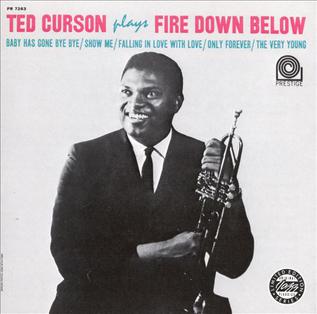
Listening to Prestige 577: Ted Curson


LISTEN TO ONE: Fire Down Below

 Ted Curson is one of that generation that made Philadelphia such a cauldron of jazz in the 1950s. The Heath family lived around the corner from and Albert "Tootie" Heath was a classmate. "On Sundays," Curson recalled (in an AllAboutJazz.com interview with Clifford Allen, "Mrs. Heath would make dinner for any musicians who were coming to Philadelphia. You could see anyone from Miles to Duke Ellington to Sonny Rollins."

But it wasn't these greats who first lured young Ted into music. It was a neighborhood guy who wandered the streets selling newspapers, and carrying a silver trumpet. When he told his father he


wanted a trumpet, the old man, a Louis Jordan fan, tried to talk him into an alto saxophone, but Ted held firm. He got his first trumpet at age ten, started playing professionally at age 16 and not long after that, met Miles Davis. In those days, Curson told Allen, he worshipped Davis:

[I was] wearing my hair like Miles, I had a tie around my waist, I even made the mistakes that he made. I liked his approach to everything and I still do. He heard me play when I was around 15 or 16 and he gave me his card and he said 'if you ever come to New York, give me a call.' There was no conversation - he said that and left - and I kept that thing in my pocket for years. After I graduated, it was about three years before I finally moved there [at age 21] and I called up Miles. Miles said 'Ted Curson, that little guy from Philadelphia? We've been waiting for you for three years! Where the hell have you been?'

This was, of course, in the Prestige days, when Miles was still allowing himself to make mistakes.

Curson drew the interest of the Levy brothers, owners of the Birdland jazz club and Roulette records. He was to make his debut at Birdland, and his audition for Roulette, on the night that Mo Levy's brother Irving was shot and killed right outside the club.

Instead, Curson served an apprenticeship in New York's avant garde. He played with Cecil Taylor, and appeared on one Taylor record for United Artists. He drew the attention of Charles Mingus, or more accurately was brought to Mingus's attention:


I got a phone call from a friend of mine and he said "I got a call from Mingus and I don't want to play with that crazy motherfucker. You want to take my place?" It was in Teddy Charles' loft, and there were a 1,000 or something musicians in there jamming, and I met Mingus and we played and everybody dropped out and that was it. He said "maybe one day I'll call you" and about two or three months later I get a call at about midnight and it's Mingus. "Ted Curson? Charlie Mingus here. You start right now. I'm at the Showplace in the Village and as soon as you get here, you go to work." I got there and he said "Okay ladies and gentleman, here's your new band - Ted Curson and Eric Dolphy - and you other cats are fired!"

He made his debut as a leader in 1961, fronting an all-star group comprised of Eric Dolphy (on two tracks), tenor saxophonist Bill Barron (who would have a long association with Curson), Kenny Drew and Jimmy Garrison. Drumming, on different tracks, were Pete La Roca, Dannie Richmond and Roy Haynes. The album came out on Old Town, a New York rhythm and blues and doowop label that had no jazz presence at all (Arthur Prysock was one of their featured artists, but he as being pitched to the rhythm and blues market in those days) and almost no LP presence, so it was heard by very few (although you can hear it now on YouTube). So for all practical purposes, this Prestige album was his real breakthrough.

The Prestige album is called Ted Curson Plays Fire Down Below, which seems to suggest that there was an audience out there just waiting to hear the latest version of "Fire Down Below," which is even less likely than the possibility than a legion of jazz fans waiting to hear the latest Old Town release. "Fire Down Below" was composed by Lester Lee, a Hollywood journeyman with a raft of movie soundtrack songs to his credit (including a bunch of polkas), but very little of interest to jazz performers.

Curson makes something eminently listenable out of the Caribbean-tinged melody, originally written for a Robert Mitchum / Jack Lemmon thriller with a Caribbean setting, and maybe part of his youthful hubris in introducing himself to the jazz public involved showing what he could do with tunes no one else had looked twice at. 

If so, he did a hell of a job. Two of the tunes are recognizable standards, Lerner and Loewe's "Show Me" from My Fair Lady, and Rodgers and Hart's "Falling in Love With Love." Well, standards. I'm not sure Henry Higgins would have recognized what Curson and Co. do with "Show Me," although Eliza Doolittle, sick to death of the genteel reserve of the society she has been elevated into, might have appreciated the propulsive drumming and all-out solos of Roy Haynes and Montego Joe.

The rest are a curious lot. Harold Little ("The Very Young") is a trumpeter and composer about whom I could find very little. Robert Allen ("Baby Has Gone Bye Bye") carved out a career as an accompanist for Perry Como, Peter Lind Hayes and Arthur Godfrey, so he can't be counted among the hippest of the hip. "Only Forever," composed by James V. Monaco, was a modest hit in 1940, from a Bing Crosby film, and Monaco does have one sublime song to his credit, "You Made Me Love You," made famous by Judy Garland. So it's not the material, it's what Curson does with it, and what he did with it announced his presence as a new major talent on the jazz scene.

Roy Haynes and Montego Joe added a lot to this session. George Tucker was a reliable bassist. Gildo Mahones would go on to do more work for Prestige in the decade, including a couple of albums as leader, so I'll save a fuller discussion of him for later. At the time of this session, he was working with Lambert, Hendricks and Ross.

"Fire Down Below" was the title song for the Prestige album, and it was also the 45 RPM single, with "The Very Young" on the flip side. Ozzie Cadena produced.

Wednesday, May 26, 2021

Listening to Prestige 573: Willis Jackson


LISTEN TO ONE: Cachita

 Willis Jackson becomes the latest Prestige artist to hop on the bossa nova bandwagon...sort of. The album is three tunes by Latino composers, two popular songs of the day, and one Jackson original. But I wonder if Prestige's marketing department was paying much attention to the product in this case. The three Latin tunes -- "Cachita," "Amor" and "Mama Inez" -- are all by Cubans. "Mama Inez," in fact, as "Ay, Mama Ines," composed by Eliseo Grenet, is a Cuban archetype. A 1933 article in Vanity Fair describes it thus:

The song of Cuba—a hundred dark throats have sung it; a thousand brown feet have danced it. O Mother Inés . . . all the Negroes drink coffee, drink thick black coffee. 0 Mother Inés, where are you hiding? We have searched for you everywhere and we have not found you. We have searched for you in the tough districts of Jesu-Maria—and we have not found you. Oh Cuba, my mother, my sister, my beloved! 


English language lyrics by L. Wolfe Gilbert are credited by many with popularizing the rhumba in North America. Here are some of them:

Oh, Mama Inez,
Oh, Mama Inez,
They hum and strum,
That's the rhumba for you.

Oh, Mama Inez,
Oh, Mama Inez,
Though others come,
Their "The Rhumba" won't do.

When I first saw the shebango,
I fell so hard for the tango,
But now this brand new fandango's got me
Like nothing's got me before!
Oh, Mama Inez,
Oh, Mama Inez,
No Cuban rum's
Like the rhumba for me.

Grenet fled Cuba after some of his song lyrics were seen as subversive by the Machado regime. He went to Europe and then to the United States, where he opened his own nightclub on 52nd Street, El Yumuri, where he is credited with introducing the conga to the US.

Montego Joe and Juan Amalbert were both native New Yorkers, Joe (Roger Sanders) African American, and Amalbert, later Emmanuel Abdul-Rahim, with a Puerto Rican father.

So, adding that all up: bossa nova? Not hardly. Kenny Burrell adds a couple of nice samba licks, but that's about it.

Do we care? We do not. This is wonderful music, a mixture of the mainstream jazz of Willis Jackson


who, like so many of the musicians who came out of the rhythm and blues subset of jazz, is unfairly overlooked, and Latin jazz, generally disgracefully overlooked by mainstream audiences. Ranker.com, a website where contemporary participants vote for the greatest this or that, lists Jackson at number 151 on their list of greatest saxophone players, and that's only because I added him. DownBeat's reader polls of this era, the era of the mambo and the cha-cha and the bossa nova, completely overlook Machito and Puente, Prado and Cugat, even in their dance band category. Allmusic.com's reviewer Ron Wynn gives the album four stars, with the note, "His second great album that year," so somebody is listening,

And for all the sales that Willis Jackson generated for Prestige in this era, somebody wasn't taking him seriously enough. Hence the marketing division's decision to market this as a bossa nova album, with bargain bin graphics on the front cover, and liner notes that must have been written by someone from the mailroom. Jose Paulo is listed in the session logs from jazzdisco.org as playing congas and timbales, on the back sleeve of the album as playing guitar. Jazzdisco isn't always right, but they're probably around 98 percent right, and since all of Paulo's other credits are percussion, I'm going to go with them.
Allmusic.com credits him on bongos, congas, guitar and timbales, but they're not always right either.

"I Left My Heart in San Francisco" is given the full-on Latin treatment. "What Kind of Fool Am I?" is more a straight-on ballad, and "Shuckin'" is Jackson playing Jackson, with Eddie Calhoun and Roy Haynes doing the rhythmic work. Calhoun was Errol Garner's regular bassist from 1955 through 1966 (he's on Concert by the Sea), and did very little other recording. Shuckin' became the title of a rerelease of the album, this time with liner notes by Philadelphia disc jockey Del Shields, mostly griping about how Willis Jackson doesn't get the respect he deserves from jazz snobs. Unfortunately, he was right.

"What Kind of Fool Am I?" and "I Left My Heart in San Francisco" were the 45. The album was a Prestige release, Ozzie Cadena producing.


Monday, April 26, 2021

Listening to Prestige 563: Ahmed Abdul-Malik


LISTEN TO ONE: African Bossa Nova

 Ahmed Abdul-Malik had a brief recording career but an enduring legacy. Raised in New York, he entered the jazz scene in 1956, recording with enigmatic German pianist Jutta Hipp, and contributing to three albums by Randy Weston. Both Abdul-Malik and Weston would go on to develop jazz styles that drew heavily on African and Middle Eastern music, becoming, like Yusef Lateef, pioneers in what would become an increasingly important strain of jazz. He made two albums as a leader in 1958 and 1959, then in 1961 began his association with Prestige, which would last for four years and four albums, after which he essentially quit the recording business. He remained active in music, with a South American tour sponsored by the US State Department and a 1973 performance in Morocco at the first major African


jazz festival. In 1970 he began a teaching career at NYU and Brooklyn College. In 1984, he was honored with BMI's Pioneer in Jazz award for his work in bringing Middle Eastern music into the jazz lexicon.

In this session, he brought together a ten-piece group composed of musicians with solid jazz reputations (Richard Williams, Caio Scott) and others who have no other jazz recording credits (Rupert Alleyne, Edwin Steede). Bilal Aburrahman, like Abdul-Malik, was an early explorer of Middle Eastern sounds in jazz. Taft Chandler is a swing era veteran (Luis Russell), but not much recorded in a small group setting. Together, they made up the sound Abdul-Malik was looking for.

With three percussionists, each of different backgrounds, he got a rhythmic synthesis that combined traditions. If the weaving together of threads from the jazz and classical worlds is known as third stream music, then maybe this is fourth stream. A better name for it would not come until years later, but surely this is an important precursor: world music.

Rudy Collins utilized the traditional trap drum kit that has always been the backbone of jazz combos.


Entering the scene in the late 1950s, he would become a fixture on the jazz scene of the next three decades, playing with traditional (Hot Lips Page, Roy Eldridge), mainstream modern (Dizzy Gillespie, Gene Ammons) and avant garde (Cecil Taylor) musicians. James Hawthorne (Chief) Bey was an African folklorist as well as a jazz percussionist. Roger "Montego Joe" Sanders took a Caribbean name, but his interests were also deeply African. He had recorded with Babatunde Olatunji, and with Art Blakey's Afro-Cuban group, the Afro-Drum Ensemble.

Abdul-Malik's parents had migrated to Brooklyn from the Caribbean, although he would later invent as Sudanese heritage. and the cradle of world music, as jazz and Africa and Brazil are melded, can be heard in "African Bossa Nova," a rhythmic delight with some superb blowing and a bravura pizzicato cello from Caio.

Sounds of Africa included one track from an earlier (May 23, 1961) session. Esmond Edward produced both this session and the previous one. The album was released on New Jazz.