Showing posts with label fiction. Show all posts

Sunday, August 18, 2013

Historical Fiction and the real world


Very nice blog post by Michael K. Reynolds on the ways that one can interface fiction and history. He offers three possibilities – The Rosencrantz and Guildenstern Strategy (“if your lead character is Winston Churchill in the early 1940’s, you are going to have a difficult time with it not being swallowed up by World War II themes. However; if you shift your lead character to a young man from India who happened to immigrate to England at the onset of the war, then this can take on a much different path”), The Monet Approach (“the idea that blurred detailing can actually provide a powerful and succinct image”), and The Character Pigeon (“use a minor character (or characters) to carry the weight of the prevalent, but non-centric theme. That way you’re not ignoring it, but you’re freeing your lead characters to swim in the main waters of your story”).

It started me thinking about some of the ways I’ve dealt with history in my own work. In my most recent, Nick and Jake, the era – and the specific year, 1953 – are central to the story. Bringing Nick Carraway and Jake Barnes into 1953 was important in that it gave a new perspective on the seminal characters of a key period in American literature, but it was also important in that it gave a new perspective on that year.

But for all that history was important, we still had to play fast and loose with a few odd details. The overthrow of Mohammed Mossadegh in Iran, which was the first CIA exercise in overthrowing the government of another country, changed the history  of the Middle East irrevocably, and not the way the CIA expected it to.

We wrote Nick and Jake partly in response to the Bush administration’s post-9/11 foreign policy, resulted in America having and then losing the sympathy and support of international opinion. We were struck by how much this mirrored the 1950s, when America went from being the country that had saved the world from the Nazis, to being The Ugly American. The thing that made the Iran coup so devastatingly successful was that no one believed the Americans would ever do such a thing. So it was a perfect metaphor for us.

But it had happened in the fall of 1953, and the action of Nick and Jake is in the spring of 1953. But it was too good for our plot to leave out…so we moved it up a few months.

Our ingĂ©nue  moves to New York from the Midwest and undergoes some significant changes. Where would she stay in the big city, a young, innocent girl? Why, the Martha Washington Hotel for Women. And nothing says Martha Washington Hotel for women in the 50s like Valley of the Dolls. Only trouble is, no one really remembers, or cares about, the characters in Valley of the Dolls any more. Not that that would have bothered us so much, except that we didn’t remember or care about the characters either. Jacqueline Susann, the novel’s author, interested us as a colorful character and a symbol of a certain literary/political zeitgeist. Only trouble there was, unlike her characters, Jackie Susann was over fifty, married, and living a totally different life from that of her characters. This might have bothered us more than it did, if we hadn’t discovered it only after we had begun writing her into the book. By the time we knew that she wasn’t really one of her characters, we liked her too much to let her go. So we shaved thirty years off her age – historically inaccurate, but that’s really the time and place she’s associated with.

Here’s a character we pulled from history out of necessity. When we went to do the audio dramatization of Nick and Jake, we were fortunate enough to have Valerie Plame Wilson offer to play a role, but there was no role for her. Who was important in the politics and cultural politics of 1953? Clare Boothe Luce! She was perfect for the story, and perfect for Valerie – and of course, since Valerie was playing her, we twisted history a little and made her an undercover CIA agent. And who’s to say she wasn’t?


More on history, and other historical novels, next time.

Thursday, February 21, 2013

Books and movies

I'm reading The Green Mile, by Stephen King. I haven't read a lot of Stephen King, but I've liked what I've read. I'm reading this one because it was originally published as a serial, and that's something I've been thinking about a lot.

Anyway, one always talks about books and movies, how the book is almost always better, but of course that's not true. As Howard Hawks said, often a good book will make a bad movie, but a bad book can make a great movie. High Noon came from a Saturday Evening Post story which no one remembers. Shane is from a Western novel that no one reads any more. Maybe genre fiction has a better chance at becoming better on film.  I read somewhere that Clint Eastwood acquired The Bridges of Madison County specifically because he wanted the challenge of turning a perfectly awful book into a good movie. Maybe he succeeded...I spared myself reading the book, and the movie was watchable. David R. Slavitt, poet and translator (his version of Ovid's Metamorphosis was not loved by some critics, but they were wrong -- it's brilliant), translated The Fables of Avianus from Latin. Are they an overlooked masterpiece? I asked him. No, he said. Avianus was a terrible writer. That's why I chose him -- so all the literary credit for the translation can go to me.

The Wizard of Oz is regarded by many as one of the greatest movies of all time, and although the books are beloved, it's hard to imagine anyone putting them on the best books of all time list. Still, I can imagine someone saying, "The book was better."

What about movies that are pretty nearly exactly as good as the book? I'd put The Green Mile on that list.

Lots of novels are written these days with the idea that they'll be made into movies, and the novels are written almost like screen treatments. They generally make serviceable novels, and serviceable movies -- neither is likely to stand out.

An odd exception to this generalization: Grahame Greene's The Tenth Man. Quoting from Wikipedia: "In the introduction to the First edition of his novel, Graham Greene states that he had forgotten about this story until receiving a letter about it from a stranger in 1983. Greene had first suggested it as an idea for a film script in 1937, and later developed it whilst working for MGMduring the 1940s. Nothing came of it and the rights were offered for sale by MGM in 1983. The buyer allowed Greene to revise and subsequently publish the work."

So The Tenth Man was actually written as a screen treatment, but it made a wonderful short novel. Interestingly, when it was eventually filmed with Anthony Hopkins, it wasn't a very good movie.

But back to The Green Mile. The book basically is the movie. The prose is straightforward, the story is the same in both versions. The one literary device that King uses, which is interesting and unobtrusive, is the moving back and forth in time by the first person narrator. The narrator places himself in a nursing home, maybe 40 or 50 years after the action of the novel, which is in the 1930s. So although he's essentially narrating the story as it happens, he's narrating a story that he knows the ending of, so he can jump forward in time and tell you what's going to happen.

Sunday, January 27, 2013

Giving away the ending

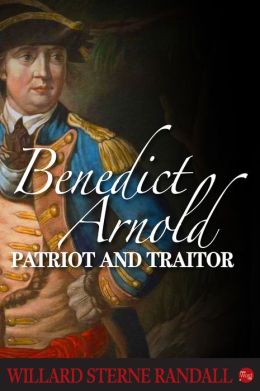
In June of 1790, Benedict Arnold’s plans to betray his country by turning West Point over to the British were discovered, and he had to flee for his life, his name forever synonymous with treason.

Suppose you didn’t know that was how the story ended. Then you have a dashing young merchant sea captain, a daring smuggler, a loving husband of an unloving wife who gains, loses, and gains another fortune, who gives up a life as the wealthiest merchant in Connecticut to join the Sons of Liberty and then the Continental Army, who leads the first successful campaign of what is not yet even officially the Revolutionary War, winning Fort Ticonderoga and Lake Champlain for the new American cause. You have a commander who leads an ultimately unsuccessful campaign against the British in Canada, but in doing so, stays with his men through the most grueling hardship, winning their love and respect. You have the master strategist, the daring commander, the wounded victor in the battle of Saratoga, and where’s your story going?

If you don’t know that your hero is Benedict Arnold, there’s suspense, there’s indignation, there’s reader identification with this brave man who serves his country brilliantly, but is thwarted, hamstrung and betrayed over and over by cowards, publicity-seeking thugs, and petty political maneuverers.

And maybe it’s a better story that way. Hard to say, because we know the story so well.  As it is, when we read about Ethan Allen stealing the credit for the victory at Ticonderoga, about the treacherous engineer Montresor giving him misleading maps for his journey to Quebec, or the cowardly Colonel Enos turning back with 300 of Arnold’s 1000 men, about the politicians who stabbed Arnold in the back, passing him over for promotion again and again in favor of lesser men, we read it with a sense of foreboding, rather than suspense, and each of these betrayals take on a sense of inevitability. Also, a red flag goes up in our minds every time we hear of a betrayal. Those incidents loom larger in our sense of the story than they might if we didn’t know the ending. Knowing the ending makes it a different story.

E.M. Forster, in his great book Aspects of the Novel, writes about life measured by time vs. life measured by value, “and our conduct reveals a double allegiance. ‘I only saw her for five minutes, but it was worth it.’ There you have both allegiances in a single sentence. And what the story does is to narrate the life in time. What the entire novel does – if it is a good novel – is to include the life by values as well.”  The story of Arnold’s life, because it’s nonfiction and we know the end, is told by values. Betrayer and betrayed – in these moments time stands still. Of course, it’s also told by time. Events unfold chronologically. But time stands still for us as readers when a betrayal enters the story.

What can you say about a 21-year-old girl who died? What if you don’t start the story that way? If you don’t start the story that way, frankly, it’s probably not a mega-bestseller, because you don’t have a story if she doesn’t die, and you’re pretending to a suspense that the reader isn’t going to feel. Take away the suspense,  and the life told by values becomes altogether different.

The Mambo Kings Play Songs of Love begins with the death of Cesar – old, sick, bloated, ugly, drunk and poor. As he stands up, staggers and falls in the swoon from which he will not awaken, he knocks over the credenza which holds all of the 78 RPM records he made in his life. And for the rest of this wonderful novel, as we follow the young, brash, ruthless, gifted, self-absorbed womanizer, we see him through this veil of sadness.

Just as we know the Benedict Arnold story will end with treason, we know how “I’ll sing you the true tale of Billy the Kid / I’ll sing you the deeds that this young outlaw did” will end. By the time he’s 21, he’ll have been “shot down by Pat Garrett, who once was his friend.” But in the case of Little Joe, giving away the ending by telling us that “he’ll wrangle never more / His days with the remuda they are done” lets us know that the life measured by time is going to be short, and the life measured by values will have to be measured against that inevitability. On the other hand, in “Lily, Rosemary and the Jack of Hearts” we have three characters – four, with Big Jim – whose lives are measured in both time and value, and the intersections of those lives leaves room for suspense which is enhanced by our not knowing the ending.

What happens next? Is a key element in every story. Starting out by telling us what happens at the end is a choice you can’t make every time, but sometimes it can be the right choice.