Showing posts with label 1961 recordings. Show all posts

Tuesday, April 20, 2021

Listening to Prestige 560: Wade Walton / Robert Curtis Smith


LISTEN TO ONE: Parchman Farm

 Clarksdale, Mississippi, is one of the most important addresses in the history of the blues, having been home to Muddy Waters, Son House, John Lee Hooker, Ike Turner, Sam Cooke, Junior Parker, and many others. Today it is a tourist destination, as people come from around the world to visit the Delta Blues Museum or the crossroads where Robert Johnson had his famous mythic meeting with the Devil. But in the early and mid-20th century it was a place to leave, a jumping-off point for the Great Migration, as its future blues legends were to depart for Memphis or Chicago, where they could find audiences and radio stations and record companies.


LISTEN TO ONE: Council Spur Blues

One who stayed was Wade Walton, who would build a life and a business in Clarksdale, and become a civil rights leader and an early member of the NAACP. 

It was a decision grounded in reality. Even most successful blues singers made a very uncertain living from the blues, and creative accounting meant that they saw little or no royalties from even a hit record. But Walton's barbershop became a Clarksdale institution. The barbershop was a community center in those days, and Walton's presence made whatever shop he worked in, from the Arnold Brothers and the Big Six barbershops in the center of Clarksdale, to eventually owning his own shop.


And he was more than a local institution. Blues superstars like Ike Turner and Howlin' Wolf and Sonny Boy Williamson would come back to Clarksdale to get their hair cut, and poet Allen Ginsberg got a haircut from Walton.

One of the reasons Walton's shop was so popular, in addition to his skill with the razor and scissors, was the music. Walton had grown up playing music. His boyhood home was the Goldfield plantation in Lombardy, Mississippi, in the shadow of Parchman Farm, and he and his brothers used to play impromptu concerts outside the prison fences. When he moved into town and chose barbering as a career over music, he kept his guitar and harmonica close at hand in the barbershop, and would give impromptu concerts there, too, on those two instruments and a third -- a straight razor and razor strop, used as a rhythm instrument.

Walton came to be known to the blues collectors who began combing the South as the blues revival got under way. Chris Strachwitz of Arhoolie Records and British blues scholar Paul Oliver came to Clarksdale in 1960 to record him in the Big Six barbershop. They got a bonus from a customer at the time, Robert Curtis Smith, who also played and sang the blues, and whom they also recorded.

In 1961, both Walton and Smith recorded for Prestige Bluesville. The recordings appear to have been set up by blues collector Dan Mangurian, who had first met Walton on a trip to Clarksdale in 1958. The jazzdisco website, a remarkably accurate source for studio recordings by most of the independent jazz labels, is sometimes a little vaguer on field recordings. They list both Walton's and Smith's sessions as having taken place in Clarksdale in the summer of 1962, but it seems almost certain that Walton, with Mangurian, came north to Bergenfield, NJ, by then the office headquarters of Prestige. Did Smith come with them? There's no indication that he did, although why would Prestige have recorded Smith independently of Walton? Stephan Wirz, the German blues scholar whose research is very thorough, says that Smith was recorded in Memphis on July 28, 1961 by Chris Strachwitz, and this would not have been the only Strachwitz session to have been licensed to Bluesville. Production credit, according to Wirz, is given to Strachwitz and Bluesville's Kenny


Goldstein, although Goldstein would not have been likely to have been in the field. Wirz lists the Walton session as having been recorded in Bergenfield in 1962, by Rudy Van Gelder, and that seems unlikely. If Van Gelder recorded it (he is also credited on the album sleeve), it certainly would have been done in Englewood Cliffs. The album cover credits Goldstein as the producer. Wirz notes Mangurian and his partner Don Hill as uncredited producers.

Mangurian's and Hill's first meeting with Walton is documented in the song "Parchman Farm," on the album. This is very different from Mose Allison's "Parchman Farm," and much more up close and personal. Mangurian describes the genesis of the song in the album's liner notes:

"Parchman Farm" is a dramatization of a very real incident involving Wade, myself, and Don Hill...on our summer vacation [from Pomona College in California], Don and I traveled to the South to record folk music and blues in the field. We found Wade in Clarksdale and, while recording, we mentioned that we wanted to go down to Parchman Farm...to record the prisoners singing their work songs. Wade generously offered to take the next day off from work and ride down with us, since he was familiar with Parchman Farm from his childhood days.

Late the next morning we drove the 25 miles down Highway 49 to Parchman. We got a visitor's pass at the main gate and drove down to the chaplain's house figuring he would know the prisoners better than anyone else and help us out. The chaplain, however, was very uncooperative and sent us down to the administration building to wait for the educational director to return from lunch.

We didn't wait long before a stocky man with a .38 at his side stormed in. This was Mr. Harpole, a staunch segregationist as it turned out, who was then assistant warden and noted for his cruelty toward the convicts with his three foot leather strap. He asked us a few questions, then turned on Wade, saying "Boy, if you know'd like I know, you'd be out of here runnin'," and bluntly ordered Don and me to leave with the advice that "we should have known better to come in here with a n*****."

...The incident made a lasting impression on Wade, who later made up this song, weaving together the events in a loose rhyming way. The guitar depicts the seriousness of the situation (which Don and I were naively unaware of)  he felt when Mr. Harpole arrived...He ends by saying "We left Parchman Farm, didn't get no race relations done."

Mack McCormick wrote the liner notes for Robert Curtis Smith's Bluesville album. Although
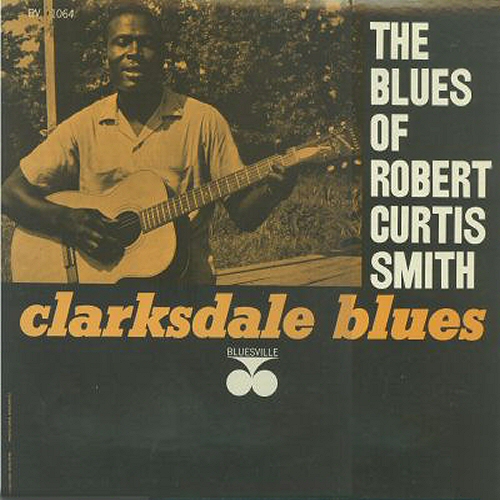

McCormick was unable to resist one more little gratuitous dig at Lightnin' Hopkins ("Unlike many a more fortunate blues singer, there is little self pity in this man"), he did paint a vivid and detailed picture of Smith's life as a Black laborer in Mississippi of the 1940s and 1950s, with a few telling but gruesome asides (Smith's home is a few miles from where Emmett Till was murdered). He describes in some detail the background to Smith's "Council Spur Blues," starting with a landowner named Roy Flowers, "whom Smith describes as 'rich man, but he don't pay nothin.'" Flowers followed what was then a common course of action -- wait for a Black man to get arrested, then go his bail, then tell the Black man that he was indebted to pay off the bail expense -- at a rate dictated by the white man.

Smith had to work for Flowers on the Council Spur plantation.

There he is kept on short rations, in debt to the plantation store and subject to the antics of an overseer who... refuses to let tenants have private vegetable gardens.

Smith's album is called The Blues of Robert Curtis Smith--Clarksdale Blues. His repertoire is bluse songs picked up from local bluesmen and the radio. Walton's is The Blues of Wade Walton--Shake 'em on Down. "Memphis Mango," credited as second guitar on the album, is Dave Mangurian. His songs are familiar blues material and some of his own composition, including two instrumentals. On both these albums, the original compositions referenced in "Listen to One" are powerful socio-historical documents as well as being powerful songs. Both are on Bluesville.

Walton's leadership in the local NAACP and his advocacy for civil rights led to his barbershop being bombed, but he rebuilt, kept working for the cause, and kept cutting hair, making a decent living from a Black-owned business that he never would have gotten from the recording industry. He was voted into the Clarksdale Hall of Fame in 1989, and died in 2000.

Monday, October 26, 2020

Listening to Prestige 523: Tampa Red


LISTEN TO ONE: How Long

 When Samuel Charters sought out Tampa Red in Chicago in the late 1950s, he found a singer whose commercial viability had dried up under shifting musical tastes, but who, unlike some of the others Charters found, had not given up on the idea of a recording career, and was itching for the chance to get back in the studio/ In the liner notes to this album, Charters reports that when he first spoke to Tampa (he got the nickname "Tampa" when he arrived in Chicago from Florida; "Red" came later): 

As he talked about the situation, sitting in his small room on Chicago's south side, he said again and again that he could still play the blues and get new songs together if he had a chance to record.


Sadly, for all his enthusiasm, Tampa would not record again after this, his second Bluesville album. although he lived another 20 years.

Neither Bluesville album represented his own choice for recording options. He was presented as a solo act, with just acoustic guitar (and kazoo!), but he had always preferred to work with a partner or even a group, going back as far as his widely popular recordings in the 1920s with "Georgia Tom." particularly "It's Tight Like That." Georgia Tom would become Thomas A, Dorsey, composer of some of America's  most beloved gospel songs. His most frequent partner, Big Maceo Meriwether, had died in 1953, and most of his old bandmates had died or left the business. If this had been ten years later, Tampa would have had no trouble finding young blues enthusiasts, most of them white, dying to play with an authentic blues legend, Even a couple of years later, young Chicagoans like Paul Butterfield, Elvin Bishop and Nick Gravenites were falling in love with the blues and forming a new generation of blues bands. But Tampa went into the studio with no amplified guitar and no fellow musicians.

Into which studio? That's a little unclear. The back cover of the first Bluesville album, at least one pressing of it, says "recorded in Chicago," and the usually reliable jazzdisco.org also gives Chicago as the site of the recording. But the back cover also says "recorded by Rudy Van Gelder," and Rudy wasn't known for taking road trips. The second Bluesville album also lists Van Gelder as the recording engineer. Stefan Wirz, the German blues discographer whose website is remarkably complete, has


Chicago listed as the recording site for both albums--and for both albums, has crossed out Chicago and written in Englewood Cliffs. That's a little odd--why not cut Chicago completely, rather than just crossing it out? Tampa Red's is one of the few pages on Wirz's site that's still marked "Under Construction," so maybe he's still researching this issue. Conceivably, whoever typed up the copy for the back cover could have put Van Gelder's name down by force of habit.

For now, we'll go with the preponderance of evidence and assign the recording site to Englewood Cliffs. If Esmond Edwards were still producing for Bluesville, he might have brought in some musicians to work with Tampa, but Kenneth Goldstein was more of the new breed of folklorist.

Charters quotes Tampa Red as saying:

My theory of a song is that it should have some kind of meaning to it. If it doesn't a man goes to two or three different meanings before he knows what the song is about.

Of course, in his younger hokum days, double entendre songs were exactly what he was about. But he'd mostly outgrown that by this time  (he does give us a little of the old hokum in "Jelly Whippin' Blues"), and he gives us the blues, straight, no chaser. It's too bad he never got to record again. 

The Bluesville album is entitled Don't Jive Me.


Listening to Prestige 522: Shirley Griffith


LISTEN TO ONE: In the Evening

 Indianapolis's great contributions to the blues were Leroy Carr and Scrapper Blackwell, so something of a blues scene grew up in their wake, with its own boosters. According to Indianapolis bluesman Guitar Pete (quoted by Arthur Rosenbaum in his liner notes to Indiana Avenue Blues), the Indianapolis part of the Great Migration brought musicians from the border states of Kentucky and Tennessee, where "the best blues musicians come from, because 'they are far enough South to have the feeling, and far enough North to play it right, to get their changes right.'"


One of the best of this group was Shirley Griffith. Griffith was from the Mississippi Delta, where he was mentored by the legendary Tommy Johnson. He came to Indianapolis in 1928, where met and became a protege of Carr and Blackwell. Carr was reportedly in the process of setting up a New York recording date for him when he died in 1935.

Indianapolis may have had a fine tradition of blues music, in local beer halls and fish frys, but it was not much of a town for recorded blues, so the musicians there toiled pretty much in obscurity. Just how much obscurity they were toiling in was revealed when Art Rosenbaum, then a local kid and college student, told a more knowledgeable friend about a terrific guitar player he'd met who "said he made some records back in the old days. His name is Scrapper Blackwell."

So Rosenbaum, who went on to become a professor at the University of Georgia and a distinguished folklorist, accidentally rediscovered Scrapper Blackwell. That not only brought Blackwell back to the attention of the newly renascent blues public, it also began Rosenbaum's reputation as a folklorist, which brought him to the attention of Bluesville's Kenny Goldstein. Rosenbaum recorded Blackwell's comeback sessions for Bluesville, and they in turn led to these two sessions with Griffith, the first one also featuring Griffith's frequent partner, Kentucky transplant J. T. Adams.

The album with Adams, Indiana Ave. Blues, features a couple of  their own songs, including instrumentals, and some popular recorded blues, staples of their party and beer joint repertoire, including Jim Jackson's "Kansas City" and "In the Evening," one of Leroy Carr's most famous songs.

Saturday Blues is perhaps more of a traditional folklorist's album, as it features Griffith alone, singing traditional blues from his youth in the Mississippi Delta, including Tommy Johnson's "Big Road Blues," one of the most widely celebrated widely covered Delta blues songs.

All of the recording was done in Indianapolis by Rosenbaum.

Wednesday, October 14, 2020

Listening to Prestige 521: Smoky Babe


LISTEN TO ONE: Hottest Brand Goin'

 Smoky Babe (Robert Brown) made his brief but real imprint onto the consciousness of blues cognoscenti when Harry Oster dropped into a party at the home of Robert Pete Williams's sister Mable Lee in Scotlandville, Louisiana, a community just outside of Baton Rouge. Brown showed up a little later, with a "big glittering gay smile and a hat sat rakishly on the side of his head," in Oster's recollection. 

And no guitar. His was in the pawnshop. He borrowed one from Oster, and proceeded to wow the veteran folklorist. Oster came back to Scotlandville with a tape recorder and recorded Smoky Babe over several sessions in 1960 and 1961. The songs were released on two albums, one on Oster's Folk Lyric label and one on Bluesville. After that the singer faded back into obscurity. He may have died in Scotlandville in 1973.


He was probably born in 1927, in Mississippi which would make him of Chuck Berry's generation. So his blues are not the blues of the preceding generation's rural sharecropper life like the early Muddy Waters, nor are they the blues of the sophisticated urban cat like Berry. Smoky Babe was more the small town kid who worked at the gas station, and as such he filled a niche that no one else really did, and that makes him a valuable addition to the blues canon. One of his most striking songs, "Hottest Brand Goin'," is one of the few blues to give voice to that sort of life:

    Well, I say I work at the Conoco Station, 1668 Plank Road
I work for Mr. Dumaine, I say now
Conoco, oil station, happy motor, super service,
You know they got the hottest brand goin'.

On these recordings, he is backed up by two local harmonica players, Henry Thomas (not the early blues singer who influenced Bob Dylan and Taj Mahal) and Clyde Causey. Hottest Brand Goin' was also the title of the Bluesville LP.

Listen to Prestige 520: Memphis Slim


LISTEN TO ONE: Churnin' Man Blues


 One tends to think of Memphis Slim as blues pioneer, and he was only four years younger than Robert Johnson, but actually he was second generation blues within his own family. His father, Peter Chatman, led a band that featured pianist Roosevelt Sykes, young John Chatman's earliest piano mentor. 

Chatman moved to Chicago in 1939, began playing with Jazz Gillum, Big Bill Broonzy and others, and by the mid 1940s was leading his own rhythm and blues/jump blues band with some success, particularly the record he called "Nobody Loves Me," but has become better known as "Every Day (I Have the Blues)." Versions of this song had been around for a while, but Slim's reworking of it became the standard version, and he is generally given composer credit. That is to say, "Peter Chatman" is given composer credit, because Slim usually used his father's name as his songwriting pseudonym.

As the rhythm and blues market dried up. and the folk music/folk blues market began to open up, Slim followed the path of his jazz mentor Big Bill Broonzy and became a folk musician, playing solo or with bassist Willie Dixon. And a European tour convinced him that this was the way to go. Not long after the release of this record, he decamped for Paris, which remained his expatriate home until his death in 1988. In 1986, he was made a Commander in the Ordre des Arts et des Lettres by the Ministry of Culture of the Republic of France.

This album is called All Kinds of Blues, and we do get a bunch of varieties, all of them well known to fans of Memphis Slim. There's the patter intro, over a slow boogie or piano blues feature. In "Blues is Troubles." we get that, and we also get that Slim is talking and singing to an audience of European or white folk festival fans--he wouldn't need to explain to home folks what the blues are. And Slim is generous in his inclusion here: "That's what I like about the blues. No discrimination. Everybody have the blues."  It was, of course, discrimination that drove Slim and so many other African American musicians to an expatriate life in Europe.

Slim was no stranger to the dirty blues, and we get them here in "If You See Kay" (no explanation necessary) and "Grinder Blues." We get the patter song and the dirty blues together in "Churnin' Blues." One of the enjoyable things about double entendre songs is that anything can be used as a metaphor for sex. Here it's farm work. Churnin' is a familiar metaphor--Wynonie Harris uses it in "Keep on Churnin' till the Butter Comes." In this song, Slim shows that he's not only skilled with the double entendre, he also knows his way around actual churning on the farm - "I put my dasher in, and then I turn it around and around." And challenges to fellow artists didn't start with the rappers. In this song, Slim tells us that Willie Dixon, Big Maceo and Muddy Waters are all in awe of his churning ability.

It was Big Bill Broonzy who encouraged Slim to stop imitating Roosevelt Sykes and find his own style, and he certainly did that. He became one of the foremost piano blues and boogie-woogie stylists, and he shows it here with three instrumentals, "Three-in-one Boogie, "The Blacks," and "Frankie and Johnny Boogie." 

"Letter Home" is more sentimental than most blues, and it has a psychological subtlety more commonly associated with modern performer/writers like Chuck Berry.

All Kinds of Blues was Slim's fourth and last for Prestige Bluesville. "Churnin' Blues" and "If You See Kay" were also included on Bluesville's Bawdy Blues compilations.


Sunday, October 11, 2020

Listening to Prestige 519: Pink Anderson


LISTEN TO ONE: I Got a Woman

There's a reason why a street singer like Snooks Eaglin, or a medicine show performer like Pink Anderson, played songs they'd heard on the radio. They were playing for the people, and their livelihood depended on catching and holding the attention of passersby, who might be factory workers or street sweepers, waiters or chefs, doctors or lawyers or teachers, Black or white. And the one thing these disparate groups had in common was the radio. If you wanted to hook them into stopping and listening, you played songs that they'd respond to.

This is Anderson's third album for Bluesville, and in many ways his most representative one. Rediscovered by


Sam Charters, the great folklorist whose work spurred the blues revival, he made two albums for Bluesville that were mostly blues, although, as Charters observed in the liner notes to the first collection, 

he didn't think of himself as a blues singer. He had spent most of his life as a medicine show entertainer, and he had sung the blues only when he was playing at small parties, or just for himself when the long hours of his job were over. It was only when he began singing that he realized how fully he had developed his own personal blues style.

Anderson was doing what he had done all his life, singing for the people. And if the people was one person, a dedicated folklorist who wanted to hear the blues, then then the blues were what he would give.

In this session, once again in Anderson's Spartanburg home, he sang the repertoire he was most familiar with -- the medicine show favorites, and some songs from the radio. Charters describes their recording technique -- 

Pink and I did all the recording for his Prestige albums in the front room of his house. The only problem we had was refreshing his memory on some of the songs he hadn't been performing. Usually he would get the first line or so, then we'd strain some more of the corn whiskey, and the rest of the song would come back a verse at a time...I had a large, heavy Ampex tape that went in the trunk of [my] old Plymouth coupe. As always, I did the recording with the microphone held in my hand, so I could pull it back if he leaned too close, and I could move it down to the guitar for his solos.

A far cry from Rudy Van Gelder's studio, but it got the job done. 

For this session, he sang old favorites from the medicine show circuit, some patter songs and some hokum, and some songs from the radio (which Charters, deep as he was in his blues collecting, did not seem to recognize as popular hits). He sang "In the Jailhouse Now," the Jimmie Rodgers classic which had recently been a hit again for country singer Webb Pierce, and one that had also made Snooks


Eaglin's list, Ray Charles's "I Got a Woman," a song that was well on its way to becoming a standard in almost every genre. Blues singers like Eaglin and Anderson, and Brownie McGhee and Sonny Terry, recorded it. So did  rock and rollers (Elvis Presley, Bill Haley), doowoppers (Maurice Williams and the Zodiacs, the Dells), contemporary pop singers (Sammy Davis Jr., Bobby Darin), traditional pop singers (Jo Stafford, as "I Got a Sweetie"), country singers (Carl Perkins, the Everly Brothers). Jazz versions were recorded by Jimmy Smith, Herbie Mann, Johnny "Hammond" Smith. Anderson gives it that comfortable, well-worn version of an old pro singing what the people want to hear.

The Bluesville album was called Medicine Show Man, Vol. 2. It was rereleased many years later by Folkways, and Charters reminisced: 

It's been more than twenty years since I saw Pink Anderson for the last time, but if I close my eyes I can still remember his long, lanky body looming in his shadowy doorway when he came to answer a knock, and I can still hear his deep, pleased laugh when he told me one of his old medicine show jokes.


Listening to Prestige 518: Reverend Gary Davis


LISTEN TO ONE: Say No to the Devil

Prestige commissioned or licensed a number of Bluesville releases over the course of the year for which limited session information is available.

Many of the Reverend Gary Davis's fans, and this certainly would have been true of the typical Prestige and Prestige Bluesville collector, were not drawn to him by his gospel message, but by his blues-based singing style and, particularly, his instrumental prowess. The number of guitarists who came to prominence in the 1960s and 1970s after studying with Gary Davis is remarkable, and when you add to that those who bought and studied his records,  it's not stretching a point much to say that he influenced a generation.


Those acolytes, and the music lovers who bought the records or heard him perform at blues festivals or in the streets and storefront churches of Harlem, were most drawn by his prowess on "Miss Gibson," his acoustic six-string guitar, but on this album he expands his repertoire, playing the twelve-string guitar on some tracks and harmonica on others. To a blues musician, especially a New York-based blues musician, Lead Belly was the standard for the twelve-string and Sonny Terry for the harmonica. Davis goes his own way on both of these instruments, and shows that there's more than one way to achieve virtuosity.

The gospel hymns are his own, with one traditional. called here "Itty Bitty Baby," elsewhere "Children, Go Where I Send Thee."


The Bluesville release was called Say No to the Devil. Kenneth S. Goldstein produced. The recording was made at Rudy Van Gelder's studio, so it's a little unusual that we don't have a date for it. It was Davis's third album for Bluesville.


Saturday, October 03, 2020

Listening to Prestige 517: Blind Snooks Eaglin


LISTEN TO ONE: That's All Right

This is listed on the jazzdisco site as being a 1961 recording in New Orleans, with no further recording details. It was issued by Bluesville in 1962, but definitely recorded earlier--mostly in 1959 and 1960 by folklorist Harry Oster, and certainly in New Orleans, Eaglin's home town. In 1960 he had signed with Imperial, but the Oster recordings were leased to various labels, and Bluesville was probably the most substantial of them, with the best distribution network, so this vinyl release was an important part of the Snooks Eaglin story.

The Snooks Eaglin story, as told by writers of the time, is an interesting window onto the landscape of music writing, and especially writing about the blues, at mid-20th century, before the blues explosion of the


1960s. Folklorists like Samuel Charters and Kenny Goldstein were rediscovering for white America the blues as an art form, and the folk music revival had swept up acoustic blues in its net.

Electric blues and rhythm and blues were still regarded with suspicion, especially as purists, both of the jazz and folk persuasion, recoiled from rock and roll. 

Ray Charles was a litmus test of sorts. Joe Goldberg, in his book, Jazz Masters of the Fifties, recalls how jazz DJ Symphony Sid would blow off callers who asked for Ray with "We don't play rock and roll."  Big Bill Broonzy, the jazz guitarist turned folk blues singer, was noted for his hospitality to all sorts of music ("Is rock and roll folk music?" "I ain't never heard no horses singin' it"), but even he, in his memoir Big Bill Blues, draws a line: "Ray Charles is a mess. He's got the blues and gospel all mixed up" (quoting from memory). 

Snooks Eaglin, who at one time called himself "Little Ray Charles," was something of a conundrum to the folklorists who were the early champions of the blues. Modeling themselves on John and Alan Lomax, early folklorists like Charters and Oster traveled the back roads, seeking out singers and instrumentalists who sang and played songs handed down in their families or churches or communities. Harry Smith was the exception. His Anthology of American Folk Music, released by Folkways in 1952, was entirely composed of commercial 78 RPM records that Smith had collected over the years, though the performers who sang and played on those recordings were mostly singing songs that had been handed down to them. Jimmie Rodgers, known as the father of country music, was another exception. When he went to audition for Ralph Peer and the Victor Talking Machine Company, he played popular sentimental tunes, and was told that they weren't interested in that, they wanted authentic folk music. Rodgers didn't know any authentic folk songs, so that night he and his sister-in-law wrote a bunch of songs that were as authentic as any that have ever been sung or recorded.

Eaglin was younger. He was born in 1937, the year after Robert Johnson made his recordings. As a New Orleans teenager in 1952, he played electric guitar in a rhythm and blues band called the Flamingoes (along with 14-year-old Alan Toussaint). And he learned his songs (he claimed to know over 2500) from the radio, from rhythm and blues and country and, yes, rock and roll. From Ray Charles and Elvis Presley ("That's All Right Mama," which he did for the Oster session, was written and originally recorded by Arthur "Big Boy" Crudup, but made most famous in Elvis's Sun Records version). And yet, singing on the streets of New Orleans, playing an acoustic guitar, he was unquestionably an authentic blues voice, at a time when authenticity was often questioned and closely scrutinized. 


Kenneth Goldstein, in his liner notes to Folkways' 1959 release of some of Oster's sessions with Eaglin, attempted to come to grips with this new phenomenon: 

All too little research has been done in the area of studying the effects of commercial and standardized music upon tradition...Listening to Snooks' recordings one is immediately aware that, though learned from radio and recordings, his material has undergone a process of change not unlike material in actual oral circulation. Learning a song from having heard it once or twice on radio, or from recordings, is little different from having learned it orally from another singer.

 So, is it really authentic folk music? You bet. No horses did any singing or playing on this record. Instead, Eaglin was joined by a couple of real folks. Harry Oster, in the liner notes to New Orleans Washboard Blues on his own Folk-Lyric label (later re-released on Arhoolie Records) describes them:

Percy (Brother) Randolph, a French Quarter junkman who pushes around a primitive wooden cart, and Lucius Bridges, and auto mechanic.

The blues were not native to Great Britain, and British awareness of them developed a little differently. Lonnie Donegan, who changed his first name from Tony after hearing Lonnie Johnson play a concert at London's Royal Festival Hall, adapted the songs of Lead Belly and Josh White to his own skiffle beat. But the real blues awakening in Britain came with Muddy Waters' 1959 British tour. So it's not surprising that when music critic Tony Standish brought out a Snooks Eaglin record, which overlapped the Bluesville release, on his tiny (sales in the three figures were a real breakthrough for him) but influential Heritage label, his view of authentic blues included the Chess Records stars who were still scorned as rock-and-rollers by the folk blues purists (that would change in the 1960s), although--perhaps surprisingly, but maybe not if your idea of blues purity starts with Muddy Waters--he drew the line at Ray Charles:

Anyone who relied on solely on today's jazz press for his information could hardly be blamed for thinking the folk blues of the American Negro was a dying art...the blues as a continuing folk art is treated superficially if at all...an average, slipshod singer like Ray Charles is hailed as the epitome of down-homeness; contemporary blues singers such as Bo Diddley, Muddy Waters, Chuck Berry, Little Willie John are dismissed as worthless rock 'n rollers

But we live in a postmodern world where the battles of authenticity and purity are long since forgotten. Harry Oster's Snooks Eaglin recordings were picked up by Folkways and Bluesville. Harry Oster, in his liner notes to the Bluesville release, describes his approach vividly:

Although Snooks Eaglin's sources are diverse, spanning country blues, pop standards, rhythm and blues and rock-and-roll--in fact every type of music that circulates in a city Negro environment, he transforms them all into something characteristically his own; the voice is an extraordinary blend of hoarseness and velvet subtlety, roughness and wistfulness; the guitar technique is always brilliant, marked by short, fast, intricate swingy runs

 Oster could not completely shake his folkie purist's distrust of rhythm and blues. In his liner notes to the Bluesville album, he wrote of "Don't You Lie to Me":

Although Snooks is here following the general pattern of rhythm-and-blues...he turns dross into gold through the dazzling brilliance of his guitar playing.

Eaglin made rhythm and blues records for Imperial, one of the two West Coast labels (Specialty was the other) that specialized in New Orleans rhythm and blues from 1960 to 1962, as Snooks Eaglin and as Ford Eaglin (an alteration of his given name Fird). In my youthful rhythm and blues collecting days (no mean feat for a small-town upstate boy) I had a Ford Eaglin 45 on Imperial. Then he seems to have faded into a temporary oblivion. Tony Standish, in the liner notes to Heritage album in 1963, lamented that Eaglin had disappeared and no one, including his father. seemed to where he was.

He can't have gone too far, because he was pretty much of a New Orleans fixture, and Standish in the same notes reported that some thought they had seen him playing rhythm and blues in a bar. In any event, he did turn up again, and enjoyed a long and fruitful career. He died in 2009.

The Bluesville album is entitled That's All Right.


Wednesday, September 30, 2020

Listening to Prestige 516: Yusef Lateef


LISTEN TO ONE: Rasheed

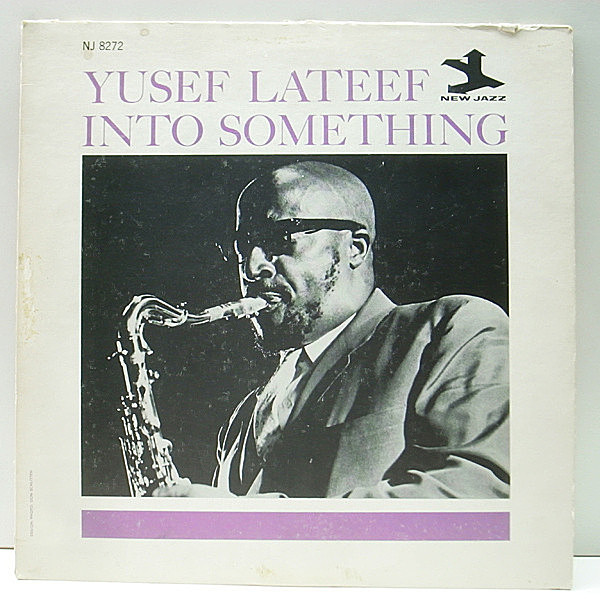
 Into Something consists of three trio and four quartet tracks, the latter featuring Barry Harris on piano. On the album, these are intermingled, starting with the quartet piece “Rasheed,” and it’s a good place to start, with some of everything that made Lateef unique — the unusual lead instrument (in this case, oboe), the Middle Eastern influence, the blues roots. But actually the recording session started with the three trio pieces, so perhaps Harris was a little late for the gig, and they had to start without him. We know that Bob Weinstock didn’t believe in rehearsals, and valued spontaneity, so why not go with what have? Barry’ll be here soon enough, what works without him? Lateef had brought along three standards to go with his four originals—tunes he chose, he told Nat Hentoff who wrote the liner notes, because he particularly liked them, for various reasons. 


The one he started the session with, “When You’re Smiling,” was a favorite of his father, who used to sing it often. It was a good memory, and he liked the message of the song. Do modern jazz musicians, whose improvisatory lines wander way outside the melody, think of the yrics of a song as they play it? Some do, some don’t. Bill Evans has said that he never did. Lateef, by his account to Hentoff, was thinking of the lyrics to “When You’re Smiling,” and thinking of them in a context. 

Written in 1928, the first recording of the song (by Seger Ellis) featured a lead-in verse, almost universally ignored in later versions, about a blind man and a legless man who take care of each other, and go through life smiling. Louis Armstrong cut what is still the classic version in 1929, and his version is illuminated by the famous Armstrong style.

Jazz musicians have recorded it: Dave Brubeck, Errol Garner and Dick Hyman, Urbie Green and Sonny Stitt, all with a lilt. Lee Konitz recorded it, and even with Billy Bauer and a quartet of Tristano acolytes, he sounds positively jaunty. Who knows if they were thinking of the words? It's hard to believe that Konitz wasn't.

But Lateef apparently was thinking of the lyrics, but maybe not so much singing or reciting the lyrics in his head as he played. He may have been thinking more about his father's voice, because his version is gentle and pensive as he states the melody, then becomes fragmented and searching.

Lateef's original tunes express the range of his passions. "Koko's Tune," as the title suggests, is in the bebop vein, though gentled down somewhat from the lightning tempo of Charlie Parker's "Ko-Ko." But if the tempo is gentled, the intonation certainly isn't, going seamlessly from gutbucket blues growls to hard-edged modernity, spurred on by the driving complexity of Elvin Jones's drumming (Jones, Harris, and bassist Herman Wright make up the all-Detroit rhythm section).

"Water Pistol" is in much the same vein, with Jones demonstrating that he really is the new face of jazz drumming. He had been working steadily and had recorded widely since his 1955 arrival in New York. He had recorded as a leader on albums for Atlantic and Riverside, and he had already joined John Coltrane's great quartet, with whom he had worked on several sessions, including the ones that made up his My Favorite Things. 


"P. Bouk" shows more of the Middle Eastern influence, and also includes an effective solo by Wright. And "Rasheed," with Lateef on oboe, shows him at full fusion strength, blending blues, bop, and the Middle East. 

Also blending Middle Eastern voicing with classic Western melody is his flute-led "I'll Remember April," the Gene dePaul-composed jazz standard that made its debut in an Abbott and Costello film. It was the 45 RPM single from the session, with "Blues for the Orient" on the flip side.

It's hard to choose a "Listen to One" from this superior session, in which every song has something particular to reommend it, from Lateef's command of the blues to blistering solos by Jones, but I'll go with "Rasheed," as perhaps being the most distinctively Lateefesque.

Esmond Edwards produced. The album was released on both New Jazz and Prestige, with "I'll Remember April" / "Blues for the Orient" as a Prestige single.


Friday, September 11, 2020

Listening to Prestige 515: John Wright


LISTEN TO ONE: Les I Can't

 John Wright is back in the Big Apple (more precisely, Englewood Cliffs) from his home on the South Side of Chicago for one more session with Prestige, his fourth of five, although it would be the last released, bringing one of his South Side soul regulars with him--drummer Walter McCants--and picking up some Detroit-to-New York soul with Gene Taylor, then working regularly as Horace Silver's bassist.

Wright's recording career was almost nonexistent outside of these five Prestige albums. He made one other recording for a small independent label 30 years later. Prestige brought him in to play piano on a recording by blues singer Arbee Stidham, where he transformed Brownie McGhee's folk blues "Pawnshop Blues"


into a jazz gem, but there's nothing at all beyond those. Unfortunately, the answer is that most of those intervening years were spent inside a bottle. Prestige "had big plans for me," he told an interviewer years later. "But my choice of getting high was whiskey, and that was my downfall."

When he finally did escape from that whiskey trap, he stayed at home in Chicago, where he began what became a Chicago tradition -- the Wright Gathering. First organized in his home in suburban Chicago, it featured his music and the cooking of his third wife Evelyn, who would prepare the whole year for it, cooking and freezing food for the big day. When Evelyn died in 2007, he thought that would be the end of the Wright Gatherings, but friends and admirers took over the cooking and organizing, and the now-popular event was moved to a nearby park.

Prestige had Red Garland, whose trio and solo albums were popular, but he was winding up his time with the label, and perhaps they hoped Wright would fill that slot. He certainly could have, had it not been for the booze. He was a wonderful musician. This session is a mixture of originals and standard ballads. The standards -- "Stella by Starlight," "But Beautiful," "More Than You Know," "Be My Love," "'Deed I Do," are all particularly beautiful melodies, given just enough of a blues treatment to reincarnate them in Wright's image. Wright has a way of playing, and of getting into a number, that gives one the feeling of a man completely in that moment, and giving his all to it. 

For me, this feeling comes across most powerfully in one of his originals, "Les I Can't." I don't know what the title refers to. A tribute to Les McCann? But McCann was on the West Coast, just getting started, hardly a household name yet. Sammy Davis Jr.? But that phrase would not be associated with the singer for another few years. It doesn't matter. John Wright can, and he does.


Wright would record one more album for Prestige, but this would be the last one released, being held in the can until 1965, by which time Wright was all but forgotten, so one suspects it didn't get heard much. If not, that's a shame. Listen to this one. It'll enrich your soul and your concept of soul jazz. Esmond Edwards produced, and the 1965 release was on New Jazz.


Saturday, September 05, 2020

Listening to Prestige 514: Willis Jackson


LISTEN TO ONE: Jambalaya (45 RPM)

 This is like one of those Prestige early days sessions, back in 1949-1951, when a band would come in to cut four sides for a couple of 78 RPM releases. In this case, though, the four sides are to flesh out an album which the Prestige brain trust must have suddenly realized needed fleshing out--they had more than enough material in the can for an album, not quite enough for two albums. So they got the band back together for one more session, although none of this material would actually be released for a few more years.

"Getting the band back together" mostly meant Willis Jackson, whose star maintained a steady wattage, and Jack McDuff, whose incandescence was steeply ascendant, more so that Bill Jennings, whose star was


fading, and who in fact did not solo to speak of on these four cuts, which is too bad, because he was a wonderful guitarist. But he still adds to the sound of a very tight group with three front men who have logged a whole lot of hours together.

The session features two originals by Jackson, and two songs by very different composers. "Without a Song" was written by Vincent Youmans, an early composer for musical theater, for a 1929 musical, Great Day, which was pretty much of a flop, but did produce two memorable songs, this one and "More Than You Know." A favorite of big-voiced singers, it's also had many jazz incarnations. 

The other is a little more unusual. Hank Williams is one of the great American songwriters and, like so many others in the American tradition, deeply influenced by the blues, but country songs and jazz musicians have rarely crossed paths. This was almost certainly the first cover of a Hank Williams song by a jazz musician, and I might have guessed the only one...but not quite. In 1994, Joe Pass collaborated with Roy Clark, a musician most closely associated with country (he was one of the stars of Hee Haw), but a guitar virtuoso who could and did play anything, on an album of Hank Williams songs. "Jambalaya" is Williams' reworking of an old Cajun melody, "Grand Texas." The original was a sad love song; in Williams's hands it became a celebration of Louisiana Cajun life. Jackson gives it some blues, and gives it some good times.

Frank Shea and Jimmy Lewis, from King Curtis'


s band, rounded out the quintet for this session.

The various sessions which reunited Jackson, McDuff and Jennings, from late 1959 through this one at the end of 1961, all produced by Esmond Edwards, were collected on two LPs, neither of which was released right away. The first, Together Again, came out in 1965. The second, Together Again, Again, which included all four of these cuts, was a 1966 release. Both album covers tout Jackson and McDuff, not Jennings, coming together again, and again.

"Jambalaya" was released as a 45 RPM single with "Thunderbird," from a 1962 Jackson album. "Without a Song" and "Backtrack" came out as Tru-Sound 45. Since there was no Tru-Sound in 1966, the time of the album release, I would guess that both of these singles came out much earlier.

Tuesday, September 01, 2020

Listening to Prestige 513: Eddie Kirkland


LISTEN TO ONE: Train Done Gone

Two items of note, here. First, Eddie Kirkland himself, one of the great blues performers of his generation. Although outgunned in reputation by Chess Records's stable of Muddy Waters, Howlin' Wolf, Little Walter, Bo Diddley and all, he was outgunned by no one when it came to delivering hard driving blues. Second, a rare, probably unique, opportunity to hear King Curtis and Oliver Nelson playing together.

That second one might be a bit of a letdown. King Curtis's band was brought in to back up Kirkland, and Nelson...? Perhaps he had stopped by the studio in Englewood Cliffs for some other reason, and decided it

would be fun to sit in, and a bit of something different. This was, after all, the blues and the concrete truth. Or perhaps there was a personal connection--Nelson would sit in again with the Curtis band on Kirkland's second Prestige session, the following year.

Neither Nelson nor Curtis solos, but the ensemble gives a fullness to what is first and foremost a Kirkland session, with the blues man's forceful and commanding voice, guitar and harmonica. It's the blues man, and it's the blues, man. Love gone wrong dominates the session thematically, and there's no arguing with that as a solid basis for the blues.

This was Kirkland's first album, and the only one on which the tag "Blues Man" was added to his name. If he was to be known by a nickname, it was more often "Gypsy of the Blues," because of his nonstop touring schedule. He did release one single--his first--as "Little Eddie Kirkland," on the West Coast RPM label, and he recorded a couple of sides in 1963 as Eddie Kirk. Those were for Volt Records, one half of the legendary soul labels Stax-Volt, during the time when he was bandleader for Volt's superstar performer, Otis Redding.

Kirkland was born in Jamaica but raised in Alabama. He toured with a medicine show in his teens, then joined the army, where a fight with a racist officer brought him a dishonorable discharge. From there he made his way to Detroit, where his mother was then living, and his guitar skills brought him to the attention of John Lee Hooker, with whom he toured from 1949 to 1962. From then on, following the gig with Otis Redding, he continued as a solo act, although he did also work with other artists, including  Little Richard, Ben E. King, Ruth Brown and Little Johnnie Taylor. He died in 2011 in an automobile accident.

It's the Blues Man! was released on Tru-Sound, and it has come to be regarded by many blues enthusiasts as Kirkland's best work. One track from the session "Man of Stone," was covered by the British blues band John Mayall's Bluesbreakers,. Tru-Sound also released "Train Done Gone" and "Something's Gone Wrong in My Life" on 45 RPM, while "Chill Me Baby" was matched with "Have Mercy on Me," from Kirkland's second Prestige session, in 1962. the 45 was released in 1964 on the Prestige label, Tru-Sound being no more by that time.

"Train Done Gone" had a parallel life, being also released on 45 by the tiny Detroit blues and soul label, Lu Pine, with "I Tried" on the flip side. Lu Pine did a lot of good stuff, but they're probably best remembered by music historians for "Tears of Sorrow" / "Pretty Baby," by the Primettes. The record flopped, but another Detroit music entrepreneur, Berry Gordy, liked the group's sound, signed them to his own label, and changed their name to the Supremes.

Music writer Elijah Wald once said of him, "For pure energy and emotion, he may be the greatest blues artist alive."


Monday, August 24, 2020

Listening to Prestige 512: Jack McDuff


LISTEN TO ONE: Your Nose is Open

Jack McDuff did a lot of recording during this period, and a lot of it, like this session, would be held back and released a good deal later. But the soul jazz sound, and the organ-tenor sax-guitar quintet sound, of which he had been one of the pioneers with Willis Jackson and Bill Jennings.

It's the second session of his association with Harold Vick, which would last for four years. Vick would go on to a successful career across the spectrum of soul and jazz, coming back in the 1970s to the soul jazz-organ sound with Shirley Scott and Jimmy McGriff.

Grant Green had been the guitarist on the earlier McDuff/Vick session, but he had moved on, and the new guitarist was Eddie Diehl, who would do a couple more sessions with this lineup. Diehl was a highly respected guitarist, but he became even more respected in a second career as a luthier, when he had left the hurly-burly of the big city and moved up the Hudson River to Poughkeepsie. 

Joe Dukes joined McDuff for this session, and remained his drummer for much of the decade. After he found Dukes, McDuff pretty much had to stop looking, because he was, by most accounts, just about the perfect soul jazz drummer. Originally from Memphis, Tennessee, he grew up steeped in blues and and soul. Critic François van de Linde in Flophouse Magazine, a jazz blog, describes him this way:

The chemistry between McDuff and drummer Joe Dukes was unbelievable, soul jazz drum pioneer Joe Dukes anticipated every move of McDuff and the tune changes with an assault of continuous accents and rolls, adapting big band style to the blues. 

And George Benson, who joined McDuff later in the decade, simply said of him (quoted in van de Linde's blog):

Such a magnificent drummer that there were times I thought he was one of the greatest things that ever happened to mankind.

 Dukes could also be a tough taskmaster, as the 19-year-old Benson was to find out when he joined McDuff:

Finally, after a particularly nasty rant, I snapped: ‘If y’all don’t lay off, I’m gonna take y’all outside and beat y’all old men up! I’m nineteen years old! Y’all can’t take me! We’re going out in the alley, right now! McDuff and Dukes just stared at me for a second, then they both pulled out switchblades. But that didn’t stop me: “I don’t care! Y’all don’t scare me! Bring your switchblades into the alley! I’ll beat y’all up anyhow!” Fortunately, cooler heads prevailed: nobody went into the alley, and nobody got beaten up. But it got them off my back.

Dukes's powerful assistance is heard to full measure on this session, as were the other musicians. McDuff learned a good lesson from his mentor Willis "Gator Tail" Jackson about choosing musicians who were not only first rate, but also absolutely compatible with him. Dukes and Diehl did not go on to become celebrated names in the jazz world--Dukes because he mostly stayed in McDuff's shadow, making only one album (for Prestige) as leader, Diehl because he left the limelight for the Hudson Valley and guitar-making--but just a listen to this session will tell you how good they were, and how right for McDuff's soulful sound.


Strangely enough, as popular as the organ-sax-guitar guitar sound was at this point, and as good as this group was, and as hot as McDuff was becoming, Prestige shelved this session and didn't release it until 1971, as On With It! One cut, "Scram," a Leonard Feather composition, came out on 1963's Soul Summit Vol. 2 ,  made up of cuts from four different sessions, mostly featuring Gene Ammons and released shortly after Ammons went back to prison.

Esmond Edsards produced.

Friday, August 14, 2020

Listening to Prestige 511: Swingville All Stars (Leonard Gaskin All Stars)


LISTEN TO ONE: At the Jazz Band Ball

Leonard Gaskin, New York City born and bred, found his way to Minton's and Monroe's early in the bebop era, and at age 24 followed Oscar Pettiford as bassist in Dizzy Gillespie's quintet. He played on some of Miles Davis's first recordings as a leader, recorded with Charlie Parker and Stan Getz. But as time went on he seemed to gravitate toward an earlier form of jazz, and his only two recordings as leader, both for Swingville, reflect that.

Jazz and its different forms have been known by a variety of names, not all of which caught on, not all of which are particularly endorsed by their practitioners. "Jazz" itself is rejected by many of the finest players of
this American music, while others guard the name against presumed barbarians at the gate, like Louis Armstrong castigating bebop as "Chinese music," or Eddie Condon, dismissing the beboppers with "We don't flat our fifths, we drink 'em." One well-known and well-esteemed jazz musician said of Ornette Coleman, "Whatever it is, that ain't jazz." 

Or sometimes maybe it isn't used at all. In The Benny Goodman Story, the word "jazz" is never used once. Nor is the word "swing," for that matter. Steve Allen, as Benny, talks about wanting to play "hot music" and have his "hot music accepted.

Other apellations just didn't stick. For a time, the music that came to be known as bebop was called "New York music," and I've always thought it was kind of a shame that that didn't catch on. Afro-Cuban jazz was also called Cu-bop, and maybe that was too cute by half. 

And then there's Dixieland, a name used by the white ensemble who cut the first jazz record, back in 1917. A number of Black musicians from New Orleans had joined the Great Migration northward to Chicago, the most famous among them being King Oliver and Louis Armstrong.  A number of white musicians were to make that same trek, because there was an audience for the music. They played on their New Orleans roots by calling their ensembles Brown's Band from Dixieland, or Stein's Dixie Jass Band, or -- the group that traveled from Chicago to New York, and ended up making that first record--the Original Dixieland Jass Band, later to become the Original Dixieland Jazz Band.

So it was this group that first popularized jazz beyond the nightclub audience in a few major cities, and who really brought the name into common parlance--and who also struck the first salvo in the ongoing culture war over the proposition that American music -- blues, jazz, and all their descendants -- are an African American art that has been stolen by whites.

And this is mostly true. I don't know how true it is on the musician level. Real musicians play music, and jazz musicians are consummate crafters who devote their lives to getting good enough, and remaining good enough, to be allowed into the colloquy that is jazz music. Louis Armstrong cited cornetist Nick LaRocca of the ODJB as one of his inspirations. But it is absolutely true on the business end. It's no accident that the ODJB, and not King Oliver or Fate Marable, was signed to make the first commercial jazz recording.

But if the white musicians who named their bands after a term which glorified the old South of slavery were not being consciously racist, they didn't have to be. Racism was such a part of their era that it was accepted without much conscious thought. In any event, the term, like the music it described, declined until the 1940s, and the revival of traditional jazz which began when journalist and music lover Heywood Hale Broun went down to New Orleans to record the still-active keepers of that tradition, and New Orleans musicians such as Bunk Johnson came to New York and recorded. This neo-traditional music, based on New Orleans and Chicago styles of the early decades of the 20th century, took the name of the ODJB and began to coalesce under the name Dixieland jazz. By then, there was at least somewhat more social awareness, and there were some who found the name offensive (and the music bland and uninteresting), but the most popular purveyors of this faux-nostalgic music called themselves the Dukes of Dixieland. 

The Dukes were never very highly regarded in jazz circles, although Pete Fountain, Jim Hall and Herb Ellis played with them at one time or another. And they were pretty solidly white, although Louis Armstrong did sit in with them on a couple of occasions.  And their musical imitators, who wore straw hats and striped blazers and conjured up images of a mythic and genteel Old South, were also all white.

But the musical tradition of New Orleans and Chicago was real, and though "Dixieland" had pretty much been relegated to football halftime shows, county fairs and Kentucky Derby festivities, there were real musicians, both black and white, who still honored those traditions, and it was just such a group of musicians that were gathered by Leonard Gaskin for this session.

It was very much Gaskin's session, and he is listed as "leader" in the session log, although that's not normally noted. Immersion in the tradition is emphasized by the selection of material, even including one tune ("At the Jazz Band Ball") from the ODJB's original sessions.

As the free jazz revolution started to take hold, it was good to be reminded of where jazz had come from--and to be reminded that jazz's evolution had been so rapid, that these still-vital, still-creative oldtimers were playing side by side with the Cecil Taylors and Albert Aylers.  Sometimes literally side by side--Garvin Bushell, who had played with Bunk Johnson and Fletcher Henderson, would also play with Eric Dolphy,

Doc Cheatham, Vic Dickenson, Buster Bailey, Dick Wellstood, Herbie Lovelle and Gaskin  have all appeared on Prestige sessions before, the first four on earlier Swingville releases. Lovelle backed up King Pleasure on a 1952 session. Gaskin was very active for Bluesville, working with a wide variety of blues singers, but he had also played on two of Prestige's earliest bebop sessions, one with J. J. Johnson and the other with Miles Davis.

Trumpeter Yank Lawson was one of those who continued to embrace the Dixieland moniker, and created, with bassist Bob Haggart, an ensemble that managed to achieve popularity on the Dixieland/nostalgia circuit while still playing music a jazz fan could take pleasure in. He began his career with Ben Pollack's orchestra in 1933, then worked with Bob Crosby, Benny Goodman, and Tommy Dorsey. He and Haggart formed the Lawson-Haggart band in the 1950s, disbanded, and then rejoined forces in 1968 to create the modestly named World's Greatest Jazz Band, which had a solid decade's run of popularity, and included Cutshall, Dickenson and Wellstood at various times.

Trombonist Cutty Cutshall played with Benny Goodman, Billy Butterfield and Louis Armstrong, but his longest association was with Eddie Condon, with whom he was still touring when he died in 1968.

Clarinetist Edmond Hall came by the tradition naturally, being from a family of New Orleans musicians. His most important association was with Louis Armstrong, but he had a pretty strong pedigree before joining Armstrong, starting with his first recording session, in 1937, with Billie Holiday and Lester Young. He played with Claude Hopkins, Lucky Millinder, Zutty Singleton, Joe Sullivan,  Henry "Red" Allen, Teddy Wilson, and Eddie Condon, among others, and was co-leader of the house band at the original Cafe Society in New York.

The recording date began with Lawson,Cheatham, Cutshall and Hall joining the rhythm section for "Tin Roof Blues," a tune that goes back to 1923 and the New Orleans Rhythm Kings, a white group of New Orleans-to-Chicago musicians, and "Muskrat Ramble," written in 1926 and first performed by Louis Armstrong.

"At the Jazz Band Ball" is the ODJB tune, written by Nick LaRocca and other members of the group in 1917, and featuring the entire nine-piece band. The whole album is a pleasure to listen to, but on this tune in particular they really let rip, its 6:19 length giving everyone a chance to shine. 

After that, Lawson, Cheatham, Cutshall and Hall pack it in, and Dickenson and Bailey take over for "Mack the Knife," the one modern tune, but it fits right in with the mood; "Hindustan," written in 1918 by Oliver Wallace, who a quarter century later would win an Academy Award for Dumbo; and "Keepin' Out of Mischief Now," a Fats Waller tune that's almost modern, having been first performed by Louis Armstrong in 1932. It really does sound from a different era and mind set than the other tunes on the album, even "Mack the Knife."

Swingville released the album as At the Jazz Band Ball by the Leonard Gaskin All Stars, but actually all it says on the front cover is the title and subtitle: A Dixieland Sound Spectacular, so Dixieland as a label was not dead yet. A later CD rerelease on a different label kept the title but named the group the Swingville All Stars.

Friday, August 07, 2020

Listening to Prestige 510: Gene Ammons - Joe Newman - Jack McDuff


LISTEN TO ONE: Born to be Blue

During the late 1960s, when rock started to take itself seriously, supergroups suddenly became the rage. But in jazz, they were old news. And they were done without thinking twice. Let's get Gene Ammons back into the studio. --Yeah, and let's put him with a couple of different guys.  -- Who's in town? And presto, you have Joe Newman and Jack McDuff showing up to jam with Gene on some tunes. Supergroup? Oh, my, yes.

And jamming? I'd say so. They're relaxed, they're trying each other out on a variety of material, they're finding some good grooves, and they're playing jazz. What's not to like?

There's nothing not to like. Unlike the world of cartoons, or all too often the world of other collaborative arts, in jazz when you put a group of musicians like this together and say "What could possibly go wrong?" nothing does. These guys are seasoned pros, they're entertainers, and they're artists. And they've got some good tunes to work with.

It's hard to pick a favorite here for a Listen to One, but they do an awfully nice job on "Born to Be Blue," the ballad written by Mel Tormé and his frequent writing partner Robert Wells (they also collaborated on "The Christmas Song").  It's sensitive and lyrical, with great individual work by all the participants.

I also love the variety of material here. Ellington and Strayhorn's "Satin Doll" gets covered a lot (397 versions, according to the SecondHandSongs website), but with top notch improvisers, it's always worth one more. "Stormy Monday Blues" is the Bob Crowder/Billy Eckstine/Earl Hines version, not T-Bone Walker's, though both are 12-bar blues. Bennie Moten's "Moten Swing" comes out of that Kansas City cauldron of swing. And the two Ammons compositions are up against some pretty tough competition, but they hold up.

The newcomer on this session is Chicagoan Walter "Baby Sweets" Perkins, who got his start playing with Ahmad Jamal, recorded with Sonny Criss for the Texas-based Peacock label, then did a few sessions as leader for the Chicago labels Argo and Vee-Jay. He would move to New York full time not long after this session, where he would do three more albums with Ammons and find plenty of other work, recording with  Rahsaan Roland Kirk, George Shearing, Charles Mingus, Billy Taylor, Booker Ervin, Jaki Byard, Lucky Thompson, Pat Martino, Sonny Stitt, and Charles Earland, among others.

As you may recall, part of the reason why I started this project was the conversations Peter Jones and I had about recorded jazz in the 1950s, and our recollection that it was all good. I've been putting that to the test for 510 entries now, and I'm into the 1960s, and it's still holding up. How many different ways are there to say this is good stuff, this is a deeply satisfying listening experience? I guess we'll find out, or else I'll start showing my age, and repeating myself.

The album was called Twisting the Jug, although it was hardly a twist album (but you could dance to it). It was released on Prestige, with the title cut a two-sided 45 RPM single.

Listening to Prestige 509: Doug Quattlebaum


LISTEN TO ONE: So Sweet

Doug Quattlebaum had a brief but well-deserved moment in the limelight, and he attained it the old-fashioned way: the modern equivalent of the old 19th and early 20th century medicine show. He had gotten a record deal in 1953, cut three songs for a Philadelphia label, and saw two of them released on a 78 RPM single. Then nothing until 1961, and his contemporary medicine show. Whereas the old timers used music to draw a crowd to whom they could sell patent medicines, Quattlebaum had taken a job driving a Mr. Softee ice cream truck. In the afternoon, he would park in a neighborhood, get out his guitar, plug into an amp he had rigged up on the truck, and start entertaining--old songs, current hits...and some blues. When he had the crowd, he could start selling ice cream. Someone told jazz and blues producer/historian Pete Welding about the Mr. Softee guy. He came, he heard, he was hooked.

Quattlebaum was from South Carolina, where as a toddler he made his first guitar out of a wire stretched between two nails on a stick of wood, then graduated to a homemade cigar box guitar. His model in those early days was fellow Carolinian Blind Boy Fuller. Later his family moved to Philadelphia, where his mother remarried. His new stepfather was Arthur (Big Boy) Crudup's brother, and he bought young Doug his first real guitar when he was 14, and taught him the only chord he knew. He taught himself the rest, and started playing accompaniment for gospel groups. After his career started and stopped in 1953, he went back to playing for gospel groups, including Clara Ward and the Ward Singers. The gospel influence can be heard in his approach to singing the blues.

For this session, he draws blues from a variety of sources, and adds a few of his own, drawing on traditional material. He pays respects to his early influences, with Blind Boy Fuller's "So Sweet" and Arthur
Crudup's "Mama Don't Allow Me to Stay out All Night Long." It's the kind of set a medicine show pitchman would put together -- something borrowed, something blue, a little something for everyone, and quite satisfying.

On the strength of this album and Welding's sponsorship, he did the blues and folk circuit for a while, then returned to Philadelphia where he continued backing gospel groups and may have become a minister.

Welding and Kenneth Goldstein produced. Softee Man Blues was released on Bluesville.

Wednesday, August 05, 2020

Listening to Prestige 508: Shirley Scott


LISTEN TO ONE: Doodlin'

No sooner do I get done praising the uniqueness of Steve Lacy's commitment to the music of Thelonious Monk, devoting one full album and the greater part of another to Monk's compositions, when what should come along but an album by Shirley Scott devoted to the music of a different jazz composer?

And while Horace Silver, as a composer, may not have had the depth of a Monk or an Ellington, he certainly knew how to write some catchy tunes, and an album devoted to them, especially as played by Scott, is going to be great for listening, for finger snapping, for toe tapping.

And one wonders if there was a marketing consideration here. Both Prestige and Blue Note were going after the new and burgeoning soul jazz market, with Blue Note having the inside track, largely because of Horace Silver. Prestige wasn't going to get Silver, but they could get his name on an album cover.

One way or another, there can't be anything wrong with hearing tunes like "Doodlin'," "Senor Blues" and "The Preacher" played by someone as inventive as Scott, combining a popular touch with a gift for musical exploration.

Scott was joined on this day by Otis "Candy" Finch, a drummer who worked with Scott, with her husband Stanley Turrentine, with Herbie Hancock and Dizzy Gillespie and others, before leaving New York for Seattle, where would teach and play music away from the limelight.

Bassist Henry Grimes, in his only appearance on Prestige. Grimes was shortly to launch into a career as one of the favored bassists of the avant garde, working with Albert Ayler, Don Cherry, Cecil Taylor and Pharaoh Saunders. But in 1961, he had already established himself a significant, figure, first in rhythm and blues (playing with Willis “Gator Tail” Jackson, Arnett Cobb, “Bullmoose” Jackson, Little Willie John and others), and then with a variety of mainstream jazz artists. His reputation as one of the most versatile bassists around was cemented in one weekend--the 1958 Newport Jazz Festival, the one captured in the documentary Jazz on a Summer's Day. He appeared with Benny Goodman, Lee Konitz, Thelonious Monk, Gerry Mulligan, Sonny Rollins, and Tony Scott. 

Grimes would go on to bring a whole new level of creativity to the bass throughout the 1970s, and then suddenly disappear from the scene, so completely that he was presumed to be dead. Free jazz didn't necessarily translate into a living, even for someone as respected as Grimes, and after his bass was damaged on a West Coast trip (strapped to the roof his friend's car, it was baked by the sun through three days of driving through the desert), he had to sell the instrument. 

He described what happened next in an interview with Jon Liebman of the For Bass Players Only website:

HG: I worked as a janitor and maintenance man and day laborer. I also spent many hours in the library, studying literature and writing poetry, short stories and metaphysical ideas. I have around ninety notebooks at home with my writings from those times. I still continue to write today.

 He lived like this for 35 years, until a social worker and jazz enthusiast named Marshall Marotte tracked him down. A younger jazz bassist, William Parker (also a free jazz player and also a poet) donated a bass to him, and he was able to resume his career.

FBPO: Did you ever really give up on music, or did you believe, deep down, that one day you would be back?

HG: I never gave up on music, not for a minute. You could say I was absent for a long time, but I always believed I would be back one day. I just couldn’t see the way to get there, but I knew it would happen.

In the same interview, Grimes gave the best, perhaps the only reasonable answer to the question, "What would you be doing if you weren't a bass player? 

This question doesn’t have any meaning to me. I am a bass player and violin player and poet. If I weren’t those things, I wouldn’t be Henry Grimes. I wouldn’t be… at all.

Grimes married, continued to create and teach and write, and lived a fulfilled life until finally felled in April of this year by the Covid virus.


Scott's second session of the day marked the start of a new association, both musical and personal. She had certainly been one of the most important figures in establishing the soul jazz organ/saxophone sound through her work with Eddie "Lockjaw" Davis; now she was to continue to mine that vein with a new saxophonist, Stanley Turrentine, who was also her new husband.  Turrentine was signed to Blue Note, so as the two continued to record together throughout the 1960s, they would be billed under her name for Prestige albums, under his for Blue Note sessions. I'll have more to say about him, and their partnership, in chronicling subsequent sessions.

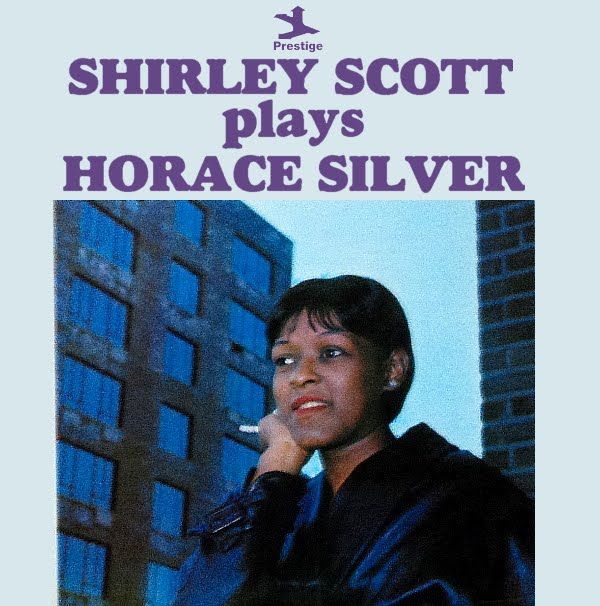
Esmond Edwards produced. The trio album was called Shirley Scott Plays Horace Silver, the quartet album with Turrentine Hip Twist. Both were released on Prestige. There were 45 RPM singles released from both sessions: "Sister Sadie, parts 1 and 2," and "Hip Twist, parts 1 and 2."