Showing posts with label Joe Holiday. Show all posts

Friday, March 01, 2019

Listening to Prestige 381: Larry Young

Larry Young's real importance in jazz history would come later, in his Blue Note years (1964-69), when he became the first organist to follow the path blazed by John Coltrane(with whom he jammed but never recorded), into the avant garde. Teaming with Coltrane's drummer Elvin Jones, he took the organ out of the soul jazz groove which had been laid out for it by Jimmy Smith, Shirley Scott and others. And he never looked back. He went on to an uncredited appearance on Miles Davis's Bitches Brew album, joined Tony Williams and John McLaughlin in Lifetime, and McLaughlin and Carlos Santana for Love Devotion Surrender. He made groundbreaking albums in both free jazz and jazz-rock fusion, before succumbing to pneumonia and dying at 37.

So it would be easy to overlook Young's debut album for Prestige, at age 19, and the Prestige/New Jazz albums that followed it, and that would be a huge mistake. Artists grow, mature, and develop in different ways over the course of lifetimes, but that doesn't negate the importance of their earlier work. I've written before about how today's young Coltrane fans betray a great impatience with Trane's early work on Prestige with the Red Garland trio, and I've said how much of a mistake I think that is. And sometimes artists grow and develop in ways that not only don't eclipse their earlier work, but don't live up to it.

What's the best Miles Davis? Some would say the groundbreaking nonet sessions for Capitol in 1948-49. I've argued that Birth of the Cool, and not Kind of Blue, is the most important album of the 1950s, but many would disagree. Kind of Blue remains the most popular jazz album of all time, and its fans are legion. Others would argue for the jazz-rock fusion of Bitches Brew. Others--probably fewer--would go for the later stuff like Big Fun and Jack Johnson. But while many would not want to make the case that Miles kept getting better and better, few would argue that he should have kept doing the same thing.

Igor Stravinsky had a long and successful life as a composer, but his youthful Rite of Spring and The Firebird are what he's remembered for most. William Wordsworth lived to be 80, and wrote poetry all his life, but he's remembered for the work he did before the age of 30.

The Beatles are celebrated for Rubber Soul and Sergeant Pepper, but for sheer enjoyment, it's hard to top "I Wanna Hold Your Hand" or "Ticket to Ride." And so it is with Larry Young. Jazz changed a lot over the years that Young was making music, and he changed with it, but if you love soul jazz, it's hard to beat the burning, churning music that this teenager turned out on his debut album.

A contemporary review of Young's first Blue Note album talks about Young "freeing the Hammond organ from a jaded rhythm’n’blues context," just as other jazz writers have talked about Kind of Blue liberating jazz from the sweaty clichés of bop, but this is frankly bullshit. Bop wasn't a cliché and rhythm and blues is not a jaded context, certainly not the way Larry Young was playing it in 1960.

Young came from Newark, halfway between the jazz mecca of New York City and the organ hotbed of Philadelphia. He had begun to make a name for himself with rhythm and blues bands in his father's Newark clubs when he was signed by Prestige. He came into the session young, but fully formed in technique and jazz awareness.

He leads a trio for most of this session: organ, guitar and drums. The guitarist is Philadelphian Thornel Schwartz, who we've heard before on two Johnny "Hammond" Smith sessions, and who was developing a reputation as an organist's guitar player. He would eventually work with nearly all the major jazz organists.

If someone tells you they're going to play you an organ album featuring Jimmie Smith, you don't expect him to be the drummer, but in this case, that's exactly what you get. This is the other Jimmie Smith, like Larry Young a Newark native, and youthful. He was fresh out of Juilliard and making his recording debut. He would go on to have a fine if mostly unheralded career. He starts the session off with a blistering drum intro to J. J. Johnson's bebop standard "Wee Dot," taken here in a version that favors soul over bop, and gives a whole new feeling to the tune.

They are joined on the second number by an old favorite, at least an old favorite of mine: Joe  Holiday, whose melding of mambo and bebop in three 1953-54 albums remains a highlight of my Prestige Odyssey. Holiday contributes an original composition, "Exercise for Chihuahuas," and comes back again later in the session to take the lead on a familiar standard, "Flamingo," best known for Earl Bostic's R&B chart-topping version in 1951.

If you think turning a bebop standard like "Wee Dot" into a soul jazz burner is a feat, how about making a soul jazz conflagration out of a Sigmund Romberg warhorse, "When I Grow Too Old to Dream"? But they do that too, and the same with Rodgers and Hart's "Falling in Love With Love."

The rest of the album is two Larry Young originals. "Some Thorny Blues" is a virtuoso piece written for Thornel Schwartz, and he comes through. "Testifying" is a remarkable piece of soul, with catchy rhythm and blues riffs morphing into the sonority of a church pipe organ.

So if you think you know Larry Young from his fusion and free jazz phases, it's worth going back and checking out where he started from. This is soul jazz and hot and fresh as sweet potato pie from a Muslim street baker in Newark. Testifying was the name of the album, and Esmond Edwards produced.


Listening to Prestige Vol. 3, 1957-58 is now available!


and also:

Listening to Prestige, Vol. 2, 1954-56


Listening to Prestige, Vol. 1 1949-53


Friday, June 12, 2015

Listening to Prestige Part 119: Joe Holiday/Billy Taylor

Joe Holiday is one of my new favorite musicians--a guy I had never heard of when I started this project, but who I've grown to love over the four previous sessions he recorded for Prestige, establishing himself as the king of mambo jazz.

That being said, listening to this session on the heels of the Sonny Rollins/Kenny Dorham/Elmo Hope session, Holiday is not in their league as an improviser. Where they were Movin' Out, Holiday is more like Stayin' Home. But I tell you, there's nothing wrong with stayin' home if you can roll back the rug, have a couple of rum and cokes, take a cute girl in your arms and do the mambo all night.

If Holiday's improvisations don't break any new ground, he can surely play the bejeezus out of a
melody, he can swing, he can bring Latin to bebop and vice versa.

Billy Taylor's improvisations are a lot more adventurous, but he and Holiday make a good fit. There are all sorts of different ways of being on the same page musically.

But if I were going to give an MVP for this session, I think it would be Charlie Smith. On the earlier Holiday/Taylor collaboration, they had the benefit of Machito's rhythm section. Here Smith handles it all, on traps and congas, and he keeps it going.

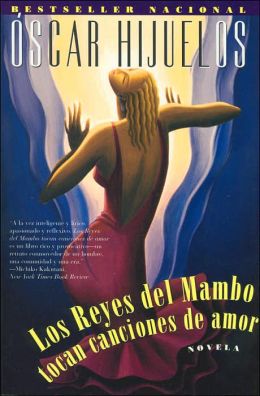
The cuts from this session were released as singles. The mambo was still a hot dance craze in 1954. Apparently, they only came out on 78. Perhaps the market for Latin music was still mostly 78 RPM. In the introductory chapter to Oscar Hijuelos' magnificent novel The Mambo Kings Play Songs of Love, as Cesar Castillo is dying, he stumbles and knocks over a credenza in his apartment, and dozens of 78s fall to the floor and shatter. "I Love You Much" had what seems to be a variously titled song on its flip side. The session list has it as "Chasin' the Bongo," but every 78 RPM catalog I've found lists it as "Chasin' the Boogie." Also, every catalog has an unknown flip side to "It Might As Well Be Spring," but the song was over five minutes long, so it has to have been Part 1 and Part 2. It looks as though no one in recent memory has actually seen a copy of either of these discs. Maybe they were part of Cesar Castillo's record collection.

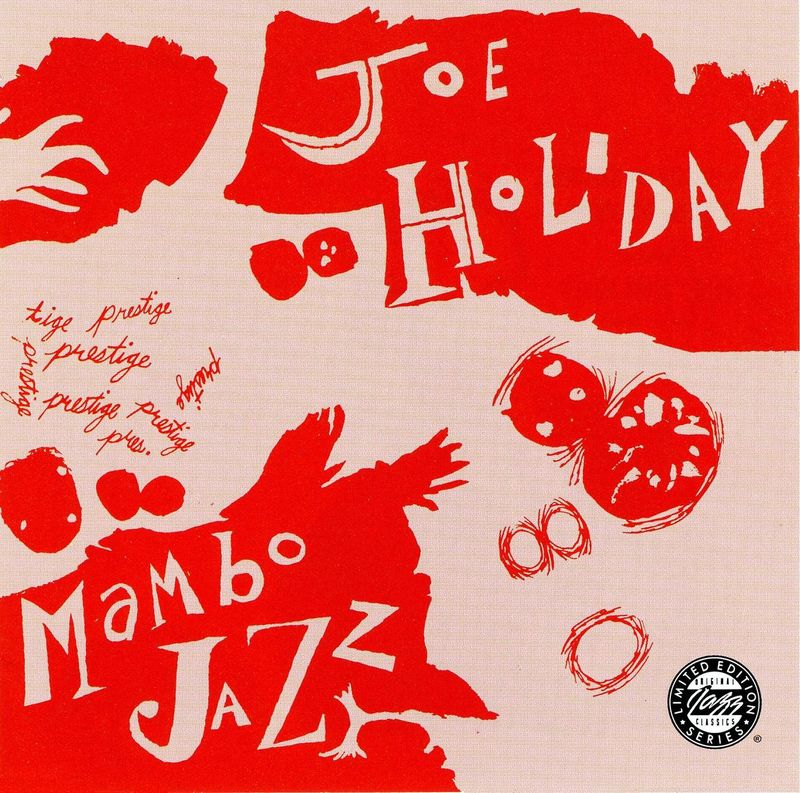
They were included on the Holiday/Taylor Mambo Jazz 10-inch, then had to wait for years-later reissues.


Thursday, April 09, 2015

Listening to Prestige Part 98: Joe Holiday - Billy Taylor

Billy Taylor, during this period, was developing quite a reputation for Latin rhythms, so it made sense to put him together with Joe Holiday, the king of mambo jazz. Taylor brings with him his regular rhythm section of Earl May and Charlie Smith, plus the musicians from Machito's band that he had used on his last session, including Machito himself, this time apparently under his own name.

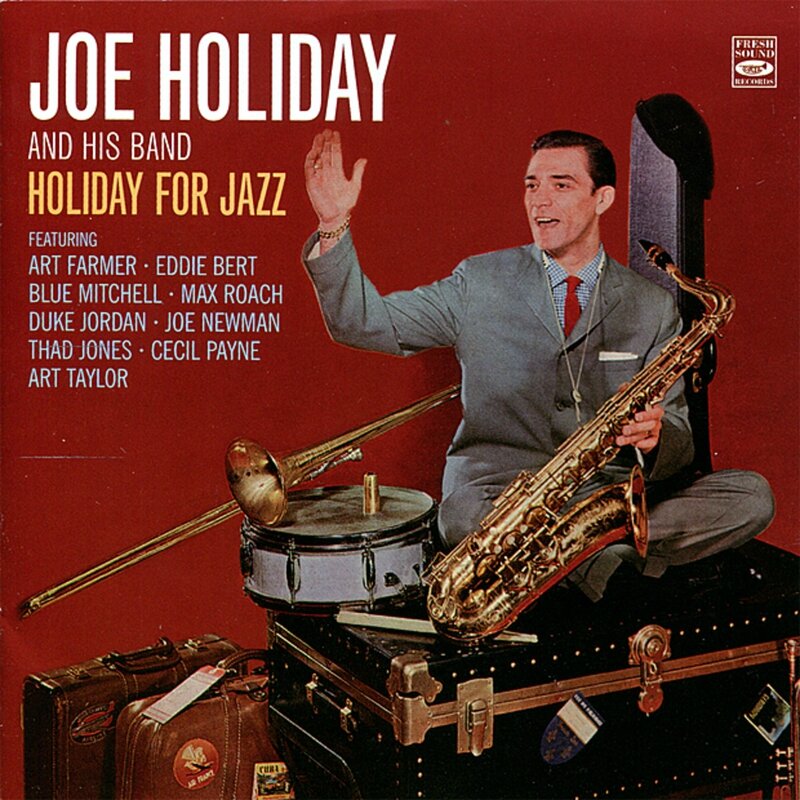
Taylor was at the beginning of a long and distinguished career, of which Latin jazz was only a small part. Holiday would record very little after this. He would do one more session with Billy Taylor, nearly a year after this one. He made an album for Decca, Holiday for Jazz, in 1957, and played on a couple of tracks for keyboardist Larry Young's debut album on Prestige.

And there were a few singles for Federal, in 1951. Federal was an odd little label. They released some jazz recordings. They had some rhythm and blues classics, including the Midnighters' "Annie" series, and Billy Ward and the Dominoes' "Sixty Minute Man," and James Brown's "Please, Please, Please." They released a number of singles by the Platters, including a mambo and the "Beer Barrel Polka," before finally finding their romantic R&B sound with "Only You," after which the Platters moved on to bigger and better things. Federal was owned by Syd Nathan, out of Cincinnati, as a subsidiary to his King label. So it's no surprise that in 1951, the same year they recorded Joe Holiday, Marian McPartland, Red Callender and Memphis Slim, they were primarily a country and western label.

Anyway, Holiday should have been recorded much more.

Machito's men cook up a storm on this session, especially on "Sleep." I'd say they add a touch of authenticity, but I don't really think it's appropriate here. Everyone on this session is authentic. Italy-born Joe Holiday and North Carolina-born Billy Taylor play mambos that have a good beat -- you can dance to them. And you can listen to them. Holiday had the rhythmic sureness, the tonality, the musical skills and the inventiveness of Stan Getz, another gringo who would make a name for himself in later years for playing a Latin American dance rhythm.

So it all adds up to total pleasure -- and I haven't even talked about Billy Taylor's contribution yet--not his piano work, and not his organ playing on "Besame Mucho," a hoary chestnut of Latin orchestras and singers which these turn into something exciting and moving. The organ is a perfect choice for it.


 "Sleep" was released on both 78 and 45, b/w "My Funny Valentine" from the March octet session. "Besame Mucho" and "Fiesta" were a 78, and "I Don't Want to Walk Without You" also paired up with a song from the earlier session, "Martha's Harp," on 78 and 45. All four tunes, along with the later Holiday/Taylor session, were included on a 10-inch LP.


Tuesday, February 17, 2015

Listening to Prestige Records Part 83: Joe Holiday


The big band era ended with World Wat II, and a combination of social and economic factors, and some aesthetic factors as well --people liked the supple acrobatics of the great bebop soloists in a small group setting -- a rhythm section and one or two -- at the most, three -- soloists. But there's still something about the texture, and the power,that can come out of a larger group of musicians, and there was always the temptation to try and recreate it. Dizzy Gillespie put together a big band. Others tried to capture theflavor of the big bands in different ways. Louis Jordan came from the Chick Webb orchestra, and his search for a way to capture the spirit of Chick Webb with a smaller group led to the sound that we now know as one of the cornerstones of rhythm and blues.

Others tried different approaches,and in the early '50s, in what was coming to be known as the poat-bebop era, perhaps the most influential sound of a group that was larger than a sextet was the Miles Davis nonet, which I know I keep coming back to, but you can't help it. And although there were several arrangers for the Birth of the Cool sessions, including John Lewis, who take his search for the new sound in a different direction, perhaps the most influential were two of the greatest arrangers jazz has ever produced: Gerry Mulligan and Gil Evans.


So it's hard to hear a group of this size without thinking of the nonet, and ruminating on what they took from that seminal sould. Joe Holiday, of course, had taken jazz in his own direction, back toward dance music, with his mambo jazz, but this was different. He was coming back toward the mainstream, and although the general public didn't know it yet, that mainstream was flowing from the Royal Roost in 1948, and the records that Ira Gitler described as "the sound heard 'round the world," that were still four years away from being released on an LP by Capitol. I loved the Joe Holiday mambo stuff, but it's easy to see why any jazz musician would want to try putting together this sort of small big band. I hear an Evans influence more than Mulligan in these arrangements.

An octet is an ambitious undertaking, the more so when you remember Bob Weinstock's prohibition on rehearsal time. You have to be be pretty good to hold it together, and Holiday proves himself pretty good, especially when you consider the disparate group of musicians he put together.

It helps to start with Max Roach, the consummate drummer of the era, and a mainstay of many a Prestige recording session. And one of the fathers of bebop.

John Acea was of Cuban ancestry, but not a mambo man. He was born in Philadelphia, and grew up in that city's musical scene. He was gifted on nearly every, but settled on piano after he got out of the army, and played on a wide range of sessions, behind vocalists from Dinah Washington to Patti Page, with jazz groups from Cootie Williams to Zoot Sims. He was one of those guys you're glad to get for a session.

I can't find much on Franklin Skeete, but he was on the scene. There's a Lester Young session with Horace Silver and Connie Kay, a session with Cecil Payne. They're earlier, and it could be that after this session he sort of faded out of the scene.

Payne played up and down the sax scale, but when he settled on baritone, he became one of the leading boppers on the instrument. He was essentially a child of the bebop era, getting his start with J. J. Johnson and Dizzy Gillespie, although he did play a stint with Roy Eldridge, and made some hot R&B sides (with Franklin Skeete) for Decca in 1949.

Idris Sulieman was one of the first jazz musician/Islam converts, with Art Blakey (Abdullah Ibn Buhaina) being the most famous. His early credits show the range in a jazzman's life: studied at the Boston Conservatory of Music, then got his first professional experience with the Carolina Cotton Pickers. Like Cecil Payne, he came up in the bebop era of the 40s, became an important figure in the hard bop era of the 50s. Like Payne, he is treasured by jazz enthusiasts, not really known to the casual listener.

Earle Warren (misspelled on the session list) was from a different source altogether. He was a longtime member of the Basie band, and played some rock and roll with Alan Freed.

So how indebted is Joe Holiday to the Birth of the Cool nonet? I think a lot, especially in the two ballad numbers, "And Now it is Love" and "My Funny Valentine," in their exploration of the tonal and textural possibilities of a medium sized band. I confess I was a little disappointed on first listening not to hear more mambo jazz, and I responded more to the uptempo numbers, "Cotton Candy" and "Martha's Harp." But on repeated listenings, the ballads grew on me, and the disappointment fled.

These came out on 78, 45, and 45/EP; not in album form till many years later, in the reissue days.


Tuesday, December 30, 2014

Listening to Prestige Records Part 64: Joe Holiday

1952 seems to have been a slow year for Bob Weinstock, which is a little odd, given that Prestige was enjoying its biggest hit to date with King Pleasure's "Moody's Mood." He did Sonny Stitt the week after King Pleasure (and it's quite likely he was expecting more from the Stitt session than from King Pleasure), and then very little else for the first half of the year. The Jimmy Forrest/Miles Davis session, which may or may not have been in the spring of 1952, wasn't a New York production or a Weinstock production.

Sometime in April there was a session with rhythm and blues vocalist John Bennings. There's no information at all about who played on the session, which is very rare for Prestige. Four songs were recorded, two released on Prestige, two on Par Presentation. I don't think Weinstock produced the Par Presentation sessions, so I'm guessing he didn't involve himself much here. Par was run by a guy named Sam Green, which is much too common a name for me to track down.It lasted until 1953.

These recordings have catalog numbers, so they must have been released, but they aren't on Spotify or YouTube. I've found mention of Bennings recording for several of the best independent R&B labels, including Savoy and Apollo, but I can't find any of those recordings either, so I don't know what he sounds like. I did find a source that says he lived till 1995, so I hope he sang and was appreciated.

I know what Bennie Green sounds like, and I would love to hear more of what he sounded like with strings, but this recording is also not on Spotify or YouTube. I was able to find it on Slacker, but without a subscription I couldn't listen to more than one cut. Bennie sounded in fine form.

I'm really starting to feel a visceral sense of loss every time I hit a session I can't lsten to.


The Green session was in May, so no recording of jazz in March or April. And then nothing until the end of July, when Joe Holiday is back, and back with a vengeance. If  anything, this is even hotter than the first session. Mambo was the thing, and Holiday has some powerful percussionists here who dominate the session -- and in a good way.

I can't find anything on Ulysses Hampton beyond this session, but he's on fire here. There must have been so many talented percussionists around New York back then. This era, and this music, and the Cuban immigrant experience are brilliantly portrayed in Oscar Hijuelos' great novel, The Mambo Kings Play Songs of Love. The movie that was made from it isn't great, but the mambo sequences are.

This was three years before Sam Woodyard joined the Ellington orchestra, but he could play anything on the drums -- his background was R&B with Paul Gayten, traditional jazz with Roy Eldridge, and here the mambo bebop hybrid of Joe Holiday. There's some very nice solo work by Holiday, and some good organ-sax stuff, but it's the percussion that really drew me. All in all, makes me even more glad to have been introduced to Joe Holiday and his mambo jazz.


Thursday, November 27, 2014

Listening to Prestige Records Part 54 - Joe Holiday

Another unexpected delight -- another musician I had not heard of at all, and clearly it was my loss. Holiday made a few albums for Prestige, and then pretty much nothing else. This one was with otherwise unknown musicians (I did find out that Clarence Johnson played bass on Lloyd Price's recording of "Stagger Lee"), and although he did record later with some of the big names in jazz, this session is a solid introduction.

A word of advice on finding him -- I did a Spotify search on "Joe Holiday" and found nothing except a country singer named Joey Holiday. Looked on YouTube, found a few things, but none from this session (ultimately I did, so it's linked to here). Continuing to research Holiday, I discovered that he'd had a hit in 1951 with "This is Happiness," so I went back to Spotify, searched on "This is Happiness," and found the whole session and more. A lot of Holiday's work was reissued on Original Jazz Classics, one of the Prestige reissue labels, and Spotify has that, with album cover art that looks
like the art for mambo album of the 50s, for which I give them credit. Actually, looking a little farther, I find a second cover, also with the OJC logo, that must certainly be from the early 50s.

On this session, Holiday plays some bebop, some rhythm and blues riffs, some ballads -- eveything that adds up to what we now call straight-ahead jazz. And he plays some mambos, the musical form with which he came to be associated, which is why he achieved a measure of popularity in the 50s, and probably why he was mostly overlooked afterwards.

Latin jazz has never gotten its full due -- if you don't believe me, look at anybody's list of the greatest jazz trumpeters ever, and see if you find Mario Bauza's name. You won't. and he was the equal of anyone you will find on those lists. Or look at anyone's list of the best jazz albums of the 1980s and '90s, and see if you find anything by Tito Puente. And his jazz recordings during that period were better than anything else being recorded.

The mambo craze hit New York in 1951 -- I would have guessed later, but that's because I grew up as a white kid in the sticks, and although I was able to find my way to blues and rhythm and blues, I was totally ignorant of Latin popular music, so all I knew of the mambo were the mid-50s pop tunes by people like Perry Como and Vaughan Monroe -- and Perez Prado's 1955 hit, "Cherry Pink and Apple Blossom White," which by some reckonings was the most popular record of the decade.

But it was Prado who actually brought the mambo to New York in 1951, with "Mambo Jambo" and "Mambo #5," the latter of which would become a huge hit again in 1999. And Joe Holiday was one of the few jazzmen who embraced the genre -- which, as I say, marginalized him a jazz musician.

And shouldn't have. Holiday proves his bebop credentials with "Hello to You" and "Nice and Easy," but he really comes into his own with his jazz mambos -- "This is Happiness," which was his hit on the Latin charts, and especially "Mambo Holiday," an extended piece at just over five minutes, which made it a two-sided single, on both 78 and 45, and which, yeah, you have to listen to.

Joe Holiday is still around. From Wikipedia:

Holiday also does abstract painting. Joe and his wife, Kelly Holiday are president and vice-president, respectively, of the St. Lucie Professional Arts League based in Port St. Lucie, FL, where he has presented annual "Art & All That Jazz" events, which have included Linda Cole, Jazz singing daughter of Nat King Cole; Miami musicians Ira Sullivan, violinist Nicola Yearling and pianist Lenore Raphael.