Showing posts with label Writing. Show all posts

Saturday, June 21, 2014

Examiner 001: Start where you can get your foot in the door.

In 2009 and 2010, I started writing a series of columns on writing for Examiner.com. I eventually stopped out of a conviction that no one was reading them, but the handful of people who did read them seemed to like them, so I've decided to repost them here, where once again, no one will read them.


If you’re looking to begin a career freelancing to magazines, start where you can get your foot in the door. You won't be able to march into the office of the editor of Vogue, or PC World, or Family Circle, but a smaller magazine may only have a staff of half a dozen people, and there may be only one receptionist (if that) between you and the editor.


You may even be able to walk right in, if you have the personality to pull it off. If not, who do you know? Specialized fields are small. If you know about crafts and hobbies, or fly fishing, or restoring old cars, you know people who share your interest, and somewhere you’ll find two or three degrees of separation between you and an editor.

Editors of small-budget magazines are always looking for writers. They want ideas, and most of all they want reliability. Frankly, these are more important than top-notch writing skills. They can teach you how to write for their market; they expect to. They can’t teach you to meet deadlines.

So your job in that face-to-face meeting is to exude professionalism, to inspire confidence. Come in with a can-do attitude and a list of ideas, convince the editor that you’re reliable, and you may well walk out with an assignment.

Thursday, May 22, 2014

What makes a great editor? -- Part five


So this, finally, is the story. I called Bob Abel at Dell Books, in New York, and told him what I was working on. He suggested we meet in New York and talk about it, so I took a sick day from IBM and came in.

We had lunch at a fancy French restaurant. I remember that, because it always happened that way. Bob always treated his writers like royalty, even the ones who were writing small books. Even me, who wasn't yet one of his writers. But mostly I remember feeling as though I was with an old friend. We talked about books, about The Realist, about the Mets and the Knicks, about jazz. About what I was writing. I told him I had two manuscripts, but the first was really just an exercise. He said to send both, and he'd look at them.

I heard from him within a week. "You were right about the first one," he told me. "It's too derivative and formulaic -- even for a formula novel. But I like the second one. It's got humor and movement. I'm going to recommend that Dell buy it. I'll have to run it past my boss -- I'm not senior enough to sign up a book myself. But I'll push it."

Then things slowed down. My book was not a priority for Bob's boss, and it languished on her desk.
Meanwhile, things weren't good for me. I had lost my job with IBM. I was having no luck at all finding a new job, and my severance pay was running out. I called Bob on a Tuesday -- it was the beginning of July, 1969. "Is there any way you can push your boss a little harder? I'm kinda desperate."

"I'll see what I can do," he said.

This is the guardian angel part of the story. Don't expect this to happen in the cutthroat world of publishing...but it can happen, once in a blue moon, if you're lucky enough to have a Bob Abel in your life. He called me back the next day.

"I don't really have the authority to do this, but I just signed up your book. You'll have a check for your advance by the end of next week. Enjoy your Fourth of July weekend."

Then the work started. And I knew I had to do it right. Not only was my future on the line, but Bob's reputation as an editor, and I knew I couldn't let him down.

He sent the manuscript back to me for revision. There were red pencil marks on nearly every page.
And what comments they were! Never did he tell me what to do. But with unerring precision, he identified every weak moment in the manuscript. Make this funnier. Make this move faster. Sharper dialog here. Why would he do that? Why would she say this? Where's the motivation here?
I have had very good mentors, and very good teachers, in my life. John Simon and Donald Finkel in my undergraduate days at Bard. Philip Roth, R. V. Cassill, Vance Bourjailly, Donald Justice and Mark Strand at Iowa. I admired all these people, and learned from them all. But I never learned so much about writing -- anywhere near so much about writing -- as I did from rewriting that potboiler novel from Bob Abel's critique. And if you're looking for a definition of what makes a great editor, you can't do better than this one: he made me a better writer, and he made me a publishable writer.

Sunday, May 11, 2014

What Makes a Great Editor - Part Four

Perhaps to attain some measure of success as a writer, you have to be blessed with a guardian angel. If that's so, I was blessed beyond all counting. My guardian angel was short, bearded, with a twinkle in his eye, a Jeopardy-champ range of knowledge, a genuine belief in writers, the ability to recognize the best in a writer and develop it. His name was Bob Abel.
In 1963, a magazine called The Realist was starting to reshape the definition of American humor. It was an irreverent, unexpected breath of fresh air. Woody Allen wrote for it. So did Kurt Vonnegut and Lenny Bruce. So did Terry Southern, the screenwriter of Dr. Strangelove. So did Avery Corman, author of Kramer vs. Kramer. The Realist was the brainchild of eccentric comic genius Paul Krassner. The masthead read "Paul Krassner, Editor and Ringleader, Bob Abel, Featherbedder." Paul's was the name everyone knew, but it was but it was Bob who held it together, got it out on time, and read unsolicited manuscripts.
Incuding mine. I was a young college professor in the midwest, a graduate of the University of Iowa Writers Workshop, as stuffy as only a young college professor could be, and as full of himself as only a recent Iowa Workshop graduate could be. But I fell in love with The Realist's iconoclasm, and decided I could write for it.
I was valuing myself much too highly. The first piece I submitted to them took on the televised state funeral for General MacArthur -- an attempt, as I saw it, to cash in on the great ratings garnered by the state funeral for President Kennedy. I expounded on this over seven pages of pompous writing. I thought it was wonderful. It was awful.
I sent it in to The Realist, expecting kudos and congratulation from Paul Krassner. Instead, and fairly promptly,  got a response from someone named Abel, telling me, in essence, that my manuscript was pompous, stuffy and dull...but that there was a funny idea on page seven that could maybe be developed.
Who reads a stuffy, dull manuscript from an obscure midwestern college professor all the way through, is perceptive enough to find one funny idea buried on the seventh page and generous enough to write the author and encourage him to rewrite and resubmit the piece? How did he know I had it in me to write something less stuffy?
The idea that struck Bob's fancy was a TV game show called "Celebrity Funeral." And he was right. Nothing else in the essay was funny at all; that had a chance to be. I rewrote the piece, resubmitted it, and it began my career-of-sorts as a regular contributor to The Realist. You can find it now online at The Realist Archive Project
That all by itself would qualify someone for guardian angelship. But it was just the beginning of Bob's benevolent influence on my career.

Friday, May 09, 2014

What makes a great editor? Part Three

What made Jim Bryans a great editor? Part of it was what made him a great packager. He knew everything. He knew every facet of the business, and he could deliver the package he promised. He knew how to put together a series, and how to promote it. And he always knew, and made sure you knew, that the writer was the most important part of the package. Show Jim that you were a professional, and you'd be treated with respect.

He was inspiring, He was a larger-than-life figure, and working with him, you knew that you were part of, if not the literary vanguard, at least of a glorious adventure.

And adventure it was. "150,000 words in ten weeks? Sure, Jim, nothing to it."

Then sit down at the typewriter, and panic starts to set in. The great sportswriter Red Smith once described the process of writing a column: ""You just sit at your typewriter until little drops of blood appear on your forehead." I started it. And started it again. And nothing. I did research. I found a neighbor who'd served on a submarine in World War II, another who'd served on a sub tender. Finally, painfully, I started to find characters. I decided to turn each character around and find his or her other side. The promiscuous bad girl...I'd open up her heart, and let her find true love. The good girl, McCrary's sweetheart...I'd find her wild side. The tough, sadistic admiral...I'd find his tender side. The intellectual naval officer who almost got drummed out of the submarine service because he developed claustrophobia, but instead became a brilliant engineer and designer...I'd put him back in a sub and subject him to the most claustrophobic adventure I could imagine. And McCrary, my dead hero?

Finding him alive wasn't hard. I located him on a prison island in the South Pacific, held in a "tiger cage" -- a pit in the ground with bars over the top (I later found out that this wouldn't have happened--no American sub commander survived the destruction of his boat, but that's another story). But then what? During my research I'd found this incredible true story, too long to go into here, which ends up with a prison ship bound for Japan, sunk by an American sub. I put McCrary on it, had him torpedoed, floating for days on a tiny raft, finally rescued more dead than alive. This would be other side of the bold action hero -- his story would be total shell shock, a long, tortuous recovery, until finally he returns to active duty and leads one last heroic mission near the end of the war.

All well and good. But I only had about 25 pages written, and I was three weeks into my timeline.

I got a call from Jim. "Tad, how's it going?"

"Great, Jim! I've got a hundred pages written, it's coming along like gangbusters."

"Well, that's good. Because it turns out we've got a little problem. We accidentally gave the same outline to two writers, you and another guy. But since you've got a hundred pages written and the other guy only has 75, we'll let you go on with it."

Whew.

"But since we've paid both of you an advance, we'll have to get books out of both of you. So there'll have to be a few changes."

The changes were up to me. But with this restriction -- so as to give the other guy a piece of the war to write about, I would have to change my time frame. Now, instead of October of 1944 to the end of the war, I had to make it to the end of the year.

Which meant I had to seriously revise at least part of my plot. Instead of a slow, tortuous recovery, I had to give McCrary a dramatic, miraculous recovery.

But I had dodged the bullet.

I told this story at Jim's memorial service, and it was good for a fond laugh...the writing life, dodging the editor's wrath, how we got things done one way or another in our youth,

But over the years, I've come to realize...Jim Bryans hadn't just crawled out from under a cabbage leaf. He'd heard every story every writer could possibly tell him. He knew what was going on.

He got the book out of me, didn't he? And on schedule. And the first of many.

There was only one problem with it. Lou Cameron, an old friend and the professional's professional in the paperback novel business, gave me one piece of advice. "Make sure to put an incest scene in it. Jim loves incest scenes."

Well, there wasn't any possible way an incest scene could fit in my plot, but who would know better then Lou? So I shoehorned it in.

Jim called me as soon as he'd finished reading the manuscript.

"Tad, this is great. But what's this damn incest scene doing here? I HATE incest scenes!"

Wednesday, May 07, 2014

What makes a great editor? -- Part two

If you do a google search on Jim Bryans, or James J. Bryans, editor, you don't get any hits at all. [note: this is no longer strictly true. Now you get my original Examiner article.] And this is not right, because Jim Bryans, though not in the prestige class of a Maxwell Perkins or a Michael Korda, was a great editor. Jim worked in the trenches. He was an editor at Magazine Management, a pulp publishing house that served as the early proving ground for writers like Mario (The Godfather) Puzo and Bruce Jay (The Heartbreak Kid) Friedman. He worked for a number of book publishing houses, and helped a lot of writers. When I met him, he was a book packager.

A book packager is a guy that big publishers outsource to. His job his to bring them a finished product. He comes up with the idea, finds the writers, edits the manuscript, gathers the art, gets the permissions, chooses the cover art, writes the cover blurbs, and sometimes even handles the production. Jim had created a hugely successful series, The Making of America, and was in the process of creating a few more. The Making of America novels were written by Lee Davis Willoughby, but Jim had a stable of writers, all of who were Lee Davis Willoughby.

Jim died...maybe ten years ago? I lose track. His memorial service was a source for sadness, but also for laughter. Everyone had a great Jim Bryans story.

Mine had to do with the first book Jim signed me up for. He was doing a series of novels on the submarine service in World War II. Mine would be about the 6th book in the series, and would be called Depths of Danger. The pseudonym for the series was a fine naval name -- J. Farragut Jones. (By the time Depths of Danger came out, the pseudonym had been changed to Halsey Clark, which was a mild disappointment for me -- I had looked forward to being J. Farragut Jones.)

Jim gave his writers a bible of about one page, which included the main characters, the historical time frame, and the story to date. The main character of this series was Jack McCrary, the handsome JFK-like captain of a sub. Unfortunately, as my book was to start, McCrary was dead -- killed in a naval action in the South Pacific. My job...bring him back to life. I was to carry the action from October of 1944 to the end of the war. I could kill off one major character, but I had to let Jim know which one, so that he could put that into the bible he gave the author of the next book in the series.

"Can you write a 150,000 word novel in ten weeks?" Jim asked me.

I had never written a novel in less than a year and a half.

"Oh, sure, Jim. No problem at all with that."

And I was launched into the strange and wonderful circus act, part high wire, part head in the lion's mouth, part being shot out of a cannon, and part baggy pants clown, that was the world of the Jim Bryans author.

To be continued...

What Makes a Great Editor? - Part One

For a few years, I wrote a column on writing for Examiner.com. I finally stopped because no one was reading it, but over a period of time I put together a bunch of thoughts about writing, and I've decided to republish them here, in another place that no one reads. I'll mostly do them in chronological order, because that way I don't have to think about any other order, but since deciding to do this was triggered by a friend's Facebook post, I'll start with the thoughts that were triggered. This is the first of five articles on what makes a great editor.


What makes a great editor? I have my own ideas, but I wondered what other people thought, so I googled the phrase.

The first hit was BNET, the go-to-place for management, and they had a whole page of definitions.  All of them were interesting and insightful, and none of them struck home to me. But of course...this was the go-to-place for management. This was a publisher's-eye view, or a CEO's eye view. None of it spoke to a writer's definition of what makes a great editor.

And yes, I do know that essentially a writer's definition of a great editor is someone who loves your book and offers you a big advance. But there's more.
AccessMyLibrary, a wonderful resource I had been previously unaware of, reprints an article [which I'd link to, but the link seems to no longer exist] from The Quill, a magazine for professional journalists, which says, among other things:

    Something odd happens when reporters of any age recall their best editors, the mentors who taught them to understand and love journalism. I've been through just that exercise in a dozen newsrooms and at just as many conventions and workshops. The responses seldom vary by much.
    Their best editors, the respondents say, were great teachers. They took a personal interest in young journalists and showed an obvious concern for them and their futures. They took time. They listened intently. They set high standards and established challenging goals. They laughed a lot. And some of them were even -- dare we say it? -- gentle.

Author Jack Hart is comparing this reality with the myth of the irascible, loud-talking Cary Grant of His Girl Friday or Jason Robards as Ben Bradlee in All the President's Men. And he's right, I think. The best editors I ever had were colorful and memorable, but supportive and warm too. I loved them, and remember them with love.

After that, this being the Internet, I started finding software reviews -- what makes a great html editor, what makes a great photo editor. So I was thrown back on my own devices. Which means that I will, after all, have to think.

And hey, that's why they pay me the big bucks. So I'll talk, in future columns, about Bob Abel and Jim Bryans, two of the greatest editors anyone could ever have worked with.

But here I'll relate one anecdote about Bill Grose, who inherited me when Bob Abel left Dell Books. I pitched Bill an idea. I had spent a long bus trip from New York to Bristol, Tennessee, with a young federal marshal as my seat mate. He saw my banjo, and told me a funny story about his first case as a marshall. He had been sent back to his home county in the Appalachian Mountains to take a prisoner into custody. The prisoner, it turned out, was his charismatic reprobate cousin, who accepted that he had been caught fair and square. "But there ain't no hurry, cousin," he said. "You can take me back on Monday. I've got a little moonshining shack up in the mountains..." and there they went, to enjoy a weekend of banjo picking and moonshining, before the law took its course."

"I think there's a story there," I told Bill, on our first meeting. "I'm thinking a rollicking comedy, with the moonshine and banjos and..."

"No, that's all wrong," said Bill. "You've got a story here, but you don't know what it is. This is a thriller...a manhunt."

I needed a book contract, so I agreed. And Bill was dead right. I discovered a young man whose training and inexperience are tested by a cheerful but deadly psychopath, and more important, a young man who has to face the roots and the heritage he has tried to disavow. The novel became The Killing Place, published by Dell, was optioned for the movies by the great Howard Hawks. Later the character of the bad guy (I developed a screen adaptation that moved the story to Puerto Rico) Raul Julia wanted to play the villain. Neither movie ultimately happened. But none of it would have happened if Bill Grose had just said "Nah, I don't see it" -- if he hadn't recognized the story that I had missed, if he hadn't nudged me toward it.

Sunday, January 27, 2013

Giving away the ending

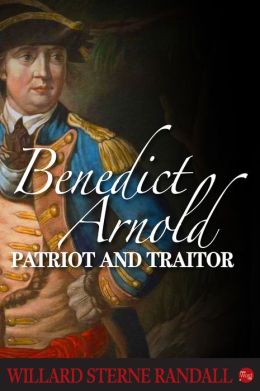
In June of 1790, Benedict Arnold’s plans to betray his country by turning West Point over to the British were discovered, and he had to flee for his life, his name forever synonymous with treason.

Suppose you didn’t know that was how the story ended. Then you have a dashing young merchant sea captain, a daring smuggler, a loving husband of an unloving wife who gains, loses, and gains another fortune, who gives up a life as the wealthiest merchant in Connecticut to join the Sons of Liberty and then the Continental Army, who leads the first successful campaign of what is not yet even officially the Revolutionary War, winning Fort Ticonderoga and Lake Champlain for the new American cause. You have a commander who leads an ultimately unsuccessful campaign against the British in Canada, but in doing so, stays with his men through the most grueling hardship, winning their love and respect. You have the master strategist, the daring commander, the wounded victor in the battle of Saratoga, and where’s your story going?

If you don’t know that your hero is Benedict Arnold, there’s suspense, there’s indignation, there’s reader identification with this brave man who serves his country brilliantly, but is thwarted, hamstrung and betrayed over and over by cowards, publicity-seeking thugs, and petty political maneuverers.

And maybe it’s a better story that way. Hard to say, because we know the story so well.  As it is, when we read about Ethan Allen stealing the credit for the victory at Ticonderoga, about the treacherous engineer Montresor giving him misleading maps for his journey to Quebec, or the cowardly Colonel Enos turning back with 300 of Arnold’s 1000 men, about the politicians who stabbed Arnold in the back, passing him over for promotion again and again in favor of lesser men, we read it with a sense of foreboding, rather than suspense, and each of these betrayals take on a sense of inevitability. Also, a red flag goes up in our minds every time we hear of a betrayal. Those incidents loom larger in our sense of the story than they might if we didn’t know the ending. Knowing the ending makes it a different story.

E.M. Forster, in his great book Aspects of the Novel, writes about life measured by time vs. life measured by value, “and our conduct reveals a double allegiance. ‘I only saw her for five minutes, but it was worth it.’ There you have both allegiances in a single sentence. And what the story does is to narrate the life in time. What the entire novel does – if it is a good novel – is to include the life by values as well.”  The story of Arnold’s life, because it’s nonfiction and we know the end, is told by values. Betrayer and betrayed – in these moments time stands still. Of course, it’s also told by time. Events unfold chronologically. But time stands still for us as readers when a betrayal enters the story.

What can you say about a 21-year-old girl who died? What if you don’t start the story that way? If you don’t start the story that way, frankly, it’s probably not a mega-bestseller, because you don’t have a story if she doesn’t die, and you’re pretending to a suspense that the reader isn’t going to feel. Take away the suspense,  and the life told by values becomes altogether different.

The Mambo Kings Play Songs of Love begins with the death of Cesar – old, sick, bloated, ugly, drunk and poor. As he stands up, staggers and falls in the swoon from which he will not awaken, he knocks over the credenza which holds all of the 78 RPM records he made in his life. And for the rest of this wonderful novel, as we follow the young, brash, ruthless, gifted, self-absorbed womanizer, we see him through this veil of sadness.

Just as we know the Benedict Arnold story will end with treason, we know how “I’ll sing you the true tale of Billy the Kid / I’ll sing you the deeds that this young outlaw did” will end. By the time he’s 21, he’ll have been “shot down by Pat Garrett, who once was his friend.” But in the case of Little Joe, giving away the ending by telling us that “he’ll wrangle never more / His days with the remuda they are done” lets us know that the life measured by time is going to be short, and the life measured by values will have to be measured against that inevitability. On the other hand, in “Lily, Rosemary and the Jack of Hearts” we have three characters – four, with Big Jim – whose lives are measured in both time and value, and the intersections of those lives leaves room for suspense which is enhanced by our not knowing the ending.

What happens next? Is a key element in every story. Starting out by telling us what happens at the end is a choice you can’t make every time, but sometimes it can be the right choice.

Thursday, January 26, 2012

Groupthink

Some advice I offered to a friend who's teaching her first creative writing class:


The one thing I'd emphasize -- workshopping student work is an important part of the course. You're expected to do it, and the students sort of expect it. But once you give it to them, they don't know what to do. Because critiquing the work of others isn't something that comes naturally. It has to be learned, and it's not always easy to learn. So -- you'll find you own way to teach this, but it has to be taught.

One way is to offer discussion questions. I can't really do this -- it's not natural to me. But it's one way.

Another -- and this works better for me -- is to set up forums on Blackboard. Divide the class into smaller discussion groups -- say, for to six in each group. Everyone in the group is to post his or her assignment, and everyone is to critique the work of the other members of the group. Then you start a dialogue, critiquing their critiques, suggesting things they might have thought of, encouraging perceptive critiques. Most of the first ones will be awful. I loved this -- it reminded me of my own grandmother. This had a really good flow to it. That sort of thing. As I said, they won't know what to say -- they won't have any sort of critical vocabulary. You encourage them to do the same things you encourage them to do in writing about literature -- go to the text, focus on specifics. What more could the author do to make this the poem it wants to be?

Don't do in-class workshopping right away. Start giving them that vocabulary first, and the encouragement that it's all right to be critical, and how to constructively bring out the things that are good about the piece -- not all criticism has to be negative.

Do some workshopping in small groups, and some in the whole class. But this will be one of the most important skills you'll teach them all semester.

You MUST read the article I just read today in the New Yorker -- Groupthink, by Jonah Lehrer. It's absolutely fascinating about the ways people make progress in groups, and the ways that they don't.
And some more thoughts on Lehrer's article. He discusses the history of brainstorming. It was a technique invented and promoted by advertising genius Alex Osborn in the 1940s -- its most important tenet, encouraging a free flow of ideas by absolutely forbidding any negative feedback at all. Negative feedback discourages creativity by inhibiting the participants. In this stage, Osborn says, you're looking for quantity, not quality. "You're loosening up an unfettered imagination -- making your mind deliver." Lehrer gives a little more history -- the idea was an instant smash, and has been used by businesses and other organizations ever since, He also gives a history of research on the technique. Research emphatically shows that id doesn't work. Blind studies of one control group who brainstormed an idea, and another who split up so that each member worked on the problem individually, invariably showed the same results. You got more ideas, and more good ideas, from people working individually. And working in groups? It has value too, but much more value if people are allowed to criticize and argue. I have been in writers' groups, and I have friends who have been in other writers' groups -- the kind which are about sharing and mutual support, and don't allow any criticism. Well, any writers group is good for one thing -- it makes you write. If you meet a bunch of folks every week to talk about your writing, you're going to want to write something every week. But outside of the fact that it would drive me crazy, I never believed the sweetness and light approach would do anyone much good. Now I stand validated.

Friday, June 24, 2011

What People Look Like

Wow. I thought I'd finished this subject, but look what Balzac can do with what someone looks like. We're introduced, as the story begins, to Michu, who is cleaning is gun, but not casually,
 A huntsman does not take such minute precautions with his weapon to kill small game, neither does he use, in the department of the Aube, a heavy rifled carbine.
No, Michu is not to be taken causally, In fact, as Balzac points out,
There is such a thing as prophetic physiognomy. If it were possible (and such a vital statistic would be of value to society) to obtain exact likenesses of those who perish on the scaffold, the science of Lavatar and also that of Gall would prove unmistakably that the heads of all such persons, even those who are innocent, show prophetic signs. Yes, fate sets its mark on the faces of those who are doomed to die a violent death of any kind.
So he's committed himself, more than a little, to prove his case of prophetic physiognomy. And boy, does he ever.
Now, this sign, this seal, visible to the eye of an observer, was imprinted on the expressive face of the man with the rifled carbine. Short and stout, abrupt and active in his motions as a monkey, though calm in temperament, Michu had a white face injected with blood, and features set close together like those of a Tartar,--a likeness to which his crinkled red hair conveyed a sinister expression. His eyes, clear and yellow as those of a tiger, showed depths behind them in which the glance of whoever examined the man might lose itself and never find either warmth or motion. Fixed, luminous, and rigid, those eyes terrified whoever gazed into them. The singular contrast between the immobility of the eyes and the activity of the body increased the chilling impression conveyed by a first sight of Michu. Action, always prompt in this man, was the outcome of a single thought; just as the life of animals is, without reflection, the outcome of instinct. Since 1793 he had trimmed his red beard to the shape of a fan. Even if he had not been (as he was during the Terror) president of a club of Jacobins, this peculiarity of his head would in itself have made him terrible to behold. His Socratic face with its blunt nose was surmounted by a fine forehead, so projecting, however, that it overhung the rest of the features. The ears, well detached from the head, had the sort of mobility which we find in those of wild animals, which are ever on the qui-vive. The mouth, half-open, as the custom usually is among country-people, showed teeth that were strong and white as almonds, but irregular. Gleaming red whiskers framed this face, which was white and yet mottled in spots. The hair, cropped close in front and allowed to grow long at the sides and on the back of the head, brought into relief, by its savage redness, all the strange and fateful peculiarities of this singular face. The neck which was short and thick, seemed to tempt the axe.
Believe in prophetic physiognomy now?

Monday, May 30, 2011

What people look like -- part 2

I started out wondering what different authors say about how people look, but found myself moving on to wondering why. Why does Eliot spend so much space on Mr Cadwallader's looks, none at all on Sir James? Maybe it's because this is all we really need to know about Mr. Cadwallader. He's a flat character, in E. M. Forster's phrase.  He's keenly observed and memorable, and he's in the novel to do a job.

I don't know about Young Ladislaw. I'm only about 1/3 of the way through the book, and I assume he'll come back in and play a larger role. So why does he get essentially a Young Tad treatment, fleshed out with the prominent, threatening aspect to mouth and chin? I'm guessing it's because Dorothea would like to pigeonhole him, but she can't quite do it. 

Mr. Casaubon gets two vivid synechdocal descriptions, the deep eye sockets and the moles with hairs sticking out, because that's all that's needed. We have both views of him as well as could possibly be desired: we don't need to know what shape his nose his, or which direction his hair falls.

Sunday, April 24, 2011

In Medias Res -- what then?

Another Creative Writing I exercise. Again, these are students just beginning to learn something about the craft.

 Christine sat on the tacky pleather couch, her vision blurred by her heavily matted black makeup. It took her a minute realize what was happening when her friends began lowering their heads to the table. This was her first time in a nightclub; it was a night of a lot of firsts. Earlier that evening she slipped on a skin-tight sequin dress and dug her feet into a pair of much too high heels. All borrowed from Janessa. Christine knew any moment that the offer would come her way. She felt the sweaty hand of a stranger on her bare thigh and couldn’t help but picture her mother. Home in bed for hours now, no doubt. She imagined her mother was dreaming of her “perfect daughter” at her prestigious college, studying or finding a cure for some nefarious disease. Christine quickly brushed the thought from her mind. Her heart thumped heavily in time with the bass of the loud music as the stranger leaned in and whispered in her ear. And without another thought she took the rolled up dollar bill and followed suit.

This is from an exercise -- write a scene that uses action to develop or illuminate character. It might be the beginning of a story, it might not. But in either case, the paragraph plunges us into a situation.

One of the books I use in a beginning Creative Writing class is Learning to Write Fiction from the Masters, by Barnaby Conrad, a novelist who also worked as secretary to Sinclair Lewis. Conrad has some good, workmanlike advice about the craft of fiction, particularly in a chapter on opening paragraphs. He presents, with examples, twelve different ways of starting a story. One of them is in medias res, "Rather than setting the scene or describing the situation in detail beforehand, the writer plunges the reader directly "into the middle of things."*

This student has started with in medias res, and here's what I said to her.

The in media res opening to a story, or a scene, can be very effective, but it has its pitfalls. What do you do next, after you've thrown your character -- and more importantly, your reader -- into the middle of the action?

This paragraph, unfortunately, is what you don't do. You can't then back up to the beginning and fill the reader in on everything. That kinda negates the whole point of in media res, which is to hit the ground running and let the reader know that she/he is going to have to run too, to catch up. It creates momentum, a sense of breathless excitement.

What if you just leave the exposition out?

Christine sat on the tacky pleather couch, her vision blurred by her heavily matted black makeup.  She felt the sweaty hand of a stranger on her bare thigh and couldn’t help but picture her mother. Home in bed for hours now, no doubt, dreaming of her perfect daughter finding a cure for some nefarious disease. Christine's heart thumped heavily in time with the bass of the loud music as the stranger leaned in and whispered in her ear. And without another thought she took the rolled up dollar bill and followed suit.

What do you think? How does it work for you now? It's all action, except for the imagined vision of her mother. And with all the exposition cut out, you have room for more action, more description, more development of that scene. You can maybe put the sequined dress back in -- I guess slit up the side, or a mini, to expose the thigh. I like slit up the side better, but that's just me. In any event, you can put her in the dress, and describe it, but describe it there -- don't take us back to earlier in the evening.

Remember the point of both of these exercises -- a scene with description of concrete detail, a scene with action -- is to use description and action to reveal and develop character. Is that happening here? With the exposition cleared out of the way, it's starting to.

What do you want to show in this scene? Christine's desire to go beyond her limits, some sense of what those limits are, some idea of her motivation, how she deals with the unknown becoming the actual? Probably something like that. But once you sort of know that, forget it. Get into the scene. What's happening? What is she doing? What are other people doing around her?

At first reading -- too much makeup, the hand on the thigh, the whisper in the air, the exchange of money -- I thought she was turning a trick for the first time. But then I realized no, she wouldn't be doing that for a dollar. She's doing a line. But still, the hand, the whisper -- there's dangerous sex lurking around the edges of this scene. Is she doing the line to enhance the experience? Or -- perhaps more interesting, because it's emotions in conflict -- because this is what she came for, but now she's not so sure it's what she wants, and she's using the cocaine as a way of putting it off? How would the action of the scene -- just this scene -- be different if it were the one or the other?

But, reiterating my point -- once you've got her in the room, with a strange hand on her thigh, it's too late to go back to exposition. You're in the scene, and you need to be there.


           ----------------------------------------------------------------------------

* I  discovered, checking Amazon, that Conrad has expanded this into a whole book -- 101 Best Beginnings Ever Written: A Romp Through Literary Openings for Writers and Readers. Looks good. Still, my favorite book on this subject is First Paragraphs: Inspired Openings for Writers and Readers, by Donald Newlove.

Saturday, April 23, 2011

Trust the story

I'm going to be posting a few scenes from student writers. These are from Creative Writing 1 students, so they're a little raw, but they all have some value, and they all illustrate some points about writing.

Gillespie was half way down the street when he heard Gracie calling for him. “You are still going after Edwin, after what I had told you?”
“The stars can’t always be right, they couldn’t even give you the correct time of my arrival!” Gillespie triumphantly proclaimed. “That’s not the point you fool! Look at everything around you, nature and all its beauty. Are you willing to risk never being able to appreciate this?” Gracie asked as she held her arms open and had her palms pointing up towards the sky. In that moment, Gillespie’s focus was caught by a butterfly, floating towards shrubberies with hummingbirds suspended at their blossoms. All the colors -- red, pink, blue, turquoise, orange -- overwhelmed him as he felt a lump in his throat approaching. A family of deer were grazing peacefully on the foliage in the background under the shade of the deciduous forest that Gillespie was on the outskirts of. In that same instance, Gracie and Gillespie caught sight of a pack of wolves stalking the deer under the cover of the forest, waiting for the right time to strike. Like a bolt of lightning, the wolves pounced on their prey, ambushing from every direction, tearing the deer limb from limb. With admiration for the grotesque carnage, Gillespie regained focus and remembered Edwin’s favorite place to hang out. A little bar by the docks called The Lone Wolf. He felt even more ready as the only thing on his mind was taking back what Edwin had stole from him: his dignity.
“See Gracie, in order to truly appreciate nature in all its beauty, you also must bear witness some of nature’s atrocities.” Gillespie said as he walked off, in search of his culprit. “Yes, but are you the witnessing an atrocity or are you the atrocity?” Gracie said to herself as Gillespie walked.

The point here -- trust the story. As much as you can, let it tell itself -- don't feel that you constantly have to step in and explain it. For instance:


You don't need to tell us that "Gracie and Gillespie caught sight of" -- we know they're there, and we know we're seeing what they're seeing. We don't need to be told that it's grotesque carnage, we can see it. And we don't need to be told Gillespie admires it -- we get that from the dialog. We don't need to be told Gillespie regains focus -- we see him regaining it.

Also "triumphantly proclaimed" and "In that moment" -- just keep remembering you don't have to give the reader all those signposts -- the story will do it.

You have all the good stuff here -- you just need to trust it.

Monday, April 04, 2011

Thoughts on writing

·  David Mamet states that human beings do not "communicate our wishes to each other, but we communicate to achieve our wishes from each other. We do not speak the desire but speak that which is most likely to bring about the desire."
People may or may not say what they mean... but they always say something designed to get what they want.
·  Italo Calvino: "Both in art and in literature, the function of the frame is fundamental. It is the frame that marks the boundary between the picture and what is outside. It allows the picture to exist, isolating it from the rest; but at the same time, it recalls--and somehow stands for--everything that remains out of the picture. I might venture a definition: we consider poetic a production in which each individual experience acquires prominence through its detachment from the general continuum, while it retains a kind of glint of that unlimited vastness."

·  Howard Hawks, on what makes a great movie: “Three great scenes. No bad scenes.”
·  F. Scott Fitzgerald: “Start with a person in mind and you can create a character, but start with a character (stereotype) in mind and you create nothing.”

· Raymond Chandler:  “When in doubt, have a man come through the door with a gun in his hand.”

·  Kurt Vonnegut:
Now lend me your ears. Here is Creative Writing 101:

1. Use the time of a total stranger in such a way that he or she will not feel the time was wasted.

2. Give the reader at least one character he or she can root for.

3. Every character should want something, even if it is only a glass of water.

4. Every sentence must do one of two things - reveal character or advance the action.

5. Start as close to the end as possible.

6. Be a sadist. No matter how sweet and innocent your leading characters, make awful things happen to them - in order that the reader may see what they are made of.

7. Write to please just one person. If you open a window and make love to the world, so to speak, your story will get pneumonia.

8. Give your readers as much information as possible as soon as possible. To heck with suspense. Readers should have such complete understanding of what is going on, where and why, that they could finish the story themselves, should cockroaches eat the last few pages.

Wednesday, March 16, 2011

Why it keeps getting harder

Thomas Mann once defined a writer as "a person for whom writing is more difficult than it is for other people." And a corollary -- the better you get at writing, the harder it becomes. It pretty much has to. Your standards get higher -- you demand more of yourself. And as a writer, you're in competition with everyone else who's writing and everyone who's ever written. In a sense, that's a fairly steady level of competition, but in a more significant sense, it's not, because you recognize more of your competition's salient points as you get more experience.
And in an even more significant sense, it gets wildly difficult, because your main competition is always yourself, and as you get better, it means your principal competition gets stiffer.

Thursday, January 27, 2011

Notes on persona and revision

When I write a poem, no matter how personal it is, when I get it down on paper (or computer screen) and start to revise it, I depersonalize it. The poem may say "I" on the page, but I think "he." I'm aware that the person in that poem is a character I've created, a fictional character--a persona. So when I'm critiquing a poem, I'll always refer to "the speaker," or "the character," or "he" or "she" -- never "you." It's not you any more, no matter how much it may be based on you. It's a character you've created. And as you revise, your responsibility is not to keep that character true to you, but to make that character true to his/her own self.

Wednesday, February 25, 2009

The Realist


The Realist Archive Project is, bit by bit, posting pdfs of every page of every issue of The Realist -- in no particular order, which is a good idea. Anyway, they've posted a couple of my contributions, most recently this one.

Tuesday, February 17, 2009

NY Writing Careers Examiner

New columns on getting started with a new project, learning from John Updike and John McPhee, lots more.

http://www.examiner.com/x-2862-NY-Writing-Careers-Examiner

Wednesday, January 21, 2009

Persona Workshop

I guess it's OK to blow one's own horn sometimes, and I do feel good about this. I taught a workshop in persona at the Solstice Creative Writing program at Pine Manor College in Boston.

I try make sure, when I'm asked to do something like this, that I actually bring something new to the table, and I guess I succeeded here. A note from Meg Kearney, the wonderful director of the program:

I have NEVER seen students RAVE about a guest's
class as they raved about yours. Not only did the students rave, two of
the students whom I really respect told me (separately), "You have to
have him back." This came from one student, Richard, who just graduated!
He said not only should I have you back, but I should encourage all
students to attend, as the class speaks to all genres, AND that I should
schedule you for earlier in the week so people have time to absorb and
start applying what you taught them while they are still here. Richard
-- who attended virtually every class offered at each residency for the
last two years -- also said that what he learned from you he hadn't
learned from anyone else OR even contemplated before.

Sunday, October 12, 2008

Handicapping poetry

I've been asked to speak to a group of students this Wednesday as part of a symposium on "Writing for Publishing." They want me to talk specifically on poetry, so I have to figure out what to tell them. Well, I pretty much know. You can't write poetry with an eye toward getting published. If you try to, you might get published, but you'll never write anything any good. You write for the poem -- to fulfill your obligation to that poem, to find why it matters and bring that out, So the real question is -- what do you do with the poems you've written? Writing poetry is inspiration and work, technique and passion, and that's all that should matter. What comes after is strategy and marketing, and at that point, these are virtues. You're not betraying your art in the slightest by being good at selling yourself, or your work.

If you're a slam poet or a performance poet, the path is basically the same as that of a musician. Start in small clubs, build up a reputation, go on to bigger venues.

If you're a printed word poet, you can submit work to magazines, you can enter contests, you can network whenever you have the chance, and if you have the temperament, you can make more chances. If you go where poets are -- writers conferences, summer workshops, elite graduate progams -- you'll meet more poets than if you don't, and people will start to know who you are. You can start a poetry-related blog, and try to get links to other blogs -- you'll be more successful here if you have something to say than if you're just making an online place to self-publish.

Submitting work to journals that publish poetry -- you need to know what the field is. There are a couple of good annual directories of poetry markets -- Poet's Market and Dustbooks Guide to Poetry Publishers. There are also a lot of good web sources, but these two books are the best and most complete. I read Poet's Market like the racing form, looking for clues to help me in picking winners. First, bloodlines. Many magazines list a few of the poets they've published. Are these poets you like? Poets you'd be pleased to get between the covers (of a publication) with?

Second, stamina. If the magazine has been around for ten years or more, it's likely to have a more substantial reputation, and less likely to fold between the time you send work to them and the time you get it back.

Third, class. In the racing form, this means the size of the purse the horse is racing for. In poetry, there's no purse. It's a strange profession in which you give away your primary product in the hope of ancillary revenues -- teaching jobs, fellowships, reading circuits. So class here means circulation. How many people might actually read your poem? Pick a magazine that has a circulation of 1000 over one with a circulation of 200.

Contests are very popular these days, and they can be a good way to go, although I haven't done it myself. You'll have to pay a small entry fee to most contests, so think about whether you want to make that investment. If a contest is sponsored by a legitimate magazine or organization, and if it has judges with decent credentials, you can assume it's probably on the up and up. A few years ago, there was a scandal about contest prizes all being won by friends or former students of the judges, but most places have now been shamed out of that. Many of the contests are chapbook contests, and if you have a body of work you're pleased with, look into them.

A book of poems? That's for later. Start with the first steps.

Wow...well, I guess that's what I'm going to say.