Showing posts with label Stan Getz. Show all posts

Friday, February 20, 2015

Listening to Prestige Records Part 84: Jimmy Raney / Stan Getz

Just as with Charlie Parker, an alias doesn't do much to hide the sound of Stan Getz. The aliases were necessary because the artists had exclusive deals with other record companies. This can't have fooled anyone. If it happened today, there'd be lawsuits, injunctions, records pulled from the shelves.

Hall Overton is back, with his other protege, Jimmy Raney, but a session with Stan Getz on it is going to be a Stan Getz session. Still, not quite like any other Stan Getz session. Do the avant-garde leanings of Raney and Overton pull Getz a little farther out into left field? I think so. He's lyrical as only he can be, but he's edgier, too.


This is an incredibly interesting session. It has the structure of a bebop blowing session, but a different dynamic. Or maybe that's not so. Maybe bebop had a lot more flexibility, a lot more nuance, a lot more room for growth than a lot of people gave it credit for. Maybe this wasn't the death throes of bebop that so many back then were predicting, and that so many since then have taken as an article of faith. Maybe this was bebop. Listen to Hall Overton's solo in "Lee." He's soloing in the bebop tradition, taking it to some strange but logical places, trading some great stuff with bassist Red Mitchell, then setting up Getz to take it out.

I've listened to this one a lot, and every time I listen, I appreciate more and more how these musicians worked with each other. Only in jazz, and maybe especially in the jazz of this era, do you find this kind of collective experimentation, and at this high level, and with this expectation of success. Putting Stan Getz together with Jimmy Raney and Hall Overton is more than just throwing a bunch of stuff at a wall and seeing what sticks. It's an inspiration.

The songs are "Round Midnight" and three Raney compositions. I had thought that "Lee" might have been a tribute to Konitz, but it's named after Raney's wife.

It's damned hard, even in the age of Google, to track down composer credits for jazz tunes, unless you happen to have the record in front of you. My ability to give credit has been, and will be, spotty at best.

New to Prestige, and perhaps new to recording -- I haven't found anything earlier -- are Red Mitchell and Frank Isola, although they had been playing and making significant names for themselves since the late forties.


Mitchell came to New York in 1948, just out of the army, and was to leave for the West Coast not long after this recording, where he made most of his career, and where he became an important innovator, tuning his bass in fifths -- the tuning used on a violin or cello -- instead of the conventional fourths. He would later join the expatriate jazz community in Stockholm.

There's a great chapter on Frank Isola, who came to New York around the same time as Mitchell, but didn't stay in the jazz world for long, in a book called Fifties Jazz Talk by Gordon Jack (Scarecrow Press). I would love to have a copy of it, but it costs 50 bucks, so it's on my gift list. Meanwhile, it is excerpted at Google Books, so we can get part of the story. We know Isola walked away from the jazz scene in 1957, after having established an important reputation as a modern jazz drummer. He worked a lot with Stan Getz, which may explain his presence on this session, and was involved in some important Prestige recordings, so we'll see him again.

In 1942, at age 17, he won the Detroit division of a national Gene Krupa drumming contest, and would have gone on to the finals in New York, if he hadn't been disqualified as an amateur for having joined the union. Had he gone, he would have given stiff competition to the eventual winner of the contest -- Louis Bellson.

He seems to have made a number of recordings that didn't quite happen, before the Prestige date. He was with a group including Don Lanphere and Teddy Kotick that backed up Babs Gonzalez on a demo for Capitol. Babs got the contract, but they didn't use the group. He made some sides with Lanphere and Herb Geller for a nascent label that never got off the ground. And in 1950, he acompanied Charlie Parker on a private session that was recorded, but I can't find a record of its having been released.

Just as he was getting ready to leave the music biz behind in the late 50s, he got a call from the Tommy Dorsey orchestra, wanting to hire him. His response: "No, thanks. Tell Tommy I'm not in a sentimental mood."

These sessions -- Raney's first as leader -- seem not to have been released as singles. Strange if true, given Stan Getz's popularity, but then his name wasn't on them. They came out on an album called Jimmy Raney Plays, with cover art by David X. Young of the Hall Overton / W. Eugene Smith jazz loft fame, one of the first Prestige albums to take cover art seriously.

Today, they're most available because of Getz, appearing on a reissue package called Early Stan.

Tuesday, September 30, 2014

Listening to Prestige Records Part 37: Wrapping up 1950

This winds up the second year of Prestige's prestigious history. Only 20 more to go, and I'm already starting to get the feeling they're going too fast -- that's the grandparent syndrome.


 The last two albums of the year are Sonny Stitt (December 17) with Junior Mance, Gene Wright and Art Blakey, and Jimmy McPartland (December 21) with a sextet including Vic Dickenson and Marian McPartland, so they closed out the year with a rising bebop star and a tip of the hat back to an older jazz style. The McPartland sides were issued on 78 as part of Prestige's 300 series, which appears to consist entirely of four 78 RPM records, all of them by Jimmy McPartland, one session in early 1949 and the other at the end of 1950 -- apparently Bob Weinstock's entire foray into trad jazz. Neither the Stitt nor the McPartland sessions can be found on Spotify, but you can get the Stitt session on Grooveshark --"Nevertheless" and "Jeepers Creepers here  and "Cherokee" here. "Nevertheless" is not exactly a bebop staple -- this is the only recording of it by a modern jazz group that I've found -- but listening to Stitt's version, one can't help but think that maybe it should be.

Prestige was certainly starting to make its mark in 1950. The scorecard: recording sessions with Stan Getz (2), Sonny Stitt and Gene Ammons (9), Eddie "Lockjaw" Davis,  Al Haig, Chubby Jackson, Lee Konitz,  Zoot Sims (4), Wardell Gray (2, one with Dexter Gordon), Leo Parker, Dizzy Gillespie, James Moody (recorded in France, released later as a 7000-series LP), and Jimmy McPartland. 


The major labels actually had the two most important jazz releases of 1950 -- one looking ahead, the other backward. Capitol put out eight songs from the Miles Davis Birth of the Cool sessions on 78. The LP wouldn't be released until 1957, although some songs from it came out on various Capitol 10 inch LPs. Nobody realized quite how important these sessions were at the time -- Miles wasn't able to make a commercial success of his nonet, and had to disband it. However, pretty much everyone knew how important the other recording was -- the recently rediscovered originals of the Benny Goodman 1938 Carnegie Hall concert, released by Columbia as a 12-inch LP -- in fact, their first double LP set.

Charlie Parker recorded with strings.

Fats Navarro died in 1950. Thelonious Monk was arrested on drug charges, lost his cabaret card, and couldn't play again in New York for six years.

Birdland, which actually opened its doors in late December of 1949, was in its first full year of operation.

On to 1951.

Friday, August 29, 2014

Listening to Prestige Records, part 26: Stan Getz


You know how when you hear a word you've never heard before, suddenly everyone seems to be using it -- seems like everyone else except you knew it all the time? Jimmy Hatlo even devoted one of his "They'll Do It Every Time" cartoons to this theme, so thanx and a tip of the Hatlo hat, Jimmy, and it's happening to me with musicians instead of words. No sooner do I mention never having heard of Tony Aless than he shows up again, this time as part of a Stan Getz Quartet.

Perhaps  there's something to be said for the theory that a jazz recording session is quite likely to involve a group made up of whoever's around. Tony Aless and Don Lamond had both played on the Chubby Jackson session a month earlier and so were quite likely still kicking around 52nd Street. And Getz would have known them because they were both -- as were so many early Prestige artists -- Woody Herman veterans.

Percy Heath has a credit that I'd venture to guess no other jazzman has: he was a member of the Tuskegee Airmen, the famed African-American military aviators of World War II. He has impressive jazz credits, too, including being a member, with his brothers, of one of the first families of jazz.

One of the joys that the great balladeers like Stan Getz bring to jazz is their way with classic songs from what has come to be known as the Great American Songbook. These are vivid and memorable melodies, with chord changes and melodic structures that lend themselves to jazz interpretation and improvisation.

But they're more than that. They're songs, with the emotional and thematic power that only a song can deliver. Lester Young said that he always heard the words to a song in his head as he played it. The fictional Dale Turner, played by Dexter Gordon in the movie "Round Midnight," has a moment when he realizes he's losing his ability to produce the music he wants to, and says, "I forgot the words." I don't know if Stan Getz played the words in his head when he recorded a ballad, but he captures the feeling of each of these.

Of course, music is abstract. If you didn't know the story of Peter and the Wolf, you wouldn't just be able to conjure up ducks and wolves and hunters from the music itself. But if you know the songs, Getz brings something palpable to them.

In "You Stepped Out of a Dream," that rapt wonder that only the person you've suddenly, unreservedly fallen in love with can evoke. Written by Nacio Herb Brown and Gus Kahn, it was  originally sung by Tony Martin for the 1941 musical Ziegfeld Girl, to the visual of Lana Turner descending a staircase. Brown isn't quite on the Olympus of American songwriters, but he was good enough to dream, and good enough to write some melodies that are remembered.


"My Old Flame" is a song that was brilliantly subverted and destroyed by Spike Jones. It was written by Arthur Johnston and Sam Coslow, who also saw their other hit, "Cocktails for Two," similarly demolished by Spike Jones. So Getz is not going her for the A-list of American composers, but he's finding some fine melodies, and in this case, restoring the feeling that Johnston and Coslow must have meant it to have: sweet nostalgia, regret.

I didn't know "The Lady in Red," so I listened to the Mark Murphy version and the Louis Prima version. I missed the Bugs Bunny version, "The Rabbit in Red," so I guess this was an eminently wreckable song too -- and again by a good, but B-list composer, Allie Wrubel. And this one bright, vivacious, sparkling. All these not-quite-great songwriters taken over the top, into immortality, by a true great, Stan Getz.

"Wrap Your Troubles in Dreams," by songwriters I really hadn't heard of -  Harry Barris, Ted Koehler, Billy Moll. Getz captures the dreamy optimism that comes out sadness. You wouldn't have to wrap your troubles in dreams and dream your troubles away if you didn't have troubles.

All these songs are about loss, and about an at best evanescent reality. Losses that you have to dream away, but you never really can. The fading memory of an old flame. The girl who steps out of a dream -- she's Lana Turner, and you'll never have her. She'll never really detach from that dream. Even the vivacious, snazzy lady in red -- you'll never have her either.

Stan Getz was a poet of loss, right up to that girl walking across the beach, looking straight ahead, not at you.

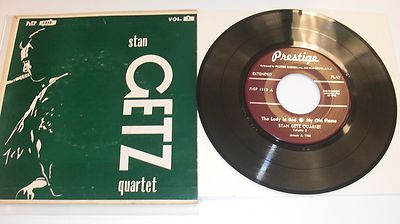
Released on Prestige and New Jazz 78s and 10-inchers, Prestige EP, even a 45 (My Old Flame/The Lady in Red), and later on a 7000-series reissue, a 24000-series double LP, even on an New Jazz LP when that line was briefly restarted.


Thursday, August 14, 2014

Listening to Prestige Records, Part 19: Stan Getz

Bob Weinstock seems to have entered into a short-lived partnership with Morris Levy, who was among other things the owner of Birdland, to form a record company called Birdland Records. It's probably just as well for Weinstock that it was short-lived, since Levy was quite likely the crookedest crook in a business not entirely known for honesty. Levy was known, among other things, for his skill with white-out -- taking the names of actual songwriters off of the papers filed with the US copyright office and substituting his own. In a posthumous suit against Levy, Herman Santiago and Daniel Negron, two of the writers of "Why Do Fools Fall In Love," one of the biggest hit songs of all time, testified that they had made a total of $1000 off the song, and that Levy had threatened to kill Santiago if he came around asking for more.

In any event, Birdland Records seems to have put out a handful of 78s in 1950, the first of them coming from this session with Stan Getz and a half-new quartet from his June 1949 session -- Al Haig is there, but now he's joined by Tommy Potter and Roy Haynes -- a quintessential bebop lineup. On two of the cuts there are vocals by Junior Parker, later to become known as one of the great rhythm and blues singers.*

Jazzdisco.org is a stunningly complete discography of Prestige's catalog by recording date, and invaluable. Another site, rateyourmusic.com, which has a dizzying plethora of lists compiled by fans and organized by some algorithm I couldn't begin to guess at, is less complete but pretty accurate as near as I can make out, and they have a variety of lists by release date. They have both the Birdland 78s and the Prestige 700-series of this session coming out in 1950, so Birdland must have been very short-lived indeed.

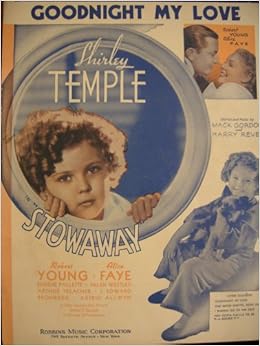
The songs on this date are mostly standards --"Stardust," "Goodnight, My Love," "There's A Small Hotel," "Too Marvelous For Words," "I've Got You Under My Skin," "What's New," "Intoit." "Goodnight, My Love" (not the rhythm and blues standard by Jesse Belvin; this is a song originally introduced by Shirley Temple) and "Stardust" get the Junior Parker vocals, and he is singing in a style distinctly different from his later R&B recordings. Here he seems to have been heavily influenced by Billy Eckstine.

Eckstine is probably not as highly regarded today as he once was -- too florid to be a really successful jazz singer. But he was important in the history of modern jazz -- the first bandleader to give Charlie Parker and Dizzy Gillespie a prominent role. And he influenced other jazz singers who are little remembered, like Kenny "Pancho" Hagood and -- had he not returned to his blues roots -- Junior Parker.

Eckstine was a little too florid, and his imitators a lot too florid -- especially when matched with Getz, who is certainly a romantic, but a drier, more modern romantic. He can unquestionably work with a singer -- "The Girl From Ipanema" proves that -- but he's not a good fit with Parker, or Parker is not a good fit for him. They say that along with the violin, the tenor saxophone is the instrument most alike in quality to the human voice, and on these standards, Getz sings. I love all of them -- even the Parker "Stardust," which grows on you, but mostly the instrumentals -- but perhaps "Too Marvelous for Words" more than any. "Too Marvelous" has a beautiful melody by Richard Whiting, and clever lyrics by Johnny Mercer, but...rather than hearing someone expend a whole lot of words to tell me that words won't do the job, I'd rather hear someone use words to do the job, as in "There's a Small Hotel" (Lorenz Hart) or "I've Got You Under My Skin" (Cole Porter).

Al Haig takes some terrific solos here too, but mostly it's Getz, Getz, Getz, and Getz at his youthful best.

These also came out on 45 RPM -- rateyourmusic.com is a little vague on the 45s, but I'd guess maybe still in 1950, more likely in 1951 -- and on their 10 inch LP series -- along with the previous Getz session -- in 1951.


* In no biography or discography of Junior Parker that I've been able to find online -- and some of them are pretty complete -- is there a reference to this session with Stan Getz. All the ones I've seen have him first recording with Modern in 1952. But I'm fairly certain it's the same guy. If it turns out I'm wrong, and this is just a curious coincidence of names, I will eat crow. For now, I claim a discovery.

Saturday, July 26, 2014

Listening to Prestige Records project - Part 9


This is all really about listening, not music criticism, not even music history, although that comes into it a little. It's about reliving a moment in history that I was not actually a part of. Everyone's played that game of "if you could go back in time, what period would you go to?" Woody Allen's character in "Midnight in Paris" wants to go back to Paris in the Twenties, and the girl he meets in that era wants to go back to La Belle Epoque. Some choose the Renaissance, or Shakespeare's London. I'd like to go back just a short distance in time -- to be a young man in an era where I was in fact a toddler. I'd like to go to 52nd Street and Minton's Playhouse and Monroe's Uptown House, to be there when bebop was being born. To me, "bebop," as a couple of nonsense syllables given meaning, has a romance that "hip-hop" will never have.

 I was nine years old in 1949. I didn't know anything about any kind of music then. I didn't listen to Paul Williams' R&B breakout hit, "The Hucklebuck," much less the Charlie Parker riff on which it was based. I listened to a few 78 RPM record albums my parents had:  Songs of the Veldt by Marais and Miranda, Ballad for Americans by Paul Robeson, the songs from Pinocchio, all of which I could listen to again with pleasure. Later on, when I became an avid collector of rock and roll, my mother tried to distract me from destroying civilization 89 cents at a time by trying to give me some 78s of the popular music of her day (looking back, I’m amazed that she’d kept them, since was passionate about neither music nor her youth). The only one I remember is “The Broken Record” by Freddy Martin and his orchestra. You can find “The Broken Record” on Spotify, but not the Freddy Martin version. It didn’t dissuade me from my own musical odyssey.

Bob Weinstock, at age nine, was already not just a jazz lover but a jazz collector, buying "'armfuls of records' at nine cents each," according to his obituary in the Washington Post, quoted in Wikipedia.
Stan Getz was just 22, and just starting his career as a leader, and trying out various formats. We’ve listened to him with an octet on a session in April. Now here it’s June 21, and he’s back in the studio with a quartet.

The quintessential bebop combo-- the sound that defined small group jazz, as the big band era came to an end--was the quintet. And with very good reason--that was the formulation created by Charlie Parker and Dizzy Gillespie. So everything else is in a sense a variation on that theme, although variations were common enough – J. J. Johnson adding a trombone to the quintet, or simply substituting a trombone for the trumpet. Stan Getz with five saxophones and no trumpet. And here, Stan Getz with one saxophone and no trumpet, which means less swapping of ideas, more time to stretch out as a soloist, more possibilities for invention. Which is a good thing, if you’re Stan Getz.
The session is June 21, 1949, in NYC. With Getz,  Al Haig (p), Gene Ramey (b), Stan Levey (d). The group is billed as Stan Getz Bop Stars.When you think of bebop piano stars, you think of Bud Powell and Thelonious Monk (with an asterisk – he played on many of the great bebop sessions, but was always his own man). But Al Haig may have been the most ubiquitous. Between 1948 and 1954, the bebop years, he played on 90 recording sessions (thanks to the amazing jazzdisco.org for that, and all my recording info), including a huge number with Charlie Parker and/or Dizzy Gillespie.

Frighteningly enough, when you look up Al Haig on Wikipedia, the first person you get is this guy --the one who said "I'm in control here" the day Ronald Reagan was shot.

But when you do get to the right Al Haig, his Wiki entry has the interesting bit of information that as closely associated as he was with bebop, he was not primarily a jazz musician. The entry doesn't go on to explain that, but we'll be coming back to Al Haig often enough. I try to keep these blog entries succinct. So far, I haven't come close to succeeding.


The four tunes cut on this day are “Long Island Sound," "Indian Summer," "Prezervation," "Mar-Cia," and "Crazy Chords." This is begging for a response, and I'm too much of a gentleman not to give it: Dig those crazy chords!

They're all great, and they all show Getz's ability to handle the tricky rhythms and chord changes of bebop while at the same time playing with warmth and lyricism -- Lester Young meets Charlie Parker, prezervation of crazy chords.

They also show that at this stage, Prestige's engineering was a little slapdash. "Long Island Sound" ends rather abruptly. The others are better, but still leave you wondering if the musicians might not have taken it out a little longer.

They're all on Spotify. All but "Prezervation" are on "Stan Getz Quartets," all but "Mar-Cia" on "Cool Bebop." Less easy to find on YouTube, but here's "Long Island Sound":


"Indian Summer" was released on a Prestige 78(PR 740)  b/w "What's New" from a later session. The others were New Jazz 78s - "Long Island Sound" and "Mar-Cia" NJ 805, "Prezervation" made it to 78 (NJ 818) as the flip side of "Battleground" from the Five Brothers session, "Crazy Chords" as the flip of NJ 811, "Speedway" from Five Brothers again. All but "Prezervation" were on PREP 1310 - it was pretty much a 4-song format. "Prezervation" came out on PREP 1340 along with Terry Gibbs - people who were in the process of moving to the West Coast?

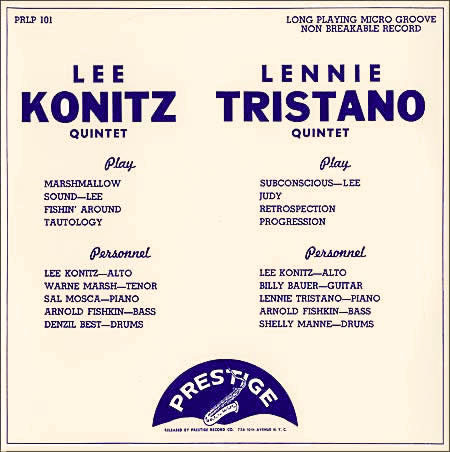
"Indian Summer" and "Crazy Chords" were on Prestige 108, showcasing Getz and Lee Konitz (thanks to the Hot Beat Jazz Blog, written in Portuguese, for these great images of the Prestige 10-inch 100 series,) along with two cuts from a 1950 Getz session."Mar-Cia" and "Long Island Sound" were added to the Five Brothers LP, all were re-released in the 7000 series.

Monday, July 14, 2014

Listening to Prestige Records Project - Part 6

Part of the springboard for starting this project was a series of conversations I'd had over time with my Peter Jones, about growing up in love with jazz in the 50s. Peter turned to jazz as an early teen. I came to it later, in college. I remember the night vividly. My dorm room in the World War II barracks that still served as dorms at Bard College then, no roommates around, a little too much to drink (probably - this was something else I'd just learned to do.) AM radio, middle of the night, those odd clear channel stations from all over. Twisting the dial, looking for some late night rhythm and blues. Suddenly hearing the sound I'd been waiting to hear all my life, without knowing it. Standing there, looking at the radio (we did that in those days) transfixed. It was John Coltrane with the Red Garland Trio -- Paul Chambers and Art Taylor. It was the first jazz record I bought, and it was on Prestige -- as were three of my first four jazz records. The other two were Mose Allison's Back Country Suite, and King Pleasure Sings - Annie Ross Sings. The outlier was Gerry Mulligan and Chet Baker on World Pacific.

That night with Trane and Red many years later became a poem, although with poetic license Trane became Miles, and I created a scene that never happened with an older brother I never had. But the poem is true to the heart of experience.


I'M NOT SO OLD

I was just fifteen when Charlie Parker died
My older brother took me aside
And said, Kid, it's a bad day
It's a sad day
Well, I didn't know why and I had to be told
Hey, but I grew up
And I learned my stuff
And I learned enough
And I'm not so old

When I was a kid just starting to move
I filled my soul with that rhythm and blues
And I listened to the Clovers
And the Coasters
And I couldn't get enough of that rock and roll
I was growing up
And the beat was mine
And it still sounds fine
And I'm not so old

Then one night I turned on the radio
Looking for some of that rock and roll
And I heard some bebop
Brought me to a full stop
Didn't know what it was but it moved my soul
I was almost grown
And they said it was Miles
I still dig his style
And I'm not so old

I saw Monk dance around the Five Spot floor
And a cat from Texas made the Five Spot roar
His sax was plastic
His sound fantastic
And I went back again to hear Ornette blow
I was all grown up
And he made jazz free
Still sounds good to me
And I'm not so old

Once they said that jazz had passed away
But I go down to hear the young cats play
They play in the tradition
They've got a mission
They play sweet and strong and free and bold
Well, I may be grown
But the cats blow on
And the music's young
And I'm not so old
Anyway, that's my particular love affair with Prestige. Shared by everyone? I'm not sure. Prestige, as I've noted before, has been somewhat the forgotten stepbrother to Blue Note. The New York Times' obituary for Bob Weinstock was a little backhanded -- " Prestige releases...weren't known for perfection. Mr. Weinstock generally set up recording sessions with no rehearsal time."

Well, perfection is overrated. And Peter Jones and I, talking about those days, have commented on what we remember as the incredible level of quality of those independent jazz labels -- it was all good.

Was it? I guess that's what I'll be finding out with this blog project. Next up, April 8, 1949, the Stan Getz Octet, including Five Brothers.

We think of the guys like Getz who became such giants in their field as having been born leading a group, playing "Desafinado" on TV, but Stan was 22 and newly graduated from the Woody Herman band, in one of his first sessions as a leader. Even at 22, he was a veteran - he'd joined the Jack Teagarden band at 16, when he was so young that Teagarden made him his ward.

An octet is big for a small jazz group, small for a big band, and this album is not big band jazz, certainly -- it's the combo format,a stated theme followed by virtuosic soloing, that was the hallmark of the bebop era. The most famous large small combo of the era -- or what came to be the most famous, since it was pretty much ahead of its time, was the Miles Davis "Birth of the Cool" nonet. Getz's octet was more straight-ahead -- I guess in the Prestige tradition of getting a bunch of guys together to blow with no rehearsal (although actually alternate takes don't seem to be so rare).

Getz was best known at this time as one of the Herman Herd's "four brothers," the four-saxophone section of Getz, Serge Chaloff, Zoot Sims and Herbie Steward -- and later Al Cohn. Sims and Cohn are the carryovers from those brothers, joined now by Alan Eager (a Herman alum but not a brother) and Brew Moore -- four tenor players, with Getz choosing baritone for this session. There's actually a sixth saxophone-playing brother involved, and this one makes them stepbrothers, in a way, to Miles' nonet -- Gerry Mulligan is listed as arranger.

I am writing this blog as a fan, as an archivist, not as a music critic or musicologist. I'm not that good. I can't tell you who's soloing when. I'd be a washout on a Leonard Feather blindfold test. In his allmusic.com bio of Brew Moore, critic Scott Yanow suggests that as a quintet of Lester Young acolytes, they all pretty much sounded the same on that session, so maybe I'm not the only one.

I can tell you that this is real Prestige jazz, the kind that makes you glad you're a jazz fan, and you get to sit still and listen to it, or snap your fingers to it, or stand still in the middle of the night and stare at whatever your contemporary equivalent to an old AM radio is. YouTube and Spotify both have this
session completely represented, including the alternate takes.
Both takes of "Battleground" were actually released on 78, one as Prestige release and the other as a New Jazz. So I was able to listen to all of it.

All the brothers were young. Al Cohn and Zoot Sims were 24,  Brew Moore was 25, Alan Eager like Getz a junior member at 22. But all were seasoned veterans. And all the brothers were valiant. Having five brothers in a small combo means succinct solos, and they make it work brilliantly. Generally a string of solos means a cutting contest. Here it's brotherly love, and wonderful cooperation to make a unified sequence.

In "Battle of the Saxes" (the only one without an alternate take) one gets the feeling that if they'd had just a little rehearsal time, they might have learned the tune, but once they start soloing, it could matter less.

With all those horns, there's not a lot of space for solos from the rhythm section, but Walter Bishop, Jr. has a few nice moments on piano. The others are Gene Ramey (bass) and Charlie Perry (drums). I wasn't at all familiar with Perry, but research reveals he's considered one of the great teachers of drumming technique, and one of his books on jazz drumming (co-authored with Jack deJohnette) is available (excerpted) online.

Friday, July 11, 2014

Listening to Prestige Records project - Part 4

I'm finding out a little more about Prestige's very early days. The Bill Coleman- Don Byas recording from Paris, though it was later released on Prestige's 7000 series, was not actually a Prestige recording. The January 11, 1949, Tristano session, which was my second blog entry, was the first actual recording for then-20-year-old Bob Weinstock's label, then called New Jazz, although it appears not to have been the label's first release. It appears as New Jazz 832 -- the 800 series were mostly 78s, though some were issued on 45. Not many, I'd guess, and certainly not in 1949. The 45
RPM record was only invented that year, by RCA Victor (the 33 1/3 RPM long playing record had only debuted the year before, from Columbia). But the Tristano session did become the label's first LP release -- New Jazz 101. The great cover art that was to become one of the hallmarks of 1950s jazz -- not just on Prestige -- was still in the future.

The actual first release -- New Jazz 800 -- came from the session we're about to explore. Weinstock apparently had access to a bunch of Woody Herman's Herdsmen, and recorded them in different groupings. Perhaps the Herd was playing a series of dates at the Metropole Cafe. Bill Crow remembers a later version of the band playing there, lined up along the runway.

In any event, Terry Gibbs, Bill Swope, Stan Getz and Shorty Rogers (playing trumpet this time - he's just listed as arranger on the Serge Chaloff date) were back in the studio on March 14, 1949, four days after the Chaloff sessions, with a different but equally potent rhythm section -- George Wallingford (p), Curly Russell (b), Shadow Wilson (d).

LP records were originally thought of as a vehicle for classical music, pop (and jazz) songs being of a length that a 78 RPM record could accommodate easily. If a composition was longer, it was generally structured in such a way that it could have a break in the middle, and be presented as "part one" and "part two," sometimes with a different arrangement or emphasis. Bill Doggett's R&B classic "Honky Tonk," with the two sides showcasing, respectively, Billy Butler's guitar solo and Clifford Scott's saxophone solo.

Something similar occurs on this 1949 recording date, in "Michelle, parts 1 and 2." The first part is completely structured around Terry Gibbs on vibes, with a horn section providing an atonal cushion for him that sounds more Kenton than Herman, while the second part gives some serious solo space to Stan Getz -- which is really why these sessions are remembered today. They've been rereleased in the Concord Original Jazz classics series as "Early Stan", along with another recording date led by Jimmy Raney. The Getz solos really are the best part. This album is also available on Spotify, though not on YouTube. The Spotify release is not really well labeled -- all the cuts are listed as Terry Gibbs/Jimmy Raney.

Weinstock was famous for recording everything in one take, so what makes this session particularly unusual is the existence of alternate takes. "Michelle"and "Terry's Tune" both have two alternate takes (and the latter has an alternate title - it's also called "Terry's Blues"). Both alternate takes are of Part One, so neither has the Getz solo. The final cut from the session appears to have had alternate mentalities at work, at least for the titling of the number: "Cuddles (Speedway)."

Almost all the takes got released, though, and sooner rather than later. "T and S" and "Terry's Blues" were the first release on the New Jazz 78 RPM series (NJ 800), and "Cuddles" became one side of NJ 802 (the other was a J. J. Johnson cut, about which more later. "Michelle" parts one and two were New Jazz 804, and the first alternate take became a Prestige 78 (Prestige 729) and later part of a 45 RPM EP (PREP 1312). I still haven't figured out when Prestige started issuing 45s, but the first of the series (PREP 1301) was an Annie Ross set (actually the classic Annie Ross set, with "Twisted" and "Farmer's Market), recorded in 1952.

Terry Gibbs is not only still around, but still playing. Along with Shorty Rogers, he decamped for the West Coast (after a stint with Benny Goodman), and left the Prestige circle. Something that surprised me: he was one of the first bandleaders to employ Alice McLeod, later much better known as Alice Coltrane.

Tuesday, January 22, 2013

Birth of the Cool: Move

Started thinking about Birth of the Cool, and the original compositions by Miles, Gil Evans and others that made up that session -- what great tunes they all are. Started wondering who else has recorded them. So here's the first cut on the album, "Move," as played by Bireli Lagrene, the gypsy jazz guitarist who first made his mark at the age of eight, playing Django Reinhardt's book.


And again by Stan Getz, a live performance from 1951, featuring Teddy Kotick on bass -- Teddy who played at Opus 40 several times with J. R. Monterose.