Tad Richards' odyssey through the catalog of Prestige Records:an unofficial and idiosyncratic history of jazz in the 50s and 60s. With occasional digressions.
Showing posts with label Philly Joe Jones. Show all posts
Showing posts with label Philly Joe Jones. Show all posts
I spent some time in my just-finished entry on Art Farmer talking about the considerable composing talents of Farmer, Hank Mobley, Gigi Gryce and Kenny Drew. Then I turn around and run smack into one of the great composers of American music: Tadd Dameron.
Dameron is sufficiently highly regarded in the jazz world to have merited a tribute band (Dameronia, formed by Philly Joe Jones, which released three albums of Dameron's compositions during the 1980s), but nowhere near as well known to the general public as he should be. He has said his greatest influences were George Gershwin and Duke Ellington, both of whom are household names. And maybe Dameron isn't quite in that pantheon because maybe no one is, but certainly he deserves to be named among the elite.
Part of the reason Dameron isn't better known is that his own output is very slim. 1956 may have been his banner year, with this and another album for Prestige. They were very close to his last recordings. There would be one more for Riverside in 1962, making his total output five albums, one of which was released postunously, plus isolated tracks on a few other albums released after his death.
Dameron wrote and arranged for a number of big bands, including those of Count Basie, Artie Shaw, Jimmie Lunceford, Dizzy Gillespie, Billy Eckstine, and Sarah Vaughan, and he liked that big sound. Most of his recordings are with eight to ten pieces, which makes this quartet album all the more unusual.
But with John Coltrane's tenor and Dameron's compositions, what more do you really need? This is a great album, one that I couldn't listen to enough. "Mating Call" and "Soultrane" may be the ones that grab a listener first, but if I were a practitioner of vocalese, and were looking for a piece to write lyrics to, I might choose "Gnid." It is so melodic. I'd probably have to change the title, if I were looking for a catchy lyric.
Coltrane is as good a choice as you could make to round out this quintet: because he's Coltrane, and a brilliant improviser, but also because he has great respect for Dameron's melodies, and lets them shine through at all times.
Dameron contributes some great solos too, giving his own interpretation to his compositions. Philly Joe Jones contributes some brilliant solos. John Simmons was a frequent contributor to Dameron's music, and if his solos here suggest that the art of bass soloing has gone a little beyond him by the mid-1950s, he's still a strong anchor to a rhythm section.
The session was booked as the Tadd Dameron Quartet, but the initial prestige release calls it Tadd Dameron with John Coltrane, which becomes, on subsequent releases, John Coltrane with Tadd Dameron, and some cuts are included on other Coltrane repackagings.
Dameron's tunes have been widely recorded. On Chet Baker's 1964 comeback album, he included a number of Dameron compositions, including "Mating Call," "Soultrane" and "Gnid."
This is the last round of the Contractual Marathon: twelve tunes, one afternoon, and Miles is out the door. And what more is there to say about what was...well, one can't say one of the most fruitful periods of Miles's career, because they were all fruitful, but probably one of the most beloved?
What's not to love? Miles with one of jazz's storied quintets, playing timeless tunes. "I'll play it and tell you what is after," Miles says at the beginning of the session, but there's scarcely any need. We always know what it is. Classic tunes from the Great American Songbook. Jazz standards from Monk and Rollins and Miles himself.
So rather than think a lot about it, I just listened to them. A lot. In the car, in the house. In a box, with a fox. And I did like them, Sam-I-Am.
Music that has been orchestrated into the sound track of your life, that you first heard when jazz was becoming as necessary to you as a pulse, can become one with that pulse over time and resolve itself into background music, but not in a bad way. It's never going to be elevator music. But it has the warm familiarity of a thirty year marriage. And then, suddenly, it will surprise you in a new, unexpected and challenging way, like...well, like a thirty year marriage.
So goodbye, Prince of Darkness. Like Tristano, and Getz, and Monk, and the MJQ, you're moving on from Prestige, although your bandmates will still be here for a while, Kind of Blue lies ahead of you, and Sketches of Spain, and In a Silent Way, and Bitches Brew, and Big Fun, and Jack Johnson, and the Fillmore. Thanks for the memories and the music.
After the last of the Contractual Marathon sessions had been recorded, Miles was free to pursue his career with Columbia. Her didn't have to wait for the records to be released, and in fact, their release dates were spread out.
"My Funny Valentine," "Blues by Five" (by Red Garland), "Airegin" (by Sonny Rollins, first
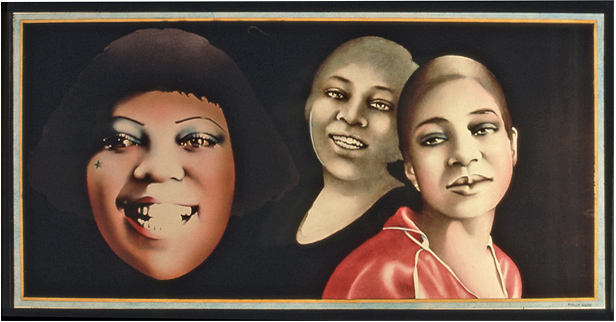
recorded by Miles in 1954 and already on its way to becoming a jazz standard), "Tune Up/When Lights Are Low" (presented as a medley, the first a Miles original and the second by Benny Carter and Spencer Williams) made up Cookin' with the Miles Davis Quintet, released in July 1957 as the first album in this series. The cover art was by Phil Hays, who, like Miles, would move on to Columbia, where he became noted for his album cover portraits of Bessie Smith and others.
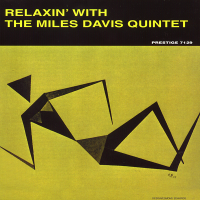
Standards "If I Were a Bell," "You're My Everything" and "I Could Write a Book," along with Rollins's "Oleo," were on the second album, Relaxin', released in February, 1958. "Half Nelson" saw daylight two years later, on Workin', February, 1960. "Well, You Needn't" was on Steamin', not released until August, 1961.
Prestige also got several 45 RPM releases from this session: "If I Were A Bell," Part 1&2, "Airegin / 'Round Midnight," "Tune Up / Oleo," and "My Funny Valentine / Smooch," the last one perhaps a Valentine's Day special.
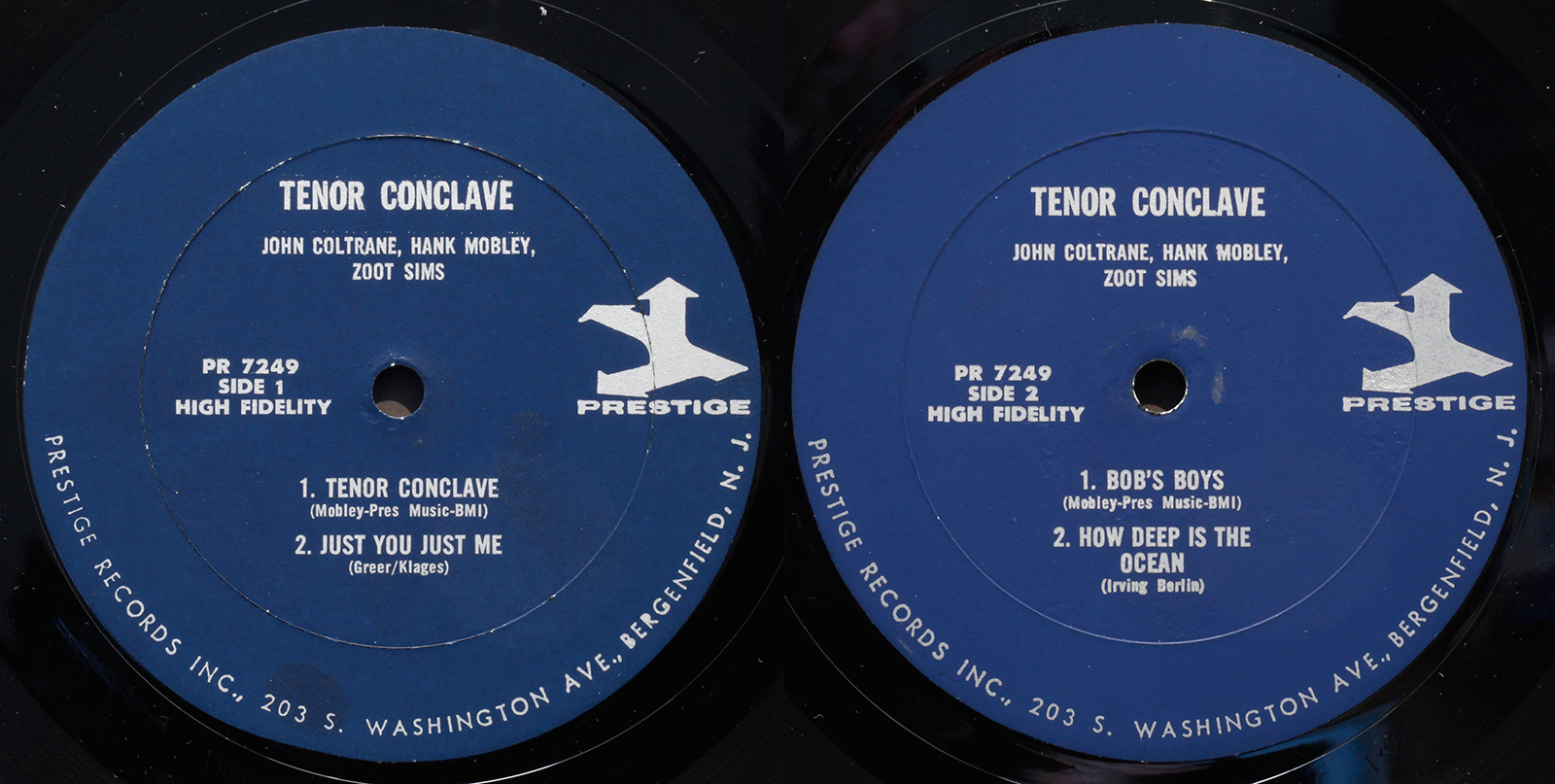
John Coltrane, Hank Mobley, Al Cohn and Zoot Sims together as the sax section for one recording session. What could possibly go wrong?
Nothing, as it turns out. Talk about four brothers! These are four of the all-time greats on the instrument that became the heart and soul of jazz and rhythm and blues of the 40s and 50s.
No one is listed as the leader on the session, although it may have sort of been Hank Mobley, who contributed two original compositions (the other two tunes are standards). Eventually, as John Coltrane's star continued to rise, the album was reissued under his name. Interestingly, although that star continued until Trane had risen to the firmament populated by Miles, Bird and Armstrong, it's the leaderless Tenor Conclave cover that adorned the CD reissue.
And no one takes over as leader, or tries to. in her liner notes to the reissue, Ann Giudici* says
As opposed to the popular "cutting session" of years gone by, this date merely offers four different players a chance to display their ideas. No one was out to blow the other off the stand. The atmosphere is one of forceful but relaxed blowing."
Maybe this is a characteristic of jazz of the Fifties. Certainly we've heard competitive sessions, like the Coltrane/Sonny Rollins Tenor Madness. But as often as not, the leitmotif is camaraderie. We heard it in the earlier Prestige All-Stars session, with Art Farmer, Donald Byrd and Jackie McLean. Or the Phil Woods session from back in June, with Woods and Gene Quill paired on altos, Donald Byrd and Kenny Dorham on trumpets.
How good an album is this?
Very, very good.
Is it four times as good as an album with one of them?
The answer is yes and no.
No, because if you compare it with albums featuring any one of them -- say, John Coltrane with the Red Garland Trio, one of my all time favorites, and also on Prestige, you wouldn't want to even consider the question of which one is better. It would be like choosing between your children.
But yes, because it's mythic. Like knowing that "Tenor Madness" is the only recorded collaboration between Coltrane and Sonny Rollins. Like the discovery, five decades after the fact, of a live recording of Coltrane and Thelonious Monk at Town Hall.
The myth is important. One of the wonders of art is that it stays with you, and gestates inside your mind and your soul until it becomes a new entity, the offspring of you and the artist(s). And that new enitycomes out into the world and plays with new friends, half-sisters and brothers, the offspring of the artist(s) and your friends, or people you meet in online forums, or people you meet by reading their books and articles and liner notes and poems (like Michael S. Harper's paeans to Dear John, Dear Coltrane). Imagine making love to someone after listening, together, to Stan Getz or Louis Armstrong or Ornette Coleman. You're imagining (or better yet) remembering three very different experiences, aren't you? And each one with a special richness that would not be there without Stan or Louis or Ornette. **
Part of that gestation is the art itself, and part is the history, the personalities, the stories--especially in jazz, which is such a collaborative art, and such an endless melding and blending and separating of personalities and sensibilities, the Miles Davis nonet or J.J. and Kai or James Moody and Tito Puente or the musicians Norman Granz brought together for Jazz at the Philharmonic or Ella Fitzgerald and George Gershwin.
In a review of the album on allmusic.com, Lindsay Planer says that " It takes a couple of passes and somewhat of a trained ear to be able to link the players with their contributions," and this is certainly true to my not very trained ear, but the sense of those different voices and sensibilities coming together is palpable and intoxicating. The London Jazz Collector, in his blog, characterizes the four voices as "Mobley’s tone is pure chocolate, Coltrane is spiced lime, Sims is a good Claret, Cohn is mocha garnacha." Which is beautiful and allusive and mysterious, especially since I had no idea what mocha garnacha is.
Ira Gitler, always helpful, runs down the solos in his liner notes to the original album:
* Always interested in new names that crop up on the periphery of the music and the scene, I looked up Ann Giudici and found not very much. In the early 60s, she was apparently producing plays off-Broadway, and Hackensack station WJRZ, which was having success with old time radio dramas, hired Ann Giudici to produce original dramas and adaptations of short stories with a local repertory company. JRZ had a varied format including jazz (Les Davis was a DJ), but shortly afterwards they switched to an all-country format.
** Here's an imagined look at jazz and lovemaking. This will be included in my forthcoming collaboration between me (poems) and Nancy Ostrovsky (drawings), She Took Off Her Dress.
SHE SAID
She said jazz
is how life should be
flexible rhythm but
you count it off
beyond that
improvisation
melody left behind
now it’s your call
you know where
the roots are you don’t
know where it’s taking you
she herself was
Chet Baker
Gerry Mulligan
touching where you didn’t
know you tingled
or she was
Thelonious Monk
threading her way along
narrow pathways
with broad steps
on either side are
Arizona cactus
long spined blooming
Bill Hardman was a youthful 23 when Jackie McLean presented him as his pal/protégé, which was actually two years older than Paul Chambers, who was already a veteran...but Chambers started mighty young. Hardman did too, even though this is is first jazz recording. Even in high school, he was playing with Tadd Dameron's orchestra. After graduating, he joined Tiny Bradshaw's rhythm and blues ensemble, and he can be heard on some of Bradshaw's recordings, although not as a soloist.
He was with Bradshaw from 1953-55, and after that, he was hired by Charles Mingus for a short time -- long enough to become friends with fellow Mingus bandman Jackie McLean (Mal Waldron was also in that group). He would make two more albums with McLean for Prestige, and shortly after this first session, both pals were grabbed up by Art Blakey, who had signed with Columbia, for the second version of his Jazz Messengers.
Hardman would do three different tours with Blakey. And he would endure. Long after bebop and hard bop had gone out of fashion, Hardman kept the flame alive, forming a bop quintet with tenor sax player Junior Cook that was still getting gigs, and appreciative audicnces, through the 70s and 80s.
Hardman died in Paris in 1990, and the headline of his obituary in the New York Times read,
curiously, "Bill Hardman, 57, Trumpeter Known For Improvisations." What did they think jazz musicians did?
Peter Watrous, who does know what jazz musicians do, wrote the obit, and what he actually said was "A fiery but lyrical improviser, Mr. Hardman was one of the last surviving major trumpeters to come out of the 1950's. " This was Watrous's third sentence, and I guess the headline writer didn't feel he needed to read any further.
The composition credits are democratically spread around the group (Jackie was no Miles Davis). "Sweet Doll" is McLean's, "Just for Marty" and "Sublues" are by Hardman, and Mal Waldron brings in "Dee's Dilemma," making for a nice mix and a nice consistency at the same time.
The session is rounded out by Charlie Parker's "Steeplechase" and the standard "It Could Happen To You," which had also recently been recorded by Miles in one of his Contractual Marathon sessions. Listening to both versions back to back is more enjoyable than instructive. The only thing I learned was that when you give a great melody to great improvisers, the results are going to be different. Miles's group takes it at a brisker tempo, even though the tempo-setters on bass and drums are the same for both sessions.
By this time Paul Chambers was established as the bassist in one of the most recognizable ensembles in the history of jazz, and although at this time jazz history was being made, not considered in hindsight, people already knew how important this quintet was.
What people don't always remember is how short-lived it was. Miles formed it in late 1955, recorded pretty heavily with it in 1956, and disbanded it in 1957, not getting it back together until 1958, and then as a sextet. Its rhythm section recorded independently, together or separately, and continued to grow as musicians -- one of the big differences between the Miles and the Jackie versions of "It Could Happen to You" is Paul Chambers' solo. Chambers is developing, and asserting himself.
The album was first released as Jackie's Pal: Introducing Bill Hardman, which is a little odd. New guys make album debuts all the time. But generous of Jackie. It was later rereleased on New Jazz as Steeplechase, a title that looked back to Bird rather than forward to the burgeoning career of young Hardman.
All right, it's mid-1956, which means we are smack dab in the middle of the hard bop era, and I haven't really talked about hard bop, or what makes it different from bebop, or where one leaves off and the other starts, and actually don't really intend to, because I don't know and don't care. There are two pretty standard definitions of hard bop. One is "what the Miles Davis Quintet played," and that obviously isn't much of a definition, but it more or less means the 1955-56 sessions for Prestige, which makes Prestige the quintessential hard bop label. The other definition has to do with getting funky, and mostly centers around Horace Silver and Art Blakey, which makes Blue Note the quintessential hard bop label, which is probably closer to the target.
One definition of the distinction is that bebop is more of a player-centric music, and hard bop a more listener-centric: "players like Diz, Bird, and Monk would play through a tune without playing the "head" first. They approached the music thinking that the listener had already digested the standards of the day and would recognize them by their chord structure. Hard Bop is based more around the melody in that you usually hear the melody at least one time, then the performer(s) will start in on a (usually) technically challenging solo."
And there may be something to be said for that, although musicians of the bebop era who were trying to pull away from it, like John Lewis, were specifically trying to move away from the head-solo-solo-solo-head template, and in a way the hard boppers, or neo-beboppers,were actually coming back to it. But the idea of hard bop being a more listener-friendly music makes sense.
It's a truism of jazz history that jazz went from being America's popular music, in the 30s, to being an art form that was not especially popular in the 40s. And like many truisms, it's mostly true. The musically and intellectually challenging concepts of the beboppers were not likely to go to the top of anyone's hit parade. It's even harder to imagine Snooky Lanson or Dorothy Collins singing "Scrapple from the Apple" or "Moody's Mood for Love" than it was to hear them singing "Sh-Boom" or "Heartbreak Hotel."
But it's less commented on that jazz made something of a commercial comeback in the 50s. It still wasn't challenging Elvis and Fats Domino, or even Eddie Fisher and Connie Stevens, for top 40 ascendancy, but it wasn't scaring people away in droves.
Jazz was still a hipster's music, but as the Eisenhower era moved on, the hipster (not today's gourmet chocolate makers in Brooklyn, but the real hipster) became a more approachable outlaw. Jack Kerouac became the Errol Flynn of a new generation, the buccaneer with a twinkle in his eye, living outside the mainstream, and Charlie Parker and Miles Davis were the Erich Korngold and Bernard Hermann of the Beat Generation soundtrack.
Jazz came to television with Peter Gunn, to Hollywood with Anatomy of a Murder. Steve Allen featured jazz musicians on his popular network show.
Playboy played a big part in bringing modern jazz into the mainstream. Playboy in the 50s offered its readers a shortcut to sophistication, and jazz was a part of that sophistication.
And it worked, for one reason or another. George Wein opened up a new audience by bringing jazz to Newport, Dave Brubeck by bringing jazz to college. Did it make a difference that a lot of white people were playing jazz? Probably. It certainly made a difference to the popularity of what had once been called rhythm and blues. But there weren't any Fabians in jazz. It was essentially a meritocracy. Was Brubeck really better than Oscar Peterson? It's a fair question, and the answer is no, and that's an important answer. The economic story of American music is inextricably tied up with racism. But in another way, it's the wrong question. Here's another one: was Brubeck deserving of the accolades and rewards he got? Yeah, he was. I applaud every dollar that went into Dave Brubeck's pocket as opposed to Dick Cheney's, and people aren't going to forget his music in a hurry.
Brubeck, Playboy, Peter Gunn, the Beats, Steve Allen. In 1955, Billboard reported that jazz was loud at the cash register. And a 1959 album, Miles Davis's Kind of Blue, is by most accountings considered to be the biggest selling album of all time, although it's also considered to be a break from all things bop, although that's a bit of an overstatement.
So, the difference between bebop and hard bop? Maybe it's a generational thing? The beboppers grew up playing big band swing, and for them modern jazz was a revolution...for a younger generation, it was just what they played. Which doesn't explain Art Blakey.,
Or how about this? If it made money, it's hard bop. If it didn't, it's bebop. Or free jazz.
Or how about this? It mox nix. It's all music.
This Phil Woods septet is made up of musicians from either side of the divide. Woods, Kenny Dorham, Gene Quill and Philly Joe Jones on the older side, Donald Byrd and Tommy Flanagan on the younger. So is their music bebop or hard bop?
Two answers. (a) I don't care, and (b) this is the last time I will ever raise that question.
I'm more interested in comparing this session to two others we've listened to recently -- the Sonny Rollins/John Coltrane duet of May 24, and the Elmo Hope Sextet session of May 7. Coltrane stayed around from that session to record with Miles and then with Sonny; Donald Byrd didn't stray far either. And Philly Joe Jones virtually never left the studio.
But it's the horns that mostly hold my interest here. Three of them on the Hope session, four of them here with Woods. You'd think that would require some serious arranging, especially here, with mini-reed and mini-brass sections, but the casualness of the Hope session seems to be the order of the day here, too. Maybe there's something about getting a bunch of musicians together that inspires a sort of collective camaraderie. There's a brotherhood in the Coltrane-Rollins collaboration, but at the same time a competitive edge. They each know what the other is doing, and neither is going to be left behind. Here, as in the Hope session, there's that fluidity. And perhaps as a result, though there's great virtuoso playing, and I mean great virtuoso playing, by all concerned, you're not really going to walk away whistling any one of the horn parts in particular. You might, instead...all right, you can't walk away whistling a drum solo, but Philly Joe Jones gets the real bravura parts.
Cover design by Harry Peck, who did some very nice work for the
British Esquire label releases of Prestige product.
Three of the tunes are Phil Woods compositions. They're vehicles for jamming: none of them has seen much recording by other artists. So it's worth noting how good some of these composed-on-the-spot vehicles for jamming in the modern jazz era were. Each of these has an arresting melody, and each provides a framework for inspired soloing by seven different guys,
'Suddenly It's Spring" is the one standard here, and if you were doing a blindfold test, and were asked to pick out the standard, you might not guess it. The guys here do all the things that give Chuck Berry his kick against modern jazz: they play it pretty darn fast, and they don't worry much about the beauty of the Jimmy Van Heusen melody. They come into it jamming, horns blazing, maybe more than on any of the spur-of-the moment compositions. There's none of the yearning romanticism that you get from the vocal versions, and it's not missed.
"Pairing Off" is the tune that gave the album its title, appropriately referencing the instrumentation.
This is two weeks after the May installment of the Contractual Marathon, and Miles may be resting up for the next assault, but the guys are still hanging around, and here is Teddy Charles's "best rhythm section in jazz" back in the studio to support Sonny Rollins.
And here, for one track, is the tenor player Miles hired when he couldn't get Sonny. These are two young men who are poised to become the dominant tenor saxophone players in jazz, the heirs apparent to Coleman Hawkins, Ben Webster and Lester Young.
I realized, as I wrote that, that I had never been quite sure what "heir apparent" meant, so I looked it up. An heir apparent is the next in line for succession to a throne or a title, and is next in line no matter what. This is distinguished from an heir presumptive, who is next in line until someone comes along with a better claim. So in jazz, one would have to say that all heirs are heirs presumptive--they are one cutting contest away from being displaced as next in line to the throne. For that matter, jazz royalty are kings presumptive.
But these were the two, and time and history have moved them from presumptive to apparent to jazz royalty, and this one track, from this one recording session, is their only appearance on record together. Ever.
The tune is "Tenor Madness," and it has become a jazz standard...and not just for tenor players. On YouTube, you can find amazing renditions of it by Emily Remler and Toots Thielemans. Tenor players who have recorded it include Arnett Cobb and Joe Henderson, Dexter Gordon,Joe Lovano and George Adams, Eddie Harris--and if you're learning jazz saxophone, you'll learn this.
Sonny and Trane are truly heirs presumptive on this recording. I wrote about the seamless weaving together of solos by Coltrane, Donald Byrd and Hank Mobley on the Elmo Hope session of a few weeks earlier. Not so here. These guys are kicking each other, challenging each other, every step of a twelve-minute journey, and the winner...well, the listener, for a start. But also both sax men. They both emerge triumphant. Wikipedia quotes jazz critic Dan Krow as saying that "the two complement each other, and the track does not sound like a competition between the two rising saxophonists," and that's sort of true, in that there are no losers. Turns out they both really are heirs apparent, if not royalty already.
On the left, the Prestige cover. On the right, the British Esquire
label cover, far more imaginative. The cover design is credited
to Sherlock, about whom I can find nothing.
The rest of the session is Rollins and the rhythm section. The music is completely different, but no less rewarding: a thoughtful, delicate jazz impression of a piece by impressionist composer Claude Debussy. Rollins is outstanding on it; so are Garland and Chambers, in their solos. Rodgers and Hart's "The Most Beautiful Girl in the World" is kicked harder, and gives Philly Joe Jones some space to swing, and has a particularly nifty closing statement of the melody by Rollins.
"Paul's Pal" is a Rollins composition, and unsurprisingly enough, gives a showcase to Paul Chambers. But Sonny also shows what a pal he is by playing one part in such a low register that he's nearly down there with the bass. He also proves to be a pretty good pal to Garland and Jones. This is a true quartet session, with everyone getting solo space, and everyone contributing to the whole experience.
Tenor Madness became the title of the album. It's on lots of lists of greatest jazz albums of all time--mostly for the title track, but even without it, the album would rank way up there.
Now we're entering the Miles Davis Contractual Marathon in earnest. His November session was only six songs. This one has thirteen--fourteen if you count the two versions of "The Theme." By way of comparison, three separate recording sessions for Columbia at around the same time period yielded seven tunes.
What's now known as the First Quintet jelled in the fall of 1955, when John Coltrane replaced Sonny Rollins, They appeared on the Steve Allen show in October, did their first studio session for Columbia a week later, and made their first recording for Prestige in November.
So by the time they got together for their first Contractual Marathon, they'd been working together for half a year. How long does it take a group of brilliant jazz musicians to coalesce? Well, we've just listened to the Elmo Hope session with Coltrane, Hank Mobley and Donald Byrd, so we know the answer is that you can just all wander into Rudy's parents' living room on a nice spring day and start playing seamlessly intuitive jazz right off the bat. Of course it helps if you have a great rhythm section, and one was there that day: Elmo Hope, Paul Chambers and Philly Joe Jones.
How much does it help? Jack Maher, in the liner notes to one of the LPs to come out of this session, recalls a club date where Miles and Coltrane were hopelessly out of sync, and the music was almost unlistenable. Maher recalls that, sitting with Teddy Charles, he commented on it. Charles's response:
"Watch the rhythm section. This is the best rhythm section in jazz the hardest swinging rhythm section, watch out when they loosen up."
At this point Miles and Coltrane abruptly walked off the stand. This was the usual cue for Red Garland to his featured number-trio style. Miles did this regularly when he was bored, felt he needed a break or a beer. I don't remember what tune it was exactly, something like "Ahmad's Blues" in this album, if I'm not mistaken, a medium tempo that more or less plays itself.
From the beginning the three men relaxed. Alone on the stand Red, Paul and Philly Joe relaxed and fell into a smooth spirited swing. The trio drew more applause for that one tune than the whole group had for the entire evening. When Miles and Coltrane returned to the bandstand the atmosphere in the club had changed. Somehow the tension had gone, and, on the next tune, "It Never Entered My Mind", which is also performed in this album, Miles played one of the most beautiful choruses I've ever heard him play.
If it doesn't take long for a bunch of great jazz musicians to find a groove, it takes a little longer to simply know this many tunes in common. And that's where six months of club dates starts to matter. Most, if not all of the songs played on this and the following marathon session were ones that the group had played on the road, in clubs. A bunch of them were pieces that Miles had recorded before, including the one they started the session with, "In Your Own Sweet Way," which he had just done two months earlier in an abbreviated session with a quintet featuring Sonny Rollins. This version is maybe better -- starting right off with Miles and his Harmon mute, setting a tone for the whole session.
I don't think he'd ever recorded "Diane" before. It wasn't exactly a jazz standard, and hasn't exactly become one, although Pete and Conte Candoli did a West Coast version a few years later. It was composed by Erno Rapee, primarily a symphonic composer. Its best known recording was by Mario Lanza, and it's not one of Lanza's best numbers. In fact, although it's been widely recorded by vocalists as far-ranging as country singer Jim Reeves, it really doesn't seem like a very good song. Until Miles gets hold of it. And Coltrane, who'd had a lovely solo on the first cut, really steps out and wails here, as he does on "Trane's Blues," which sort of makes its recorded debut here--that is, first recording under this title. It was called "Vierd Blues" when Miles and the same rhythm section, plus Sonny Rollins, recorded it in March, and composer credit was given to Miles. And also in March, it was recorded for a West Coast label by a group under Chambers' name, featuring Coltrane, Jones and Kenny Drew, as "John Paul Jones," for reasons that should be self-explanatory.
Going back and listening to both versions of "In Your Own Sweet Way" again, something occurs to me. Rollins is capable of as much romanticism as Davis is. So is Tommy Flanagan, actually. And Miles holds back a little. In the quintet version, he's matched with John Coltrane, who is following his own muse, which will take him, as we know, into remarkable places. But even here, he's into his own explorations, and this gives Miles license to completely open up to the romantic side of his nature. Listen to the way Miles comes back in at the end "In Your Own Sweet Way," after Coltrane's solo, simplifying, finding all the sweetness in the melody.
And I think this is one of the reasons why the albums that came out of these sessions were so popular at the time, and remain so popular. We've listened to the Davis/Charlie Parker recording session of 1953, where they ran out of studio time, and had to record "Round Midnight" in fifteen minutes. I said of that recording, "No time to be clever, no time to intellectualize it. Just go with the emotions closest to the surface, and for Parker pain was never far below."
Miles doesn't have a lot of time here, and maybe he's taking the most direct route. He's doing what Chuck Berry says modern jazzers don't do: trust the beauty of the melody.
But maybe he's doing it because he knows he can. He's been playing with Coltrane, Garland, Chambers and Jones for six months now, and he trusts them to provide a framework. Maybe that's one of the reasons why he chose so many ballads for this session.
"Something I Dreamed Last Night" is the first of these. It's a Sammy Fain melody that's been done
often by vocalists, starting with Marlene Dietrich, who is never simply romantic. There's always the subtext that she knows more about life than you'll ever know. Sarah Vaughan is surrounded by strings for her version, which makes for romance, but Sarah always has an edge, too. She always sings the song, and does it justice--more than justice--but she's also always singing the music, making a statement about it. Miles does that too, of course, but somehow he stays closer to the emotional purity. Johnny Mathis is all about beauty and emotion, but Mathis, as good as he is, is a bit of a one-trick pony -- beauty and emotion is what he's always going for. For Miles, it's a choice. And that brings a special kind of intensity.
There's probably no one who's never recorded "It Could Happen to You," starting with Dorothy Lamour in a 1944 movie. There's probably no way to sentimentalize a song more than Lamour does, even though she sings it to Fred MacMurray, and Miles finds a drier, more emotionally ambiguous approach, as he does with "Surrey With the Fringe on Top," the Rodgers and Hammerstein paean from Oklahoma to a bucolic life that Miles never knew nor wanted to know. In both of these, he sets up Coltrane for adventurous and bopworthy solos.
He gets back to the achingly beautiful with "It Never Entered My Mind," a song from the other side of the Richard Rodgers songbook, the dark side that Lorenz Hart explored, as opposed to Oscar Hammerstein's sunny side. Hart's lyrics capture the devastating loss of love to a guy who maybe deserved it, but that doesn't make the loss any less painful, especially since he knows he deserves it. Miles gives us the loss, in its purest form. He lets Red Garland explore other emotions, and then he brings it back to the melody, and the simple emotion. "When I Fall in Love," written by Victor Young for a forgettable 1952 movie, is nowhere near as good a song, but Miles finds the pathos in it, and makes the melody better than it perhaps has a right to be. There'll be more ballads in the next and final chapter of the Contractual Marathon, and they'll be beautiful too.
Then there are bebop classics (Dizzy Gillespie's "Woody'n You" and "Salt Peanuts," Miles's "Four"). They're treated like old friends, and they give all the satisfaction of hanging out with old friends...who have something new to say. Philly Joe Jones takes over "Salt Peanuts" and leaves you breathless. There's no chanted "Salt Peanuts! Salt Peanuts!" but Miles's horn gives a pretty good approximation.
Garland, Chambers and Jones are given the spotlight on "Ahmad's Blues," including a gorgeous bowed bass solo by Chambers. They demonstrate what Teddy Charles was talking about, and they demonstrated it to Bob Weinstock too -- he signed them as a trio.
Miles was a huge fan of Ahmad Jamal, and a lot of jazz critics thought Miles was crazy. Jamal played a lot of gigs in Chicago, which automatically put him the Second City second rank, and he mostly played with a trio in cocktail lounge settings, which made it easy to dismiss him as cocktail pianist. It should come as no surprise to find out that Miles was right.
The contractual sessions were cut up and released on four different albums over the next few years. "Woody'n You" and "It Could Happen to You" were on the March 1958 release, Relaxin' with the Miles Davis Quintet (the first release, Cookin' in 1957, was all tunes from the later session).
"In Your Own Sweet Way," "Trane's Blues," "Ahmad's Blues," "It Never Entered My Mind," "Four" and the two versions of "The Theme" came out on the 1959 release, Workin' with the Miles Davis Quintet.
"Diane," "Something I Dreamed Last Night,""Surrey with the Fringe on Top," "When I Fall in Love" and "Salt Peanuts" were all held off until 1961 and the final LP from the 1956 sessions, Steamin' with the Miles Davis Quintet.
A number of these tunes also eventually found their way to 45 RPM singles, as Prestige really entered that game in the 1960s. "It Never Entered My Mind" came out in early 1960, divided onto two sides of a 45, and July of 1960 saw "When I Fall in Love"/"I Could Write a Book." The marketing folks at Prestige had apparently decided that two songs were a better sell than Parts 1 and 2, which meant that These long form LP improvisations were released in edited versions. "When I Fall in Love," at 4:21, could easily have been split in half, but instead it was cut down to 2:25. Same with "I Could Write a Book," which went from 5:11 t0 3:37.
"Surrey with the Fringe on Top"/"Diane" was released in April or May of 1963, as Prestige continued to space out the contractual sessions as far as they could. Both of these were in severely edited versions -- the originals had been 9:05 and 7:49 respectively. For that matter, on "Surrey With the Fringe on Top," they edited the "e" out of "Surrey."
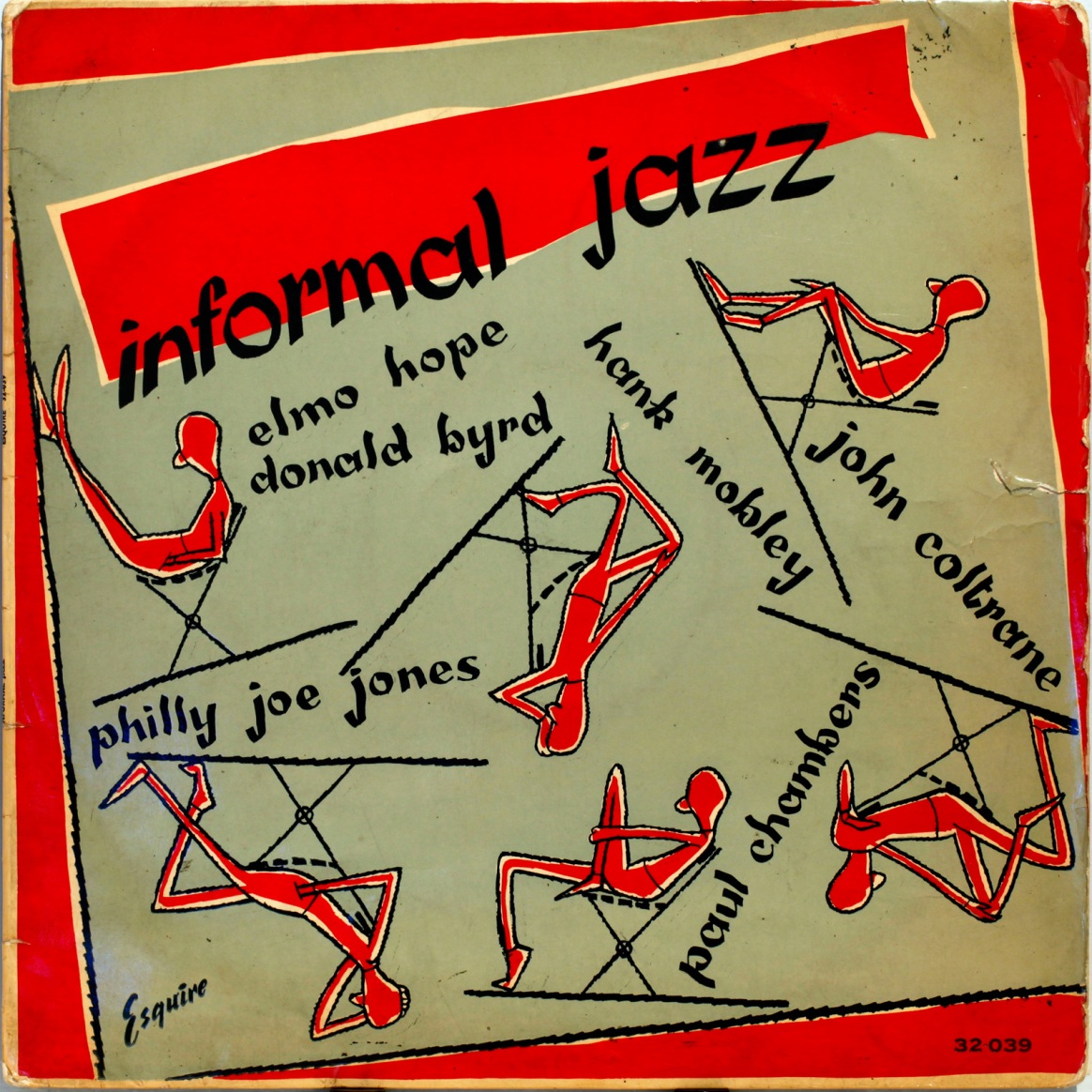
Elmo Hope's star, never as bright as it should have been, was perhaps beginning to wane at this point. The session is listed as "Elmo Hope All-Star Sextet," and the album was released as by the Elmo Hope Sextet, but at exactly the same time, so it would seem, it was also released as by Hank Mobley and John Coltrane, as Prestige PRLP 7043 and 7043 (alt).
And Ira Gitler, in his liner notes, describes the session as being "the nominal leader on the date," whatever that means. Gitler also suggests, without actually saying it, that the session is a buncha guys who happened to drop in at Rudy's parents' living room on a Friday afternoon to see what was happening.
If so. that would make this just about the perfect Bob Weinstock jam session, and maybe Gitler is exaggerating the casualness of the ensemble a little bit, but maybe not. I'm willing to take it as mostly true, and I'm willing to credit it as a quintessential tribute to the Weinstock philosophy of what jazz is.
As Gitler goes on to point, out, these musicians were hardly strangers to each other. Donald Byrd and Hank Mobley had played together in the Jazz Messengers; John Coltrane, Paul Chambers and Philly Joe Jones were the nucleus of the new Miles Davis Quintet, and Jones and Hope went even farther back.
It's interesting to note how strong the rhythm and blues roots were for these musicians. Jones and Hope had first played together in Joe Morris's band, Hank Mobley with Paul Gayten, John Coltrane with Eddie "Cleanhead" Vinson. Also interesting that when they get together for a casual jam session, they go to bebop, not rhythm and blues, as a lingua franca.
Even more interesting, to me, is how powerful a lingua franca this is. Gitler, in his liner notes, lists the order of solos, as he oftenh does, and I wonder if he got, or gets, enough credit for this service. Too many serious jazz aficionados are also jazz snobs, and would dismiss this as pablum, but for the rest of us, it's very useful in following a jazz recording. In this case, Gitler gives us a remarkably involved and complex series of solos:
Weejah: Opening riff, Hank, Donald, Trane (bridge), Hank, Donald (4), Hank (2), Trane (2), Hank (1), Trane (1), Hank (1), Trane (1), Elmo (3), Chambers (2), Donald, Hank, Trane in fours with Joe (1), Joe (1), out chorus in same order as opener.
And even with Ira's help, I get lost. Well, I did recognize when Elmo came in. Or:
On it: Donald (8), Elmo (8), Hank (3), Trane (3), then two choruses each, followed by one chorus each, followed by two choruses of fours, two of twos, and another of fours. Hank is first at the beginning of the conversations.
This is a good thing to keep in mind the next time I'm tempted to criticize Gitler as a commentator on jazz. Yeah, I got lost again here. But there are a couple of reasons. One is, at a certain point I have to give up feeling the pressure -- am I going to be able to tell where they go from trading fours to trading twos? -- and just listen to the music.
The other is--it's almost beyond understanding how completely these loose, informal jammers are on the same page. Very often, especially in the early days of bebop, when the music was shifting from dance-centric to listener-centric, and the idea of a virtuoso solo was moved to the forefront, a soloist would finish off his turn with a little statement -- "Here, what are you going to do with that?" -- and there'd be a vamp by the piano or bass (not so often bass when recording engineers couldn't pick him us as well), for the listener and the next soloist to reflect on what had just been heard. Not so here. This music is seamless, so much so that you sometimes even forget to notice whether you're listening to Byrd or Coltrane -- and that's not leaving out of account that we're listening to some of the most distinctive voices in jazz.
Two of the pieces are Elmo Hope compositions -- "riffers which expedite the blowing," in Gitler's words, but they're more than that. Both, especially the bluesy "On It," are lyrical. Hope was a gifted composers, and these two tunes justify this being labeled as an Elmo Hope sessions.
The other two are standards, very much "mainly vehicles for blowing," in that like the two Hope tunes, they give the soloists the basis for work which is so seamless it almost makes a succession of solos sound like an ensemble. "Polka Dots and Moonbeams" was a Jimmy Van Heusen pop hit for Tommy Dorsey/Sinatra which has become a favorite of the moderns, with versions by Bud Powell, Chet Baker, Bill Evans, Wes Montgomery, Blue Mitchell...it has been listed as one of the most frequently recorded jazz standards.
I've commented before on how many times beboppers have reached back to a very early age, taking songs from operetta to transform into a modern idiom. "Avalon," in a way, harkens back even farther. It's credited to Al Jolson, Buddy deSylva and Vincent Rose, and while it's questionable whether Jolson really did any of the writing, it's also sort of questionable whether Rose did. The melody is close enough to an aria from Tosca that the Puccini estate was able to sue for plagiarism and win.
Are there any other modern jazz versions of operatic arias (not counting Porgy and Bess)? Probably. There must be some from Carmen. But I can't think of any offhand.
A couple of digressions before I let you go. A lot of the Prestige catalog was licensed in England to the Esquire label. The Esquire release of this album, which must have been not long after the Prestige release, has cover art by Ralph Steadman. Steadman is one of the great illustrators of our era, and I suspect he may be pretty embarrassed by this, which doesn't begin to suggest Alice in Wonderland or Fear and Loathing in Las Vegas. He must have still been an art student at this time, and nowhere in his biography does it mention any work as an illustrator for record labels.
Second digression. And I know I'm preaching to the choir here. Everyone who cares about music, or cares about education, knows how important music education is. Donald Byrd went to Cass Technical High School in Detroit. We think of Detroit today as the epicenter of urban blight and hopelessness, but Cass Tech has held onto its music ed program, and according to its Wiki page, "Cass Tech students' strong academic performances draw recruiters from across the country, including Ivy League representatives eager to attract the top minority applicants."
Because Cass Tech continues to have a music education program, its graduates have made their mark from swing to hip-hop, not to mention opera and gospel. I promise I won't keep posting lists like this, but here are some of Cass Tech's graduates, and of course I'm not including the kids who went on to become teachers, or the kids who simply stayed in school because there was a band and a concert choir.
Dorothy Ashby, jazz harpist and composer.
Geri Allen, post bop jazz pianist.
Sean Anderson aka Big Sean; hip-hop artist signed to Kanye West's Label (G.O.O.D. Music).
Kenny Burrell, jazz guitarist.
Ellen Burstyn, won Academy Award for Best Actress for Alice Doesn't Live Here Anymore and starred in The Exorcist, Tony Award winner, Emmy Award winner, Golden Globe Award winner (did not graduate).
Donald Byrd, jazz and rhythm-and-blues trumpeter.
Regina Carter, jazz violinist.
Ron Carter, jazz double-bassist.
Doug Watkins, jazz bassist.
Paul Chambers, jazz bassist.
Alice Coltrane, jazz pianist, organist, harpist, composer, and the wife of John Coltrane.
Muriel Costa-Greenspon, mezzo-soprano who had a lengthy career at the New York City Opera between 1963 and 1993.
Jerald Daemyon, electric jazz violinist, composer and producer known for bringing technical refinement to violin improvisation.
Delores Ivory Davis, was internationally recognized in opera, oratorio, and for performances with Springfield (Mass.) Symphony, St. Paul Symphony, and Detroit Symphony Orchestra.
Carole Gist, 1990 Miss USA, first African American woman to win the Miss USA title.
Wardell Gray, jazz tenor saxophonist who straddled the swing and bebop periods.
David Alan Grier, actor, comedian.
J. C. Heard,[36] swing, bop, and blues drummer.
Major Holley, jazz upright bassist.
Ali Jackson, jazz drummer.
Philip Johnson actor, leading role in the Lifetime movie America.
Ella Joyce, actress.
Hugh Lawson,[36] was one of many talented Detroit jazz pianists of the 1950s
Donyale Luna, model and actress.
Howard McGhee, one of the first bebop jazz trumpeters, together with Dizzy Gillespie, Fats Navarro and Idrees Sulieman.
Al McKibbon,[36] jazz double bassist, known for his work in bop, hard bop, and Latin jazz.
Billy Mitchell,[36] jazz tenor saxophonist best known for his work with Woody Herman when he replaced Gene Ammons in his band.
Kenya Moore, 1993 Miss USA.
Naima Mora, fashion model, America's Next Top Model winner (Season 4).
J. Moss (aka James Moss), Grammy Award-winning gospel singer-songwriter, composer, arranger, and record producer.
Greg Phillinganes, (1974) session keyboardist.
Della Reese, singer, actress, later famous for playing Tess on the television show Touched by an Angel
Frank Rosolino,[37] was an American jazz trombonist.
Diana Ross (1962), singer, actress, graduated one full semester ahead of her classmates; major listed in Cass Tech Triangle Yearbook was "home economics"; studied costume design as her curriculum path; 2007 Kennedy Center Honors recipient.
Donald Sinta, classical saxophonist, educator, and administrator; in 1969 he was the first elected chair of the World Saxophone Congress.
Cornelius Smith Jr., actor, 2010 NAACP Image Award winner for Outstanding Actor in a Daytime Drama Series.
Lucky Thompson,[36] jazz tenor and soprano saxophonist.
Lily Tomlin, comedian, actress, 2014 Kennedy Center Honors recipient; winner of two Tony Awards, a Grammy Award, 5 Emmy Awards and a Daytime Emmy Award. Listed and pictured in the Yearbook as Mary Jane Tomlin – a cheerleader.
Jack White, acclaimed musician and member of The White Stripes, The Raconteurs, and The Dead Weather.[38]
Gerald Wilson, influential jazz trumpeter, Big Band leader and composer.
This session was released simultaneously under Hope's name as Informal Jazz, and under Coltrane's and Mobley's names as Two Tenors. Later, as Coltrane became the big star, it was reissued under his name as Two Tenors with Hank Mobley. .
Let's start with the music. Bennie Green and Art Farmer have an affinity for each other that keeps on giving.
I talked about sentimentality in my last post, and defended its place in art, but you can also ignore it altogether. Green and Farmer take "My Blue Heaven" at a bebopper's pace, using the melody as a springboard for great improvisation, pretty much forgetting about Molly and me and the baby, although there's a real sweetness to Farmer's restatement of the melody at the end. And although there aren't any blues in that cozy place with the fireplace, these guys find room for them in their improv.
"Cliff Dweller " is a composition by piano player Cliff Smalls, and it kicks off with some very
complex but driving interplay between Smalls, Addison Farmer and Philly Joe Jones. Smalls worked often with Bennie Green, and there may have been an extra affinity there because Smalls was also a trombonist. Further, they shared a taste for the accessibility of rhythm and blues -- Smalls would go on to be the bandleader for Clyde McPhatter, Smokey Robinson, and Brook Benton.
"Let's Stretch" seems to come with no composer credit, so we'll take it as a collectively improvised Five O'clock Blues, and stretch they do, for a well-spent ten-plus minutes.
They finish the set with a nice moody version of "Gone With the Wind." Now, moving on to the digression. Jazz.com's online encyclopedia gives this biographical note:
Bernard Green was born on April 16, 1923 in Chicago, to a family of musicians. His older brother Elbert had played with trumpeter Roy Eldridge in the local Chicago scene, and both attended DuSable High School, a hotspot for music education at the time. It was under the direction of his music teacher at DuSable where Bennie began to study trombone.
At a time when music education is disappearing from our test-obsessed schools, it's good to stop and remember how important it was to the American Century in music, our great contribution to world culture. People talk about musicians, particularly soul musicians, and how they learned their music in church, but there were far more who learned in school.
And what about DuSable High? Who started their music careers there?
Holy smoke.
Here's a list from Wikipedia:
Gene Ammons — pioneering jazz tenor saxophone player.
Ronnie Boykins — jazz bassist, most noted for his work with Sun Ra.
Sonny Cohn — jazz trumpet player, perhaps best known for his 24 years playing with Count Basie.
Nat King Cole — pianist and crooner, predominantly of pop and jazz works (Unforgettable).
Jerome Cooper — jazz musician who specialized in percussion.
Don Cornelius — television show host and producer, best known as the creator and host of Soul Train.
Richard Davis — bassist and professor of music at the University of Wisconsin–Madison.
Dorothy Donegan — jazz pianist.
Von Freeman — jazz tenor saxophonist.
John Gilmore — clarinet and saxophone player, best known for his time with the Sun Ra Arkestra, a group he briefly led after Sun Ra's death.
Johnny Griffin — bebop and hard bop tenor saxophone player.
Eddie Harris — jazz musician best known for playing tenor saxophone and for introducing the electrically amplified saxophone.
Johnny Hartman — jazz singer (Lush Life), best known for his work with John Coltrane.
Fred Hopkins — jazz bassist.
Joseph Jarman — jazz composer, percussionist, clarinetist, and saxophonist.
Ella Jenkins — Grammy Award–winning musician and singer educations best known for her work in folk music and children's music.
LeRoy Jenkins — violinist who worked mostly in free jazz.
Clifford Jordan — jazz saxophonist.
Walter Perkins — jazz percussionist.
Julian Priester — jazz trombone player.
Wilbur Ware — hard bebop bassist.
Dinah Washington — Grammy award–winning jazz singer.
And that's not even all. Soul singers like Joann Garrett. Doowop groups like the Esquires. Other groups like the El Dorados and the Danderliers played talent shows there.
Let's give a tribute to the men and women who taught at Dusable, and contributed so much to our culture.
This session was released on LP as Bennie Green with Art Farmer.
This was part of the Contractual Miles period, but not one of the marathon sessions, and not one of the new quintet sessions, which is interesting, because Miles was pretty well committed to the new quintet at that point. They played on the late 1955 session and the marathon sessions of later this year.
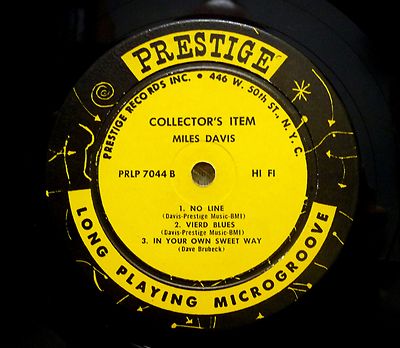
Also interesting was the brevity of this session. Only three songs, but it turned out that was all they needed to make up one of the albums that Miles owed Bob Weinstock. They had an unreleased session from 1953, and they put it together with this session to make the album called Collector's Items.
This sent me back to the 1953 session. Miles, in his autobiography*, paints that session as something of a disaster. Miles himself was heading into the depths of his heroin addiction. Bird was drunk. He polished off a quart of vodka at the rehearsal, according to this account, but since Bob Weinstock didn't do rehearsals, this was probably at the session itself. At some point he fell asleep, and Davis recalls being so mad he played poorly, or at least that was his opinion, and session producer Ira Gitler's, and this is probably why the session wasn't released at the time. In the liner notes to Collector's Items, Gitler says that the session was shelved because it was too short, and that may be part of it. But Prestige was releasing 45 RPM EPs at the time, and it could have been brought out that way.
Probably a good part of the reason the session was so short was that given the condition of the participants. Sonny Rollins was also addicted at this time, as were Walter Bishop and Philly Joe Jones.
So was the session good enough to be released in Contractual Year 1956?
It was good enough to be released any time.
Don't forget there's another joker in the contractual deck. Miles has already cut his first album for Columbia, due to be released after the Contractual Completion. That album, when it comes out in early 1957, will be called Round About Midnight, and will feature the quintet's version of the Monk classic. Did Weinstock know this, and was he trying to steal a march on George Avakian and the Columbia marketing division?
The first Columbia album, Round About Midnight, came out in 1957, and was not all that well reviewed. Critics found it wanting in comparison to the Prestige albums, though this judgment was to change over time, and Round About Midnight would become a classic and beloved jewel in the Davis crown. But the first response to it was tepid, and this strikes me as interesting.
...what really interests me here is the possibility that the passing of time may have led to a changing of tastes. Today, there's a lot more awareness of the evils of conglomerates and mega-corporations than there was in the 50s, and an indie label, or no label at all, might get a more sympathetic ear from critics, especially indie critics. But back then, I don't think this would have been an important issue.
...Today some critics, perhaps many of them born and raised in the in the era of studio perfection, are a little snarky in assessing the Prestige catalog. Ragged, they say. Bob Weinstock preferred quantity to quality, rushed his sessions, didn't allow his musicians to rehearse, never did more than a couple of takes. But maybe back then, that ragged edge was more appealing, more authentic. Maybe the critics of 1957 were put off a little by the studio-perfected sound.
Maybe. And the 1953 "Charlie Chan" session provides an even greater contrast: a finely honed, rehearsed session vs. a total mess. And out of that whole chaotic fiasco, "Round Midnight" was probably the most chaotic. As Gitler describes it euphemistically, "for various reasons the date had not jelled to expectations," and by six o'clock, when the engineer (not Van Gelder) was scheduled to go off duty, and had announced that there'd be no overtime, they only had three tunes in the sack. Actually, only two, but for Collector's Items they use two different versions of "The Serpent's Tooth." They were planning to finish off the day with Monk's "Well, You Needn't," but they couldn't get it together. With 15 of studio time left, they somehow managed to pull it off.
Which is better, the once-maligned, now treasured Columbia version, or the once-shelved, now mostly overlooked collector's item?
Dumb question, of course. They're both magnificent, and no one should be expected to choose one. But, God help me, I like the earlier one. Gitler, in his liner notes, says that Bird's opening solo "is full of the pain and disappointment he knew too well. That borders on the pathetic fallacy, assigning such specific emotions to an abstraction like a piece of music.
But Gitler is right. The pain is nearly palpable. One can't help but be moved.
So, on to the new session, with only Paul Chambers from the quintet, with Miles in full possession of his Harmon-muted voice, And with another unexpected collaboration-of-sorts, between the two jazz mega-stars of their era: Miles and Dave Brubeck. The session starts with a beautiful Brubeck composition, "In Your Own Sweet Way." There are some--not many-- who have reservations about Brubeck as a pianist, but I don't think anyone can question his brilliance as a composer. Miles would record "In Your Own Sweet Way" again with the quartet, and it has become a kind of touchstone for trumpeters, with versions by Chet Baker, Woody Shaw and Art Farmer.
"Vierd Blues" is a Miles composition that has become a standard, often for pianists (Bill Evans, George Shearing, Oscar Peterson), but also for unlikely artists such as German avant-gardist Albert Mangelsdorff. It has a striking piano solo here by Tommy Flanagan, who had just arrived in New York from Detroit (where he had been house pianist at the Blue Bird Inn) with a reputation that preceded him: in one week in March, he broke into the recorded jazz canon with sessions with Thad Jones, Kenny Burrell, Jones again, and this session with Miles.
This is a session without much or a history. It was released in 1956, and then again in a 1971 compilation-of-this-and-that reissue. But like everything else Miles did in his Contractual Farewell Tour, it has immediacy and urgency.
I woke up this morning thinking "The one thing that this blog/book series is going to be judged on is whether I got Miles Davis right."
Well, you think a lot of strange things when you're waking up, but there's no overestimating how important Miles was in the history of American music.
We're at a crucial juncture in the Miles Davis/Prestige Records story: that is, the end of the story. Miles jumps to Columbia, has to finish his obligation to Prestige, does it in two marathon sessions that maybe should have sounded rushed and perfunctory but instead produced some of Miles's best-loved albums.
I had somehow thought that this was done all at once--two days, two marathon sessions, in and out, so long Bob. But actually, it was a little more spread out than that. One session in the summer of 1956, one in the fall. And this one, near the end of 1955.
Why am I suddenly so self-conscious about writing about the Prince of Darkness? It's not as though I haven't covered him before. And it's not as though Miles is the central figure in this fragmented narrative. I'm just as interested, if not more so, in learning about Lawrence Wheatley, who made a passionate commitment to live jazz, and chose never to record again. Or Freeman Lee, who left the road to become a beloved junior high school science teacher. I'm just as interested in trying to find out if the Junior Parker who recorded with Stan Getz is the same one who made "Mystery Train." Or finding out that Teddy Charles' professor at Juilliard later taught Steve Reich, and wondering if the inventive jazz musician influenced the celebrated modern composer.
I suppose it's because so much has been written about Miles, and so may people have read it. And I mostly haven't. There are biographies. There's an autobiography, There are even specialized books, like the one on the making of Birth of the Cool. I actually have read that one. I have so much better chance of being found wrong, in writing about Miles.
So I woke up this morning thinking maybe I ought to read a biography of Miles before going on. And I probably will, before I finish up with him in 1956. But not just yet. Now I want to stay in my head, and float a few hypotheses, wrong though they may be.
Miles's transition to Columbia was far from overnight. By the fall of 1955, he had signed with Columbia, and he had even made his first Columbia recording, though it wouldn't be released right away. That was the deal--he could record for Columbia, but the records could not be released until after he had completed his obligation to Prestige.
And altogether, the Prestige obligation was completed in three sessions: the two marathons in 1956 and this one mini-marathon from November, 1955.
So the Columbia date in October was actually the first recording session for what came to be known as the First Quintet: Miles, John Coltrane, Red Garland, Paul Chambers, Philly Joe Jones. They did four songs, and the rhythm section did a fifth.
The Prestige session of November was long but not quite as grueling as the later ones. The group recorded six songs, which were released as Miles in April of 1956.
The first Columbia album, Round About Midnight, came out in 1957, and was not all that well reviewed. Critics found it wanting in comparison to the Prestige albums, though this judgment was to change over time, and Round About Midnight would become a classic and beloved jewel in the Davis crown. But the first response to it was tepid, and this strikes me as interesting.
First off, had I been George Avakian, and had I had the benefit of my own hindsight, I would have told Miles not to record his long Prestige swan song with the quintet. "Come on, Miles, do what you've always done with Bob. Put together a pickup group with whoever' around. You can use that piano player, Lawrence Yardley. He just played on an Ammons session and I bet he'd love to get more recording work. Maybe get Ammons, too, or how about James Moody? Throw in a vocal -- Prestige has that guy King Pleasure, and they're not using him much. Save the quintet for the big Columbia unveiling."
But what really interests me here is the possibility that the passing of time may have led to a changing of tastes. Today, there's a lot more awareness of the evils of conglomerates and mega-corporations than there was in the 50s, and an indie label, or no label at all, might get a more sympathetic ear from critics, especially indie critics. But back then, I don't think this would have been an important issue. The 50s were marked by the advent of Rudy Van Gelder and a new era in jazz music recording. But
recording equipment continued to evolve, and big studios were able to constantly upgrade to the newest state of the art. Tape made editing simpler. So did multitracking and, eventually, digital recording. Today we have AutoTune, and you can virtually make the Singing Dogs sound like Pavarotti.
Even in 1956 at Columbia, they were starting to push the possibilities of studio recording. "Two Bass Hit" took six takes, and the finished version splices the beginning of take two to the end of take five. Artists (including Miles) would come to take it for granted that if they missed a high note, they could come back into the studio and hit just that one note, and have it spliced in.
Today some critics, perhaps many of them born and raised in the in the era of studio perfection, are a little snarky in assessing the Prestige catalog. Ragged, they say. Bob Weinstock preferred quantity to quality, rushed his sessions, didn't allow his musicians to rehearse, never did more than a couple of takes. But maybe back then, that ragged edge was more appealing, more authentic. Maybe the critics of 1957 were put off a little by the studio-perfected sound. Miles was the LP from this session, and it came out in April of 1956. "Sposin'" and "Just Squeeze Me" were released on 45.,


:format(jpeg):mode_rgb():quality(90)/discogs-images/R-4728185-1378736078-7897.jpeg.jpg) But with John Coltrane's tenor and Dameron's compositions, what more do you really need? This is a great album, one that I couldn't listen to enough. "Mating Call" and "Soultrane" may be the ones that grab a listener first, but if I were a practitioner of vocalese, and were looking for a piece to write lyrics to, I might choose "Gnid." It is so melodic. I'd probably have to change the title, if I were looking for a catchy lyric.
But with John Coltrane's tenor and Dameron's compositions, what more do you really need? This is a great album, one that I couldn't listen to enough. "Mating Call" and "Soultrane" may be the ones that grab a listener first, but if I were a practitioner of vocalese, and were looking for a piece to write lyrics to, I might choose "Gnid." It is so melodic. I'd probably have to change the title, if I were looking for a catchy lyric.


:format(jpeg):mode_rgb():quality(90)/discogs-images/R-2273503-1393390308-4239.jpeg.jpg)



:format(jpeg):mode_rgb():quality(90)/discogs-images/R-2070641-1322345159.jpeg.jpg)


:format(jpeg):mode_rgb()/discogs-images/R-5246474-1388644697-6124.png.jpg)






:format(jpeg):mode_rgb():quality(96)/discogs-images/R-4324011-1361742350-2365.jpeg.jpg)




:format(jpeg):mode_rgb():quality(96)/discogs-images/R-4395456-1446070960-7324.jpeg.jpg)