


I'll post the planting of the new tree, and follow its progress, as those events occur.


Edward Albee likes to tell about the time when, at 18, having fled his adoptive parents’ stiflingly conservative household to begin a more expansive self-education in Greenwich Village, he knocked on W. H. Auden’s door. Mr. Albee, frequently referred to as America’s greatest living playwright, thought himself a poet then.
“I thrust my poems in his hand and said, ‘I’ll be back in a week,’ and then I ran,” he recalled. “A week later I showed up, and he invited me in. He spent two hours talking about my poems.”
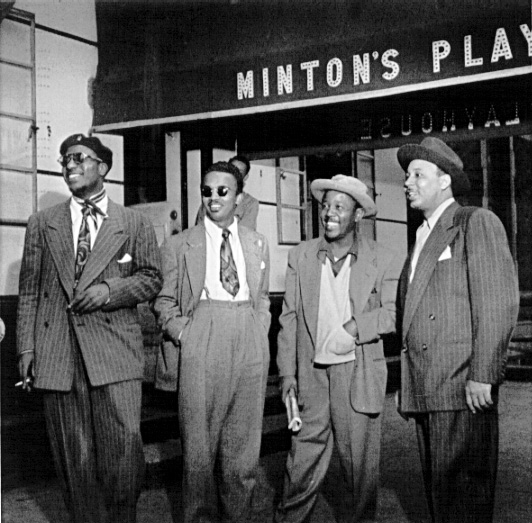 I'd like to have been around at the birth of bebop, to hear Charlie Parker playing on 52nd Street. I picked 30 because that would make me old enough to have some artistic experience and sophistication, young enough to stay out all night, to go up and catch the jam sessions at Minton's and Monroe's. And of course, in this fantasy, I'm totally hip, hipper than I ever was in real life (though not too hip, like Terry Southern's character).
 The first band I heard there was led by Donald Byrd and Pepper Adams. Pepper Adams played a gig at Opus 40 not long before his death, and I made sure to tell him what an honor it was to present the first jazzman I'd ever heard live. "Yeah, I remember that gig," he said.
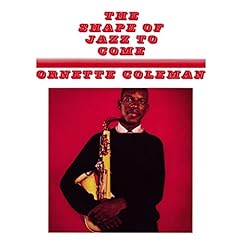 And that's the last reminiscence in my "I'm Not So Old" poem. I went there a lot in that winter of 1958-59, but once Ornette started his gig there, I went there all the time. I may not have been around for the birth of bebop, but I was there for the birth of Free Jazz, and that was as thrilling as it sounds. The white plastic sax, the tiny B-flat trumpet, and music like nothing anyone had ever heard.
I'M NOT SO OLD
I was just fifteen when Charlie Parker died
My older brother took me aside
And said, Kid, it's a bad day
It's a sad day
Well, I didn't know why and I had to be told
Hey, but I grew up
And I learned my stuff
And I learned enough
And I'm not so old
When I was a kid just starting to move
I filled my soul with that rhythm and blues
And I listened to the Clovers
And the Coasters
And I couldn't get enough of that rock and roll
I was growing up
And the beat was mine
And it still sounds fine
And I'm not so old
Then one night I turned on the radio
Looking for some of that rock and roll
And I heard some bebop
Brought me to a full stop
Didn't know what it was but it moved my soul
I was almost grown
And they said it was Miles
I still dig his style
And I'm not so old
I saw Monk dance around the Five Spot floor
And a cat from Texas made the Five Spot roar
His sax was plastic
His sound fantastic
And I went back again to hear Ornette blow
I was all grown up
And he made jazz free
Still sounds good to me
And I'm not so old
Once they said that jazz had passed away
But I go down to hear the young cats play
They play in the tradition
They've got a mission
They play sweet and strong and free and bold
Well, I may be grown
But the cats blow on
And the music's young
And I'm not so old
 Most of this is true…the first part isn’t. There was no older brother to tell me about Charlie Parker, and when he died, I didn’t know about it. Actually, neither did much of anyone else. He died on March 12, 1955, and the New York Times obituary didn’t appear till the 15th, at which time it listed the 35-year-old Bird as “about 53,” which was the coroner’s best estimate. My favorite story of that sad ending: Bird died in the Stanhope Hotel apartment of the “jazz baroness” Pannonica de Konigswater, while watching the Dorsey Brothers’ TV show (not Elvis -- he wouldn’t appear with the Dorseys till the following year). Nica called her Park Avenue physician, who arrived at the Stanhope to find a desperately ill and disreputable black man, dying of pretty much every excess known to man. As he began his examination, he asked,

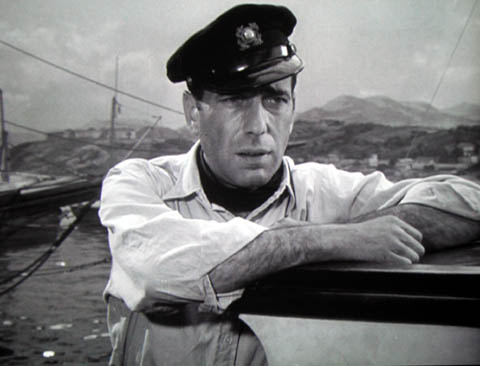 Then I use a scene from the Hawks/Bogart/Bacall classic, To Have and Have Not -- a scene which has virtually no dialog -- and ask the same questions. What do you know, and how do you know it? It's the scene where Bogart (Morgan) and Bacall (Slim)'s eyes meet across the nightclub, when she gets up to sing "Am I Blue" with Hoagy Carmichael (Cricket). What do we know? We know she's being ironic and mocking about the lyrics to the song, but she means them, too. We know that there's something happening between the two of them, but we don't know what. We know that she doesn't want to be with the man she's with (Johnson). We suspect there may be a business connection between Morgan and Johnson. We know Johnson drinks too much. And more. The scene opens with a black waitress moving through a cordon of men, some of them in uniform. We know it's an exotic Caribbean setting, and maybe wartime, maybe a dangerous setting. We know it's a mostly male setting, and a woman has to know how to negotiate her way through it. Then, as the camera catches sight of Morgan over the waitress's shoulder, it seeks him out and comes to rest on him, first in a two shot with a waiter, then quickly to a medium closeup. We know he's a loner, and we know he's a figure of authority. His eyes look up, and we know that everything we see thereafter will be from his point of view. He lights a match, and Cricket's piano starts at the same moment -- Morgan is setting the scene into motion.
 What I added to the unit this time -- I've used it before, but in a different context -- is the Moe Green scene from The Godfather. Michael arrives in Las Vegas to buy the casino from Moe Green. Green doesn't want to sell. Fredo is obviously on Moe's side. What's the scene really about? It's about power, control...and loyalty. Moe makes the first power play, by not being there when Michael arrives -- letting Fredo greet him with temptation, girls and a band. Michael makes his first test of loyalty, when he tells Johnny Fontane, the Sinatra character, that he'll be buying the Hotel from Moe, and he wants a signed commitment from Johnny to appear at the club five times a year, and convince some of his Hollywood friends to appear as well. Fredo hovers in the background, giving Johnny an out with his protestation that he's sure Moe doesn't want to sell out. Johnny hesitates. It's a tough spot. Is Michael bluffing, playing from weakness? Should he take the safe route, and say "Let's wait and see what Moe says"? But he comes through. "Sure, Mike, you know I'll do anything for my godfather." Maybe it's not as total an expression of support as "Sure, Mike, you know I'm with you." But it's the best Michael can expect.
Write a scene between two characters, featuring dialog, in which the characters are talking about, or doing, anything you want them to be talking about or doing. But what underlies the scene -- which you know, but you don’t address directly -- is one of the following.
At some point in the future, the characters will have sex with each other
The characters will never have sex with each other, but one of them thinks they will.
One character is going to betray the other.
One character has already betrayed the other.
During the 1972 season, Willie Mays was traded to the New York Mets for a ballplayer named Charlie Williams and $50,000. I took the occasion to write a magazine article about the trading of baseball superstars in their declining years. The list is long and eye-opening.
Among those who, in the days before free agency, wound up their careers playing in strange uniforms are such Hall of Famers as Babe Ruth, Cy Young, Dizzy Dean, Christy Matthewson, Tris Speaker, Hank Greenberg, Rogers Hornsby and a raft of others.
Ruth at least left the Yankees of his own accord. But the Yankees didn't bother to retire his number. The legendary journalist Heywood Hale Broun was a boy at the time, and a die-hard Yankee fan.
"When George Selkirk trotted out on the field wearing number 3," he once told me, "I left Yankee Stadium and vowed never to go back there."
It was a little different with Jackie Robinson, the pioneer who baseball honors this year on the 60th anniversary of his epoch-making arrival in the Major Leagues.
Robinson was traded from the Brooklyn Dodgers, the team with which he had broken the color barrier when he crossed the first base line at Ebbetts Field on April 15, 1947, the team for which he had done so much and endured so much, the team for which he had played his entire career.
He was traded across town to the hated New York Giants. He was traded for a journeyman relief pitched named Dick Littlefield, and a reported $35,000. He didn't go.
In researching the Mays article, I tracked Robinson down for an interview. He had a construction company then, and I reached him at a New Jersey building site. He answered the phone himself, which floored me so much I could hardly think of what to ask him.
Jackie Robinson! At the other end of the telephone line!
The irony, he told me, was that he had already decided to retire after the 1956 season, his tenth with the Dodgers. He hadn't made the announcement yet because he had a deal with Look Magazine for the story.
That irritated some people, including the veteran sports columnist Red Smith, who wrote that for "peddling a news story, the rights to his retirement, no defense is discernible ... He has embarrassed the Dodgers, dislocated the plans of the Giants, and deceived the working newspapermen whose friendship he had and who thought they had his confidence ... . But for the Dodgers, the Jackie Robinson of this last decade would not have existed."
But for Robinson, the Dodgers of that decade would not have existed, not as we remember them, not as the Boys of Summer, who had capped the Robinson years with the franchise's first ever World Series triumph in 1955, a year before the trade.
"I saw it coming," Robinson told me. He and Dodger owner Walter O'Malley, who had bought the team from Branch Rickey and who would break the hearts and the spirit of the borough of Brooklyn in another year by removing the team to Los Angeles, did not get along. Robinson was a Rickey loyalist, and that sat ill with O'Malley.
Robinson suspected some other reasons for the trade. There was still plenty of racism in baseball a decade after he ended its apartheid. When a top star finished his playing days it was common practice for the organization to find him a job, managing or coaching or in the front office, if he wanted one. But for a black star, Robinson said, it was a different story.
O'Malley and the Dodgers did not want the embarrassment of having to face that delicate question when baseball's first black superstar reached that awkward age.
So Jackie Robinson said "no thanks" to the New York Giants, and packed up his equipment bag, and moved away from baseball. He became a successful businessman, and a major civil-rights leader. He died young, at 53, from heart problems and diabetes, a year after that afternoon when we talked on the phone.
Once, 10 years earlier, I had stood next to Jackie Robinson, backstage at the Ed Sullivan Show, where I was working and he was appearing.
We were among a knot of guys hanging around the security guard's desk watching the New York Mets, then in their first hapless season, on TV. Jackie shook his head.
"What a bunch of clowns," he chuckled, as Rod Kanehl in center field played an innocent pop fly into a triple.
Al Jackson, a pretty good pitcher, was on the mound for the Mets that night. He was an African American, and without the man standing next to me, he wouldn't have been out there.
My Honors English this semester, a bunch of students I love, are finding out way too much about me.Something about the dynamic of the class makes things keep leaking out. They probably don’t believe half of what I’m telling them, but actually, it’s all been true, and it’s been bringing back memories to me. Like somehow yesterday I got into talking about how I taught John Belushi about the blues.
Which I actually did. It began with my friend Aardvark, who is no longer with us. Aardvark was a very good friend, if not in every respect a completely good person. Actually, he was drug dealer, though not when I first knew him. That developed over time, and I assume that was his connection to Belushi.
An aside: Acquaintances always used to ask me what Aardvark’s real name was; and, since I knew him better, I actually knew his real name. My answer was always, “If I tell you, then you will no longer have the pleasure of knowing someone whom you know only as ‘Aardvark.’”
The exceptions to this rule were his succession of beautiful and wealthy girlfriends, who always called him “Rick.” On reflection, I could understand this. It’s hard to imagine calling out, in the heat of passion, “Oh, Aardvark…Oh, Aardvark…”
But back to Belushi. This was in my
I had, at the time (they’re still safe, but now with my brother) one of the world’s great collections of rhythm and blues 45’s from the 1950s. I packed them into a suitcase, and headed over to Belushi’s. I brought my girl friend at the time, who was newly arrived from the
But Aardvark and Belushi and I spent the next couple of hours listening to Muddy Waters, and Magic Sam, and Lightning Hopkins, and the Clovers. Belushi and Dan Aykroyd had just done the Blues Brothers sketch for the first time on Saturday Night Live, and the response to it had been phenomenal. People wanted more Blues Brothers. An album. More SNL performances. And eventually, a movie, but that would come later. But he didn’t really know anything about the blues. He’d never listened to the blues particularly, and if he was going to be doing an album…
And we spent all of the next day with Belushi in the Colony Record Store in
Obviously, he was a quick study. I mentioned to a jazz musician friend that Belushi had just heard the blues for the first time last week, and now he was going to make a record. The musician said, “Well, sometimes that’s all it takes.”
Songs I know I brought to Belushi’s attention were “Rubber Biscuit,” originally by the Chips, “Flip, Flop and Fly,” originally by Joe Turner, and “Riot in Cell Block #9,” originally by the Coasters.
That’s pretty much the whole story, except that I had to call him every night for about a year before he finally got around to giving my records back.
Oh, and one other phone call -- this time from him to me, and characteristically for those days and this cast of characters, late at night. They were getting close to ready to make the record, and did I know any good blues musicians. I named a few. There was a pause at the other end of the line.
“Aren’t they all……………black?”
“Well, yeah…blues and all, you know how it is…”
“Do you know any white blues musicians? I’m a little afraid of black people…”
Well, if he was, he got over it. They had some of the greatest white blues musicians around on that first album, like Steve Cropper and Donald “Duck” Dunn, and some great black musicians too, like Matt “Guitar”Murphy. And some of the greatest blues people of all time in the movie. Thinking about it in later years, I wonder if maybe he just meant that when it came to the blues, he was intimidated by the black blues greats.
No need, John. You made your own strange contribution to the blues, and to American culture. And I hope your old evil spirit caught a Greyhound Bus and rode.
And to my old friend Larry the Fluff, if you’re reading this…you were one of the white musicians I recommended to John.


