Tad Richards' odyssey through the catalog of Prestige Records:an unofficial and idiosyncratic history of jazz in the 50s and 60s. With occasional digressions.
One of the many sessions Gene Ammons crammed into this period between incarcerations, this one is notable for having Mal Waldron on piano, which also meant the inclusion of some Waldron compositions, which are always welcome. Waldron wasn't playing much in 1962. Like Ammons, he was deep in thrall to heroin, leading to a complete breakdown in 1963. Fortunately, he recovered,and then opted for the expatriate life in Paris, where he was able to recover his health and his career.
Waldron could and did write for anyone, and here he is right up Ammons' alley, with compositions
tailored to his rhythm-and-bluesy accessibility, his ability to make the most of a groove, and his musical inventiveness. The tunes he brought to this session are "Light'n Up," "Short Stop," "Salome's Tune" and "Blue Coolade." There was good reason for Ammons' popularity. He played real jazz, and he played for the people. And Waldron caught all of that.
This session was broken up and parceled out to two albums: Velvet Soul ("Light'n Up," "Salome's Tune," "A Stranger in Town), and Sock! ("Short Stop," "They Say You're Laughing at Me," "Blue Coolade"). Both albums were released in 1964, after Ammons had begun his second prison sentence. "You Go to My Head" and "It's the Talk of the Town" were on a third album, 1965's Angel Eyes, as Bob Weinstock parceled out Ammons' releases over his incarceration period to keep his reputation alive with the jazz public. "A Stranger in Town" came out as one side of a 45 RPM single, with "Velvet Soul" on the flip side. Esmond Edwards produced the session.
In the 1940s, a revolution in American music took place in New York City, in the nightclubs along 52nd Street and the great after-hours clubs, Minton's and Monroe's, in Harlem. New York was the place, to such an extent that when people were looking for a name for the music that came to be known as bebop, one of the names that was used for a while was New York music. By the end of the 1950s, a new revolution was taking place in American music, and New York was still the white-hot epicenter, but the locus had shifted. Now it was downtown, along the edge of Greenwich Village, in a neighborhood that was then called the Bowery or the Lower East Side but would later be rebranded as the East Village, and specifically in one club: the Five Spot.
The Five Spot had begun its move toward the cutting edge in 1957-58, when Thelonious Monk, newly reinstated to legal status with a cabaret card, took residence with a group featuring John Coltrane. Then in 1959, it opened its stage to Ornette Coleman's quartet, a group no one wanted to book, and not everyone wanted to hear, but no one could stop talking about.
Probably the three most important figures of the new jazz, or "free jazz" as it came to be called, were Coleman, Coltrane and Eric Dolphy, and in July of 1961, Eric Dolphy brought a quintet to the Five Spot.
The quintet included drummer Ed Blackwell, who had played with Coleman. Bassist Richard Davis had most recently been working with Sarah Vaughan, but he understood what Dolphy was doing. Mal Waldron was on piano, and anyone who's followed this history of Prestige knows what I think of him, both as a player and as a composer. He has one piece here, the fire-breathing "Fire Waltz," which they had played on a Prestige session led by Waldron just a couple of weeks earlier, and which has been recorded a number of times in succeeding years by different artists.
Finally, Booker Little, the brilliant young trumpeter who had played on Dolphy's last studio album, and would be dead within three months of the Five Spot dates. Little was ten years younger than Dolphy, eight years younger than Coleman. He had grown up under the spell of Clifford Brown, and he had played for a few years and made several albums with Max Roach, but he was ready for the new sound, and ready to spread his wings with the new music Dolphy was making.
Dolphy was an interesting musician in so many ways. He was so much in the vanguard of the new music, and one of its most important innovators, but he was able to play in such a wide variety of contexts. He was very often the most advanced musician in whatever ensemble he was playing with--the Prestige albums with the Latin Jazz Quintet are a perfect example--but he left no musician behind.
This club date with Little is not master and student--Dolphy was never like that. But it is Dolphy leading the way. Little has come a long way in the six months since his studio album with Dolphy, and we can only imagine what more he would have had to offer.
The two albums, Eric Dolphy at the Five Spot Vol. 1 (New Jazz) and Eric Dolphy at the Five Spot Vol. 2 (Prestige) were both from the same night at the club, and were recorded by Rudy Van Gelder. "Fire Waltz," "Bee Vamp" and "The Prophet" were on Volume 1, with the alternate take of "Bee Vamp" included on the CD reissue. "Aggression" and "Like Someone in Love" were Volume two, with "Nunber Eight" and "Booker's Waltz" added to the CD reissues. A couple of numbers, "Status Seeking" and Dolphy's unaccompanied "God Bless the Child," were on another album, Here and There.
Esmond Edwards produced.
Listening to Prestige Vol 4, 1959-60, now available from Amazon! Also on Kindle! Volumes 1-3 are also available from Amazon. The most interesting book of its kind that I have ever seen. If any of you real jazz lovers want to know about some of the classic records made by some of the legends of jazz, get this book. LOVED IT. – Terry Gibbs
Mal Waldron was recognized in his time by those who paid attention, and for more than just being Billie Holiday's pianist on the night that Frank O'Hara immortalized in "The Day Lady Died," even though he didn't get the votes in the Playboy or Down Beat reader's polls. Billboard, in reviewing this album, said, "As a composer and pianist in avant garde jazz, Mal Waldron has few peers." The Billboard reviewer put "composer" first, and that's no mistake. For whatever reason, the general public, even the Down Beat reading public, never got the message, but musicians and jazz record producers surely did. On virtually every session that Waldron was called to play on, he was asked to compose a few tunes (look at my comments for his sessions of May 2 or September 26, 1958.
"Soul Eyes," written for John Coltrane, is his best known composition, but "Fire Waltz," from this session, written for Dolphy, has attracted its share of musicians, especially in recent years. One of the many pleasures of this album is getting the chance to reconsider and re-appreciate Waldron as a composer. All the pieces recorded this day were his.
Billboard puts Waldron with the avant garde, and although his talents and interests covered the breadth of modern jazz, being asked to compose for a session with Eric Dolphy certainly gives him an opportunity to spread his avant garde wings, and he's up to the task.
There were two important jazz musicians in this era who were named after the pioneering African American educator Booker T. Washington, and both died of illness way before their time. Trumpeter Booker Little, whose collaborations with Dolphy can only leave us wondering what more the two of them might have achieved, died on October 5, 1961, at age 23.
Ervin died at age 40, in 1970...both of them of kidney failure. He had a chance to leave behind a substantial body of work, much of it on Prestige.
Originally from Texas, he got his start in the southwestern territorial band of Ernie Fields, then moved to New York in 1958, where he very quickly caught the attention of Charles Mingus. Although Dolphy and Ervin were both part of the Mingus family, they only appeared together on one recording, the Complete Town Hall Concert. This appears to be their only other joint outing.
I won't comment on each selection individually. I'd like to, but I don't have the knowledge or the vocabulary. I will say that this session made me stop and listen over and over again, and not want to go on. Charlie Persip's drumming kicks and drives and complicates the rhythm. Joe Benjamin's solid bass makes it possible for Ron Carter to move his cello up to the front line. The cello is always a touchy instrument for jazz, but Waldron finds a place for it that works. And while Waldron always adds something unique and valuable to any group that he's in, his solos on his own compositions are particularly expressive. This is a beauty of an album.
It was released on New Jazz as The Quest. Esmond Edwards produced. It would later be rereleased on Prestige under Dolphy's name as Fire Waltz. The tune, "Fire Waltz," was also played by Dolphy, Booker Little and Waldron on the Dolphy/Little Live at the Five Spot sessions, and in recent years, it has gone into the repertoire of a number of jazz musicians.
Listening to Prestige Vol 4, 1959-60, now available from Amazon! Also on Kindle! Volumes 1-3 are also available from Amazon. The most interesting book of its kind that I have ever seen. If any of you real jazz lovers want to know about some of the classic records made by some of the legends of jazz, get this book. LOVED IT. – Terry Gibbs
This is Ron Carter's debut as a leader, but he had already begun to make a considerable name for himself as a skilled and original bassist who could play in almost any context. He had already appeared on six sessions for Prestige alone, and had showed his prowess on the cello in one of those sessions, with Eric Dolphy. Dolphy was just coming into his own at this juncture, and he would be bound to come in for a large share of the attention any time he appeared on a session (some later reissues bill this as an Eric Dolphy album), but Carter has the presence to justify his billing as leader, including two tracks where Dolphy sits out.
"Bass Duet," as advertised, is exactly that, featuring Carter on pizzicato cello and George Duvivier on bass, counterpointing each other with shifting tempos and melodic lines. "Where?", a Randy Weston composition, features Carter's bowed cello and Mal Waldron's moody piano.
"Saucer Eyes" is another Weston composition, one that's been in the repertory of a number of groups. "Yes Indeed" is the Sy Oliver gospel-tinged rhythm and blues classic that's probably best known in the 1958 rendition by Ray Charles, and you can almost hear the call-and-response as you listen to Carter and Dolphy.
The Sigmund Romberg melody, "Softly, as in a Morning Sunrise," has Carter soloing on bowed bass and accompanying Dolphy pizzicato. They take a lot of adventurous liberties with the old operetta aria, and they make it all work. And this is as good a place as any to mention Charlie Persip's drumming, which adds so much to the session, but is particularly striking here.
"Rally" is a Carter composition and a powerful showcase for everyone involved in the session. Carter is on cello, so George Duvivier gets in on the action. Mal Waldron has solo space, and I've certainly had plenty of occasion to write about how highly I regard Waldron, as this is his 33rd Prestige session. My only regret is that none of his original compositions are featured here.
Esmond Edwards produced for New Jazz. The album was titled Where?
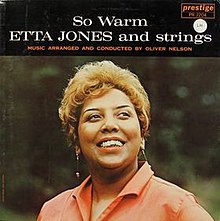
This is the first of three sessions involving a collaboration between Etta Jones and Oliver Nelson. That only four songs were recorded on this session is a pretty good indication of the complexity of the project. It must have cost a lot more than Bob Weinstock was accustomed to paying for an album,what with three days of studio time and the cost of a string section. And were they able to put all this together with no rehearsal time at all? It seems unlikely. This was no jam session. Since Weinstock didn't believe in keeping alternate takes, we have no idea how many takes were discarded, but the fact that they only got through four songs, all of them fairly short (2:02 to 3:40), should tell us something.
I hope this proved to be a good investment for Weinstock. Jones had some popularity at the time--Don't Go to Strangers sold a million copies, though she never attained that level of success again. And her place in the pantheon of jazz singers, to today's jazz audience, is iffy. One internet poll of top female jazz singers places her at number 38, another (a list of the top 25) leaves her out altogether. And yet another one places her 7th, just behind the acknowledged queens of the field.
So it depends on who you ask; but she is for the most part, I would guess, only marginally remembered. And it's hard to understand why this is so. She had a long career, and in fact issued her last record, a tribute to Billie Holiday, just before her death in 2001.
And she really was that good. You can hear the influences of all the singers that she absorbed--chiefly Billie Holiday and Dinah Washington--but she's not derivative. The influences are absorbed, learned from, and channeled into a voice that is distinctively her own.
And whether or not Bob Weinstock made back his investment in this album, we're lucky to have it, both for Jones's beautiful interpretations of songs by a variety of composers, and for yet another demonstration of the range of Oliver Nelson's talents.
Working with a deliberately limited palette--a French horn section, a string section--Nelson produces a sound that's striking and unique, but always does its primary job of supporting the singer.
Classical musicians, in general, don't get the kind of recognition that jazz musicians do. Even in a big orchestra like Duke Ellington's or Count Basie's, you know the names of all the players, and if you're a serious jazz fanatic, you know what each one of them sounds like. Here, the stringed instruments, which play such an important role in Oliver Nelson's sound, are anonymous.
The French horn players do get individual credit, and while they aren't names we would recognize as readily as the reed players like Jerome Richardson and Eric Dixon, other musicians knew who they were. Richard Berg was called on for sessions by Dizzy Gillespie and Jimmy Heath in 1960-61, and a dozen years later, when Charles Mingus needed a French horn player, Berg was the one he called. John Denver and Neil Sedaka both used him, and he has a previous Prestige association, though he's not listed on the session log: he helped out Moondog on that eccentric genius's Prestige recordings. I don't find Joe Singer's name attached to any other recording sessions, though I'm sure he did many, but he is the author of the standard instructional book on developing an embouchure for French horn,
Esmond Edwards produced the session. The album, about which we will be hearing more, was called So Warm.
Left Alone (Bethehem) and Impressions were the two albums that Mal Waldron made in 1959 to commemorate his two-year association with Billie Holiday, who would enter the hospital for her final illness on May 31, and die on July 17. Left Alone was recorded on February 24, Impressions on March 20.
Holiday's death was famously chronicled in Frank O'Hara's poem, "The Day Lady Died," in which O'Hara recalls a moment at the Five Spot when:
She whispered a song along the keyboard
to Mal Waldron and everyone and I stopped breathing
The memory of the song, and the moment that took O'Hara's breath away comes back to him the news of Holiday's literal last breath. But in the poem, that transcendent moment reaches Mal Waldron first, before it spreads to everyone else in the club and finally to O'Hara, leaning on the door to the john. An perhaps more than that. To Waldron, her closest collaborator in art at that moment, and through him to Lester Young, her soulmate in art, dead just a handful of weeks earlier, and to all artists touched by art as perhaps no one else can be, and then to everyone in the club, and then to everyone, touched and moved and changed by art being in the world whether they know it or not, whether they care or not, whether they've heard of Billie Holiday or not, and finally to Frank O'Hara, who can only record that she stopped breathing on an ordinary day, and stopped breathing because for a moment her artistry made the universe stand still.
In O'Hara's poem, Mal Waldron is the conduit, and as his two-year-association with Billie Holiday drew to a close, Waldron was thinking, musically, about that that meant.
Both Left Alone and Impressions are unique as tribute albums in that they don't, on the surface, have very much to with the artist they're paying tribute to. Left Alone has one song, "You Don;t Know What Love Is," associated with Holiday. Impressions has three songs that were written for vocalists, but only one of them, "All the Way," was recorded by her, on her strings album with Ry Ellis, but surely that song would fit more comfortably onto a Frank Sinatra tribute album.
Trumpeter Webster Young recorded a Holiday tribute album that was all songs she had made famous, but Waldron's approach really makes as much sense. Jazz is jazz. Once Young has played the melody of "Don't Explain," he's off into his own improvisation, and the version quickly becomes his.
Waldron is thinking about what he's learned from his two years with Holiday, and in fact one track of Left Alone is Teddy Charles interviewing Waldron about precisely that.
One thing, Waldron stresses in the interview, is that he learned from Holiday to listen to the words. This is advice passed down to the younger musician from an older one, with Holiday as the conduit: Lester Young said that he always had the words to a song in his mind when he played. I've always wondered if this could also be retrofitted--did Lester think of King Pleasure's lyrics to "Jumpin' With Symphony Sid," written to his solo, when he played it?
A bit of transient whimsy, but interesting to consider in that Waldron was one of the best composers of his era, and as such played a lot of original material that had no words. But I have to believe that Holiday's influence was strong here, too: the way that she listened to, and sang, and created musical patterns for words.
Three of the pieces on Impressions are a suite: "Les Champs Elysées," "C'est Formidable," and "Ciao," inspired by a European tour that he and Holiday took together. You can actually hear the spectre of lyrics in "Ciao," the frenzied conversations, trying to get everything in before departing for America. Waldron would return to Europe to live, after losing a few years to a heroin overdose triggering a near-total mental breakdown, and he would often say in interviews that if Holiday had been able to make the break to expatriate living, it could have added years to her life.
The other non-original songs that Waldron includes on Impressions are "With a Song in Heart" by Rodgers and Hart, and "You Stepped Out of a Dream" by Nacio Herb Brown and Gus Kahn. "All About Us" is credited to Elaine Waldron, Mal's wife. She's received composer credit on his work before, and it may be some sort of publishing thing.
When John Coltrane came back to New York from Philadelphia, clean and sober and ready to record again, one of the players he brought with him was drummer Albert "Tootie" Heath, who stayed in the Big Apple and returns to Prestige here.
As of this blog entry, "Tootie" is still with us, and he talked about jazz then and now in a recent interview:
I come from an era where...“jazz” was not considered a music that was sophisticated. It was always happening in some place where everybody was drunk, the room was full of smoke, and it wasn’t on the concert stage.
Once jazz was presented on the concert stage and introduced to festivals all over the world, the people that play it don’t necessarily represent people from my era anymore because we’ve died out.
I consider myself one of those people who came from the area where the blues was important and the RnB was important, and church gospel music was important. It’s not a part of what people call “jazz” anymore. People ignore that, they are not intellectual forms of music. That is not taught at the universities, they don’t teach you nothing about no blues. How to play an 8 bar or 12 bar blues, they don’t teach you that at the universities.
They teach you about sequences and how to go from this kind of change to that kind of change. We didn’t even know what that was, most of us.
Duke Ellington said, “one foot in the future, and one foot in blues would make the music unique.”
I started this project partly on a whim, partly out of the realization that this was an important era in American culture, and the idea that I could maybe get a sense of the totality of it through looking at one record label. Prestige because I thought it had been a little overlooked in jazz history, and because it was such an important part of my early jazz record collecting.
Bob Weinstock said that he sold the label in 1971 in part because the jazz he loved was no longer the jazz that was being made. Choosing Prestige meant starting to look at jazz in 1949, which is good because there's no right date, and this way the choice was made for me.
The music of these two decades was made by musicians born in the teens, in the 20s, the 30s, the 40s--musicians who matured and made their mark in the heart of the American Century in Music, that unparalleled artistic flourishing that came from the blues and developed in so many astounding ways. Maybe jazz, building from " the area where the blues was important and the RnB was important, and church gospel music was important," is the fullest expression of that music. Not the best, because there is no best, but the fullest, and the music that so many who started in more basic forms aspired to.
There are lots of reasons why the American Century wound down, or maybe just one reason. Because things do. No one is composing baroque music any more, or writing Elizabethan drama. That doesn't make the interpretive art of a Yo-Yo Ma or an Ian McKellen any less wonderful. But maybe "Tootie" has his finger on it.
There's another explanation, and that is that I'm wrong. That the Duke is right, and we still have one foot in the blues, and the other in the future. That "Tootie" got old, and I got old, and it's natural for us to live in the past.
Impressions was released on New Jazz. In spite of being hailed at the time as Waldron's best work to date, it seems to have never made it over, in whole or part, to a Prestige release.
Listening to Prestige Vol. 2, 1954-1956 is here! You can order your signed copy or copies through the link above.
Tad
Richards will strike a nerve with all of us who were privileged to have
lived thru the beginnings of bebop, and with those who have since
fallen under the spell of this American phenomenon…a one-of-a-kind
reference book, that will surely take its place in the history of this
music.
--Dave Grusin
An
important reference book of all the Prestige recordings during the time
period. Furthermore, Each song chosen is a brilliant representation of
the artist which leaves the listener free to explore further. The
stories behind the making of each track are incredibly informative and
give a glimpse deeper into the artists at work.
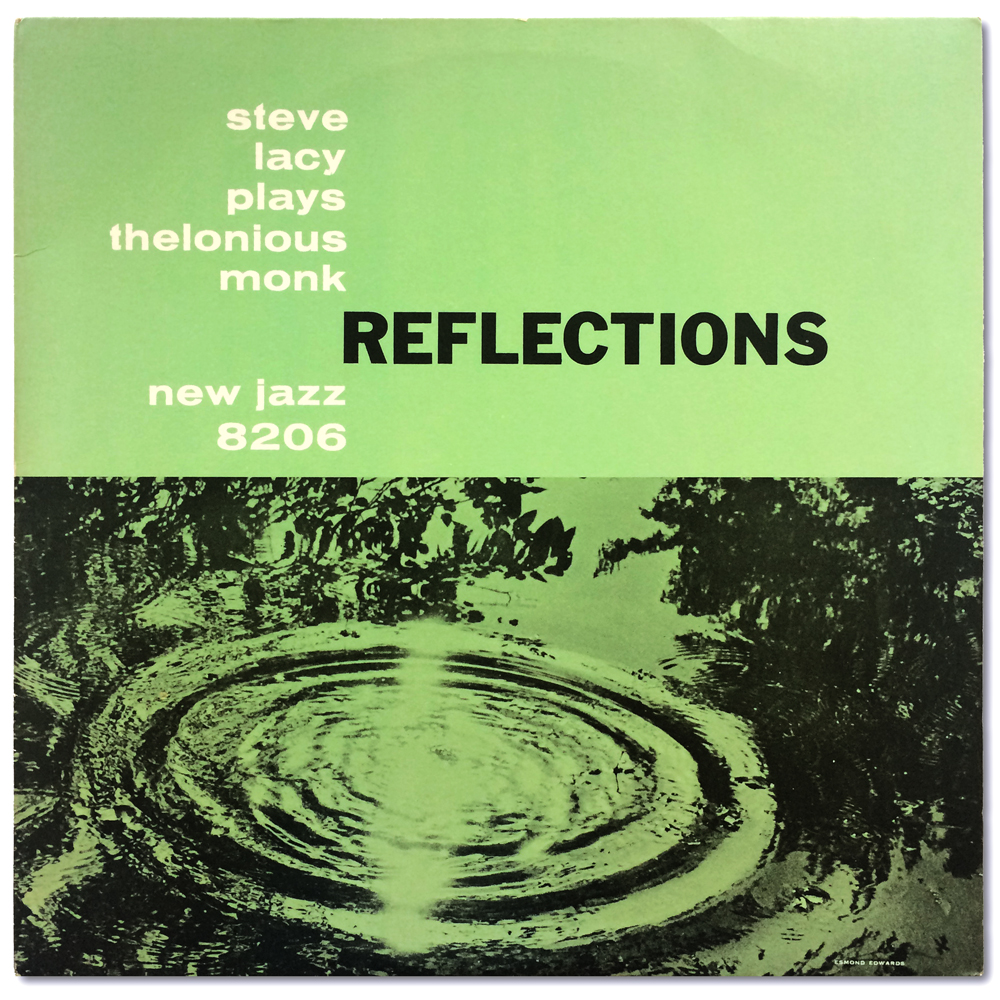
This is Steve Lacy's second album as leader, both for Prestige. As long and productive as Lacy's career would go on to be, he's not immediately thought of as a Prestige artist, but Weinstock's label is where he got his start, first with Gil Evans and then under his own name.
This one is particularly noteworthy for two things. First, his quartet personnel has changed. Buell Neidlinger returns as bassist, Elvin Jones is the new drummer. Most significantly, he is put together with the Prestige "house pianist," Mal Waldron, a pairing that was to be of great significance to both men when they reconnected years later in Europe.
Second, the entire album is devoted to the compositions of Thelonious Monk. Lacy was an admirer and champion of Monk's work, and tried to include at least one Monk composition on every recording he made, but this is the first time an entire album has been devoted to this great composer's work.
It's an article of faith among many, myself included, that Thelonious Monk and Duke Ellington are good candidates for the two most important 20th Century American composers, but that awareness has been slower in coming than you might think. Sure, "Round Midnight" became an instant classic, and so did several of his other works, but Lacy dug deeper into the catalog, and found pieces for which recognition came much slower, if at all.
Secondhandsongs.com is a fascinating website which tracks the cover versions of songs. It doesn't list every song ever composed, though they keep adding to it, and there's no guarantee they're going to catch every cover, but they are a wonderful resource. Here's what they have on the tunes from this album:
Hornin' In: Recorded for Blue Note in 1952 and released in 1956. After Lacy's version, no one paid attention to this tune for 40 years, until Sonny Fortune in 1994. Since then, very little. Sphere, the group founded after Monk's death and devoted to his music, recorded it, as did two European jazz groups, and that's it, except for an unusual interpretation by rockers Terry Adams and NRBQ in 2015. YouTube offers a couple more recent live versions, and there is no reason why this wonderful piece of music should not be a jazz standard except that it's in competition with so many other classics from this composer.
Skippy was recorded by Monk in 1952 for Blue Note, and seems to have only been released on a 78 RPM single. It's complex, stirring, uptempo. Lacy's version features a terrific solo by Mal Waldron, among other delights. Lacy recorded it once more two decades later with a different quartet (Roswell Rudd, Henry Grimes, Dennis Charles), and then it lay fallow until 1988, when Buell Neidlinger recorded his own version, and Anthony Braxton covered it. In 1994 it was picked up by Paul Motian among others, and this millennium it's been rediscovered by a number of young jazz esnembles, both European and American, to the point where it can legitimately be called a standard. But 'twas not always thus. Monk's own version features Kenny Dorham, Lou Donaldson and Lucky Thompson, from the same session that produced "Hornin' In."
Reflections is Steve Lacy's title cut. It is an absolutely beautiful melody, from an early Prestige trio session. It captures both Lacy and Waldron at their most lyrical. Monk was an important influence on Waldron, but not an early influence. Certainly this session with Lacy must have affected him deeply.
"Reflections" is certainly a standard, covered four times as often as Holland-Dozier-Holland's same-titled song for the Supremes.. J. J. and Kai (Savoy) and Sonny Rollins (Blue Note) both recorded it before Lacy. But then it also was pretty much forgotten until 1982, when Chick Corea, Miroslav Vitous and Roy Haynes did it. Since then, it's become ubiquitous, with secondhandsongs listing 66 versions. But a tune this important in the monk canon went a long time ignored.
Monk's version of Four in One (Sahib Shihab, Milt Jackson, Al McKibbon, Max Roach) was
released by Blue Note in 1952 on 78 and on the Genius of Modern Music, Vol. 2 album. Lacy's version features some driving Elvin Jones work along with the solos by Lacy and Waldron. Then again, a long period of neglect. Monk's death in 1982 brought about a renewed interest in his music, and one of the first stirrings of this was a very odd album in 1984, That's the Way I Feel Now, a tribute to Monk by an eclectic bunch of musicians, most of them rockers. "Four in One" was covered by Gary Windo, a British avant-gardist who played his own brand of music, more often lending it to rock than jazz performers, and Todd Rundgren. Windo played alto sax, Rundgren supplied synthesizers and drum machines, for a performance that's manic, chaotic, geared to a rock-steady beat, and still recognizable as Monk. Since then, it too has entered the Monk mainstream, with 33 versions listed by secondhandsongs.
Bye-Ya is one of the pieces that Monk and Coltrane performed on their 1957 Carnegie Hall concert, a recording of which was only recently rediscovered and released. It's such a familiar tune that it seems impossible that it, too, could have languished throughout the 1960s and 1970s, but it did. This started to make me curious, and I checked secondhandsongs for some of Monk's best-known compositions, starting, of course, with "Round Midnight." Composed in 1940, first recorded by Cootie Williams (who took co-composer credit), it became an instant classic when Blue Note released Genius of Modern Music, Volume 1 in 1951. Since 1955, scarcely a year has gone by without several recorded renditions of it. "Blue Monk," first released on Prestige in 1954, has proved nearly as popular, with "Straight No Chaser" and "Ruby, My Dear" not far behind. So at least Monk was getting royalties from some of his classics during his lifetime. "Bye-Ya" has five lifetime, 48 posthumous, and secondhandsongs has somehow missed the Carnegie Hall concert.
Ask Me Now has had a similar fate. Steve Lacy, PeeWee Russell and Ronnie Mathews during Monk's lifetime, 91 posthumous versions.
Secondhandsongs doesn't have information on "Let's Call This."
Listening to Prestige Vol. 2, 1954-1956 is here! You can order your signed copy or copies through the link above.
Tad Richards will strike a nerve with all of us who were privileged to have lived thru the beginnings of bebop, and with those who have since fallen under the spell of this American phenomenon…a one-of-a-kind reference book, that will surely take its place in the history of this music.
--Dave Grusin
An important reference book of all the Prestige recordings during the time period. Furthermore, Each song chosen is a brilliant representation of the artist which leaves the listener free to explore further. The stories behind the making of each track are incredibly informative and give a glimpse deeper into the artists at work.
This is the fourth Prestige session Mal Waldron presided over as leader, and he'd appeared on a whole bunch more as a sideman (I have 28 different references to him in this blog), so I've listened to a lot of his music, with growing admiration of his musicianship, his technical and emotive range, and with growing awe at his abilities as a composer. Looking back on those years, in a 2000 interview (he died in 2002) with jazz writer Ted Panken, Waldron did see himself in exactly the same light (all the quotes from Waldron in this essay are from Panken's interview). To Panken's suggestion, "Your music certainly had its own sound by 1960. You’re recognizably Mal Waldron ...no one could mistake you for anybody else, Waldron demurred.
Well, I’m not quite sure about that, because I was still learning and putting it together. I was halfway through the tree. In other words, I started out with a big tree and I tried shaving and shaving and shaving try to find the perfect toothpick, but I wasn’t there in 1960 — definitely. I was nowhere near the toothpick at that moment.
This is a startling and original metaphor for an artist trying to find his or her own voice. I've really never read anything like it, and it rings deeply true. Michelangelo may or may not have said (almost certainly did not say) that he took a block of marble and chipped away everything that didn't look like "David." Many teachers of writing, myself among them, have counseled that the most important part of revision is cutting. But this different, and I will be thinking about it for quite a while.
A large part of Waldron's goal of shaving that tree down came from Charles Mingus, who caught him trying to play like Bud Powell and gave him a tongue-lashing, telling him never to try to sound like anyone except himself.
But the first clumsy strokes at that tree are always going be taken with borrowed axes, and one of Waldron's first--he had grown up being forced to practice the piano, and hating it--was Coleman Hawkins. It was "Body and Soul" that first made him fall in love with music, and he immediately went out and bought a saxophone:
...An alto. I couldn’t afford a tenor. I got a big, hard reed and an open lay on the mouthpiece so it would sound like a tenor, and I got the music for “Body and Soul” from “Downbeat” and I read it, and for 5 minutes I was Coleman Hawkins!
And after that, of course, with an alto:
I was trying to emulate Charlie Parker! But I couldn’t arrive, so I hocked the horn and went back to the piano. Because I found my basis on piano was strong enough at least to enable me to play the changes right.
His enforced training on the piano as a child had been classical, which he found too constraining--"I had to do it the same way every time, otherwise I got my knuckles rapped"--nevertheless remained a part of his musical awareness, as did studying composition at Queens College with the eminent German émigré composer Karol Rathhaus. He discussed the importance of the classical influence with Panken:
TP: Did those lessons stay with you in your composition?
MW: Definitely.
TP: Your classical background never left you, your sense of harmony and shading…
MW: And form and development, how to develop themes, sure.
TP: I think people aren’t aware of how deeply classical music studies permeated musicians of your generation, who then created a lot of home-grown resolutions and utilizations of it. Can you address that a bit. I guess the G.I. Bill helped a lot of people.
MW: Sure. Well, it had to do with the concepts of Bach. Bach is very basic. The way he moves from V to I, that concept is very instrumental in how the musicians grew. They moved from V to I, and they made it with a flat fifth and putting in stuff like extra notes in the chords and changes like that.
TP: In your circle of friends with Randy Weston and Herbie Nichols, etc., were you talking a lot about classical music and listening to…
MW:Yes, we discussed things like “Rite of Spring” and the sounds and things like that.
Waldron is very much of a generation I've discussed a lot. The early beboppers grew up on swing, on Kansas City blues, on the territorial bands, on Basie and Ellington and Lunceford and Erskine Hawkins as well as Goodman and Shaw; Waldron's generation grew up on bebop. But Panken and Waldron make an important point here about this generation that came of age post-World War II, with college and conservatory studies thanks to the G.I. Bill. We know that Charlie Parker listened to everything, and responded strongly to the compositions of Bartok. The fictional Dale Turner, in Round Midnight, speaks for many of his generation when he acknowledges his debt to Debussy.
The last Waldron session I wrote about was one with Gene Ammons, for which Waldron composed all of the tunes, and I began by imagining a conversation with Bob Weinstock:
"Mal, you're playing a gig with Gene Ammons this Friday. Come up with some tunes that'll suit him."
"On it."
And this is probably pretty close to how it went down (including the Friday part: that was Prestige's day in Hackensack).
MW: The way the setup was in those days, they’d tell me who was on the set and then they’d tell me to write six or seven compositions for the date. So I had to stay up all night long and write the changes, and next morning I’d come in to Hackensack, N.J., and make the records, then I’d go home and write some more music for the next date.
The way I’d write the tunes, the first important thing was to be able to solo on it. So I’d make my changes first, nice blowable changes that you could solo on beautifully, and then I’d write a tune over the changes.
TP: Write your melody…
MW: Over the changes, yes...my life was consisting of thinking about the melodies in the daytime, writing them at night, and then recording them the next day.
TP: You’d get a phone call, you’d write some music, a bunch of charts or tunes…
MW: Right, and bring them in. We’d run them through maybe for ten minutes, or just talk about them, and then we’d make the record. They were usually all first takes, too.
TP: If you had a date with Gene Ammons and composed “Ammon Joy,” was that based on his…
MW: Yes, on his sound. They’re all connected.
TP: Or writing for Thad Jones or Frank Wess or John Coltrane. In each case you had their sound in mind.
MW: Their sound in mind, sure. That’s the way you write.
On many of these dates, like May 2 with Ammons, Waldron was called upon to write the entire session. Here, he only contributes three of eight, the rest being standards. But that's another part of the Waldron story. He was already working as Billie Holiday's accompanist, and he would go on to work with Abbey Lincoln, Jeanne Lee, and other vocalists, so he was spending a lot of time with standards, and that, too, relates over to his work in an instrumental jazz context. As he told Panken:
[Internalizing the lyrics] really helps me to improvise, because the words give it a completely different atmosphere to improvise on. You can improvise the words alone, instead of just improvising on the changes and the harmony and the melody.
In a way, this is exactly what Eddie Jefferson did with "I'm In the Mood For Love."
Waldron takes four songs from what we now call the Golden Age of American song, and the fifth from the era that surrounded him. Sammy Davis Jr., or his spirit, must have been tap dancing through Hackensack in the summer of 1958, because this is the second "Too Close For Comfort" we've had (Eddie "Lockjaw" Davis/Shirley Scott providing the first), along with one "Mr. Wonderful" (per Red Garland).
Kenny Dennis is new to Prestige with this recording. He broke into the jazz scene with junior high classmate Ray Bryant, played with many of the greats, and is still active as the assistant director of the Lab Band at the Los Angeles County High School for the Arts. Among his numerous recording credits is a session with Langston Hughes.
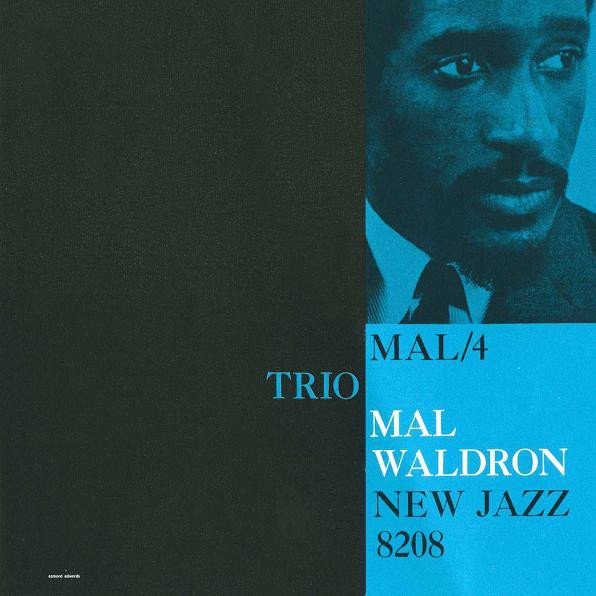
This came out from New Jazz, with Prestige following its pattern of numbering Waldron's albums. This one was Mal/4--Trio.
Listening to Prestige Vol. 2, 1954-1956 is here! You can order your signed copy or copies through the link above.
Tad Richards will strike a nerve with all of us who were privileged to have lived thru the beginnings of bebop, and with those who have since fallen under the spell of this American phenomenon…a one-of-a-kind reference book, that will surely take its place in the history of this music.
--Dave Grusin
An important reference book of all the Prestige recordings during the time period. Furthermore, Each song chosen is a brilliant representation of the artist which leaves the listener free to explore further. The stories behind the making of each track are incredibly informative and give a glimpse deeper into the artists at work.
"Mal, you're playing a gig with Gene Ammons this Friday. Come up with some tunes that'll suit him."
"On it."
By 1958, jazz and rhythm and blues had gotten a divorce, and rock 'n roll was the co-respondent. Jazz had won custody of Gene Ammons, but that gritty rhythm and blues consciousness was still a part of him, a different consciousness from that which informed the newer hard-bop, jazz-funk style that was coming to be associated with Blue Note.
So Mal Waldron did contribute all four tunes to this session, and they couldn't be righter for Ammons: funky, rhythmic, great ensemble sections, loose enough to provide plenty of space for improvisation. A lot of jazz tunes are simple riffs brought in for the session, based on the changes or even the melodic hooks of other tunes, serviceable for some great blowing but not likely to enter the jazz library.
And so it is with these, but Waldron always gave you a little more, and any of these could have blossomed into a standard. "Hip Tip," smeary and bluesy and atmospheric as a smoky alleyway, could have been another "Harlem Nocturne," and maybe would have been, if it had had a more anthemic title. It has been covered, with a very different sensibility, by a Latin-jazz-funk star of the 1980s, Bobby Rodriguez. David "Fathead" Newman made "Blue Greens and Beans" the title cut of a 1990 album, and Newman of course came from the most prestigious of rhythm and blues pedigrees: the Ray Charles orchestra of the Atlantic years. Ammons pays tribute to the blues and bebop both on this cut, throwing in one of those little unexpected quotes from an odd source, in this case "Isle of Capri."
Idrees Suleiman, Ammons, and Pepper Adams know their way around the blues, know how to construct killer jazz solos, and know how to play together. Ammons would go to a sparer sound in later albums, but this period, with his sextets and septets, produced some richly satisfying music.
Bobby Rodriguez may have come to this album, and "Hip Tip," through admiration for Ray Barretto, but it's "Scamperin'" that really showcases the conguero. It could have been a hit too, with its Latin rhythm and the all-out wildness of the horn players. "Blue Greens and Beans" was the two-sided 45 from this session, and no complaints...it deserved it. But I might have gone with "Scamperin'."
"Blue Gene" was the title track for the album, and it has some lovely soulful playing on it, and it's the time that was also included on a compilation album later on, called Gene Ammons - Biggest Soul Hits.
So in other words, you couldn't go wrong with any one of these Mal Waldron compositions, or any one of these septet treatments of them. This album is pure pleasure.
Listening to Prestige Vol. 2, 1954-1956 is here! You can order your signed copy or copies through the link above.
Tad Richards will strike a nerve with all of us who were privileged to have lived thru the beginnings of bebop, and with those who have since fallen under the spell of this American phenomenon…a one-of-a-kind reference book, that will surely take its place in the history of this music.
--Dave Grusin
An important reference book of all the Prestige recordings during the time period. Furthermore, Each song chosen is a brilliant representation of the artist which leaves the listener free to explore further. The stories behind the making of each track are incredibly informative and give a glimpse deeper into the artists at work.
It's hard to say how many compositions came from the imagination of Mal Waldron, but they certainly numbered in the hundreds. Any session that hired Waldron as pianist was more than likely to want one or more original compositions from him, and he wrote most of the material on the albums he recorded as leader. If you're that prolific, one of two things is likely to happen. You're going to start repeating yourself -- not necessarily bad thing, if you're finding new ways to do things you've done before. Or you're going to keep finding new ground.
Waldron wasn't one to stay still. He had a wide range of passions and influences. He was still part of that generation, slipping away as the 50s played themselves out, that got its start in rhythm and blues. He was a lover of classical music, and recorded several pieces by classical and modernist composers. He worked with beboppers and the avant garde, and he was Billie Holiday's accompanist during the last two years of her life. And he brought all of that experience, and his own restless genius, to bear on his work as a composer.
When one starts to categorize music, one immediately runs into the futility of categorizing music. A jazz recording session in 1957-58: is it bop? Hard bop? Cool? Neo-swing? Third stream? The lion lies down with lamb, Mulligan meets Monk, and Dizzy Gillespie plays a duet with Louis Armstrong. And that's just jazz. What do we call that other music that was composed earlier in the 20th century by Charles Ives and Aaron Copland, later on by John Cage and Philip Glass and LaMonte Young? Contemporary classical music? That's not only moronic, it's oxymoronic. What else? Composed music? Duke Ellington composed his music, and so did film scorers from Korngold to Elmer Bernstein, not to mention Leonard Bernstein. Cage and Glass were avant garde, but so was Ives in his day, and nobody stays avant garde. So we're probably stuck with contemporary classical music.
And how is that different from what Mal Waldron is doing in this early 1958 session? It must be jazz,
because it's got that swing without which, the Duke tells us, it don't mean a thing? Elvin Jones, on drums, had that swing, and Waldron was already teamed up with Billie Holiday, who out of the era for which Swing was the name, not just a characteristic. But listen to the beginning of "Tension." The number will move into jazz improvisation, with great solos by Art Farmer and Eric Dixon, but the opening section -- I'm not even sure you'd call it a head -- has a lot of the tonality and feeling that we associate with what we call classical, oxy and moronic though we may be, and not just in what Waldron and Farmer and Dixon are doing -- Jones is very much a part of that stance.
"Ollie's Caravan" has a head that's very much in the bop tradition--and an arresting melody--but then it goes different places. Putting a caravan in the title can't help but make one think of Duke Ellington and Juan Tizol, but while Eric Dixon's flute solos have an Eastern tinge, they make one think of Yusef Lateef's experiments more than "Caravan." And all the above ingredients come together again in "The Cattin' Toddler" -- a striking drum intro by Jones, a catchy riff head, Eastern-tinged flute by Dixon, plus a wonderful extended solo by Farmer and the kind of work one expects of Waldron in improvising off one of his own compositions--which is to say, something completely unexpected.
"Portrait of a Young Mother" provides a space for a wordless vocal by Waldron's wife Elaine, although the piece is by no means a song, or even primarily a vehicle for voice. At ten minutes long, it gives room for solos by everyone, including a wonderful pizzicato cello by Caio Scott. This and "The Cattin' Toddler" suggest a devotion to family life that Waldron, sadly, was not able to entirely sustain. In 1963, a heroin overdose led to a major breakdown that finally responded to shock treatments and a spinal tap. His marriage to Elaine did not last. But perhaps there was a happy ending after all, for which I am very glad. These folks give so much to us, it's good to know when they get some happiness back. Mal and Elaine had two children. He had five more with his second wife, and in 1995, to celebrate his 70th birthday, he took both wives, all seven children, and two grandchildren with him on a three week tour of Japan.
These were released on New Jazz as Mal/3 -- Sounds.
Listening to Prestige Vol. 2, 1954-1956 is very close to release. Order your advance copy from tad@tadrichards.com






:format(jpeg):mode_rgb():quality(90)/discogs-images/R-10643447-1501534721-5552.jpeg.jpg)


