Showing posts with label Teddy Kotick. Show all posts

Monday, January 15, 2018

Listening to Prestige 302: Phil Woods

Phil Woods is back for a Prestige session after a couple of years absence, and this will be his last session for Prestige. In fact, for someone who is remembered as one of the most prolific jazz recording artists of all time, he did very little recording for most of the 1960s. So it’s a shame that this session was put on the shelf, and never actually released until the late 1960s, by which time he was back on the recording scene again,with a pace that never slackened.

It’s a shame because it’s a wonderful recording, and also because it’s a rather unusual group of musicians.

Dick Hyman, who is recognized as one of the masters of jazz piano (quite literally: he was named an NEA Jazz Master in 2017),and who rivals Phil Woods for a prolific catalog, did very little recording in the widely preferred small group setting. He could play anything, and did. He played tribute albums in the style of everyone from Jelly Roll Morton to Thelonious Monk. He worked extensively in radio and television, including stints as musical director for Arthur Godfrey and Sing Along With Mitch, two gigs you might not want on your resume if you were trying to show how hip you were, but Hyman didn’t care much about that. However, another one of his TV gigs was as the piano player on Charlie Parker’s only television appearance. In 1955, he recorded “Moritat: Theme from the Threepenny Opera,” and his mournful instrumental version sold a million copies, making it the most successful recorded version of the tune until Bobby Darin swung it, with Doc Severinsen on trumpet, as “Mack the Knife.”

Hyman had done another small group recording for Prestige in 1956, backing vocalist Barbara Lea, under the pseudonym Richard Lowman (he was under contract to MGM at the time).

Howard McGhee is one of the premiere bebop trumpeters. When Charlie Parker made his ill-fated West Coast tour in 1945, McGhee was one of the few artists who understood him and were able to play with him.

Because of McGhees 1946-47 sessions with Parker, I’d always thought of him as a West Coast musician, but in fact he spent very little time on the West Coast. Addiction problems meant that he didn’t work or record much in the 1959s, but his career would have a renaissance in the 1960s.

With McGhee, Teddy Kotick and Roy Haynes, who can play some bebop, and Dick Hyman, who can play anything, there’s some terrific music here, none of which I can share with you on Listen to One, because no one has put it up on YouTube.  This may have been Kotick’s last New York recording session, with the exception of one he did with Helen Merrill in the mid-1960s. Here’s a poem I wrote about him (recently published in the online journal Verse-Virtual):


TEDDY KOTICK

I deliver the mail

in Needham Mass

middle aged white

guy in blue shorts

Fridays I drive

three hours to Albany

bass in the back

play for the door

back to the route where

everyone knows me

even the dogs

who sniff at my ankles

but no one

would know what it meant

if someone told them

I’d played with Bird
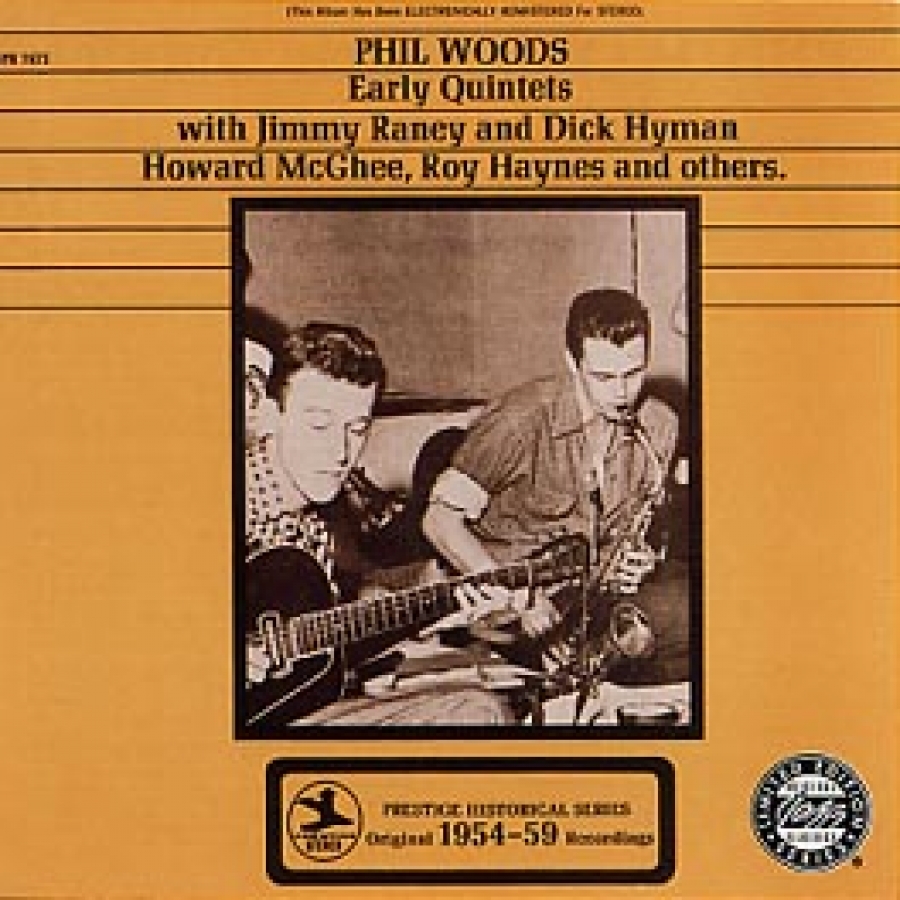

It’s a short session: four songs, the kind you used to see when they were still making 78s. When it was finally released, it made up side of an LP. The other side was a session with Jimmy Ramey--actually a Jimmy Ramey ssesion--from 1954. it had been released on New Jazz and on the odd formats they
were experimenting with back then: 16 2/3, 45 RPM EPs.

This album was released as Early Quintets, and the cover art suggests even earlier quintets than they actually are: it looks like something from the early days of LPs, back in 1952. Makes you wonder about the marketing: did Weinstock expect people to see it in the bins and say, "Wow! Phil Woods from back in the day! Wonder how I missed this?"

Order Listening to Prestige Vol 2


Listening to Prestige Vol. 2, 1954-1956 is here! You can order your signed copy or copies through the link above.


Tad
Richards will strike a nerve with all of us who were privileged to have
lived thru the beginnings of bebop, and with those who have since
fallen under the spell of this American phenomenon…a one-of-a-kind
reference book, that will surely take its place in the history of this
music.


--Dave Grusin

An
important reference book of all the Prestige recordings during the time
period. Furthermore, Each song chosen is a brilliant representation of
the artist which leaves the listener free to explore further. The
stories behind the making of each track are incredibly informative and
give a glimpse deeper into the artists at work.
                                                                                                                --Murali Coryell

Sunday, February 19, 2017

Listening to Prestige 246: Phil Woods-Red Garland

Found "Sugan" on YouTube, hit "play," forgot what was I was doing, half-listening to great Phil Woods solo, then gradually found myself asking, "Wow...what's happening with the piano behind Phil? That's amazing."

Ah yes, as well it should be. A Phil Woods - Red Garland collaboration? You couldn't ask for better. And then, with my attention fully engaged, Red went into his solo.

Anyway, I got held up for a while. "Sugan" grabbed my attention and wouldn't let go, through four consecutive listenings, and since it's nine and a half minutes long. that meant a sustained half hour plus of "Sugan," every time marveling at it. Garland's solo is three minutes long, and with at least four unexpected twists and changes of direction. Ray Copeland does some fine solo work too, but even better are his duet exchanges with Woods. The number concludes with something you didn't hear all that often in jazz of the fifties, and that's a fadeout. Whether that was Rudy's or Weinstock's idea, it happened to work perfectly with Copeland's and Woods's exchanged phrases. Give a listen.

The session is half Woods originals, half Charlie Parker. A gutsy choice by Phil, for whom an exchange with Bird was a turning point in his career, and who would, in fact, marry his widow, Chan Parker. Maybe "gutsy choice"  isn't right. Maybe a natural choice. Anyway, a good choice.

I'd just be repeating myself if I went over every cut on this album. The level of inventiveness never flags. The musicians do everything you want jazz musicians to do. They go off on their own, they're always working with each other. They respect the melody, they're not limited by the melody. Ronny Graham, in his great comedy routine "Harry the Hipster's Commencement Address to the School for Modern Jazz Musicians" tells his graduating class, "When you cats came here, all you could play was the melody. Now you wouldn't know a melody if it hit you in the mouthpiece." These cats know the melody, and a whole lot more, and you don't even need a cache of stashay in your sachet to appreciate it.

It's good to hear Ray Copeland, who didn't record much. His only other Prestige outing was with Monk in 1954, and I commented about that session, "perhaps the only thing better than listening to Thelonious Monk is listening to Monk play with someone who really gets him." Monk was a rare and idiosyncratic talent, but Copeland gets Woods and Garland too, and their interplay is one of the joys of this album.

Copeland's most active collaboration was with Randy Weston, another visionary. He went on to have a distinguished career as an educator, teaching jazz composition at Hampshire College in Amherst Massachusetts, part of Amherst's five college consortium that was a pioneering center of jazz education (Max Roach taught at Amherst). In 1974, he published The Ray Copeland Method and Approach to the Creative Art of Jazz Improvisation.

You need to wonder about the marketing of this one. Was Prestige overloaded with product at this point? They did a lot of recording in 1957 -- 70 sessions, as compared to a little more than half of that the following year. How much is too much product? I guess it depends on your pressing capabilities and your distribution capabilities. Anyway, this wonderful record, titled Sugan and with nice but not really inspired cover art, was dumped into the budget bins as a Status release. It was also included as part of one of those weird 16 2/3 super-LPs, called George Wallington, Phil Woods, Donald Byrd, Red Garland - Modern Jazz Survey - New York Jazz. 


 Order Listening to Prestige, Vol. 1 here.

Sunday, December 11, 2016

Listening to Prestige 220: Phil Woods and Gene Quill

Phil Woods is a jazz icon today, and Bobby Jaspar is pretty much forgotten, so there's a lot to be said for longevity. There are some careers that were pretty short, but they burned with such a brilliant flame that they'll never be forgotten. Charlie Parker is the obvious one. Bud Powell. There were some whose careers were very short, and they may not be remembered by the casual fan, but they are revered by the serious aficionados. Charlie Christian, Chano Pozo. There are some who had brief, blazing careers and are remembered vividly, some with much the same brief blazing careers and not so vivid: Clifford Brown and Fats Navarro.

Gene Quill had a long and productive life, but except for these recordings with Phil Woods, he mostly settled for the job security and relative anonymity of studio and section work, playing with some of the great jazz orchestras.

All of these, remembered or semi-forgotten, wrote their names in the Book of Jazz, and deserve to be remembered..deserve to be cherished.

These musings come at a time when Bob Dylan has just been awarded the Nobel Prize, and many are saying, "Aren't there other singer-songwriters who deserved it more?" And that's a foolish question. There is no "deserved it more." You either deserve it, whether it's the Nobel Prize or the respect of your peers, or you don't deserve it. Bobby Jaspar, Gene Quill, Fats Navarro, Elmo Hope, Wardell Gray, J. R. Monterose...they all deserve it.

And Phil Woods absolutely deserves it.

For this session, Woods brings back the rhythm section he used for his 1954 Prestige session with Jon Eardley (another not-so-remembered player, for a common reason: because he moved to Europe early on and spent the rest of he career there): George Syran, Teddy Kotick and Nick Stabulas. But this is 1957, and things are different. Certainly they're different for bass players. Teddy Kotick is a veteran of the birth of bebop days, one of Charlie Parker's favorite bassists. Like others of his generation, he was valued for his ability to handle the tricky tempos and improvisational leaps of the great bebop soloists, but was not expected to solo much, partly because in the pre-Rudy Van Gelder era it was hard to mike the bass in such a way as to feature it as a solo instrument. Players like Charles Mingus and Paul Chambers changed all that, and some of the standout bebop bassists like Curly Russell essentially called it a career. In this session, Kotick steps up for some serious bass solos, and he delivers.

This is very much a bebop session. You don't name a tune "Altology" unless Charlie ("Ornithology") Parker is very much on your mind.

Woods and Quill feature a couple of modern jazz standards: "Solar," attributed to Miles Davis or perhaps Chuck Wayne, and "Airegin," written by Sonny Rollins and originally recorded by Sonny with Miles. "Airegin" came from a time when it became fashionable to name tunes with words spelled backwards, a trend that I don't miss nearly as much as I miss titles with bop puns, like "A Night on Bop Mountain" or "Flight of the Bopple Bee."

Speaking of titles, two of the originals on this session are "Creme de Funk" and "Nothing but Soul," and they are fine bebop cuts, but not especially characterized by funk or soul, neither looking backward to the rhythm and blues/bop fusion of the late 40s and early 50s, or the funk/soul jazz that was trending in the late 50s and would become ubiqiitous in the 60s. This style would become linked with Blue Note, and its stars like Art Blakey (whose pianist Bobby Timmons would write the classics of the genre, "Moanin'" and "Dat Dere"), and Horace Silver (who would use Teddy Kotick on two Blue Note albums in 1957/58).

But the real progenitor of the movement was probably someone who is now revered as a jazz immortal, but was back then rejected by jazz snobs: Ray Charles. Rhythm and blues and bebop may have been soul brothers, but the exploding popularity of rock and

roll, and especially white rock and roll, had led jazz purists to build a wall even solider than the one Donald Trump plans for Mexico. But that didn't mean musicians weren't listening, and Charles' fusion of blues and gospel resulted in a whole new definition of the blues that changed both jazz and popular music irrevocably.

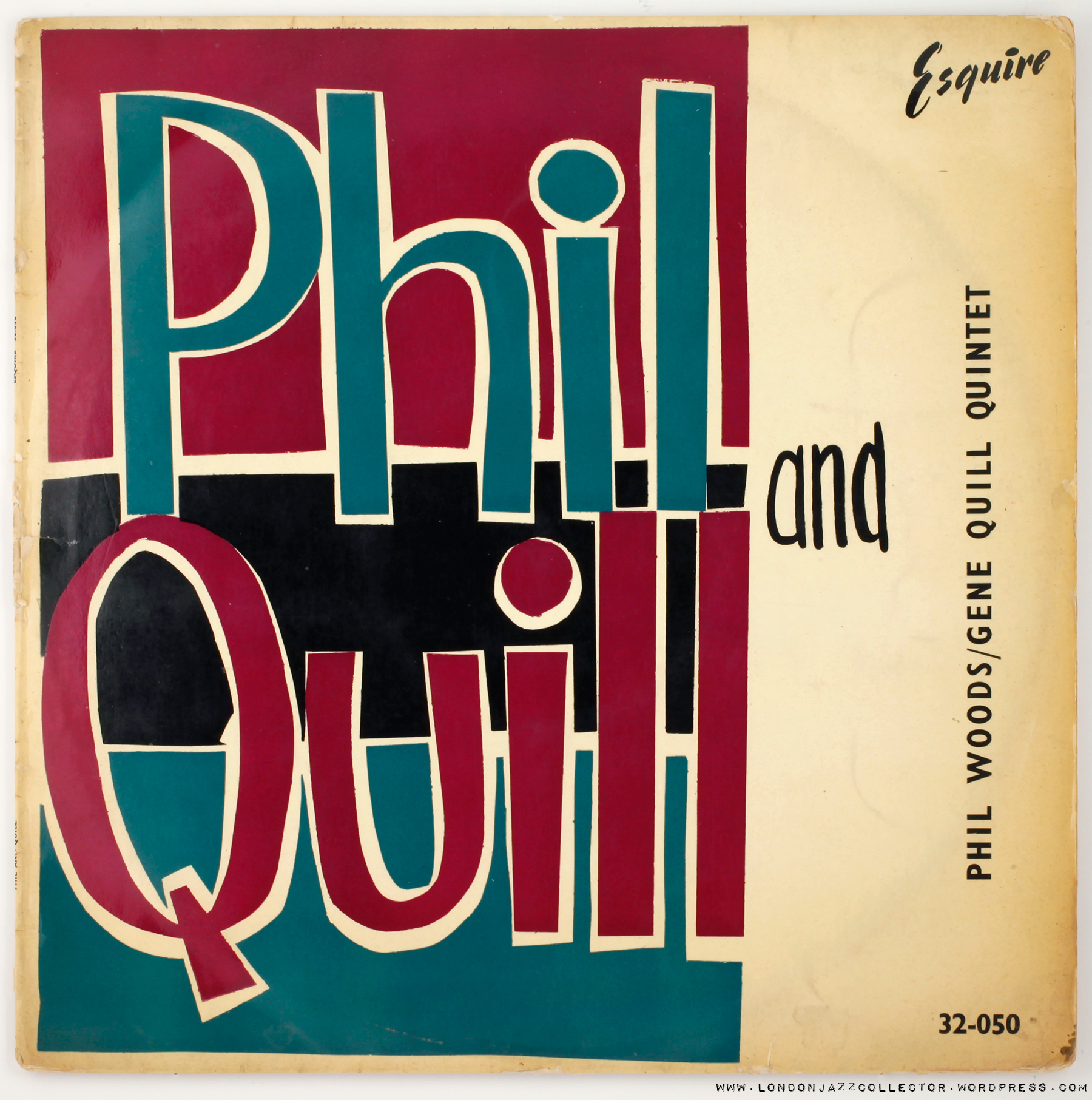
But I digress. Phil Woods and Gene Quill made a successful pairing because of their musical compatibility, and also because of the marketing gimmick suggested by their names. This album came out as Phil and Quill with Prestige, later released under Woods's name as his reputation continued to grow. There were only two Phil-and-Quill labeled recordings, the other for Epic, although they performed often as a quintet in clubs during this era.


 Order Listening to Prestige, Vol. 1 here.

Tuesday, October 25, 2016

Listening to Prestige 212: George Wallington

Strange coincidence -- or are the gods trying to tell me something? The last three recording sessions I've listened to have featured musicians who left the jazz life behind for something more respectable and secure. By the early 1960s, Teddy Charles would hie himself to the Caribbean to become a charter boat skipper, where he took many vacationers on a three hour cruise, and never stranded any of them on a deserted island. Wendell Marshall would hold out a little longer, but by the end of the decade, he would be back in his home town of St. Louis, opening his own insurance agency.

George Wallington may already have had one foot out the door when he walked into the Van Gelders' living room to record these tracks. He was nearing the end of his time in smoky clubs (and exclusive prep schools--one of his final albums was Live at Hotchkiss). He would make two more albums altogether in 1957, the Hotchkiss album for Savoy and one for the tiny East-West label. Then he would adjourn to Florida, and take his place in his family's air conditioning business, where he would remain until making a comeback in the 1980s.

Wallington had paid his dues. He had been around since the early days of bebop, as had bassist Teddy Kotick. Wallington made his first records in 1949 (with a sextet that included Gerry Mulligan and Brew Moore), but he'd already been around for a while. He was with the first bebop group that Dizzy Gillespie brought to 52nd Street,. Max Roach was in that band, and he said of Wallington:
We needed a piano player to stay outta the way. The one that stayed outta the way best was the best for us. That's why George Wallington fitted in so well with us, because he stayed outta the way, and when he played a solo, he'd fill it up; sounded just like Bud.
 And he'd made a powerful impact as a composer. His "Godchild" was one of the tunes on the historic Miles Davis Birth of the Cool sessions (perhaps brought by Mulligan?).

Teddy Kotick, who played with Stan Getz and was one of Charlie Parker's favorite bassists, also knew how to stay outta the way--keep time, understand the subtleties and complexities of bebop, don't solo.

Whoever took the notes or transcribed the notes for this session had a bit of a communication problem. The first track is listed as "In Sarah," but that didn't seem right -- a little too risqué -- and besides, it seemed very familiar. It's probably been 30 years since I played the album I first heard it it on, but back when I first heard it -- good Lord, 50 years ago--I wore it out. The correct title is "In Salah," and the composer is a young piano player who was sort of a protege of Wallington's. Wallington used this tune on this album, and a few more on his next album. The young composer would shortly sign with Prestige, and release his own first album: Back Country Suite, by Mose Allison. Wallington, Byrd and Woods take it at a more boppish tempo than the bluesy, laid back Mose. But we'll be getting to him soon.

The confusion expands with the next tune, a Phil Woods original, or maybe Phil wrote it down and he had really bad handwriting. On the set list, it's "Up Children Reel." The correct title is "Up Tohickon Creek," and unless you were from Bucks County, Pennsylvania, having a hard time with that would be understandable.

"In Salah" is a piano piece for Allison, but Wallington gives Byrd and Woods plenty to do on it. He doesn't stay outta the way, though. He doesn't intrude on their solos, but he goes all out on his own. Different from Allison's, but I'll get to that when I get to Mose. "Up Tohickon Creek" is another uptempo piece, with a killer drum solo by Nick Stabulas.

"Graduation Day" was a current hit for the Four Freshmen, who were always billed as a jazz vocal group, and they sorta were (their Four Freshmen and Five Trombones is considered a classic), but not exactly in step with the bebop era, or the rock 'n roll era. On this version, Byrd and Woods stay outta the way, and Wallington does it as a trio piece. It's taken slowly and dreamily, and with a lot more depth of feeling than the pop version, but what do Freshmen know about graduation day?

"Indian Summer" is the Victor Herbert chestnut turned jazz standard that we've heard before from Stan Getz and Lee Konitz. Teddy Kotick has not exactly stayed outta the way throughout this session, but here he steps forth with a full fledged solo. He should have done more.

The set winds up with compositions by Byrd and Woods. All good stuff.

The album is called George Wallington -- The New York Scene, and it was released on New Jazz. It also had a release as part of an album on the almost totally forgotten 16 2/3 RPM format, under the title George Wallington / Phil Woods / Donald Byrd / Red Garland -- Modern Jazz Survey -- New York Jazz.

The New York Scene.  A cool and catchy title that could have been given to nearly every album in the Prestige catalog. And it's interesting for another reason.

Genres of music get labeled, and sometimes the people who play that music hate those labels. Many jazz musicians hate the term "jazz" -- in Art Taylor's book of interviews, Notes and Tones, written in the 1970, he asks many musicians how they feel about the word, and most of them don't like it. But nothing better has come along. "Swing" wasn't always called "swing," and musical styles like the blues, ragtime and stride piano existed way before they had names. Rhythm and blues was once called "race music," and disc jockey Alan Freed called the contemporary rhythm and blues records that he played "moondog music" until he moved from Cleveland to New York and discovered that a blind street singer already used the name "Moondog," so he started calling the music he played rock 'n roll. In Art Taylor's book, the music that today we call "free jazz" had a slightly different name: Taylor asks his interviewees what they think of "freedom music" (opinions are mixed; he also asks them what they think of the Beatles and that's mostly negative). The music that began its life as "rap," and is still called "rap" by some, mostly goes now by "hip-hop," the name preferred by its practitioners.

So what about bebop? Some suggest it came from the nonsense syllables sung by scat singers (much like doowop). As such, it was also sometimes called "rebop." But before "bebop" caught on, was taken up in public print, and became the standard nomenclature, this music -- developed in Harlem and on 52nd Street, then exported to the world, was called "New York music." Charlie Parker, Dizzy Gillespie, Bud Powell, and, yes, George Wallington - the New York scene.

New York music. Why not? We have New Orleans jazz. Kinda too bad it didn't stick.


 Order Listening to Prestige, Vol. 1 here.

Friday, July 01, 2016

Listening to Prestige 192: Phil Woods / Donald Byrd

Donald Byrd was apparently a contract player with Prestige at this tine, as he appears on several of the Prestige All-Stars sessions, but he was hardly exclusive with the label, and he was in demand. 1955 had been his breakthrough year, and by this time in 1956, he had already recorded on Prestige with George Wallington, Jackie McLean (three different sessions), Elmo Hope, Phil Woods, Gene Ammons, Hank Mobley, and the Prestige All-Stars. Art Farmer and Jackie McLean were also featured on that date, but on subsequent re-releases, leader credit was given to the two trumpeters and then to Byrd alone. Here are Byrd's other record dates from that same year.

For Savoy: three sessions with Kenny Clarke, one with Hank Mobley.        

For ABC-Paramount: Billy Taylor. ABC-Paramount, started in 1955, released a lot of jazz in its early years, which surprises me. I had never thought of it as a jazz label at all.

For Columbia: Several sessions with Art Blakey, some instrumental, others backing Dutch singer Rita Reys. I had never heard of Reys, so I listened to a little of this session, and she's very, very good. There's also some great solo work by Byrd.  Reys primarily performed in Europe, where she was known as "Europe's First Lady of Jazz." She continued performing and recording into this millennium. She died in 2013.   Also a couple of sessions with Horace Silver on Columbia subsidiary Epic.      

For Blue Note, with whom he would become most closely associated over the next decades, he appeared on Paul Chambers' first album as leader, which also featured John Coltrane. By the end of the year, he seemed almost constantly in Rudy Van Gelder's studio for either Prestige or Blue Note, recording for the latter label with Horace Silver, Hank Mobley and Sonny Rollins, As a leader, he recorded a session in Boston for Transition Records, a label founded by Tom Wilson, later to gain fame as Bob Dylan's producer, and a second session under Doug Watkins' leadership.;So these were formative years for Byrd, playing with a wide range of musicians, absorbing a lot. He was 24 years old in 1956, and this session, with Phil Woods, represents a wide range of ages and musical experience all by itself.

Woods was 25, like Byrd really coming into his own in the mid-50s, like Byrd destined to go on to significant commercial success--Byrd in the jazz fusion field, Woods most famously with Billy Joel -- while retaining the respect of the jazz world.

Al Haig was only 34, but pretty much at the end of his jazz career, at least during this period. This was close to his last recording (there'd be one with Chet Baker in 1958) until he experienced a renaissance in the mid-70s. According to jazz historian Brian Case,
Jazz pianism, ever more percussive in a crass simplification of [Bud] Powell's methods, had no room for the crystalline touch and swift, logical turnover of ideas. Haig got by with semi-cocktail piano in New York bars.
Teddy Kotick had been around since the birth of bebop, but jazz generations can turn over swiftly, and although he was only 28 years old at the time of this recording, he already seemed to belong to a previous generation. He dropped out of music for a while--I understand he returned to his native Massachusetts and worked as a mailman. I presented him in several concerts at Opus 40 in the 1980s with J. R. Monterose.

Charli Persip, only a year younger than Kotick, was at the beginning of his career (and was still spelling his name "Charlie"). He had spent several years with Dizzy Gillespie's big band, and had appeared on a couple of albums with Dizzy's band, but this was his first recording with a small ensemble.

Persip was known for his proficiency at sight reading music, and he explained in an interview in All About Jazz how he developed that skill:
  Mainly because I objected to the word that was going around that jazz drummers couldn't read well. Then it translated into black drummers couldn't read well. I totally took umbrage to that. I said OK I'm gonna be the best reader in the land—I'll fix you. I spent many hours practicing, I took music books to bed with me to read instead of novels. I was fighting the fight for the good name of black jazz drummers.
The grizzled old-timer of 28 and the young pup of 27 come together to lay down a fine rhythm foundation for this album. As with many bassists of his generation, like Curly Russell or Tommy Potter, Kotick wasn't much for soloing, although he does take a couple of solos on this session, modest but excellent. As with many drummers of his generation, Persip is assertive when it's called for, and knocks out some less modest but also excellent solos.

The early 50s were marked by artists like John Lewis and Miles Davis trying to get away from the head/solos/head formula, but Lord knows Miles came back to it, and Lord knows it didn't go away, nor should it have, although artists like the MJQ and Gil Melle, and Miles as his career progressed and Birth of the Cool finally gained wider release, blazed new and important trails.

This is the dichotomy of many art forms. Some poets find working in 14 lines, with a regular meter and rhyme scheme, artificial and confining. Others find it infinitely subtle and flexible. When, in the 1940s, virtuoso soloists became the center of jazz, this format proved to be the one most suited for those soloists to create in. That remained true through the 40s and 50s, and like the sonnet, it has never gone away altogether.

Phil Woods is the main composer here. "Lover Man" is a standard and "Dewey Square" a Charlie Parker composition, but the rest are all Woods. "House of Chan" is a tribute to Charlie Parker, who used "Charlie Chan," taking his wife's first name, as a pseudonym when he needed one for contractual reasons. But then, everything Woods did is to some extent a tribute to Charlie Parker. But even more than that, it's dedicated to Chan Parker, Bird's widow, whom Woods had grown close to, and whom he would marry in 1957.

Prestige released this as The Young Bloods, with co-leader credit given to Woods and Byrd. It would later be rereleased as House of Byrd.


 Order Listening To Prestige Vol. 1, 1949-1953 here.  

Wednesday, January 13, 2016

Listening to Prestige part 163: George Wallington

The new name here is Donald Byrd, who was at the beginning of a major career in American music. He was 24, and had already recorded more than a lot of musicians ever do, beginning with a 1955 album laid down in his native Detroit, for Transition, a short-lived label run by Tom Wilson, who would later achieve considerable renown as Bob Dylan's producer, one of the reasons why Dylan's albums were so good musically.   Byrd Jazz featured fellow Detroiters Yusef Lateef and Barry Harris, and was the first of a bunch of albums he would make for Transition in 1955, the rest after his move to New York.

There's a lot more to say about Donald Byrd, and I'll save most of it, since he would be very active on Prestige before signing an exclusive deal with Blue Note in 1959. But I will mention the quintet he led with Pepper Adams, another Detroiter, from 1958-1961, because it had such a profound effect on me.  This would have been 1959, me living in New York for the first time, starting my own transition from scared kid to having an actual sense of myself as a person, with jazz playing a major part in that. And finding my way up to 135th Street, to Smalls Paradise (the picture is from a few years later, when Wilt Chamberlain had bought the club). The Byrd/Adams Quintet was playing there, and there was no minimum, and you could get a beer for 75 cents and nurse it all night. I was still mostly scared kid, and not at all sure I had a right to be there with the real hip cats, but the music drew me in, and I'll never forget it.

That quintet would make several albums, including one live at the Half Note. No live at Smalls, but always in my heart.

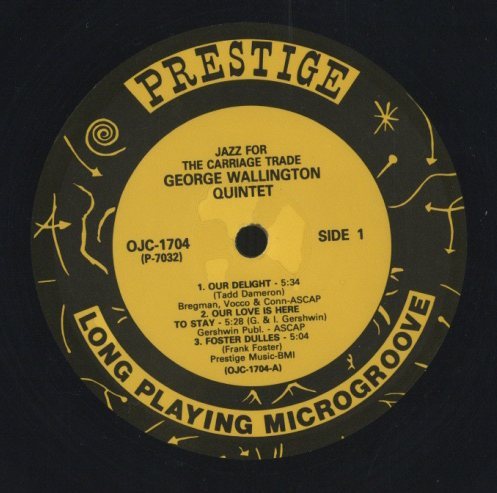
Listening to this album, with George Wallington as leader, is almost as much of a treat as being back at Smalls. It's that good. I'm listening, as always, to the tunes in order of set list for the recording session, not as they appear on the LP, starting with a couple by two important jazz composers. Tadd Dameron is one of the most important, and "Our Delight" is a delight, with some remarkable trade-offs between Woods and Byrd, and maybe even more remarkable piano solos by Wallington. Jazzdisco.com, probably going from the original set list, gives the drummer as Bill "Junior" Bradley, who had been working with the Woody Herman band and was working regularly with Wallington at that time. But the liner notes credit Art Taylor, who was doing a lot of drumming for Prestige in this days, so it's almost certainly him. Ira Gitler explains that although it's Bradley's picture on the album cover (I'll have to take Ira's word for this; I don't know what Bradley looked like, but the picture shows four white guys and Donald Byrd, so that would seem to be the case), he was out of town for the recording date--probably doing a gig with Herman.  In any event, the drum fills are very tasty indeed.

The second cut, "Foster Dulles," is not so much a tribute to Eisenhower's secretary of state as a play on the name of its composer, Frank Foster, and thank goodness boppers have not completely forsaken the art of punning on their names. Whoever picked the tunes for this session, Wallington or Weinstock -- and I have to guess it's Wallington, because it's such an eclectic mix -- did a great job.

Gershwin is next, with "Our Love is Here to Stay." It's fascinating to follow the range of composers, noted and obscure, from early 20th Century operetta to Fifties pop, who have caught the attention of modern jazz improvisers. But Gershwin remains the gold standard.

Two Phil Woods compositions suggest, from their titles and from the free-swinging good time music, that these are Rudy Van Gelder's "Five O'Clock Blues." "Together We Wail" is aptly titled, as Byrd and Woods wail together, separately, and closely conjoined., For that matter. so is "But George," which has more Byrd/Woods work, but also allows Wallington a large open space to make the most of.

"What's New" is a showcase ballad for a vocalist, with notable recordings by Linda Ronstadt and Frank Sinatra among others, and I hadn't realized it was written by dixieland bass player Bob Haggart. It makes a fine moody showcase for Wallingford.


Saturday, January 09, 2016

Listening to Prestige part 162: Jon Eardley

The thing to remember about mainstream or straight ahead jazz is that it's never really mainstream, and never really straight ahead. I'd always usd the terms pretty much imterchangeably, to refer to,the music of the time period I'm writing about. Wikipedia says there's a difference, "Mainstream" refers to players like Buck Clayton who continued to perform and record after the big bands broke up, but never  embraced bebop. "Straight ahead" refers to,the music made after the Charlie Parker era and before the Dolphy-Coltrane-Coleman era. Music such as was made by guys like Jon Eardley. I suspect I'll comtinue to use them interchangeably.

You can put it on as background music because, let's face, any kind of music can be background music. You put on something you like, even if it's Charlie Parker or Ornette Coleman or Igor Stravinsky or Gustav Mahler, and you're doing something else, whether it's an architectural rendering or washing the dishes, it's background music. If you're writing a blog about jazz, and your whole point is that this music is important, and you should set yourself down in a quiet room with no distractions and listen to it, and you're writing this at the same time the music is playing, then it's background music.

But mainstream or straight ahead are words that seem to describe music that can easily fade into the background as you concentrate on your rendering or dishwashing or jazz blogging, and it never can. With the kind of player that Bob Weinstock brought into the studio, and Rudy Van Gelder recorded, it never gets predictable, These guys played jazz because they came, consciously or not, out of modernism, out of Pound's dictum to "make it new." They came out of Louis Armstrong, who made it new, and Charlie Parker, who made it new, and they were inspired to keep building on that, to keep searching for the new.

John Eardley was to pretty much fade into oblivion after this album, and in fact, when it was rereleased in the 60s, it would be under Zoot's name.. He wouldn't record again as a leader until some sides for European labels in the late 70s. He'd be remembered, if at all, as one of those guys who played hard bop, just as if "one of those guys" was a phrase that had any meaning at all. As if those guys were minnows swimming straight ahead down a main stream. This album is none of that. It's full of surprises, full of inventiveness, full,of musical ideas and inventiveness, of phrasing, of time, of creative flight. And you don't get guys like Phil Woods and Zoot Sims for a session unless you're well respected.

"Koo Koo" is an Eardley composition (as are "On the Minute" and "Ladders"), and it's the gem of an excellent lot. It became the title track for the Zoot Sims reissue, and I'm surprised that it hasn't become more of a standard. Maybe because there are so many songs named "Koo Koo." "Eard's Word," interestingly, is a Zoot composition.

Milt Gold played with Kenton, and later in a three-trombone ensemble led by Bill Harris. When you're playing in a group with Eardley, Sims and Woods. you're not going to get a lot of solo time, but Gold sounds great when he does get a horn in edgewise.
There are so many great Zoot Sims stories, it's hard to resist putting them in every chance I get. This is David Amram reminiscing about the old Five Spot.

One time Larry Rivers was playing. Larry loved to play as much as anybody in the world
and he had a great band with Freddie Redd and Elvin Jones and all these tremendous musicians. But Larry was so busy painting, I don’t think he ever practiced in 30 years. He was blasting away, hitting a lot of clinkers. Zoot Sims was sitting at the bar and Zoot was the most big-hearted person. As Larry was playing more and more clinkers, Zoot was quietly sinking down in his bar stool, waiting for it to be over. I said, “Zoot, wasn’t that something?” He looked up very quietly and said, “Man, I think I’m gonna take up painting.”

The Jon Eardley Seven was released on 12-inch LP. which was now the standard.


Monday, December 14, 2015

Listening to Prestige Part 158: Phil Woods

I hope the two John Williamses who were playing piano in New York in the mid-50s at least had different answering services. Otherwise who knows what confusion might have ensued? Suppose Phil Woods had called for the guy who'd played dates with Stan Getz, Al Cohn and Zoot Sims, and would later play with Cannonball Adderley, and by mistake he'd been connected to the other John Williams, the Juilliard student who was also playing a lot of club dates around town, and doing a lot of studio work, much of it with a rising young composer. What if Woods had gotten the wrong John Williams for this gig, and the wrong John Williams had done so well on the session that he never would have made it out to LA with his his composer friend Henry Mancini, and never would have become a composer himself? No Jaws, no Star Wars?

But Woods did get the John Williams he was looking for, along with Teddy Kotick and Nick Stabulas, for a heck of an album.

"Be My Love" is best known as the signature song for pop-operatic tenor Mario Lanza, and it seems an unlikely vehicle for a jazz quartet. But actually, it's proven to be a surprisingly versatile warhorse. Composed by Hungarian emigre Nicholas Brodszky, it's gotten the full-out dramatic treatment from Placido Domingo and Jose Carreras,and by Lanza fan Jackie Wilson, singing in the operatic style for which he was trained--and by Sammy Davis, Jr., doing an uncanny impression of Lanza (and of Louis Armstrong on the same tune--file under "Only Sammy").

But it's been taken up by a surprising number of jazzers--Keith Jarrett, Earl Klugh, Kenny Drew and Howard McGhee, Hubert Laws and Nancy Wilson. Stranger still a rock version by NRBQ, a country rock version by Rick Nelson, and a Ray Charles version by Ray Charles. Mario Lanza might be spinning  in his grave, except that he grew to hate the song, and his spirit is probably just as glad to see it separated from him. 

Phil Woods does a terrific version of it, taking it at a tempo that would have surprised Lanza, with some fine solo work by the right John Williams, and beautifully balanced drum accents by Nick Stabulas, who provides them at just the right spots throughout the album.

We know that the classic composers who created the Great American Songbook drew much of their inspiration from jazz, and the modern jazz musicians mined the Great American Songbook for melodies. But it's interesting to me how often they went outside the Great American Fakebook of those jazz-influenced composers. Back to an earlier time, taking melodies from the operetta composers like Victor Herbert and Rudolf Friml. To European folk melodies like "Dear Old Stockholm" (and we know how much of an influence Debussy was on Charlie Parker and others). And to composers like Brodszky, who were also working out of a strictly European tradition.

The white male pop singers of this era fell broadly into two categories: the jazz-influenced singers like Sinatra, who came from the influence of Bing Crosby, who was the first white singer to understand Louis Armstrong. And the guys who were pretty much untouched by Armstrong, like Vic Damone and Jerry Vale, who came out of the tradition of bel canto, which was the pop side of operatic voices like Lanza and Ezio Pinza. And of course, the original great pop idol in American music was a pure opera singer: Enrico Caruso.

And you might not think that this would be a direction toward which jazz musicians would lean, but they were amazing. They had ears that were active and questing. Louis Armstrong loved Guy Lombardo. David "Fathead" Newman loved Michael Bolton. You don't get it? You're probably wrong, and they're probably right.

"Slow Boat to China" is a Frank Loesser tune, and Loesser is certainly a master in the tradition that flows from Gershwin. It's an irresistibly catchy melody, which also appealed to Charlie Parker and Miles Davis, to the MJQ and Sonny Rollins, to Stan Getz, to Diz and Bird. To the masters, and Phil Woods is one of those masters. And catchy as the melody is, it could resolve itself in sort of a cliched way, unless you're one of those masters, and are never going to settle for the obvious.


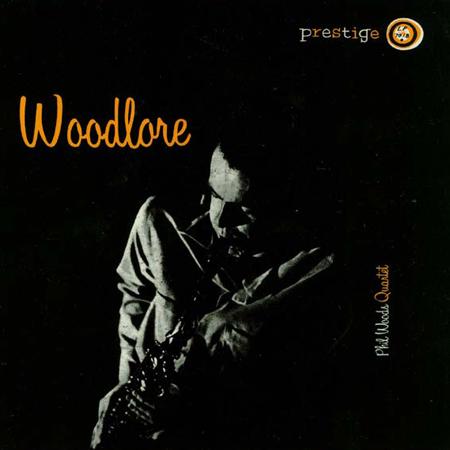
"Woodlore" and "Strollin' with Pam" are two strong Woods originals. Teddy Kotick is a veteran of the early days of bebop recording, where bassists didn't solo. Well, they mostly couldn't, being set too far back from a single mike, but they didn't. Kotick takes a solo on "Strollin' with Pam," and shows that he can.

We lost Phil just a couple of months ago, and what a loss for jazz.

This was only released as a 12" LP (and years later on Original Jazz Classics). And the whole session was on that LP. This is a new trend -- one session, one album. So the four-song session is on its way out.


Thursday, September 24, 2015

Listening to Prestige Part 148: Bob Brookmeyer

Bob Brookmeyer, during this time period, was somewhat bicoastal. He had replaced Chet Baker in Gerry Mulligan's famous pianoless quartet, and he was still making dates in New York. This is another four song, 10-inch recording date, perhaps because Prestige already had one such session (with Teddy Charles), and needed one more to fill out a full length LP.

This New York session is also a pianoless quartet, except when it isn't. On two of the tunes, Brookmeyer plays piano. Actually, Brookmeyer had started as a pianist, with the Tex Beneke and Ray McKinley bands, before switching to valve trombone full time. This was actually true of the Mulligan-Brookmeyer quartets, as well--they were pianoless except when they weren't, since both Mulligan and Brookmeyer played piano.

To my ears, there's no falling off in technique or imagination when Brookmeyer switches to piano. He's great on both instruments, and the four tunes together, with the piano and trombone alternating, make a cohesive unit.

The quartet makes a cohesive unit, too. I believe this is Mel Lewis's debut on record. His first
important professional gig had come in just the previous year, when he had joined Stan Kenton's orchestra. Teddy Kotick had also played on the Teddy Charles session.

I continue to be impressed with Jimmy Raney, who's been on several Prestige sessions before this. His solos are beautiful, and his duet exchanges with both Brookmeyers, the trombonist and the pianist, are dazzling. He does a very cool duet with Teddy Kotick, as well, on his own composition,  "Potrezebie," the title of which tells me that in addition to his other accomplishments, Raney was an early fan of Mad comics. Mad's resident genius, Harvey Kurtzman, had run across the word in a set of Polish instructions for a bottle of aspirin (and who among us hasn't read aspirin labels in Polish?) and decided he liked thesound of it as a nonsense word (it actually means "need"). Looking on Allmusic.com to see if anyone else had recorded "Potrezebie," I discovered that although it hasn't been picked up by any other Mad-loving jazzmen, there are a number of Polish songs that use it in the title. The Polish songs spell the word correctly: Potrzebie, with no "e" between the "r" and the "z." Actually, the root word is an inflected noun, and "potrzebie" is the dative case of the noun. The various Polish songs usually use "potrzebuje" or "potrzeba," which, as near as I can make out, are verb forms. "kilkanaScie przedsiEbiorstw potrzebuje nowych dochodOw"  translates as "Over a dozen of enterprises need new incomes," which seems somehow appropriate for a discussion of jazz. I like to think that Jimmy Raney was a real Mad fan, and knew the correct spelling, but was done in by the label maker for Prestige's pressing plant.

The original 10-inch release in 1955, and the later 12-inch release, were both titled The Dual Role of Bob Brookmeyer, referencing two different sessions with two different Hall Overton students, or more likely Brookmeyer as trombonist and pianist. The same album was also given a New Jazz release, as Bob Brookmeyer -- Revelation!


Thursday, September 03, 2015

Listening to Prestige Part 141: Jon Eardley

Before we get to Eardley, a mention of a couple of sessions lost to the haze of time. On March 10, the Tony Luis trio cut four tunes, which were released on EP format only, and four more tunes backing up vocalist Terry Morel (also EP only). I can find nothing at all on Luis anywhere. I did find one mention of his drummer, Hank Nanni, in the autobiography of a Wall Street trader turned vagabond, who briefly went to work for Nanni, who was playing drums in a Las Vegas lounge. But not as a musician. Nanni had also opened up a business selling vacuum cleaners door to door.

Terry Morel apparently had two recording sessions in 1955, the one for Prestige which sank without a trace, and one for Bethlehem, which has survived. All I know about her I found on a German Wiki page -- there's no Wiki entry in English for her. Herbie Mann and Ralph Sharon played on the Bethlehem album, which is a live recording. She made one more live album with Gerald Wiggins in 1957, and appeared on a TV show with Bud Shank and Gary Peacock in 1962. Nothing else, although she lived until 2005. The Bethlehem sides are very good.

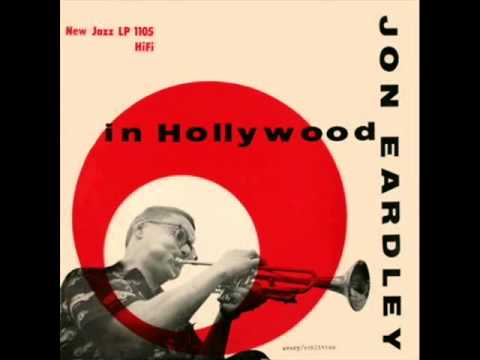
Jon Eardley had cut a quintet session in the Van Gelder studio a month earlier with Phil Woods, under Woods's name. This session features the same rhythm section, but with J. R. Monterose's tenor replacing Woods's alto.

Monterose is a favorite of mine, and was a good friend. He came out of that hotbed of jazz that was Detroit, but he didn't have much time to absorb that city's influences. When he was only a few months old, his family moved to Utica, New York, and upstate New York would always exert its pull on him. His first major gig was with the Buddy Rich band, but after six months he decided it wasn't the music he wanted to play, so he went back to upstate New York, where, he says, he "spent the next couple of years working in little joints but with good men."

J.R. worked with some more good men on his return to New York, including Claude Thornhill, Teddy
Charles, Kenny Dorham and Charles Mingus. But the jazz scene in New York changed in the late 60s and early 70s, with more of a racial divide than there had been previously--a situation with which he was not comfortable. He retreated to Europe, and then back to upstate New York, where he became a legend in his own time with a long-time engagement (the better part of a decade) at the Lark Tavern in Albany. He was back playing little joints with good men, including Teddy Kotick. The others in his most frequent ensemble were pianist/attorney Walter Donnaruma and drummer Eddie Robinson.

This is Jon Eardley's session, though, with Monterose as an able partner. There's one Eardley original ("Demanton") and two by Tadd Dameron, one of the finest composers in the jazz idiom. Dameron once said that he strove for beauty above all else in his composition, and he certainly achieves it here, especially in "If You Could See Me Now," which also has a haunting solo by George Syran.

The fourth piece, "Hey There," is by Richard Adler and Jerry Ross, and comes from the 1954 musical "The Pajama Game." It was a pop hit in 1955, for both Rosemary Clooney and Sammy Davis Jr.

The pages had pretty well been turned on the Great American Songbook by the mid-Fifties. There were still crooners like Eddie Fisher, and band singers from the Forties like Jo Stafford and Perry Como and even Bing Crosby, but the great songs had pretty much all been written, which is why pop singers like Margaret Whiting and Tony Bennett were covering Nashville songs, particularly those by Hank Williams.  But the news hadn't quite reached Broadway yet, and the Fifties were actually a pretty strong decade for Broadway musical scores. "Hey There" is a very lovely melody, and if it didn't quite become a jazz standard, it had some very good jazz interpretations by Grant Green and Phil Woods. It was recorded by a number of jazz as well as pop singers, most notably Sarah Vaughan, who was given an arrangement involving a weird and not entirely successful Danish choir, but still managed to create one the great jazz vocals.

"Hey There" was written as a moody, torchy ballad, and is generally played that way, but Eardley and Monterose take it uptempo and urgent, and it's a good change from the expected.

These tunes were released on a 10-inch from Prestige, and a 12-inch from New Jazz.


Monday, May 18, 2015

Listening to Prestige Part 111: Jimmy Raney

Jimmy Raney double-tracks his guitar on these tracks, using a technique that Les Paul had started to experiment with in the 30s, but had not been able to convince a record label to release a record using the technique until 1949. Interestingly, that meant that Paul was not the first artist to put out a record with multi-tracked instruments--Sidney Bechet did it in 1941.

Outside of the studio pyrotechnics, there doesn't seem to be much to connect the progressive ideas of Jimmy Raney with the more trad-focused licks of Les Paul, but it's not hard to think of them together, if one puts one's mind to it. There's a joy and a brightness in the playing of both guitarists. And, of course, wizard-like technique combined with technical wizardry.

Here again, Raney is joined by Hall Overton, and as with the Teddy Charles sessions, it's a case of the student overtaking the professor (Raney and Charles had both studied with Overton and Juilliard). But not really. Overton was an enigmatic and adventurous musician, and he prods Raney into some very cool things here.

Art Mardigan may be best known as a mainstay of the red hot Detroit jazz scene, working as the
house drummer at the Blue Bird Inn, but he did a lot of work in New York, too, with some major musicians.

I knew Teddy Kotick at the end of his career, when he was working a day job as a mailman in his native Massachusetts, and playing some great jazz with J. R. Monterose in Albany. He had been one
of Charlie Parker's favorite bassists, and was always reliable. He didn't solo much, but he has some moments here, on "Some Other Spring" and "On the Square," and he shines.


Sunday, February 03, 2013

Birth of the Cool: Godchild

Birth of the Cool 7: Godchild. I'm doing this in the order they appear on the CD, not the order they appeared on the original album.The reason for this choice...actually it wasn't a choice. This happened to be the first track listing I ran across online, not having the album in front of me. If I were to start over, I'd use the original listing. Actually, "Godchild" is the third track on the album. The first four were "Jeru," "Move," "Godchild" and "Budo." They were the first four songs recorded, and the two singles released, someone at Capitol having decided they were the best melodies, and likely to be the catchiest. A good decision, I think -- it's really those first four melodies that hooked me in thinking about the album, and made me want to pursue this. Certinly "Godchild" is a wonderful melody. It was written by George Wallington, an outstanding bebop pianist, and it's probably been recorded in more different version that any other piece except possibly Budo/Hallucinations. In at least one YouTube uploading, the composition is credited to Gerry Mulligan, and certainly his arranger's hand is here, but it's Wallington's tune. Starting with the Birth of the Cool track:

Here's a beautiful version by Wallington with a trio, featuring Nick Stabulas on drums, and Teddy Kotick, who I had the pleasure to meet when he played at Opus 40 with J. R. Monterose, on bass.


AllMusic lists a version several of the Birth of the Cool tracks by Miles Davis and Charlie Parker, and I've dug deep, trying to find them, and have finally come to the conclusion that they don't exist. Apparently there's an LP of Charlie Parker - Miles Davis - Lee Konitz, but it's a teaser. Some of the tracks are by Bird, some by Miles and Konitz.


Here's a beautiful version by a Mulligan tentet featuring Art Farmer and Lee Konitz. Great ensemble work, wonderful opening statement of the melody by Mulligan, lots of room for solos, the Farmer and Mulligan solos neatly resolving in an ensemble restatement of the melody.


Versions you can find on Spotify but not YouTube -- Bill Charlap, Tal Farlow/Charles Mingus/Red Norvo, Howard Roberts. Here's one YouTube does have, from Kai Winding:


 And from the classic Mulligan-Chet Baker quartet:


And finally, Terry Gibbs with a big band:

Tuesday, January 22, 2013

Birth of the Cool: Move

Started thinking about Birth of the Cool, and the original compositions by Miles, Gil Evans and others that made up that session -- what great tunes they all are. Started wondering who else has recorded them. So here's the first cut on the album, "Move," as played by Bireli Lagrene, the gypsy jazz guitarist who first made his mark at the age of eight, playing Django Reinhardt's book.


And again by Stan Getz, a live performance from 1951, featuring Teddy Kotick on bass -- Teddy who played at Opus 40 several times with J. R. Monterose.