Showing posts with label Jon Eardley. Show all posts

Saturday, January 09, 2016

Listening to Prestige part 162: Jon Eardley

The thing to remember about mainstream or straight ahead jazz is that it's never really mainstream, and never really straight ahead. I'd always usd the terms pretty much imterchangeably, to refer to,the music of the time period I'm writing about. Wikipedia says there's a difference, "Mainstream" refers to players like Buck Clayton who continued to perform and record after the big bands broke up, but never  embraced bebop. "Straight ahead" refers to,the music made after the Charlie Parker era and before the Dolphy-Coltrane-Coleman era. Music such as was made by guys like Jon Eardley. I suspect I'll comtinue to use them interchangeably.

You can put it on as background music because, let's face, any kind of music can be background music. You put on something you like, even if it's Charlie Parker or Ornette Coleman or Igor Stravinsky or Gustav Mahler, and you're doing something else, whether it's an architectural rendering or washing the dishes, it's background music. If you're writing a blog about jazz, and your whole point is that this music is important, and you should set yourself down in a quiet room with no distractions and listen to it, and you're writing this at the same time the music is playing, then it's background music.

But mainstream or straight ahead are words that seem to describe music that can easily fade into the background as you concentrate on your rendering or dishwashing or jazz blogging, and it never can. With the kind of player that Bob Weinstock brought into the studio, and Rudy Van Gelder recorded, it never gets predictable, These guys played jazz because they came, consciously or not, out of modernism, out of Pound's dictum to "make it new." They came out of Louis Armstrong, who made it new, and Charlie Parker, who made it new, and they were inspired to keep building on that, to keep searching for the new.

John Eardley was to pretty much fade into oblivion after this album, and in fact, when it was rereleased in the 60s, it would be under Zoot's name.. He wouldn't record again as a leader until some sides for European labels in the late 70s. He'd be remembered, if at all, as one of those guys who played hard bop, just as if "one of those guys" was a phrase that had any meaning at all. As if those guys were minnows swimming straight ahead down a main stream. This album is none of that. It's full of surprises, full of inventiveness, full,of musical ideas and inventiveness, of phrasing, of time, of creative flight. And you don't get guys like Phil Woods and Zoot Sims for a session unless you're well respected.

"Koo Koo" is an Eardley composition (as are "On the Minute" and "Ladders"), and it's the gem of an excellent lot. It became the title track for the Zoot Sims reissue, and I'm surprised that it hasn't become more of a standard. Maybe because there are so many songs named "Koo Koo." "Eard's Word," interestingly, is a Zoot composition.

Milt Gold played with Kenton, and later in a three-trombone ensemble led by Bill Harris. When you're playing in a group with Eardley, Sims and Woods. you're not going to get a lot of solo time, but Gold sounds great when he does get a horn in edgewise.
There are so many great Zoot Sims stories, it's hard to resist putting them in every chance I get. This is David Amram reminiscing about the old Five Spot.

One time Larry Rivers was playing. Larry loved to play as much as anybody in the world
and he had a great band with Freddie Redd and Elvin Jones and all these tremendous musicians. But Larry was so busy painting, I don’t think he ever practiced in 30 years. He was blasting away, hitting a lot of clinkers. Zoot Sims was sitting at the bar and Zoot was the most big-hearted person. As Larry was playing more and more clinkers, Zoot was quietly sinking down in his bar stool, waiting for it to be over. I said, “Zoot, wasn’t that something?” He looked up very quietly and said, “Man, I think I’m gonna take up painting.”

The Jon Eardley Seven was released on 12-inch LP. which was now the standard.


Thursday, September 03, 2015

Listening to Prestige Part 141: Jon Eardley

Before we get to Eardley, a mention of a couple of sessions lost to the haze of time. On March 10, the Tony Luis trio cut four tunes, which were released on EP format only, and four more tunes backing up vocalist Terry Morel (also EP only). I can find nothing at all on Luis anywhere. I did find one mention of his drummer, Hank Nanni, in the autobiography of a Wall Street trader turned vagabond, who briefly went to work for Nanni, who was playing drums in a Las Vegas lounge. But not as a musician. Nanni had also opened up a business selling vacuum cleaners door to door.

Terry Morel apparently had two recording sessions in 1955, the one for Prestige which sank without a trace, and one for Bethlehem, which has survived. All I know about her I found on a German Wiki page -- there's no Wiki entry in English for her. Herbie Mann and Ralph Sharon played on the Bethlehem album, which is a live recording. She made one more live album with Gerald Wiggins in 1957, and appeared on a TV show with Bud Shank and Gary Peacock in 1962. Nothing else, although she lived until 2005. The Bethlehem sides are very good.

Jon Eardley had cut a quintet session in the Van Gelder studio a month earlier with Phil Woods, under Woods's name. This session features the same rhythm section, but with J. R. Monterose's tenor replacing Woods's alto.

Monterose is a favorite of mine, and was a good friend. He came out of that hotbed of jazz that was Detroit, but he didn't have much time to absorb that city's influences. When he was only a few months old, his family moved to Utica, New York, and upstate New York would always exert its pull on him. His first major gig was with the Buddy Rich band, but after six months he decided it wasn't the music he wanted to play, so he went back to upstate New York, where, he says, he "spent the next couple of years working in little joints but with good men."

J.R. worked with some more good men on his return to New York, including Claude Thornhill, Teddy
Charles, Kenny Dorham and Charles Mingus. But the jazz scene in New York changed in the late 60s and early 70s, with more of a racial divide than there had been previously--a situation with which he was not comfortable. He retreated to Europe, and then back to upstate New York, where he became a legend in his own time with a long-time engagement (the better part of a decade) at the Lark Tavern in Albany. He was back playing little joints with good men, including Teddy Kotick. The others in his most frequent ensemble were pianist/attorney Walter Donnaruma and drummer Eddie Robinson.

This is Jon Eardley's session, though, with Monterose as an able partner. There's one Eardley original ("Demanton") and two by Tadd Dameron, one of the finest composers in the jazz idiom. Dameron once said that he strove for beauty above all else in his composition, and he certainly achieves it here, especially in "If You Could See Me Now," which also has a haunting solo by George Syran.

The fourth piece, "Hey There," is by Richard Adler and Jerry Ross, and comes from the 1954 musical "The Pajama Game." It was a pop hit in 1955, for both Rosemary Clooney and Sammy Davis Jr.

The pages had pretty well been turned on the Great American Songbook by the mid-Fifties. There were still crooners like Eddie Fisher, and band singers from the Forties like Jo Stafford and Perry Como and even Bing Crosby, but the great songs had pretty much all been written, which is why pop singers like Margaret Whiting and Tony Bennett were covering Nashville songs, particularly those by Hank Williams.  But the news hadn't quite reached Broadway yet, and the Fifties were actually a pretty strong decade for Broadway musical scores. "Hey There" is a very lovely melody, and if it didn't quite become a jazz standard, it had some very good jazz interpretations by Grant Green and Phil Woods. It was recorded by a number of jazz as well as pop singers, most notably Sarah Vaughan, who was given an arrangement involving a weird and not entirely successful Danish choir, but still managed to create one the great jazz vocals.

"Hey There" was written as a moody, torchy ballad, and is generally played that way, but Eardley and Monterose take it uptempo and urgent, and it's a good change from the expected.

These tunes were released on a 10-inch from Prestige, and a 12-inch from New Jazz.


Sunday, August 23, 2015

Listening to Prestige Part 137: Phil Woods

In this second session pairing Phil Woods and Jon Eardley, you can really hear why Woods was so often compared to Charlie Parker. There's that same feeling for the roots of swing with a daring tonality that pushes the edges of atonality, that same sense of the delight in adventure. But you can also hear how different they are.

And they'd have to be. Bird came from Kansas City, from Jay McShann's Kansas City blues band, and he felt the blues as only someone who grew up with the blues can. Woods was born in Massachusetts, took his first lessons from Lennie Tristano, and was schooled at Juilliard.

Like Bird, he paid his dues, but they were different dues. Juilliard and the Manhattan School of Music, where he also studied, are not for slouches. They didn't teach jazz back in those days -- did not even have a saxophone major, so he studied clarinet. But they taught a lot.

He came out of Juilliard knowing a lot, but unprepared to be thrown into the sort of apprenticeship that Parker, or John Coltrane, or Ornette Coleman would have taken for granted. He had a lot to learn, and some of it he learned from the master: Charlie Parker. Here's a story he told to Marc Myers of JazzWax about those early days:

I had just graduated from Juilliard in 1952 and was playing at the Nut Club on Seventh Ave. and Sheridan Square in the Village. After all of that great education, here I was playing "Harlem Nocturne" 10 times a night...I wasn’t happy with myself. I was saying to myself, “My god, I’m a Juilliard graduate, and I can play great jazz, and here I am playing "Night Train" and "Harlem Nocturne." I didn’t like my mouthpiece. I didn’t like my reed. I didn’t like my horn. I didn’t even like the strap.

...One night somebody came into the club and said, “Hey, Charlie Parker’s playing across the street. He’s jamming.” ...I was going on my break so I rushed over. When I walked in, there was this 90-year old guy playing a piano that was only three octaves long [laughs]. His father was on drums using a tiny snare and little tiny pie plates for cymbals. And there was the great Charlie Parker—playing the baritone sax. It belonged to Larry Rivers, the painter. Parker knew me. He knew all the kids who were coming up.

...I said, “Mr. Parker, perhaps you’d like to play my alto?” He said, “Phil, that would be great. This baritone’s kicking my butt.” So I ran back across the street to the Nut Club and grabbed the alto sax that I hated. I came back and got on the bandstand, which was about as big as a coffee table. I handed my horn to Bird and he played "Long Ago and Far Away."...As I’m listening to him play my horn, I’m realizing ...nothing was wrong with the reed, nothing was wrong with the mouthpiece—even the strap sounded good. Then Parker says to me, “Now you play.” I said to myself, “My God.” So I did. I played a chorus for him... When I was done, Bird leaned over and said, “Sounds real good, Phil.” This time I levitated over Seventh Avenue to the Nut Club. And when I got back on the bandstand there, I played the shit out of Harlem Nocturne. That’s when I stopped complaining and started practicing. That was quite a lesson.
There's more than a little Parker in "Horse Shoe Curve," from the bluesy riff-based head through the blistering solos.  But it, and the rest of the session, are solid Phil Woods, and once again, he and Jon Eardley sound as perfectly matched as...well, as Bird and Diz. But it seems as though Woods could match up with anyone and sound great.


Sunday, July 19, 2015

Listening to Prestige Part 132: Jon Eardley

These days on Sirius/XM they have five channels in their jazz/standards section, one of which is devoted to the 1940s (defined rather loosely), one to the blues, two to some forms of smooth jazz or new age or something--I can't tell you exactly what because I don't listen to them--and one called "real jazz."

Jon Eardley is real jazz. He didn't make the mark that some of his trumpet contemporaries did, but he's still for real. As Marc Myers says in a JazzWax blog entry on Eardley,
Jazz was so crowded with talent in the 1950s that it's easy for great artists from the decade to slip into obscurity today. This is especially true of trumpet players. We fixate on Miles Davis, Chet Baker, Kenny Dorham and Clifford Brown, not to mention Dizzy Gillespie, Harry "Sweets" Edison and Roy Eldridge. Rightfully so, but there were plenty of others. One who deserves much more recognition than he has received thus far is Jon Eardley.
Eardley did one earlier Prestige session, with Phil Woods, about which I said "if two guys were ever made to play together, it's Phil Woods and Jon Eardley."

Eardley most frequently played in a quintet-or-more setting, but here he's the only horn, which means he has a lot to carry, and he's up to it. I don't really have the language to describe what's unique about his style, so I'll go to Marc Myers again:

What made Eardley special during the '50s was his ability to blow hot but with laid-back  distinction. The faster the tempo, the more harmoniously rich he would become, taking on a rolling, punctuating style.
I can say that his style is distinctive, with a beautiful tone that takes advantage of what a trumpet can do, the same thing I hear in Art Farmer.

Eardley had left the New York jazz scene by the end of the 50s, and by the mid-60s he had moved to Europe, where he lived the rest of his life, raised a family, and put his family first, not every jazz musician's choice. He explained to British interviewer Les Tomkins:
I live in Cologne now, together with my wife and two children. I work with what they call the Westdeutscher Rundfunk, which is the German radio in Cologne. This has been the case for practically nine years, and now it’s come to the point that they’ve decided they want the orchestra I work with to be full–time. In other words, when I can’t play the trumpet any more they’ll still pay me. Because of the fact that I am married and have children, I don’t like to travel too much. You can understand that—I like to be around my children while they’re growing up
These tunes were cut in Los Angeles, where Eardley had gone to play with Gerry Mulligan. One has to guess at a couple of the titles -- jazzdisco.com has them as "Lute Leader" and "Cross," Spotify as "Late Leader" and "Gloss," Discogs as "Late Leader" and "Cross." Eardley didn't record often in a quartet setting, so here he has the opportunity and the challenge of stretching out, and he delivers.

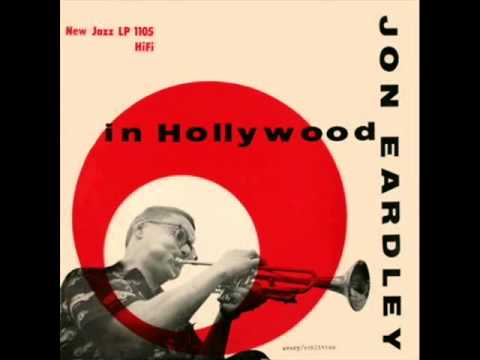
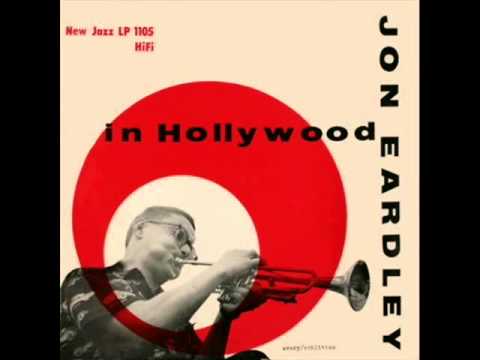
These tunes were released on New Jazz and Prestige 10-inchers as Jon Eardley In Hollywood.


Tuesday, June 23, 2015

Listening to Prestige Part 122 - Phil Woods

When I started this project, my goal was to listen to at least one cut from every Prestige album in chronological order. That went out the window pretty quickly when I realized that to do a proper chronology, I'd have to do it session by session, not album by album. And it really went out the window when I discovered that one cut was nowhere near enough. It might take a substantial chunk of time, but what better to do with my time than listen to jazz on Prestige? I was going to listen to every recording ever made for Bob Weinstock's label.

When possible. Some things I just haven't been able to find, and that would include most of this session. "Open Door" has been put up on YouTube, and that's it.

Still, every limitation has its compensations. In this case, instead of listening to four songs in rotation, I've focused on just the one, appreciating that if two guys were ever made to play together, it's Phil Woods and Jon Eardley. Of course, Phil Woods played with so many different musicians, and sounded great with all of them.

This was his first session as a leader, and maybe only his second recording session. I haven't found anything else besides the Jimmy Raney session just two months earlier. He was only 23 when he made these recordings.

George Syran seems only to have recorded on a handful of sessions with either Woods or Eardley, but his obituary (2005) offers this:
 Mr. Syrianoudis played with Billy May, Hal McIntyre, Jimmy Dorsey, Richard Maltby, Cannonball Adderley, Al Cohn, Phil Woods, Lester Lanin, Dick Meldonian, Hal Prince and many others.

 He was the personal accompanist for Buddy Greco, Don Rondo and Morgana King.

That's a pro's pro who can fit in anywhere, but he definitely knew how to play jazz. He has a strong solo here.

Nick Stabulas is a powerful presence throughout.

These were released on New Jazz, and the New Jazz releases seem in general to be less reissued and harder to find. "Pot Pie" and "Mad About the Girl" were also on a Prestige EP.