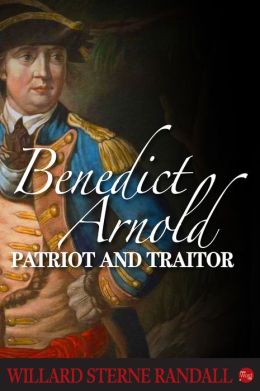
In June of 1790, Benedict Arnold’s plans to betray his
country by turning West Point over to the British were discovered, and he had
to flee for his life, his name forever synonymous with treason.

Suppose you didn’t know that was how the story ended. Then
you have a dashing young merchant sea captain, a daring smuggler, a loving
husband of an unloving wife who gains, loses, and gains another fortune, who
gives up a life as the wealthiest merchant in Connecticut to join the Sons of
Liberty and then the Continental Army, who leads the first successful campaign
of what is not yet even officially the Revolutionary War, winning Fort
Ticonderoga and Lake Champlain for the new American cause. You have a commander
who leads an ultimately unsuccessful campaign against the British in Canada,
but in doing so, stays with his men through the most grueling hardship, winning
their love and respect. You have the master strategist, the daring commander,
the wounded victor in the battle of Saratoga, and where’s your story going?
If you don’t know that your hero is Benedict Arnold, there’s
suspense, there’s indignation, there’s reader identification with this brave man
who serves his country brilliantly, but is thwarted, hamstrung and betrayed
over and over by cowards, publicity-seeking thugs, and petty political
maneuverers.
And maybe it’s a better story that way. Hard to say, because
we know the story so well. As it is,
when we read about Ethan Allen stealing the credit for the victory at
Ticonderoga, about the treacherous engineer Montresor giving him misleading
maps for his journey to Quebec, or the cowardly Colonel Enos turning back with
300 of Arnold’s 1000 men, about the politicians who stabbed Arnold in the back,
passing him over for promotion again and again in favor of lesser men, we read
it with a sense of foreboding, rather than suspense, and each of these
betrayals take on a sense of inevitability. Also, a red flag goes up in our
minds every time we hear of a betrayal. Those incidents loom larger in our
sense of the story than they might if we didn’t know the ending. Knowing the
ending makes it a different story.
E.M. Forster, in his great book Aspects of the Novel, writes about life measured by time vs. life
measured by value, “and our conduct reveals a double allegiance. ‘I only saw
her for five minutes, but it was worth it.’ There you have both allegiances in
a single sentence. And what the story does is to narrate the life in time. What
the entire novel does – if it is a good novel – is to include the life by
values as well.” The story of Arnold’s
life, because it’s nonfiction and we know the end, is told by values. Betrayer
and betrayed – in these moments time stands still. Of course, it’s also told by
time. Events unfold chronologically. But time stands still for us as readers
when a betrayal enters the story.
What can you say about a 21-year-old girl who died? What if
you don’t start the story that way? If you don’t start the story that way,
frankly, it’s probably not a mega-bestseller, because you don’t have a story if
she doesn’t die, and you’re pretending to a suspense that the reader isn’t
going to feel. Take away the suspense, and the life told by values becomes altogether
different.
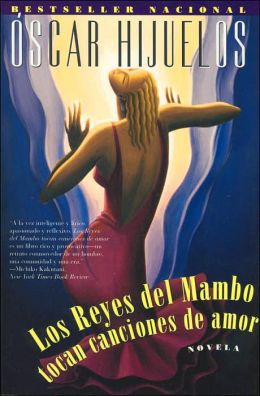
The Mambo Kings Play
Songs of Love begins with the death of Cesar – old, sick, bloated, ugly,
drunk and poor. As he stands up, staggers and falls in the swoon from which he
will not awaken, he knocks over the credenza which holds all of the 78 RPM
records he made in his life. And for the rest of this wonderful novel, as we
follow the young, brash, ruthless, gifted, self-absorbed womanizer, we see him
through this veil of sadness.
Just as we know the Benedict Arnold story will end with
treason, we know how “I’ll sing you the true tale of Billy the Kid / I’ll sing
you the deeds that this young outlaw did” will end. By the time he’s 21, he’ll
have been “shot down by Pat Garrett, who once was his friend.” But in the case
of Little Joe, giving away the ending by telling us that “he’ll wrangle never
more / His days with the remuda they are done” lets us know that the life
measured by time is going to be short, and the life measured by values will
have to be measured against that inevitability. On the other hand, in “Lily,
Rosemary and the Jack of Hearts” we have three characters – four, with Big Jim –
whose lives are measured in both time and value, and the intersections of those
lives leaves room for suspense which is enhanced by our not knowing the ending.
What happens next? Is a key element in every story. Starting
out by telling us what happens at the end is a choice you can’t make every
time, but sometimes it can be the right choice.