Showing posts with label Art Davis. Show all posts

Sunday, April 04, 2021

Listening to Prestige 556: Clark Terry


LISTEN TO ONE: Nightlife

 Was the world really panting for a jazz version of All American? They hadn't exactly been panting for the original version of All American. The musical by Lee Adams and Charles Strouse, who had hit it big with Bye Bye Birdie, ran for 80 performances on Broadway, panned by critics and unloved by audiences. An account of the show's history in Wikipedia is a compendium of wrong moves. 

First, the show's producers hired Mel Brooks  to write the book, which doesn't sound like a bad idea, except that Brooks was then young and inexperienced. He'd had some success as a TV gag


writer, but didn't know much about writing a play. For one thing, he discovered, plays are longer than sketches for Your Show of Shows, and you had to sustain momentum all the way through them. This proved too much for Brooks to handle, and he gave up when he discovered that after you'd finished the first act, you had to write a second act. So the producers brought in Joshua Logan, who had lots of experience as a successful Broadway director and script doctor, but not so much with the kind of broad sketch comedy favored by Brooks, so the second act ended up not exactly meshing with the first act. Then the producers, sensing trouble, brought in a star--Ray Bolger, the Scarecrow from The Wizard of Oz and a veteran Broadway star. So the script was rewritten around Bolger, which might have been a good idea except for two things: the story wasn't much of a fit for Bolger, and in 1962 no one cared about Bolger any more. Nothing good came out of all of this for the producers of All American, but something eventually did for Brooks: The Producers, inspired in part by this experience.

For all that, a musical can at least sort of succeed if it produces a few hit songs, though by 1962, that was also pretty much an idea whose time had passed. And the score of All American was not the most memorable. The website secondhandsongs.com lists cover versions of over 100,000 songs -- it's not complete by any means, but it's pretty comprehensive and a good resource. Only two of the songs from All American are listed at all on the site, so if there are any covers of the others, they are slim and scattered. "Once Upon a Time." first recorded by Tony Bennett, has had a good run of action among crooners, both pop and country, although not even the Bennett version cracked the Billboard Top 100. Instrumentally, it has mostly been picked up by orchestras like Lester Lanin's and Percy Faith's, with very little jazz interest. Charlie Byrd has recorded it, and Kenny Barron. 

The only other song from the score to get any cover action at all is "I've Just Seen Her," which has ten recordings, per secondhandsongs...and all by jazz performers. Terry, followed by Gary Burton, Pepper Adams, Scott Hamilton, Bill Charlap, Scott Hamilton with Bill Charlap. 


Nothing for any of the others. Perhaps they weren't very good songs. Certainly, they weren't the hippest of the hip. Nat Hentoff, in the album's liner notes, says rather charitably of Strouse and Adams:

Both are knowledgeable writers for the current state of the Broadway musical, but no one would claim that either or both has more than a peripheral acquaintance with jazz. 

One wonders who thought this was a good idea in the first place. Esmond Edwards? Bob Weinstock? Did Weinstock get such a cut rate deal on the score that he couldn't refuse? In any event, a silk purse had to be made out of a sow's ear.

The history of sow's ears into silk purses, in American culture, is an interesting one, and there have been some notable successes. Louis Armstrong turned a fairly pedestrian tune, "Sweethearts on Parade," by square's square Carmen Lombardo, into one of the most sublime jazz vocals of all time. Some would argue that history repeated itself, if not quite as sublimely, with "Hello, Dolly."

There's that great story of film director Howard Hawks trying to convince Ernest Hemingway to write for the movies. Hemingway said he didn't like movies, and every time he saw a movie based on a good book he hated it. "That's because good books don't make good movies," Hawks told him. "But sometimes a bad book can make a great movie. I'll prove it to you. I'll take the worst piece of garbage you ever wrote and turn it into a great movie." 

"What's the worst piece of garbage I ever wrote?" Hemingway demanded.

"No question about it. To Have and Have Not."

Hawks, like virtually everyone else, shortchanged To Have and Have Not, which is a pretty interesting novel. But he did make a great film of it.

The poet and classicist David R. Slavitt, who has been praised for his translations of Seneca and Ovid, also published a collection of a little-known Roman author, The Fables of Avianus. Because Avianus was an undiscovered gem? "Heavens, no," Slavitt told me. "Avianus was a terrible writer. This way, all the credit for quality is mine alone."

And it's been reported that Clint Eastwood wanted the challenge of making a quality film out of a perfectly awful novel. Hence, The Bridges of Madison County.

"It was clear to me," Oliver Nelson told Hentoff,

...that without the action on state, Ray Bolger's dancing, and the comedy, the music by itself needed quite special treatment to stand up on a jazz date.

In short, Nelson was nearly as accomplished a diplomat as he was an arranger.

So, did he do it? Did he make the silk purse?

Oh, my yes. It was silk, it was silk and satin and linen that shows, rings and things and buttons and bows. "I've Just Seen Her," the one tune from the show that intrigued some jazz musicians, may be the weakest track here. Nelson has crafted a pure delight, and unexpected delight. Probably no one much took this album seriously. The contemporary website AllMusic.com gave it three stars; there are no listener reviews at all on Amazon, no comments on the cuts on YouTube. So this is one of those gems of a golden age of American that's just waiting there for you to discover it. And it may not be the equivalent of David R. Slavitt and Avianus, because Strouse is certainly an adequate tunesmith, but this is Nelson's music. 

Clark Terry must have been scratching his head when Prestige contacted him about this gig. Also the diplomat, he describes, not his first reaction, but his second:

I was surprised at how much Oliver had been able to do with the tunes, not only with regard to making them more interesting harmonically, but also in terms of the naturally flowing rhythm patterns he set them in. And once we all got into it, it turned out to be a thoroughly enjoyable date. As I think the recording shows, we all had a ball.

It does. There's no guarantee that a bunch of performers having a ball will translate into a good time for the audience--look at the Rat Pack's version of Ocean's Eleven -- but in this case, you can hear them having a ball, and you can also hear them digging into miraculous arrangements, and doing right by them.

The band was quite likely a Nelson-Terry collaboration. Les Robinson was a veteran section man with a number of big bands, and was probably known to both men--certainly to Terry, who had played with him on the West Coast. George Barrow was frequently called upon by Nelson, both on baritone, as here, and tenor. He played on Nelson's Prestige sessions, and on The Blues and the Abstract Truth.

Of Budd Johnson, Terry told Nat Hentoff:

It was a great help, of course, to have Budd Johnson along. First of all, no matter what you give him, Budd will swing it. And he has such a solid knowledge of chords that you can't lose him. He always knows what's happening and what can be done to make the proceedings more interesting. You listen to him here. He's like an old pitcher -- he's got so much "stuff" going for him, not only a fast ball, but curves and twisters and changes-of-pace. And always there's that big tone.

This comes back to Nelson again. Not to put down the excellent musicians, including some jazz greats tired of the road, who play in the pit orchestras of Broadway musicals, but the score of a show like All American isn't going to have chord changes so unexpected that they might lose a lesser musician than Budd Johnson.

Eddie Costa played on a couple of Prestige sessions in 1957. Terry singles him out for much-deserved praise as well. 

The man simply can't go wrong rhythmically. Eddie also contributed a lot to the good feeling that pervaded the session.

Costa's rhythmic brilliance, especially on the vibes, and his good camaraderie were both approaching a tragic end. In July of that year, just two months later, he would die in an auto accident at age 32. 

Esmond Edwards produced. The album was recorded over two sessions. It was released on Moodsville, although it was far from being a Moodsville album. The title, and I appreciate the gentle irony, is Clark Terry Plays the Jazz Version of All American.


Wednesday, January 20, 2021

Listening to Prestige 537: Sam Taylor


LISTEN TO ONE: Love Song from Suzie Wong

Anastasia

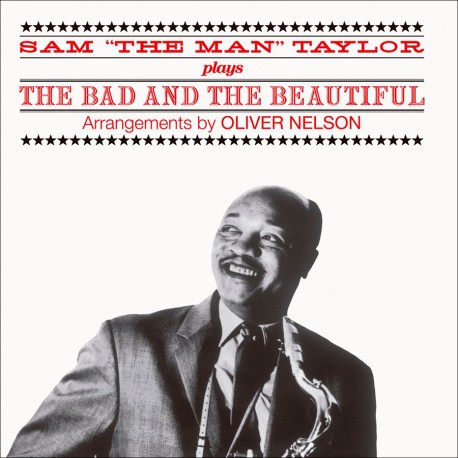
 Prestige adds another rhythm and blues giant to its jazz roster, proving once again that rhythm and blues is a legitimate form of jazz, and that these players fit seamlessly into a more bop-oriented context. Up this time is Samuel Leroy Taylor Jr., known as Sam "the Man" Taylor when he led Alan Freed's stage band, but simply Sam Taylor when he recorded in more respectable settings (similarly, Ellingtonian Al Sears was "Big Al" when he performed and recorded with the Alan Freed band).

Taylor had been something of a pioneer in the sax-organ combo business, having recorded an album with Dick Hyman for MGM back in 1957, with a very different approach from the soul jazz sound that had become popular in 1962. But he


eschews the sax-organ sound here, going instead with a quintet. Pianist Lloyd Mayers's carer spanned decades, and twenty years after this session, he would be named musical director of the Broadway revue of Duke Ellington's music, Sophisticated Ladies. Wally Richardson was a very active session guitarist in those days, with a number of sessions for Prestige. Art Davis, whose reputation as one of the finest bassists of his generation, classical or jazz, was matched only by his social conscience, had appeared on two previous Prestige sessions. And that a classical cat can get down with a rhythm and blues cat is as good as any tribute to the breadth of the language of jazz. And add Ed Shaughnessy to the mix and you have a pro's pro, whose best known gig, with Doc Severinsen's Tonight show orchestra, didn't begin to scratch the surface of his range.


The album's format is a little gimmicky--movie themes that celebrate women's names (or attributes, like "The Bad and the Beautiful," and it was released on Moodsville, which was sometimes accused of being a little gimmicky as a label. But I am here to say I see absolutely nothing wrong with this. It was probably a lot of fun coming up with the gimmick, and then finding the movie themes that would work. This included classics like "Laura," and tunes that had immediate popularity and proved to have legs, like "The Bad and the Beautiful," written by David Raksin and recorded by jazz musicians from Barney Kessel (1957) to Bill Frisell (2016). And a couple of sleepers. "Love Song from Suzie Wong" has never been recorded by anyone else that I know of. It was written by George Duning, a frighteningly prolific


composer with 180 film scores to his credit. In 1960 alone, the year of The World of Suzie Wong, he scored six other movies. But someone had a good ear, and "Suzie Wong" came out well enough to be the 45 RPM single release from the session, with "Anastasia" on the flip side. 

"Suzie Wong" / "Anastasia" was released as a Prestige single, "The Bad and the Beautiful" as a Moodsville single. The album, with the same name, also came out on Moodsville. "Ruby" (written by Heinz Roemheld for the movie Ruby Gentry) was later released on a compilation album for Prestige's budget label, Status, entitled Lusty Moods, and credited to Sam "the Man" Taylor.


Wednesday, July 29, 2020

Listening to Prestige 505: Gene Ammons


LISTEN TO ONE: I Sold My Heart
to the Junkman

Gene Ammons played back to back sessions in October of 1961, with different lineups, for two different albums, although some tunes from each session would end up on each album.

Art Taylor and Ray Barretto supplied the percussion for both sessions, both of them familiar sounds to Prestige listeners, particularly Taylor, who had appeared on 65 earlier Prestige sessions. George Duvivier, who played on the October 18 session, was another regular, with 33 previous appearances.

Art Davis was the other bass player. He had first been heard on a Prestige recording just the week earlier,
appearing on Oliver Nelson's epic Afro-American Sketches. Ammons and  producer Esmond Edwards blended youth and experience on both dates, with Davis (age 24) paired with Walter Bishop Jr. (age 34) on piano, while the veteran Duvivier (age 41) was matched with Patti Bown (30).

Both Davis and Bown had classical as well as jazz backgrounds. Bown moved early into jazz and stayed there, but Davis, regarded by many as one of the finest musicians of his generation, continued to work, and excel, in both worlds.

And he paid for it. Although he played with major symphony orchestras, those positions were hard to come by for an African American, and in 1969 he filed a discrimination lawsuit against the New York Philharmonic, which up until that time, had employed exactly one Black musician. He lost the lawsuit, but his activism led to the practice of blind auditions, where the judges could not see the race or gender of the applicant who was playing. But activism often comes with a price, and for Davis the price was a blacklist. He found it hard to get employment as a musician in the 1970s, and this was a man who was known to be John Coltrane's favorite bassist, who had been described as a "forgotten genius" by Ahmad Jamal and "beyond category" by critic Nat Hentoff.

Davis, for a while, had to find another line of work, and he did. I've talked about jazz musicians who found other things to do--George Wallingford going into the family air conditioning business, Wendell Marshall starting his own insurance agency--but Davis did them one better. He went back to school and got a doctorate in clinical psychology, and as gigs started coming his way again--both jazz and classical--he worked them around seeing patients.

Ammons, always a versatile player, covers a wide range of material in these two sessions. 

There are three jazz standards, which allow Ammons and Co. to exercise their bebop chops. "The Masquerade is Over," composed by Allie Wrubel, was a hit for Jimmy Dorsey and others in 1939, then lay mostly dormant until until a doowop group, the Cleftones, picked it up in 1965, and the following year Cannonball Adderley became the first modern jazz musician to record it, after which it rapidly became a favorite of jazz, pop, and even rhythm and blues performers,  "I'm Beginning to See the Light" is from the Ellington songbook, co-composed by Duke, Johnny Hodges and Harry James, it has the subtle chord changes that beboppers love. Scores of jazz singers, and singers who'd like a little jazz tinge to their repertoire, have recorded it, and it's been a favorite of instrumentalists as well. In 1961 alone, it was recorded by Ben Webster, Billy Byers, Ruby Braff, and Al Casey. And Lester Young's "Lester Leaps In" has remained a great vehicle for tenor sax players ever since Young and Count Basie introduced it in 1939, although it took a while to become the ubiquitous standard that it is. The first jazz musician to record it after Lester was James Moody in 1949 (for Prestige, on the same Swedish session that produced "Moody's Mood for Love").  Oscar Peterson recorded it in 1956, then Cannonball Adderley with Gil Evans in 1958, and after that, the floodgates opened.

"Travelin'" by Kenny Burrell isn't so much of a standard, but it's a nice tune, and this may be the first recorded version of it. Burrell doesn't seem to have recorded it until two years later, a session with Jimmy Smith.

The recent pop song catalog was mined for "The Breeze and I," "Song of the Islands," "Soft Summer Breeze," "Moonglow" and "The Five O'Clock Whistle."  All of these except "Soft Summer Breeze" were older songs that had been resurrected during the 1950s.

One aspect of 1950s culture that's not often remembered was the rise of what would later come to be called "easy listening" music, but was in that era a rearguard action against rock and roll. 

The playing of recorded music had become one of the predominant features of the radio airwaves by the 1950s, as live broadcasts from the big bands disappeared, and comedy and drama shows, and their stars, were lost to television. The first record was played over the air in 1911, when both radio and records were in their infancy. But the format was not to catch on right away, because a lot of restrictions were put on the way recorded music could be presented, and a lot of records simply couldn't be played over the air, because many artists wouldn't allow it, and their records were stamped "Not licensed for radio broadcast."

A real milestone in the history of recorded music on radio came
in 1935 with a program called "Make Believe Ballroom," hosted by a radio personality named Martin Block, who came to be so identified with the format that columnist Walter Winchell began calling him a "disc jockey," which was a pretty clever coinage, when you think about it. "Make Believe Ballroom" was created to fill a need--the need to fill in time between reports on the most dominant news story of the day.  A carpenter named Bruno Hauptmann had gone on trial for the kidnapping and murder of the infant son of aviation hero Charles Lindbergh. The trial lasted for over a month, and while it was going on, any regular radio programming would be broken into with bulletins. Since Block was standing by to fill in odd chunks of time, he couldn't very well have a real orchestra on hand, so make believe orchestras in a make believe ballroom were the next best thing.

Both Block and the show's title had a longer life than Bruno Hauptmann, who went to the electric chair on April 3, 1936. Recorded music on the air was growing in popularity, to the extent that musicians began to feel it was jeopardizing their livelihood, and the musicians' union called a strike against recording companies that lasted from 1942 to 1944. But recorded music on the air was a phenomenon that couldn't be stopped. 

Having their records played over the air was the life's blood of the new independent record labels which had grown up like mushrooms after World War II, labels that specialized in jazz, rhythm and blues or country (although country did have its live broadcast outlets like Grand Old Opry and Louisiana Hayride). And then in the 1950s, rhythm and blues morphed into rock and roll and became the new lingua franca of teenage America.

And the bĂȘte noire of another group, for whom rock and roll was the music of the devil or jungle or the terminally tone deaf, depending on which outraged voice you were listening to. For those people, recorded music on the radio followed the "Make Believe Ballroom" format, and, indeed, still included "Make Believe Ballroom" and Martin Block, who hosted the show on WNEW radio in New York until 1954. After Block finally decamped for another station, "Make Believe Ballroom" continued on WNEW with new host Jerry Marshall for three years, and then when he left, with William B. Williams, who became synonymous with the programming concept and the rearguard action against rock 'n roll through the 1980s.

So, to wind up this digression, what were the "Make Believe Ballroom" type stations playing in the 1950s? They couldn't go on being pretend ballrooms hosting make believe big bands, because those big bands mostly didn't exist any more, and the era of the big band had given way to the era of the singer--1940s era holdovers like Frank Sinatra and Jo Stafford, new crooners like Eddie Fisher and Connie Francis. And where did these singers get their songs? Sinatra, Tony Bennett and other recorded LPs of standards, but the real action in the 1950s--radio, jukeboxes--was on the 45 RPM record. The singers got their material from new Broadway musicals like My Fair Lady and The Pajama Game and Kismet, or from movie soundtracks like Three Coins in the Fountain or A Summer Place. or new songs from Tin Pan Alley that were often not very good, or by digging out some less likely songs from the past.

Radio actually hedged a lot of bets in the 1950s. For every Make Believe Ballroom on the one hand, or Alan Freed's rock 'n roll party on the other hand, there were stations, and a format, that had it both ways. In New York, when Jerry Marshall left WNEW to go and host a similar show for competitor WMGM, that station was also adopting a new format for its afternoon, after school slot--a format that had recently been created by an Omaha, Nebraska radio station owner who noticed that the same songs kept being played over and over on the jukebox in a diner he frequented, and from that observation, Top 40 radio was born, and the top jukebox hits of any given week put Eddie Fisher and Perry Como cheek by jowl with Elvis Presley and Fats Domino. 

The jazz musicians of the 1950s and early 1960s did not go much to rock 'n roll for inspiration, although that would change later in the decade, but they could still go to Your Hits of the Week for songs to catch the ear of the something less than hard core jazz fan, and a populist like Gene Ammons would always have an ear open for that.

And so with the songs on this album. "The Breeze and I" was originally a classical piece written by Cuban composer Ernesto Lecuona in 1928, made into a hit with English lyrics by Jimmy Dorsey in 1940. and then returned to Your Hits of the Week in 1955 by the Italian singer Caterina Valente. "Song of the Islands" was written by Hawaiian politician/songwriter Charles E. King in 1916, and brought back to radio and jukeboxes in the late 1950s by Marty Robbins, Andy Williams, and Annette Funicello.  Both of these were representatives of an odd genre of faux-exotic music called "exotica," described by bandleader Martin Denny, who more or less invented the genre, as  "a combination of the South Pacific and the Orient...what a lot of people imagined the islands to be like...it's pure fantasy though." Which meant they were sort of novelty songs, but catchy and melodic. "The Five O'Clock Whistle" wasn't exotica, but it was a novelty, and catchy. Written by film composer Joseph Myrow in 1940, it was popularized by the orchestras of Duke Ellington and Glenn Miller, then brought back to life in 1955 as a pop instrumental (they had them in those days) by organist Lenny Dee. "Moonglow," written in 1933 by Will Hudson, has always been a favorite of dance orchestras, but found its way into top 40 radio in 1956, as part of a medley with the theme from Picnic, a movie vehicle for William Holden and Kim Novak, performed by George Cates, who would become Lawrence Welk's musical director.

"Soft Summer Breeze" was a minor 1955 hit for jazz/lounge pianist Eddie Heywood, who would have a much bigger hit the following year with "Canadian Sunset." "I Sold My Heart to the Junkman" was a 1948 hit for Dinah Washington, and did get a cover in the 1950s by the doowop group The Silhouettes, but that never went anywhere. It would become a career-making hit a few years later for Patti LaBelle and the Bluebells, but it's probably here just because Ammons liked it.

Jazz versions of top 40 hits were never likely to make a dent on Top 40 radio, but they could get played by the Martin Block/Jerry Marshall/William B. Williams types, and find their way onto certain jukeboxes. "The Breeze and I," "Moonglow," and "I Sold My Heart to the Junkman" all did get released on 45, as did "Don't Go to Strangers," which had been a jazz and Make Believe Ballroom hit, even making it onto the top 40 charts for Etta Jones (on Prestige). Two Ammons originals, "Up Tight!" and "Carbow" also made it onto 45. 

Both recording sessions were produced by Esmond Edwards. Up Tight! was released in 1961, Boss Soul! in 1963.


Friday, July 10, 2020

Listening to Prestige 502: Oliver Nelson


LISTEN TO ONE: Afro-American Sketches

There's so much to say here: Oliver Nelson's first recording with a big band, all those tonal possibilities for his fertile composer's imagination--made even more interesting by the fact that he used what amounted to two different big bands for one day in the studio,  and then a second day, with a different lineup. They must have needed at least a little rehearsal time, with all those musicians...and what about all those paychecks? Bob Weinstock must have really thought he had something in Oliver Nelson, and he was right.

I'm always going to wonder about musicians Prestige and I are encountering for the first time, especially names I'm not familiar with--the guys who've been flying under the radar. Did they just show up for one magical gig and then disappear into the shadows? Or have they been there all along, known by every bandleader who's ever needed a guy who can show up on time, play all the charts, and give it that little extra that makes jazz? So I'll  run down the Prestige newcomers, and there are a lot of them.

Jerry Kail was a section man, and there's always room for a good section man. Among those who found room for him were Quincy Jones, Johnny Richards, Pete Rugolo, Herbie Mann, Shirley Scott, King Curtis, Bill Evans, Jack McDuff, Woody Herman, and Tito Puente. Just because you haven't heard of a guy, doesn't mean you haven't heard him.

Ernie Royal was the younger brother of Basie regular Marshall Royal, and he played a stint with Bssie too, and with a number of other big bands. Most of his work was in horn section, including the three Miles Davis/Gil Evans big band LPs, but he also worked with Charles Mingus in his octet. He was active up through the late 1970s;

Joe Wilder was a classically trained musician who turned to jazz when he realized that there would be little chance for an African American to advance in the classical world. Th concert hall's loss became jazz's gain, as Wilder's time with Hank Jones, Gil Evans, Benny Goodman and many others, his work with singers from Billie Holiday to Eileen Farrell, Tony Bennett to Harry Belafonte, led him to an NEA Jazz Masters award in 2008.

Paul Faulise is best known for his work with Kai Winding's trombone septet, but like the others on this album, he found work any time anyone needed a bass trombone. On how he broke into the recording studio, he tells a story (per interview with Jack Schatz at the Trombone Page of the World)  which introduces me to a job I didn't know existed: 
There were many rehearsal bands in New York, and one of them was Dan Terry's band. Dan was a music copyist and contractor for Ernie Wilkins, an arranger who had written for the bands of Count Basie, Harry James, and Tommy Dorsey and was currently the hottest arranger for jazz artists. After playing a few times in Dan's rehearsal band, he put me on one of Ernie's sessions. Ernie liked my playing, and from that time on I was Ernie's first call.
A contractor for a bandleader, contracted to supply him with musicians. Makes sense, when you think of it.

And Faulise had another story for Schatz, one that could only happen to a trombone player. This came when he was in the Tonight show orchestra:
I remember one New Year's Eve we were playing a live TV special, and all of these balloons were supposed to let go above the band at midnight. Needless to say, they didn't come down; and people started to laugh. Something got stuck in the net right over me; so Doc said to me, "Paul, get it with your slide." So I reached up with the slide to pull the net, and the slide got stuck in the net. I tried to get the darned thing loose, of course, the whole time on live TV. Johnny Carson finally shouted over, "Leave it there"; and the band pretty much lost it for the rest of the show.
Urbie Green is better known to the average jazz fan, having been voted the New Star of 1954 on trombone in that year's DownBeat critics' poll, and regularly placing high in the trombone category of their annual readers' poll (6th in 1960). Over a long and distinguished career he recorded 28 albums as leader, several for such labels as Blue Note, Vanguard and RCA. Bill Watrous, no slouch himself on the instrument, once said, "Urbie Green is the greatest trombone player I have ever heard." And Paul Faulise, who played with him often, said, "Every time I worked with Urbie, it was like taking a lesson."

Jim Buffington, as James L. Buffington, had an outstanding career in the classical music field. He played with the Budapest String Quartet, the Juilliard String Quartet and the Lincoln Center Chamber Society. He was a soloist with the Mostly Mozart Festival Orchestra and the Symphony of the Air.

As Jim Buffington, he was part of the Gil Evans/Miles Davis orchestras on their collaborations, and was one of the first called when a jazz ensemble needed a French horn. Among many others, he recorded  with Oscar Pettiford, Charles Mingus, Dizzy Gillespie, James Brown, John Coltrane, Lee Morgan, Paul Desmond, Gato Barbieri and George Benson.

In the area of unclassifiable music, he recorded with Moondog.

In 1979 and 1980, he received the Most Valuable Player Award for consistently outstanding performance from the National Academy of Recording Arts and Sciences.

Jerry Dodgion is hailed both for his versatility ("a multi-woodwind master"--the National Jazz Museum in Harlem) and his virtuosity can always be counted on to take an inventive solo that perfectly fits the circumstances"--Scott Yanow for Blue Note Artists). Like these other in-demand session men, he's played with a plethora of artists, from Louis Armstrong to Charles Mingus. Dodgion is still with us as of this writing.

In an interview for jazzleadsheets.com, Dodgion recalls working with Oliver Nelson on this recording. He had first met Nelson in Las Vegas, when they were both playing with Red Norvo. Then later, after playing a gig in Atlantic City backing up Frank Sinatra, he and the drummer, John Markham, went out on the town looking for some music, and found themselves in a small club run by Sammy Davis Jr.'s mother, where a trio was playing: Wild Bill Davis, Grady Tate, and Oliver Nelson. They talked with Nelson during a break and he said, modestly, that he was doing some composing as well as playing, and some arranging for Quincy Jones and a few other guys:

I said to John, "We've heard him play, and he plays great. He doesn't sound like anybody else, and to hear him talking about what else he does--it's possible that's true." Then he asked me to bring my horn with me tomorrow night, so I did, and I sat in with them,and he said, "When you move to New York, call me." I ran into him one other time over the next few years--he was wearing a Count Basie band uniform. He was doing a couple of weeks with Basie. 

Then a year or two later he called me to do his first big band date. And that was at Rudy Van Gelder's--my very first time at Rudy's. It was great. High ceilings, all wood, and the floor was cement with throw rugs in different places. And the drums were right in the middle of the room! No group around the drums...I mean, big band, loud music, soft music -- I didn't understand it. I said, "How is this possible?" But it turned out to be OK. You go anywhere else, the drums are off separate, so they don't bleed into the other microphones, but at Rudy's they were always right in the middle of the room, and no one else could make that work."
 
(Edited some for continuity.)

Dodgion takes a flute solo on "Message" and "There's a Yearnin'."

Bob Ashton was called upon again by Nelson, who did seem to like those multi-instrumentalists, and who also counted on guys he'd worked with. Many of these names -- Dodgion, Royal, etc. -- turn up again and again. Nelson and Ashton first worked together on a big band session for Prestige led by Eddie "Lockjaw" Davis and arranged by Nelson in 1960, released as Trane Whistle in 1961. A 1961 Prestige session led by Gene Ammons and arranged by Nelson was parceled out to  various albums over the next few years. He can also be heard on Fantabulous (1964, Argo); a trio of Impulse! sessions: Happenings (1966), The Spirit of '67 (1967) and Soulful Brass (1968); Goin' Out of My Head (Verve, 1966), arranged and conducted by Nelson, and a Grammy winner for best jazz album; and Every Day I Have the Blues, with Nelson arranging music and conducting a band for blues singer Jimmy Rushing.

Ashton played a number of sessions with Gene Ammons for Prestige. He is also the author of an instruction book, You Can Teach Yourself to Compose Music. 

The cello isn't called upon all that often as a jazz instrument, and when it is, it's generally played by someone like Ron Carter or Oscar Pettiford, or Ray Brown, who once made an album called Jazz Cello. The only real full time jazz cellist I can name is Fred Katz. But Nelson called on two cellists for this ensemble: Peter Makas, who would also play on albums by Johnny Griffin and Kai Winding, and Charles McCracken, who garnered very little ink as a personality (no American Wikipedia page; what biographical and discographical information I could find came from German Wikipedia), but a great deal of respect as a musician. He was used as a soloist on recordings by third stream composer Bill Russo and Charles Mingus (on Let My Children Hear Music, the album that Mingus has called "the best album I ever made"). He recorded with Louis Armstrong, Stan Getz and Jackie Paris, was a member of the Metropolitan Opera Orchestra at 24, and appeared, altogether, on over 200 recordings--classical, jazz, avant-garde, unclassifiable, even mainstream pop. His son, Charles McCracken Jr., is a bassoonist with a resume almost as full and as varied as his father's. McCracken solos on "Disillusioned."

Clyde Reasinger had an interesting day job. He was the piano tuner for Johnny Carson's Tonight show orchestra. Not that he needed a day job. He was another in-demand musician for big-band work and studio recording. His first major gig was replacing Maynard Ferguson in Shorty Rogers' band, and over the years he also worked with Ferguson many times. He was in the Miles Davis/Gil Evans big band.

I was aware of Melba Liston's reputation as an arranger in the 1960s, and knew that she'd made a reputation on trombone beginning in the late 1950s, but I had no idea how much work she'd done, or how far back her career stretched. She began with Gerald Wilson's big band in 1944, when she was 18, and first recorded with high school classmate Dexter Gordon in 1947. A couple of  years touring with Count Basie and Billie Holiday were enough to convince her life for a woman on the road was no life for her, and she left the music profession altogether for most of the 1950s, returning near the end of the decade to record with Art Blakey, Ray Charles, Dizzy Gillespie, Quincy Jones and a host of others (including one Prestige session, the Eddie "Lockjaw" Davis big band album arranged by Nelson). The 1960s saw the beginning of her association with Randy Weston, and her career as an arranger that would win her the most recognition, including an NEA Jazz Masters Fellowship in 1987. 


“I (Nelson) didn’t know a lot about Africa, African people and culture and most important, nothing about African music and rhythm.”  Embarking on intense study of those subjects, Nelson spanned his musical portrayals from conflicts between African natives and slave traders to the contemporary civil-rights Freedom Riders of 1961.  “I have at last realized the importance of my African and Negro heritage,” Nelson concluded in the liner notes, “and through this enlightenment I was able to compose 40 minutes of original music which is a true extension of my musical soul.”

Afro-American Sketches is an ambitious suite, tracing the Black experience from being snatched out of Africa and sold into slavery in America, through freedom and its attendant trials. Nelson seems to have begub with ambivalent feelings about Africa. In his liner notes to the album, he says “I didn’t know a lot about Africa, African people and culture and most important, nothing about African music and rhythm." And his initial study of recorded music of Africa given to him by Esmond Edwards was disappointing: "European influences--social, political and cultural--had somehow gotten into African music and refined it on the surface so much that I was unable to learn very much."

But he stayed with it, and began to hear that "the rhythm of the African People had remained intact...I could absorb some inspiration from that source alone."

Interestingly, as carefully as the suite was conceived and written, it was not recorded in sequence. This was because different movements of it were written for different combinations of instruments and instrumentalists, not all of whom were present on the first day of recording. 

Nelson has quite a lot to say about how the suite develops. Although admitting that he generally "dislike[s] to paint word pictures about music," in this case he wants the listener "to envision what the music from a completely subjective viewpoint  means to me."

This strikes me as a valuable series of insights, and I'm excerpting liberally from the album notes.

"Message"...is essentially a conversation between drummers Ed Shaughnessy and Ray Barretto. The "Message" relates that men and boats are coming up-river in great numbers.

"Jungleaire" is an account of a contest for freedom between the African Warriors and the slave traders. There is a contest in which the African loses, having been betrayed by some of his own people. He begins a new and more cruel existence in a world full of hatred and bigotry. 

"Jungleaire" powerfully plays massed horns against valiant solo instruments, primarily Nelson himself.

"Emancipation Blues"...is...an attempt to depict what freedom must have meant to the American Negro when he was told, "You Are Free!" First he gives thanks, then celebrates
the acquisition of his new liberties, and then wonders, "Free to go where, to do what?"

"There's a Yearnin'," which in its entirety should be read "There's a Yearnin' Deep Inside Me," is a lament.

"Goin' Up North" is a journey by the American Negro to make a better life, to live as a human being with rights, protection under the law, and education for his children, he thinks. 

"Disillusioned"...tells us that the trip North for the Negro pioneer has pro
ved little, that the Negro's position in society, politics, culture has not really changed. He realizes, however, if an individual has courage, patience, and guts, coupled with the will to overcome...hard knocks...social justice and the right to become somebody is at least within the realm of possibility. 

The themes from "There's a Yearnin'," "Disillusioned," and "Freedom Dance" are all the same...they are different only in mood and musical notation..."Freedom Dance" is dedicated to the thousands of militant youths, Freedom Riders (of all races) and all people with desire and maturity to be free...In order to be really free, though, man must first learn to respect the rights of other peoples, other cultures.

I have at last realized the importance of my African and Negro Heritage and, through this enlightenment, I was able to compose 40 minutes of original music which is a true extension of my musical soul.

Nelson's liner notes go into a lot more detail about the musical structures of each piece, and they're worth reading. Buy the album. Or you can find a facsimile of the back cover at the excellent London Jazz Collector website.


Nelson says that "in order to be really free, though, man must first learn to respect the rights of other peoples, other cultures." American culture is getting more and more insular, as people in power seem to countenance, even encourage, white supremacy, while at the same time, people of all races are being galvanized in support of the Black Lives Matter movement.

Back in the 1960s, the civil rights movement was also galvanizing support across racial lines, and also creating a backlash, to which not even the jazz world was immune. Nelson, in an interview with John Cobley, described a conversation with someone he chose not to identify: 
if I would say Charlie Parker, he would say Lee Konitz. If I would say Duke Ellington, he would say Stan Kenton. If I would say John Coltrane, he would say Stan Getz. He didn’t realize that he was trying to have a complete division, saying this was white jazz, cool jazz. Of course, what Charlie Parker and Dizzy Gillespie were doing, that was black jazz. And I hate to think of jazz being that kind of music. As long as politics can stay out of it, I think music in this country will be very, very healthy. 
In Afro-American Sketches, the key solos are by musicians covering a mixture of races. "Message" is built around a conversation between a white drummer, Ed Shaughnessy, and a Latino drummer, Ray Barretto, New York born, Puerto Rican by ancestry; it then moves into solos by white flute player Jerry Dodgion and Black bassist Art Davis. 

Nelson handles the solo on "Jungleaire." Nelson, Joe Newman and Patti Bown, all African American, solo on "Emancipation Blues"; Dodgion is the soloist on "There's a Yearnin'," and Newman on "Goin' Up North." In his liner notes, Nelson calls particular attention to the "beautiful 'cello solo interpreted by Charles McCracken," another white player. Nelson also gives particular thanks to Bob Ashton for conversations before and during the composition of Afro-American Sketches, and I can find nothing on the Internet to tell me whether Ashton was Black or white. In the words of the great rhythm and blues disc jockey John R., "Why do you care?"

Nelson recognized that the greatness of the American Century in music came from Black roots, and that it flowered in its multicultural heritage, but race and music were still a source of frustration to him. He told Cobley in 1972:

 Do you know what they call me, my black brothers?  They call me a white musician.  They call me a white composer. It’s because I’m always trying to do something. I couldn’t stay with Shaft just to prove how black I am. So I write all kinds of twelve-tone music. I write from my experiences through my education, and now I’m putting together my own thing. And if it goes outside their spectrum, they say, “You’re thinking white.” 
Much of this era--the late 1960s and 1970s--was a period of Black militancy, and it was reflected in the political stances of many younger musicians. The relationship between jazz composition and socio-political statement was explored in a conversation between National Public Radio host David Brent Johnson and historian Michael McGerr of Indiana University:

MM: Ellington made it much, much easier to write political music. Not right away... the civil-rights movement wasn‘t quite there yet. There are very few recordings in the 1940s and early 1950s by jazz musicians that are willing to go out on the racial limb that Ellington had already gone out on repeatedly. But when the civil-rights movement really takes hold, progressively from the late 1940s down into the late 1950s, then you begin to see this influence. I often think of that Clark Terry piece, "Serenade to a Bus Seat," about the Montgomery struggle and Rosa Parks. It‘s one of the first moments where you see a jazz musician saying, "You know, I can play to this." And then certainly you have people like Oliver Nelson and Afro-American Sketches who are inspired by that. But it‘s interesting to me, the lag time… Ellington was way out in front, and you get the feeling that African-American musicians writing about civil rights by the early 1960s are reacting more than leading. Which is not a putdown of them…

DBJ: That‘s really interesting, because speaking of Oliver Nelson‘s Afro-American Sketches, that was composed and recorded in 1961, and according to his own liner notes, he entered the project reluctantly, and somewhat at the behest of Prestige‘s A and R man--because, he said, he was "put off by the lack of honesty in a lot of Afro-jazz LPs on the market" at the time...

MM: Oliver Nelson absolutely knew Black, Brown and Beige. In fact, one of his last albums, the title is a play on that--it‘s Black, Brown and Beautiful... Nelson, interestingly, was an especially politically engaged man...was known for it, was closer to politics than musicians tended to be. He did that later album in 1967, The Kennedy Dream, which is an almost surprising choice in ‘67, to be producing a tribute to a white politician. This is just, what, a year and a half away from James Brown doing "Say It Loud, I‘m Black and I‘m Proud." If I‘m remembering correctly, Oliver Nelson did orchestrations for James Brown--[Soul on Top] ...And again, it‘s too simple--we‘re talking in big building blocks here, but it‘s more musically radical musicians, innovators such as Archie Shepp, free-jazz players who seem to be the ones who tap into Black Power more readily. Think of the Attica piece that Shepp did...and there are critics who argue that there‘s a very close relationship between the radicalism of the black nationalist, black power movement on the one hand and what they saw as the revolution in jazz music, the free-jazz movement inspired by Coltrane and Albert Ayler and Archie Shepp…

DBJ: ...I can‘t think off the top of my head of any of the free-jazz musicians attempting something similar to what Nelson... had done with Afro-American Sketches and-certainly they‘re concerned with the same themes, but they don‘t seem to be prepared to address it in that kind of a scope.

MM: I think that that‘s true. Ellington and Nelson had a couple of advantages; one is musical, that they worked in forms--big-band, what would later be called mainstream music, more or less--that lent itself to longer themes, more ordered statements, to a kind of readily-heard coherence for an audience, that could make it possible to take a set of themes about black history or black activism and put them to music. Coltrane and his followers struggled with what form would be like in free jazz. When you think of that famous Coltrane record Ascension, which to some people is just two sides of cacophony on one LP record….so I think there are formal problems that the free-jazz movement had, but also I think there‘s a matter of political temperament. Ellington and the civil-rights movement were trying to locate African-American civil rights in a long sweep of black history, whereas the black power movement , for all of its emphasis on an African past, emphasized the moment and confrontation in the here and now, in a way that was different--and I don‘t think somehow lent itself to the same kind of long-term reflection that Ellington had sustained.


I'm listing the whole suite as my "Listen to One" because it should be listened to in its entirety. And if you keep Nelson's words in mind as you listen to the music, you'll hear, vividly, what he's saying. 

Afro-American Sketches was released on the Prestige label. Nelson credits Esmond Edwards with giving him the idea of writing a long form piece drawing on African and American traditions, but no producer credit is given on the album. And although this seems very much to be album-geared material, two 45 RPM singles were drawn from it: first "Emancipation Blues," split up over two sides, and then "Goin' up North" as the B side to "Azure Te," from an earlier Nelson collaboration with Lem Winchester.