Showing posts with label Paul Griffin. Show all posts

Tuesday, February 08, 2022

Listening to Prestige 606: Jimmy Witherspoon


LISTEN TO ONE: S.K. Blues

Jimmy Witherspoon was the most eclectic of blues singers. In that, he reminds me of Jerry Lee Lewis, who could and did take songs from every genre of American popular music, and -- without perverting their essence--turn them into Jerry Lee Lewis songs. 'Spoon did much the same, taking schmalzy pop, Delta blues, urban rhythm and blues, Kansas City Blues (he had four years with Jay McShann to internalize that genre), and making them into Witherspoon blues. When he joined McSha, early in his career, he replaced the hugely popular Walter Brown. McShann, Witherspoon would reminisce, told him there were three songs that had become signature songs for Brown: "Confessin' the Blues," "Hootie Blues" and "Lonely Boy." Audiences would


expect to hear them the way Brown sang them, and Witherspoon was to sing them just the Brown had. Beyond that, he was on his own, and he could find his own interpretation. Which is what he did with McShann, and what he did for the rest of his career.

This session shows the full range of Witherspoon's eclecticism. He starts out with Big Bill Broonzy's "I Had a Dream." Broonzy was from the Delta, but had built a career as a jazz guitarist in Chicago during the 1930s-40s. Then when folk music became popular in the 1950s, Broonzy reinvented himself as a "folk blues" artist. "Folk blues" was a term with wandering definitions. Sometimes it was synonymous with "country blues," which referred to the acoustic, primarily guitar-based blues of the Mississippi Delta and other rural regions, distinct from the "classic blues" of Bessie Smith and other jazz-based performers. In the 1950s it meant, more or less, the blues singers who played the folk festival and coffee house circuit, to largely white audiences. In the 1960s, as the rhythm and blues musicians from Chicago and Detroit, largely centered around Chess Records, began to decline in popularity with black audiences, while at the same time the sound they had pioneered was sweeping the globe as interpreted by young British musicians, the Chess brothers made a move to market their electric blues sound to a new audience by issuing a series of records by Muddy Waters, Howlin' Wolf and others entitled The Real Folk Blues.

Big Bill Broonzy reached his peak of popularity as a folk blues performer and composer. His best-known composition, "Black, Brown and White," took on racial prejudice, but "I Had a Dream," also known as "Just a Dream," ran it a close second, with shifting lyrics in different performances, but the same song at root. Witherspoon had recorded it earlier with Ben Webster, for Frank Sinatra's Hollywood-based Reprise Records; here he gives a straight, pretty much folk blues reading, albeit with some first rate jazz musicians following his lead.

It's jazz all the way with Count Basie's "Goin' to Chicago," brought into the 1960s and organ-based soul jazz by King Curtis organist Paul Griffin.

"You Made Me Love You" is a music hall tune from 1913, written by James Monaco and Joseph McCarthy and popularized by Al Jolson, later to become a beloved classic when sung by Judy Garland in Meet Me in St, Louis. Witherspoon gives it his best blues crooner rendition.

"My Babe" and "Around the Clock" are from two of the leading figures of the golden age of rhythm and blues in the 1940s and 1950s, Little Walter Jacobs and Wynonie Harris. "My Babe" was a huge hit and Little Walter's signature song, "Around the Clock" lesser known but still tasty. 'Spoon knows how to sing that rhythm and blues.


"S.K. Blues" is from 1942, the beginning of that golden age, when it was a hit on the Race Records charts for Saunders King. There have been a lot of blues singers named King, and Saunders may not have been as well known as B. B., Albert or Freddie, but he deserves to be. "S. K. Blues" became a hit again in 1945, in perhaps the definitive version by Big Joe Turner, with a band including Pete Johnson, Don Byas and Frankie Newton, and it became a favorite of Witherspoon's, who first recorded in 1959, and was to record it for a third time in 1967 with Brother Jack McDuff. "S. K. Blues" is a singer's song--you can put your individual stamp on it without distorting it, and Witherspoon does just that.

"Goin' Down Slow" is from the same era. Like Saunders King, St. Louis Jimmy Oden is not remembered as well as he should be. And as with King, if he's not quite remembered, his most famous song certainly is. "Goin' Down Slow" has been recorded by nearly everyone who ever sang the blues


(including a reprise on Prestige by St. Louis Jimmy in 1960), and it's had instrumental jazz treatments by Hank Crawford and Archie Shepp. This is just a great song. Singers love to sing it, audiences love to hear it, and Witherspoon does it justice. It's another one that he has recorded a number of times: with Eric Burdon, with Ben Webster, with Robben Ford, and with Duke Robillard.

Finally, the session included three originals by Witherspoon, himself no slouch as a blues composer,

Ozzie Cadena produced the session. The Prestige LP was entitled Blues Around the Clock. It spun off two 45 RPM singles,  "I Had a Dream" / "S. K. Blues" and "You Made Me Love You" / "Goin' to Chicago Blues."


Friday, December 18, 2020

Listening to Prestige 533: King Curtis


There's a lot to be said for the thought behind this King Curtis session, but not much to say about it. Take a collection of really familiar chestnuts and give them the King Curtis treatment: the stuttering tenor sax, the red hot rhythm and blues combo, here augmented by Ellington veteran Britt Woodman, which can't be anything but good news. Also joining the group is Carl Lynch, one of the best session guitarists in New York, with mega-credits extending from Pearl Bailey to the Fugs.

This was a gambit frequently used by 1950s rock-and-rollers. Take a song that everybody knows, because everyone sang it in their grade school music classes, and give it a Duane Eddy twangy guitar treatment, and you have "Red River Rock," by Johnny and the Hurricanes. Or take something equally familiar--a Stephen Foster song--and if you're a genius, like Ray Charles, you can turn it into "Swanee River Rock." Or if you're a gifted satirist, like Stan Freberg, you can turn it into "Rock Around Steven Foster." Fast forward to the 1970s, and they're still doing it, with equally familiar, if more classical, sources: Walter Murphy's "A Fifth of Beethoven."

King Curtis and his band are not geniuses like Ray Charles; they are, however, better musicians than Johnny and the Hurricanes, and if they aren't exactly the satirists that Stan Freberg is, they do approach these old chestnuts with a sense of humor. They did the old chestnuts about as well as you could ask for. This isn't an album that's lasted, and that's kinda too bad. It's fun to listen to.


The Tru-Sound album is called Doin' the Dixie Twist. Twist, I guess, because if you stuck "twist" on any any collection of rhythm and bluesy instrumentals, you had a chance of selling a few more copies in those days, so they were definitely not shy about getting the word out there. Dixie, I guess, because a lot of the songs are associated with the South, or because they're associated with Dixieland jazz. That crown jewel of all Dixieland chestnuts, "When the Saints Go Marchin' In," became a Tru-Sound 45, along with "Free for All," from the King's January session.


Tuesday, November 10, 2020

Listening to Prestige 526: King Curtis


LISTEN TO ONE: Low Down

 King Curtis made his reputation with his thrilling solos to recordings by Atlantic rhythm and blues and doo wop performers in the 1950s. Then, later in 1962, he made a recording, "Soul Twist," for Harlem entrepreneur Bobby Robinson's Enjoy label, which hit Number One on the Billboard R&B charts, number 17 on the pop charts, and established Curtis as a star in his own right, with several more chart singles,  culminating in the monster hit, Memphis Soul Stew, for Atlantic in 1967. 

In between, he made six albums for Prestige, three of them for the "contemporary rhythm and blues" label, Tru-Sound. He worked on a number of other sessions, including several backing up singers for Bluesville. He worked with jazz musicians like Nat Adderley, or with his own working group, as here. This is the second of two sessions to include another rhythm and blues tenor legend, Sam "the Man" Taylor.


It was his association with the twist that brought stardom to Curtis, but really, "Soul Twist" was just a rhythm and blues number, and a good one--Curtis was one of the best R&B tenormen around. You could actually do the twist to any peppy tune with a back beat--it wasn't like the samba or the rhumba or the mambo, or even the bunny hop.

And the same with the tunes on this album. "The Twist" is the most Pavlovian response-inducing cultural phenomenon in American history. Hear Chubby Checker's voice singing "Come on bab-eeee..." even today, and a roomful of people will start gyrating and moving their arms as if drying their butts with an imaginary towel. Same probably with the Isley Brothers of the Beatles singing "Shake it up baby." Not so much with King Curtis's instrumentals, although I'm sure people were twisting the night away to them back then. Now they could still be for dancing to, if you chose, or you could just sit back and listen and snap your fingers and tap your feet. It's King Curtis's regular band, tight as can be, with a second star of the rhythm and blues firmament, Sam "the Man" Taylor (on all but two tracks).


These tunes all went onto the Tru-Sound album It's Party Time, along with four tracks from July 11, 1961, which utilized the same personnel, including Taylor. "Free for All," with "When the Saints Go Marching In" from a session in February 1962, was the first 45 RPM single to come from the session, followed by "Low Down" / "I'll Wait for You."

Sunday, April 19, 2020

Listening to Prestige 478: King Curtis

King Curtis joins with another giant of rhythm and blues, Sam "The Man" Taylor, for the first of two blowing sessions that would ultimately make a Tru-Sound album called It's Party Time with King Curtis.

And party time it is. A solid groove for dancing, a tight arrangement, not a lot of room for improvisation, but some goose-bump-inducing solos by two masters if the art of wailing sax, and two of the most in-demand session men in New York. If your saxophone break on the hottest rocker of the moment wasn't by Curtis, it was probably by Taylor.

They were backed up by Curtis's regular group, plus a couple of extra musicians who--uncharacteristically for a Prestige session at Van Gelder Studio--weren't identified in the session log. Those were the trumpeter and the bongo player, both of whom performed on "Slow Motion."

And dig him here, with a tight band, led by a man who knew how to run a tight ship and keep it loose and swinging. Amazingly, nothing from this session was released on 45.

Paul Griffin on piano and Jimmy Lewis on bass were Curtis's regulars. Ernie Hayes played on this and the second Party Time session, and would be called on for other Prestige sessions, but Curtis didn't always use an organ, so he can't really be called a regular.

Billy Butler joined Curtis from Bill Doggett's band, where he had co-written and played the guitar solo on "Honky Tonk." Like all of the other musicians on this session and in Curtis's orbit, he was one of the session players that made the New York sound of the 1950s and early 1960s so powerful. A recent movie has shown us the incredible Detroit musicians who were the anonymous backbone of the Motown sound in the soul era, but the contributions made by the guys in the studios of the Big Apple in the rhythm and blues/rock and roll era of the 1950s were equally important. New York was the jazz center of the world in those days. It's where people came to play.

And it provided its own talent, from its own streets. Drummer Ray Lucas is a case in point.

Lucas grew up in Harlem, where music was everywhere. He recalled those early years in an interview with Jim Payne for Modern Drummer magazine.
I was still in high school when I heard “Yakety Yak” by the Coasters, with King Curtis on sax. At that time I was playing bebop and jazz. I didn’t care nothin’ about rock ’n’ roll. I was born and raised in Harlem. All I knew was New York and bebop. If you didn’t know Blue Mitchell, Miles Davis, Dexter Gordon, you weren’t in my league. But Curtis had a unique style of playing, and when I heard him on that Coasters record, I was knocked out.
A few years later, when Belton Evans was leaving and Curtis was auditioning drummers, Eric Gale arranged for Lucas to try out. When he got to the audition, he found that he was to be judged by Curtis and Roy Haynes.
Afterwards Roy looked at Curtis and said, “That’s a good kid. He’s all right.” I was nineteen or twenty at the time. I played with Curtis from 1961 to 1966, and that was the best band I was ever in.
 The artists that Lucas played for, and the records he played on, would fill a book. But here's Ron Carter, recalling one session.
I got a call to come by and do this record with a young singer named Roberta Flack playing with this New York band. Ray Lucas on drums — an incredible drummer — Bucky Pizzarelli on guitar and some wonderful arrangements. That record ["Compared to What"] put her on the map.
His resume would have to include the Beatles, for whom the King Curtis band opened on their second US tour. And here's Lucas remembering a young guitarist-singer whom Curtis hired:
 Jimi Hendrix, man, you’re talking about one of the nicest guys. He was so kind and courteous. He played with his teeth and all that, but he could play. Jimi would play Curtis’s tunes and then do some of his own. He would sing more or less down-home blues, rather than the psychedelic things he got into later. We were doing mainly contemporary tunes. He stayed with us for about six months, and then he went on his own.
Jimi and I used to play together in the studio, just me and him. He’d try all kinds of different things. He’d plug into the Leslie speaker from the organ. I’d play a backbeat or a shuffle or whatever. This went on for maybe two or three weeks. It was a studio on 54th Street. That’s how he built his recordings. I never heard any of the final versions.
One day a little later I ran into Jimi on the street downtown. He said, “Hey, Ray, what are you doing?” I said I was in between gigs. He said, “Man, I got my passport and my papers from the State Department. I’ve been trying to do my thing here, but it’s not working out that great. I just got an offer from England. If you want to do it, I can get the finances together. Do you want to come with me?” Of all the drummers he knew, he asked me. I told him I couldn’t do it, and in less than two years he was the biggest thing out there.
 And finally, here are some other musicians reminiscing about playing with Lucas:
Bernard Purdie: Ray was an absolutely phenomenal player. He had no problem doing
what he needed to do. He had great time and a superb touch. He could be the quietest person in the world and be in the groove, and when he had to be fatback, he had no problem. And he had no problem swinging either. That’s why I enjoyed him so much—he could change. Whatever the feel was, whatever the attitude needed, he had it.
Watching Ray, he was like an acrobat. So light on his feet—he danced on the pedals. He could take sticks and make them sound like brushes.
Chuck Rainey: I enjoyed playing with Ray. He had very good time, and he played jazz real well. Ray was always very amusing too. He laughed a lot and told a lot of jokes.
Cornell Dupree and Ray and I went out on the road with the Coasters—who were great—and with the Supremes and Patti LaBelle, and with Jim “Mudcat” Grant, who was a pitcher for the Cleveland Indians. He read poetry while we played.
When we opened for the Beatles, Ringo and Paul did everything they could to stay far away from all the acts from the States. John and George hung out with us on our part of the plane, though. They even came off their floor in the hotel and were very cool. We played cards, took pictures, stuff like that.
Ray played on my first record, The Chuck Rainey Coalition. I used to always get a kick out of him taking drum solos with his bare hands. He was sort of known for that. Not like congas—he played just like he had sticks in his hands. I’m proud to say that I came up with Ray Lucas.
 Charles Collins (The O’Jays, MFSB, the Salsoul Orchestra): Ray Lucas was such a sweet cat, and he had a great touch. He could make one snare drum sound like 500 different snare drums, to give the music different colors. We’d do gigs back in ’71, ’72 with Dionne Warwick. [Collins was in a band called the Continentals, which opened for Warwick.] I learned how to play in auditoriums and in concert halls by listening to Ray. I’d go all over the room. Sometimes I’d go way in the back, and I’d still hear that snare drum—bow! bow!—and just different little tasty sounds he could do. He was very creative.

You've heard Ray Lucas, many times over. With Illinois Jacquet, Mongo Santamaria, Bobby Timmons, Shirley Scott, Aretha Franklin, Dionne Warwick--with whom he toured for 12 years, then quit the business. Disco was coming in, and he just wasn't interested.


Friday, March 20, 2020

Listening to Prestige 464: Anisteen (Ernestine) Allen

Annisteen Allen, as she was known through most of her career, had a good run in the 1940s and early 1950s, singing with Lucky Millinder and other top rhythm and blues ensembles. She was discovered singing in a club in San Antonio one night when Duke Ellington and Louis Jordan went out clubbing, and wouldn't you like to have been along for that ride? They both dug her singing, but as neither was in the market for a girl singer, they recommended her to Lucky Millinder, who hired her without even hearing her on the strength of their recommendations. Wouldn't you?

Her recording career with Federal/King ended on an odd note, when King Records was sued by another rhythm and blues label, Apollo, for copyright infringement over one of Allen's recordings. She did have a minor hit for Capitol in 1955 with "Fujiyama Mama," outsold, as many songs were in those days, by white pop singer Eileen Barton, later covered most successfully by Wanda Jackson. Still later, the Clash would perform it live in Tokyo with a vocal by bassist Paul Simonon's wife, Pearl Harbour.

She would continue to record, for Capitol and Decca and a couple of very small independents, but in 1958 she gave up touring and performing, taking a job in a hospital office.

The session for Prestige was her first full length album session, and the first under her real name. Perhaps her career over the previous five years had been obscure enough that Prestige felt "Annisteen" no longer had any drawing power, or perhaps she simply convinced Bob Weinstock not to use a name which she had acquired from a typographical error on an early press release, and which she had never liked. In any event, this resurrection, and this album, is one more thing we can thank Prestige for.

Allen had always played with first rate musicians, so this is not a rarity for her, but her producer--perhaps Ozzie Cadena, who worked most of the Tru-Sound sessions--surrounds her with an excellent supporting cast here, starting with King Curtis, and musicians who played with him regularly: Paul Griffin on piano, guitarists Al Casey and Chauncey "Lord" Westbrook, bassist Jimmy Lewis and drummer Belton Evans.

The session was released on Tru-Sound rather than Bluesville, and that makes sense. Tru-Sound was variously described as modern R&B or Prestige's pop label. The King Curtis combo gives it rhythm and blues credentials, and while there are some blues in the mix -- her Lucky Millinder hit, "Let it Roll," the R&B standard "I Want a Little Boy" (or girl, as in the best-known versions by Big Joe Turner and Ray Charles) and an original, "Miss Allen's Blues" -- most of the selections come from Broadway and Tin Pan Alley.

We have a lot to thank Prestige Records for--being in the center of some of the most important jazz movements of the American Century in music, creating a record of the creative growth of older musicians who were not part of the bebop revolution...and mixing it up. In so many ways. Weinstock's decision to record Miles Davis with different musicians, rather than having form a regular group as he was to do later, gives us a different and important context for this giant of 20th Century music. Bringing in contemporary jazz musicians
to record with blues singers. And sessions like this one. King Curtis's band brings a new bite to some old standards. With their kicking tempo and Allen's exuberant vocal, they give a new twist to the Gershwin brothers' "The Man I Love." In the classic versions by Billie Holiday and Ella Fitzgerald, there's such yearning for an unrealizable ideal. Both of these great singers give us hope against hope--that big and strong man is never going to come along, and they know it. Allen, with Curtis and the boys, are out for a good time. She kinda likes the idea of the man she'll love coming along, but she's having a good time now, and she doesn't really care all that much if he never does.

But the remake of "Let it Roll" is where they really let it roll. And rock. And they throw in some scat. And they stretch it out to nearly seven minutes, so while this is clearly the jukebox pick from the session, they have to put it on both sides of a 45.

Let it Roll is also the title of the Tru-Sound album. It was to be her last recording,  In 1986, after she retired from her hospital job, she did play a few dates with Bull Moose Jackson (as Annisteen Allen). She died in 1992.


Listening to Prestige Vol 4, 1959-60, now available from Amazon! Also on Kindle!
Volumes 1-3 are also available from Amazon.
The most interesting book of its kind that I have ever seen. If any of you real jazz lovers want to know about some of the classic records made by some of the legends of jazz, get this book. LOVED IT.
– Terry Gibbs

Wednesday, February 12, 2020

Listening to Prestige 455: King Curtis

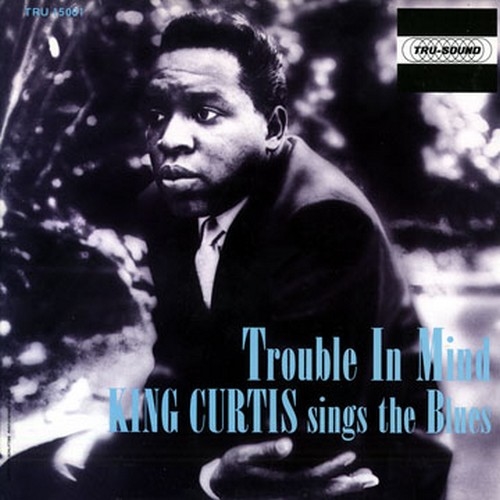
This is an extremely unusual addition to the King Curtis canon, and perhaps not the one you'd reach for first, in that it features Curtis as a singer. There's some saxophone playing, and it's good, but it definitely takes a back seat to the singing.

Which raises an interesting point. Curtis is a wonderful saxophone player, and it's great that he had the opportunity to show what he could do as a jazz musician on a number of recordings, many of them on Prestige. It's great that Prestige the 1950s-60s interregnum opened the door to an expansive definition
of jazz. Their Swingville label reminded people that there were plenty of great musicians around who had been passed over as the winds of innovation kept sweeping jazz forward. Producers led by Esmond Edwards made a particularly wise decision to let these people play creatively, not simply reproducing the sounds of the swing era. And as the soul jazz era began, Prestige had the insight to realize that there had been a previous soul jazz era, the one called rhythm and blues, and to record and release some of the musicians like Willis Jackson who had been overlooked by the jazz public.

In the late 1950s, as my passion for rhythm and blues developed, I bought a lot of records without ever having heard them first. You pretty much had to, if you lived in the country. I'd pick up records by Muddy Waters or Amos Milburn or Roy Brown. I'd pick up records because they were on Aladdin, or Checker. And I picked up a 45 by King Curtis on Atlantic -- "Just Smoochin'" b/w "Birth of the Blues." I think "Birth of the Blues" was the B side, but it was the side I wore out. I bought his first jazz album, Soul Meeting, when it came out.

But probably Curtis's most lasting impression came as the bandleader and saxophone soloist on a number of Atlantic rhythm and blues records. You listened to a record like "Saved" by LaVern Baker, you looked forward to every new release by the Coasters, partly for the outstanding vocal performances, partly for the innovative songwriting by Jerry Leiber and Mike Stoller, but also--and this was very much a part of it--because you knew there was going to be a killer solo by King Curtis.

So why isn't this the same? A vocal recording with some hot instrumentals? Well, on the Atlantic recordings, the saxophone solos were always a highlight of the record -- you knew they were coming you waited for them, and they never disappointed. They had their own identity, a song within a song.

There's nothing like that here, and though Curtis is a good singer, his vocals don't strike to the gut the way his sax solos do.

But once you accept that, and listen to the album again, there's a lot to like.

For one thing, there's a fine eclecticism to Curtis's blues choices. "Nobody Wants You When You're Down and Out" is a depression-era classic, but actually it may have been prescient. Written in 1927, it preceded the stock market crash by two years. Bessie Smith's 1929 version captured the mood of the country, but, improbably, no one else touched until the 1950s, when it became a late-blooming standard. "Ain't Nobody's Business" is even older, dating back to 1922, and it's always been a standard for blues and torch vocalists, even though modern mores would disagree with Bessie Smith's and Billie Holiday's assertion that spousal abuse is nobody's business. "Trouble in Mind" also dates back to the 1920s, and is credited to composer Richard M. Jones, but its folk roots go back much farther. It is even more ubiquitous than "Ain't Nobody's Business."

"Bad, Bad Whiskey" was a 1950 hit for Amos Milburn, and Curtis was actually the first to cover it.

"Deep Fry" and "Jivin' Time" are the album's two instrumentals, and they were recorded at the end if the day. "Deep Fry" has the tenor sax spotlight. It's eight minutes long, with solo space for all the principals, and it does leave you wishing there were more tracks like it, but this is far from Curtis's only album, and he has a right to try something different. There's some nice tenor on "Jivin' Time" too, but even more nice work by the guitars. In general, Curtis leaves most of the instrumental turns to his bandmates, and they come through. Curtis does some guitar work, but mostly it's Al Casey, formerly with Fats Waller, is his regular guitarist, but on this session he's joined by Hugh McCracken, for contractual reasons using the pseudonym of Mac Pierce for this session, although it's hard to say why, because McCracken worked with pretty nearly everyone on every label. More likely, because this is a youthful McCracken at the outset of his career, it has to do with union status.

Trouble in Mind, recorded when he was 19, was one of his first gigs. He had dropped out of school at age 16 to make music and help support his family, His mother was working as a hat check girl in a New Jersey club where Curtis had an engagement. She convinced him to listen to her son, and he hired him for the session.

He once did sessions for Aretha Franklin and Paul McCartney in different studios for different labels on the same day, and he was McCartney's first choice as guitarist for Wings, but he elected to stay home with his young children and keep doing studio work. He had an approach to studio sessions that I suspect might not go over so well today, According to his obituary in the New York Times,
He would improvise his part once he apprehended the drift of a producer’s intention, his wife said. He arrived early the day Roberta Flack was recording “Killing Me Softly With His Song” and began fooling around on his classical guitar as he waited for the session to begin. Joel Dorn, the producer, asked him to play his riff again, and it became the song’s introduction.
Jimmy Lewis is a powerful presence on the electric bass throughout the session, and it was a relatively new instrument for him, He had played a standup bass with both Count Basie and Duke Ellington, among others, but switched to the electric bass when he joined Curtis. He would go on to make a record with a group that no one would expect to use an electric bass--the Modern Jazz Quartet. It was for a 1965 album, Jazz Dialogue, which featured the MJQ with a big band.

The King Curtis combo was pianist Paul Griffin's first major engagement, but hardly his last. He's probably best remembered for his work with Bob Dylan on Highway 61 Revisited, Blonde on Blonde, and Aja; he also played piano on Don McLean's mega-hit, American Pie.

Belton Evans  played with almost everyone in the blues and traditional jazz field, and with almost as many different first names, although he always stuck with Evans.

"But That's All Right" has backing vocals by the Cookies. The Cookies had a substantial career as a backup group, and had a couple of hits in their own right ("Don't Say Nothin' Bad About My Baby"). At this time, their most important credit had been as Ray Charles's backup singers, and Charles's own group, the Raelettes, was formed around Margie Hendricks, an original Cookie. They give "But That's All Right" a real Ray Charles sound.

Trouble in Mind was released on Tru-Sound, a short-lived Prestige subsidiary. Tru-Sound had two different catalogs. One was all gospel, and the other was more varied, but albums by King Curtis made up the lion's share of their list. Two 45s came from the session, both released on Tru-Sound: "Trouble in Mind" b/w "But That's All Right" and "I Have to Worry" b/w "Jivin' Time."