Saturday, October 28, 2023

Listening to Prestige 709 Lucky Thompson


LISTEN TO ONE: Cry Me a River

 This was Lucky Thompson's fourth (counting an early session with Miles Davis) and final album for Prestige. After that, in the early 1970, he made three more for the small but prestigious independent label Groove Merchant, and then apparently grew disillusioned with the music business altogether, and dropped out. It would be good to report that he had moved to Europe, where he continued to be highly regarded. He had lived in Paris from 1957-62, before returning to New York and his Prestige recording years. He did, in fact, go back from 1968-70, living in Lausanne, Switzerland, but then returned to the States again, and whatever he was looking for, he must not have found it, although he appeared to making a decent life for himself. In addition to the Groove Merchant sessions, he also taught at Dartmouth college for


two years, 1973-74. Then he dropped out.

He continued to be highly regarded in Europe -- small European labels would release forgotten or unreleased sessions by him over the next couple of decades -- but he never returned, and he seems to have grown altogether disillusioned with music. According to his obituary in the New York Times:

Fiercely intelligent, Mr. Thompson was outspoken in his feelings about what he considered the unfair control of the jazz business by record companies, music publishers and booking agents. 

Something of his later life was described by Ben Ratliff, writing the Times obituary:

Friends say he lived for a time on Manitoulin Island in Ontario and in Georgia before eventually moving west. By the early 90's he was in Seattle, mostly living in the woods or in shelter offered by friends. He did not own a saxophone. He walked long distances, and was reported to have been in excellent, muscular shape.

He was hospitalized a number of times in 1994, and finally entered the Washington Center for Comprehensive Rehabilitation.

...He was rarely seen in public; at times it was hard for his old friends to find him. But the drummer Kenny Washington remembered Mr. Thompson's showing up when Mr. Washington was performing with Johnny Griffin's group at Jazz Alley in Seattle in 1993. Mr. Thompson listened, conversed with the musicians, and then departed on foot for the place where he was staying -- in a wooded spot in the Beacon Hill neighborhood, more than three miles away.

He died of complications from Alzheimer's in Seattle in 2005.


His 1965 Prestige session was called, with bitter irony as things were to turn out, Lucky Thompson Plays Happy Days are Here Again (and one wonders if that song ever really signalled happy days for anyone). Thompson is still the guy who played with Erskine Hawkins and with Charlie Parker, equally at home with swing and bebop, and so the old chestnut, the theme song of Democratic presidential hopeful Al Smith, is a fitting start point for the session. Thompson has a swingster's affimity for melody, a bebopper's comfort with complexity. There's a complexity of emotion, too, in Thompson's interpretation of this paean to untrammeled happiness, as a tinge of melancholy pervades his version.


"Happy Days are Here Again" is also closely associated with Barbra Streisand, and in fact the whole album revolves around songs associated with Streisand, even if she's not necessarily the primary association. "Cry Me a River," the next standard up, was sung by Barbra, but will forever be Julie London's. "Cry Me a River" is a song that's well-nigh irresistible for any singer with even a flicker of torch in their pipes, from Ella Fitzgerald to Joe Cocker, certainly  Streisand, most famously London. There are well over 600 covers of it. Sixty-odd instrumental versions make it a quasi-jazz standard as well, though not all that many A-listers have had a go at it: in addition to Thompson, it's been recorded by Dexter Gordon (in 1955, contemporaneous with London), Ray Bryant, Don Elliott, J. J. Johnson, Pete Candoli and a few others. Johnny "Hammond" Smith did it for Prestige.

The song was written by Arthur Hamilton, who had a long and not unsuccessful career as a songwriter and lyricist, but if he had been told he could keep all the money he made from all his other songs, but would have to return all his "Cry Me a River" royalties, he'd be pretty deeply in the red. He also had a pretty good hit with "Sing a Rainbow," from the Jack Webb movie Pete Kelly's Blues. He wrote three songs for Pete Kelly's Blues, two of which made it into the movie. The rejected one was "Cry Me a River."

Thompson makes you wonder why there aren't more jazz treatments of it. In his version, it has everything--the melodic sweetness, the uptempo bebop improvisation, room for a wonderful Tommy Flanagan solo. stickwork by Walter Perkins that embellishes as it drives.

Other standards follow: "You Don't Know What Love Is," "As Time Goes By," and of course the song most closely associated with Streisand, "People." He plays one number of his own composition, "Safari." It would have to be pretty good to keep company with these popular favorites, and it is.

In writing recently about Chuck Wayne, I discussed "that genre that's sometimes called 'mainstream' or 'straight ahead' jazz, but might best be called 'timeless jazz,' music that comes not out of any school or any era, but out of a quest for beauty, for an edge, for virtuosity, that comes from a love of playing and a mastery of the instrument and the form."

That's this album. Soul jazz and free jazz were the zeitgeist in 1965; this is neither. Barbra Streisand was the hottest thing on Broadway and in Hollywood; this isn't about her. It's timeless jazz, and thamk heavens for it.

Tommy Flanagan, George Tucker and Walter Perkins, three men at home in the world of timeless jazz, were the rhythm section. On "Safari" and "You Don't Know What Love Is" they are joined by harpist Jack Melady. Not primarily a jazz musician, Melady was known for his work in Broadway show pits, with Irish folkies the Clancy Brothers, and for a couple of albums of lounge favorites with cellist Julius Ehrenwerth, as Jack and Julie. He fits in here nicely, though.

Don Schlitten produced. "Happy Days are Here Again" and "Cry Me a River" were the single.  

Friday, October 27, 2023

Listening to Prestige 708 - Brother Jack McDuff - Benny Golson


LISTEN TO ONE: Rockabye

 This is an odd little session -- odd in so many ways. First, each cut seems to have slightly different personnel, although that may not be the case. it may been the same group of musicians, billed differently for each cut. Second, with all the painstaking care taken to separately identify the musicians for each cut in the session log, no one seems to have jotted down the date of the session -- it's just "some time in early 1965." Third, they don't seem to have had any strong reason for calling this session, unless it was just that Benny Golson had paid the big band for one more day. Each of the three cuts from the sometime in early May session ended up on a different McDuff potpourri album, one released in 1967, the other two in 1969.


Since Prestige doesn't seem to have given a lot of time and attention to the session, I won't either. Lew Futterman, McDuff's manager/producer, was at the controls. McDuff's core group is solid, and Benny Golson was doing some very interesting work with this studio band of unidentified musicians, which is another oddity of the session. Golson, at least according to Lew Futterman, jumped at the chance to record with McDuff, and a second go-round, now that McDuff has faded into history and Golson receives the honors of esteemed elder, is good to have. I've discussed their previous collaboration here.

"Rockabye" was released on the 1967 album The Midnight Sun. Two years later, "English Country Gardens" came out on I Got a Woman and "Shortnin' Bread" on Steppin' Out.

Thursday, October 26, 2023

Listening to Prestige 707 Freddie McCoy


LISTEN TO ONE: Lonely Avenue

 It's 1965, and Prestige is fully committed to riding the wave of soul jazz, and no one exemplified that better than Freddie McCoy, who was tapped by Johnny "Hammond " Smith (later known as Johnny Hammond) on a couple of Prestige albums before getting this shot at an album under his own name--a position he was not to relinquish quickly. He would release seven albums on Prestige over a three year period, then one album on a tiny independent label in 1971, then nothing. He dropped out of sight, apparently left the music business. He died in 2009 in Morocco, where he was living under his adopted Muslim name of Dit Ahmed Sofi.


Larry, of the Funky16Corners blog, rates McCoy as "the finest, purely 'soul jazz' vibraphonist I’ve ever heard, and while others may lay claim to that distinction--and I would never tout any artist (well, except for Louis Armstrong) as the finest of anything, a strong case could be made for Freddie McCoy as the quintessential soul jazz vibist. His commitment to this signature jazz sound of the 1960s seems to have been total, and his ability to coax soul out of an instrument that does not allow much for the slurs or microtonalities of the blues. 

McCoy's first entry into ars poetica of soul jazz, his first tune of his first session, first cut (and the title cut) on his first album, was Doc Pomus's 'Lonely Avenue," originally recordeed by Ray Charles, inspired by the Pilgrim Travelers' gospel song "How Jesus Died." My first thought on seeing the set list was "What made Freddie McCoy think he could possibly do this?" Just as my first thought on hearing Ray's version was "How could he do it? This could so easily go wrong--how did he make it so right?" Surprisingly, it's had rather a lot of covers since Ray's masterpiece, including British Invasion soft rockers Peter and Gordon (mistake) and the Everly Brothers (big mistake -- the Everlys could sing almost anything, including several other Ray Charles covers, but they couldn't sing this. 

In short, I wasn't expecting much.

And it didn't take long to convince me otherwise.


If you loved the sound of the vibraphone, as Prestige's Bob Weinstock apparently did, and you were convinced that soul jazz was what was going to keep your label afloat in the 1960s, you had found your guy. With the vibraphone playing off the full sound of trumpet, baritone sax, trombone and organ, with a brilliant arrangement by trumpeter Gil Askey, it was pretty clear that Prestige had come up with another winner in the soul jazz sweepstakes.

Freddy McCoy, at 32, may have been a new face on the soul jazz scene, but soul jazz was not an entirely new sound (see my book, Jass with a Beat), and McCoy and producer Cal Lampley came up with some veteran talent to make this session work. Tate Houston, 40, made his first recordings with Billy Eckstine in 1946. He followed that up with stints with Sonny Stitt and Milt Jackson, and played at Detroit's Blue Bird Inn. He moved from bebop to rhythm and blues with Hal "Cornbread" Singer and Big John Greer. Napoleon "Snags" Allen's career goes back even further, being one of the first to introduce the electric guitar to the New York scene in the 1930s. Martin Rivera is probably best known for his work with Junior Mance in the 1980s, but his recording career goes back to the mid-1950s, and like Houston and Allen, was one of New York's reliable studio musicians. Like Ray Lucas, he has recorded on Prestige betore -- Rivera with Kenny Burrell, Lucas with Bobby Timmons and King Curtis. Organist James Thomas is almost certainly not the British classical organist and choir director of the same name, and I haven't been able to find out anything else about him.

The abum was recorded in two sessions, January 25 and February 16, and the second session was augmented with trombonist Dicky Harris, another veteran whose roots go back to Erskine Hawkins in the 1930s, and whose rhythm and blues credentials include work with Lucky Millinder, Ruth Brown and Sam Cooke.

t's unusual to see an arranger credit on an album by a small jazz combo, but Gil Askey certainly deserves it here. Askey, a 25-year veteran of the jazz scene (Dizzy Gillespie, Miles Davis, Duke Ellington, Count Basie) took on this gig on the way to a full time job that would keep him occupied for the next decade and more. He had just gotten a call earlier in the month from a young Detroit entrepreneur who was starting a new label.

Berry Gordy was to describe Askey as ""the glue that kept everything together" at Motown, and he is generally recognized as one of the important creators of the Motown sound. He was instrumental in developing the Jackson Five, and when the brothers were first booked on Ed Sullivan, little Michael was afraid to go until he was reassured by the sight of "Uncle Gil" in the wings.

Askey's musical roots go back to the Austin, Texas, Anderson High School Marching Band (Kenny Dorham was a bandmate), one of the first Black marching bands to gain prominence. He developed his skills in rhythm and blues as an arranger for Buddy Johnson, and touring with 1950s package shows as the backup band for Frankie Lymon and the Teenagers, the Platters, the Clovers, Jackie Wilson, Lloyd Price and many more.

None of these musicians played on subsequent McCoy recordings. McCoy was talented enough, and attuned enough to the zeitgeist, to build a successful career on his own talents. But these veterans, and especially the arranging genius of Gil Askey, gave him a particularly powerful debut.

Lonely Avenue became the title of the album, and also the A side of its first 45 RPM single release. The B side was "Collard Greens," continuing a rhythm and blues tradition of giving soul food titles to tunes, like Hal Singer's "Cornbread," Eddie Vinson's "Kidney Stew" and Frank Culley's "Cole Slaw" -- a tradition that had continued into the soul jazz era with Booker T's classic "Green Onions." The February 16 session yielded more soul food, and another single, with "Belly Full of Greens" (flip side the standard "Willow Weep for Me"). McCoy would continue the theme on subsequent albums Peas 'n Rice and Beans & Greens. 


Monday, October 23, 2023

Listening to Prestige 706


LISTEN TO ONE:My Baby Just Cares for Me

 For someone so highly respected as a jazz guitar innovator, with a career that spanned four decades, Chuck Wayne has a very small catalog as a leader: two albums in the 1950s, this one for Prestige in the 1960s, one each in the 1970s and '80s.

Wayne was  one of the first to apply the theories of bebop to the guitar, and his innovative techniques led him to be recognized as one of the most important technical innovators on the instrument. For the average layman (me), you may not be able to elucidate what sets his playing apart, but you're left with the feeling that yeah, that sure is different--but it sounds so natural, like it's the way everyone should be playing,


LISTEN TO ANOTHER: Sonny

Wayne's long-term credits include an early stint with Woody Herman (the First Herd) and many years as Tony Bennett's musical director and accompanist. That he could play all those years with Bennett is some indication of how listenable he could be; that Bennett would choose someone as original and innovative as Wayne to be his accompanist says a lot about the singer's chops. A YouTube search for "Chuck Wayne-Tony Bennett" brings up a version of "My Baby Just Cares For Me," which is a superb showcase for both men.

One of his his most famous compositions, and one of the great jazz standards, is his 1946 work, "Sonny." What's that? You've never heard of a jazz standard called "Sonny"? Well, perhaps you've heard it under another name, and credited to a different composer: "Solar," by Miles Davis. By now, it is generally acknowledged that Miles's "Solar" is Wayne's "Sonny." 


ONE MORE TIME: Someone to Watch Over Me

What else to say about the man? His technique and his technical innovation remain so important to this day, that a YouTube search on his name will lead you to a number of transcriptions of his solos on well-known standards.

And what about his session for Prestige? What can I say about it except that it's a wonderful album, in that genre that's sometimes called "mainstream" or "straight ahead" jazz, but might best be called "timeless jazz," music that comes not out of any school or any era, but out of a quest for beauty, for an edge, for virtuosity, that comes from a love of playing and a mastery of the instrument and the form. 


AND ONE MORE ONCE: See Saw

He takes on an eclectic mix of composers from Gershwin to Gordon Jenkins, and includes three of his own tunes. As a composer, he's best known for the tune he's officially not known at all for, "Solar," but contributions to this session, "See Saw," "I'll Get Along," and "Shalimar," show that he could write music worth listening to.

Perhaps the biggest surprise of the session comes when Wayne exchanges his guitar for a banjo on Steven Sondheim's "Lovely," bringing a flexibility to that instrument that would be explored by genre-bending virtuosos like Billy Faier, George Stavis and Bela Fleck.


Wayne is joined by bassist Joe Williams--not the singer, and I could find nothing else about him except that he sounds good here. The drummer is Ronnie Bedford, who recorded sparingly but always in good company, and spent much of his life in Powell, Wyoming, where he was a professor at Northwest College, and was a recipient of the Wyoming Governor's Award for the Arts.

The session was produced by Cal Lampley, new to Prestige, but an esteemed figure in American music since his graduation from Juilliard in 1949, a time when enrollment by an African American in that prestigious institution was still a rarity, and his Carnegie Hall debut as a concert pianist in 1953. At Columbia, he had produced the Miles Davis/Gil Evans Porgy and Bess sessions. He had worked with Leonard Bernstein, Mahalia Jackson, Dave Brubeck and Victor Borge.


He came to Prestige in 1964, replacing Ozzie Cadena, whoi had left to form his own label. As Prestige producer Bob Porter, who came to the label shortly after Lampley, recalled it, "Weinstock wanted someone with a greater pop sensibility—Don Schlitten would handle the hardcore jazz." Which seems odd, given Lampley's classical background experience working across a broad range of genres. Lampley would work with a broad range of talents during his Prestige years, but he did apparently have something of a pop sensibility--he would produce the label's only charted pop hit--Richard "Groove" Holmes's version of "Misty."


The album was released as Morning Mist. It would be Wayne's only Prestige session, although a 1952 recording he made with George Wallington (on mandola) would be released, along with other early Wallington recordings, on the Prestige Historical Series in 1968, an early forerunner of the the reissue label that Prestige was to become in the 1970s.

Side note -- it's hard to believe this is a Prestige album cover.


9

Thursday, October 19, 2023

Listening to Prestige 705: Lightnin' Hopkins


LISTEN TO ONE:I Learn about the Blues

Lightnin' Hopkins is, by most counts. the most widely recorded of all blues singers, under his own name and a variety of others. and they're all worth listening to, but most people, indlucing most blues lovers, will not have amassed a complete collection of Lightnin's discography. You'd have to pretty committed just to own a complete set of Hopkins on Prestige--there are 11 albums, on the main label, Bluesville and Prestige Folklore.

This is the last Prestige session, produced once again by Samuel Charters, and distinguished by alternating tracks of Lightnin' singing and Lightnin' talking, creating a mini-memoir. The songs are great, in the Lightnin' style, and the interviews are fascinatng. If


you were only going to buy one Lightnin' Hopkins album, you'd probably not choose this one. You'd go for the music, and you might well choose one of the Prestige albums, because they have higher standards for recording than a lot of the other labels he turned up on. But if you're a folklorist, or just someone who wants to get to know the musicians he listens to better, this is an excellent choice. Called, appropriately, My Life in the Blues.

Wednesday, October 18, 2023

Listening to Prestige 704: Bobby Timmons and Don Patterson


LISTEN TO ONE: White Christmas

LISTEN TO ONE: Rudolph the Red Nosed Reindeer


 A Christmas album! From Prestige!

Yes, it's true.

It's more than true. There are two of them. Bobby Timmons, and then Don Patterson, leading their respective trios through a more or less conventional mix of traditional carols and Christmas pop songs. Fortunately, it was 1964, so most of the really awful Christmas pop songs hadn't been written yet, and Bobby and producer Ozzie Cadena know enough to stay away from "Rudolph the Red Nosed Reindeer," "Jingle Bell Rock" and "Rockin' around the Christmas Tree," at least with Timmons. By the time Ozzie got to Patterson, on the next day, he did let "Rudolph" slip in. Both Timmons and Patterson do, however, essay "Santa Claus is Coming to Town."

There are two reasons for buying an album of Christmas songs. One, there's a choir singing the songs so you can sing along with them, a beat behind if you don't remember


the words. Two, they're all or mostly instrumental, so you can have them as background music while you're trimming the tree, wrapping presents, or trying to seduce the receptionist from the accounting department, If you're Mantovani or the Melachrino Strings, you're playing the melody pretty straight through, so that people can sing along. If you're a jazz group, you're going to be improvising, but staying close enough to the melody that people remember what it is that you're playing.

There's probably a third. You hate Christmas music, and would rather just be listening to some good jazz, but your spouse, or your boss, or somebody, insists that you pick up a Christmas album to play at the office party or the tree trimming gathering, so you get something that says "Holiday Soul" on the cover, put it on, dig it quietly until the boss says "What is this shit?" and then you show him the album cover -- "See? It says 'Holiday Soul'!" and then, if you're lucky, Bobby Timmons comes in with the melody to "Deck the Halls," and plays it pretty close to recognizably straight for the last thirty seconds of the cut. This is, of course, if you're at an office party in 1964. Today's young whippersnapper boss probably won't recognize the melody to  "Deck the Halls," and will want to know why Timmons isn't playing "Grandma Got Run Over by a Reindeer." Or "White Christmas." Oh, that was "White Christmas"? Where was the melody?

It's not quite that extreme. Well, it is for "White Christmas." For the most part, both Timmons and Patterson do at least allude to the melodies of their Christmas standards, but each allows himself plenty of room to just stretch out and play jazz, and that is something each of them does very satisfactorily.

Well, probably "Rudolph, the Red Nosed Reindeer" was a mistake if you're looking for holiday soul.


Timmons finds considerably more soul in the 16th century Welsh melody of "Deck the Halls" than Patterson does in Johnny Marks's ditty, composed during the bebop era, recorded around the time that Bob Weinstock was lining up Lennie Tristano for Prestige Records' inaugural recording session. Gene Autry didn't want to record "Rudolph," and there's a good chance Don Patterson wasn't a lot more thrilled. 

Still...hey, it's Christmas. And with some good jazz, you can make it through the season. Ozzie Cadena produced both sessions.


Wednesday, August 30, 2023

Listening to Prestige 703: Otis Spann


LISTEN TO ONE: The Blues Nevr Die

 Prestige had closed down its Bluesville label by this time, but they weren't completely finished with the blues, although this session, featuring Muddy Waters sidemen Otis Spann and James Cotton, hadn't exactly been 0n their fall schedule. 

How did it come about, exactly? Well, according to the more or less official story, on the liner notes by Pete Welding, 

Muddy's decision to allow his bandsmen so much solo opportunity is as much prompted by purely pragmatic considerations as it is by his desire to see them receive their share of attention. Pure and simple, Muddy wants to take it easy.


With all due respect to the distinguished music historian Mr. Welding, this may be so much bullshit. According to a note appended by Larry Hoffman to the Discogs web page on the album:

The story behind this album is pretty cool. Producer Sam Charters had hosted a folk concert at Carnegie Hall where the Muddy Waters band had played. Muddy called Charters the next day to say that they hadn't been paid enough to get back to Chicago, and asked the producer to arrange a session for them. Since Muddy was on contract to Chess, he was not to sing a lead vocal or to play a slide solo. Nor could they use his name. This album predated Charters' great "Chicago /The Blues /Today!" trilogy that was a further step in the careers of both Spann and Cotton.

Muddy's train fare to Chicago is music's gain. This is a terrific album, the Chicago blues at its best, with both Spann and Cotton in top form, and "Dirty Rivers" providing great accompaniment.

The session notes give Chicago as the location for the recording session, but that can't be right. Not if they didn't have the fare back to Chicago.


Samuel Charters produced, and "The Blues Never Die!" became the title song for the Prestige release. "I Got A Feeling" / "Straighten Up, Baby" became a 45 RPM release.

A word of advice: if you put this album on your turntable. or line it up on your streaming service, don't think you'll be taking it off any time soon.


Monday, August 21, 2023

Listening to Prestige 702: Charles McPerson


LISTEN TO ONE: Hot House

 You look at an album, and you see that the tunes on it are by Tadd Dameron, Fats Navarro, Bud Powell and Charlie Parker, and you start to get the feeling that this guy is serious about his bebop. That the two remaning tunes are by the Gershwins and Rodgers and Hammerstein will do nothing to dissuade you from that opinion. And then if you notice that the album is titled Bebop Revisited, even if you've never heard of the guy, you've got reason enough to pick up the album.

Of course, this is 2023, so you already know that Charles McPherson is one of the revered elder statesmen of jazz, with a career that few can match. But if it were 1964, and you were standing in Sam Goody's looking over the new jazz releases, you might not be so familiar with the name.


You might. McPherson had been playing and recording with Charles Mingus for three years by then. But this was his first recording as a leader. So you look at the names of the composers, and the names of the tunes: "Hot House," "Variations on a Blues by Bird," and if you're an old timer of, say 27 or 28, and you're already regretting the passing of the bebop era, you're definitely starting to be intrigued.

And if you start reading the liner notes by Ira Gitler, a real old timer in his thirties, you discover that Ira, too, misses the bebop era, and is saddened by the fact that younger musicians who play "hard bop" are not really challenging themselves -- they play the "simpler [bebop] tunes like 'Now's the Time' rather than 'Billie's Bounce,' 'Relaxin' at Camarillo' or 'Shaw 'Nuff.'"

And you'll certainly, as you plunk down your $3.98 for the album, be intrigued by the presence of Barry Harris, an uncompromising bebopper still playing in the new era and still making great music.


And in fact, McPherson had been a protégé of Harris's for quite some time, going back to when he was 14, newly moved to Detroit from Joplin, Missouri,  and living on the same block as Harris and Lonnie Hillyer, another young teenager in love with music. McPherson and Hillyer used to sit outside the local club--also on the same street--where Harris played, and talk to the musicians when they stepped outside to take a break and grab a smoke or some fresh air.

McPherson started taking music lessons from Harris, but he soon found out that the pianist had a lot more to teach him than that. In a videotaped interview, he remembered showing Harris his report card, which was all C's, 

And I thought that was fine...I was focused on other things than homework. As long as I'm not the dumbest guy in the room...he said, "I see you got a bunch of C's. You're quite ordinary, aren't you?" And I said -- I was proud of it -- "Yes, I am." And he said, "Well, I'm going to tell you. The kind of guys you like -- your musical heroes -- are anything but ordinary. If you want to learn to play this music, you can't be a C anything." And the moment he said that, it changed my whole way of thinking. He said, "Do you ever read?" I said no. "Do you ever do puzzles?" No. He said, "OK, let's start by doing the puzzles," and he brought out a newspaper -- the New York Times -- and I noticed that he could read the whole New York Times, the editorials, so he knew about...and I had not a clue. So I started reading, and I started doing the puzzles.

And Barry Harris had friends, people like Pepper Adams, who would come to his house, and I would listen to these guys talk, and quite often they would talk about things that had nothing to do with music. They would be talking about de Maupassant, Nietszche,  Schopenhauer, Immanuel Kant, they'd talk about Henry Miller and this book, Tropic of Capricorn, and I had not a clue that this was what jazz people...and I learned that, at least in Detroit, in order to be considered hip, not only did you have to know about Bird, and this kind of music, you had to know about painting, you had to know about philosophy, and if you could talk, and you had something to say, then you were considered hip.

Well, I've talked about Detroit before, and how it was one of the greatest schools of music in those days, but clearly with guys like Barry Harris and Pepper Adams around, it was a lot more than that, 

And they would say, "Hey man, do you know that Charlie Parker can go to a museum and identify Marc Chagall, or Matisse, or Miro -- he could just look at a painting and say 'Oh, this is cubism' -- these people are great thinkers, as well as wonderful musicians, and if you want to be like that, you have to read.

Barry Harris gave young Charles a lesson that stayed with him for life. Harris, and Pepper Adams -- he doesn't mention Wardell Gray, but Gray was around Detroit in those days too, and he was another who valued learning. And Charlie Parker -- in another interview, given just this year, he recalled, “Bird could sit down and talk about quantum mechanics. Our notion of hip was a broad thing, and Bird’s the guy who started to make it that way.”  

And McPherson paid it forward. The interviewer, Andrew Gilbert, mentions Rob Schneiderman, a fine young pianist who worked with McPherson, listened to McPherson, and went on to get a Ph. D. in mathematics at the University of California:

He credits his early conversations with McPherson about Einstein’s theory of spacetime with setting him on the path that led to his love of math (and his current position as a professor of mathematics at City University of New York’s Lehman College).  

“Charles McPherson loves talking about Einstein’s theories,” Schneiderman said. “You look at all these books for the lay person on Einstein and you realize you’ve got to learn calculus in order to understand physics and why time stands still at the speed of light.”


All of this is completely irrelevant to a discussion of the music.

All of this is crucial to a discussion of the music.

Both of the above statements are true. But at any rate, we're back in 1964, and Charles McPherson, with Barry Harris, is in Englewood Cliffs, New Jersey, making an album of bebop, the music to which Charlie Parker brought his love of Marc Chagall, and Igor Stravinsky, and the blues. As did Barry Harris. As did young Charles McPherson.

It is ridiculous to suggest that in just a few years, bebop had exhausted everything it was possible to say within its framework, any more than it makes sense to say that the English language sonnet had run its course as a viable form after a couple of hot decades in the 16th century. Charles McPherson finds plenty to discover and build on in its complex use of chording, rapid tempi, and deconstruction of melody. His tone has a sweet lyricism to it, and it can reach to intellectually challenging improvisational passages or emotional immediacy in the Illinois Jacquet mode.

He is joined by Barry Harris, with whom he had of course had a long association, and Carmell Jones, with whom he had never worked before. Jones had spent time in California, where he had worked in movie studio orchestras and recorded with Bud Shank, Harold Land and Teddy Edwards. Coming east, he had been on Horace Silver's Song for My Father. He did not record again with McPherson, which is too bad, because they meshed well together; but he basically didn't stick around New York for too long. He did a couple of Prestige sessions with Booker Ervin, but then headed to Europe, where he spent the rest of his career as an expatriate, gaining less name recognition but more respect.

Barry Harris leads an outstanding rhythm section of Albert "Tootie" Heath and Nelson Boyd. Boyd came from Philadelphia, perhaps second only to Detroit for gestation of jazz talent, and he came by his bebop credentials honestly, having played with Charlie Parker and Fats Navarro. This session seems to have marked the end of his recording career, although he lived until 1985.

And of course, Harris's solos are invaluable.

Charles McPherson With Carmell Jones And Barry Harris - Bebop Revisited! was produced by Don Schlitten.


Saturday, August 19, 2023

Listening to Prestige 701: Pat Bowie


LISTEN TO ONE: Get out of Town / I've Got Your Number

Pat Bowie is primarily a stage actress, having appeared in several productions of August Wilson's plays, among numerous other credits. She has recently had recurring roles in Orange is the New Black and And Just Like That..., the reboot of Sex and the City. This, and one later album for Prestige, were her only ventures into recorded jazz singing, and from the evidence here, she certainly could have had a career as a jazz singer, although it's entirely possible that recurring roles on hit TV series pay better than singing in jazz clubs.


Certainly the Prestige brain trust must have thought highly of Bowie's singing abilities. They brought her back into the studio for three different sessions, and surrounded her with a dream team of musicians.

Bowie takes a brisk, hard-edged, no-nonsense approach to a song, cutting off Seldon Powell when she's had enough of his solo and getting through "Get Out of Town" in under two minutes, which is pretty close to unheard of for a jazz recording, Ray Bryant returns the favor by breaking right in when she threatens to hold a note on "I've Got Your Number," and taking an authoritative piano solo. It all works, and perhaps this conservation of energy is what has enabled her to have a fine career going 60 years after the making of this record.

Cal Lampley produced--a new name on the Prestige label, Lampley was starting to spread his wings and freelance in a few different places, after having spent nine years with Columbia, starting as a tape editor and working his way up to Recording Director of the Popular Albums Department, although his producing range extended farther than that: he worked with Leonard Bernstein, Victor Borge, Mahalia Jackson and Dave Brubeck, just to name a few.

The album was entitled Pat Bowie--Out of Sight!

Friday, August 18, 2023

Listening to Prestige 700: Bobby Timmons with Johnny Lytle


LISTEN TO ONE: Lela

 Another milestone -- the 700th Listening to Prestige column. And a musician who was widely enough recorded on some significant labels during the 1960s (Jazzland, Riverside, Pacific Jazz), almost always as a leader, who was described by Lionel Hampton, according to his Wikipedia bio, as "the greatest vibes player in the world, and whom I'm sad to say I had never heard of before listening to this album and writing this blog entry.

Lytle's Wikipedia entry uses much of the same material as his AllMusic entry, whtch was written by Craig Lytle, presumably his son, and both are a little overenthusiastic in describing his career. The compositions which are called "jazz standards" in the Wiki entry don't seem to have been recorded by much of anyone else, accordeing to Second Hand


Songs. and "Selim." which Miles Davis did record, is credited by SHS to another composer. And this album, originally titled Bobby Timmons and Johnny Lytle -- Workin' Out! became, in a 1994 (the year before Lytle died) Bobby Timmons -- Workin' Out!

A quite lovely tribute to Lytle was written by local reporter Andrew McGinn in Lytle's home town newspaper, the Sprngield (OH) News-Sun. It came out in 2009, 14 years after Lytle's death. and offers some sobering insights into how the career of a fine musician can get lost.

The article begins with a story about Lytle arriving home in Springfield from playing a gig at Redd Foxx's Los Angeles  nightclub with his paymenr for the gig -- five of Foxx's suits.

That was a pretty good example of Lytle's business acumen, 

His wife, Barbara, according to McGinn, 

was OK with that.

She worked as a secretary at Wright-Patterson Air Force Base for 36 years so “Dilly” could do what he loved — recording in New York, touring Europe and playing just about anywhere with a stage or enough open floor space for his vibes and a good organ.

“He would play because he just loved playing,” Barbara Lytle said. “We weren’t rich, but we weren’t poor, either. I was happy with it.”

But almost 14 years after Lytle died suddenly — and, dare it be said, poetically, just weeks after a hard-fought solo appearance with his hometown symphony orchestra — his family has been left with really nothing more than a city street named in his honor.

And the house that they lived in on Johnny Lytle Avenue was sold in 2006 because Barbara could no longer get up and down the stairs;

 “My husband never had anything in writing,” Barbara Lytle said. “He wasn’t a man who took care of his business. If you’d tell him he had to cut a record, he’d be there. But he wasn’t a man of business, and that’s what hurt him.

“He would play because he just loved playing. We weren’t rich, but we weren’t poor, either. I was happy with it.” 

Lytle's best-selling album was The Village Caller (like so many jazzmen of that era, he never ssw a royalty check), and the title song from that album his most popular single. Second Hand Songs lists no other recordings of it, but they could be wrong.. It could be that no one just kept track of it.. 

Someone at BMI, which licenses music for broadcast, once told the family they’d need to hire a music attorney to sniff out album royalties, [daughter] Michelle Hagans said.

“Mom should be entitled to that,” she said.

But the actual hiring of an attorney is the problem.

“It costs $2,000 just to talk to him,” Barbara Lytle said.

A call to the Concord Music Group — parent company of Lytle’s Milestone, Riverside and Jazzland labels — seeking comment about royalties wasn’t returned.

Reading stories like this always makes me cry. Musicians like Johnny Lytle ought to be remembered,


and they ought to get paid in something more than suits -- although, according to Barbara, she was surpried to find that Redd's suits fit her husband so well.

So let's talk about the music Johnny Lytle made with Bobby Timmons, who did get at least some royalties from "Moanin'" and "Dat Dere." It's rapid-fire. it's soulful, it features two guys who could get on the same wavelength. Timmons wasn't always the most adventurous of piano players, but with Lytle pushing him, he's in top form.

Keter Betts had worked one other Prestige session with Timmons. He was shortly after this to embark on the most prestigious segment of his career, a long association with Ella Fitzgerald. William Hinnant made a number of recordings with Lytle, but seems to have no otjer recording credits.

The session begins with a snappy and soulful Lytle original, "Lela," followed by a Timmons original, "Trick Hips," and three standards (Lytle doesn't play on "People." Ozzie Cadena produced.

Johnny Lytle went out with a concert he had always wanted to play--as a guest artist with the Springfield Symphony Orchestra. He was in the advanced stages of liver cancer, but he played for two hours, his daughter remembers, and signed autographs for two more. He would be dead less than a month later.


Thursday, August 17, 2023

Listening to Prestige 699: A. K. Salim


LISTEN TO ONE: Afrika (Africa)

 This album marked the finishing touch to A. K. Salim's career, though he lived to be 80 years old and died in 2003. But it was a distinguished career indeed, even if much of it was behind the scenes, and he's little remembered today, Most of his work was as an arranger and composer -- he had been forced to give up playing the alto saxophone due to a jaw injury.

Salim was born Albert Atkinson in Chattanooga, Tennessee, in 1922, but grew up in Chicago, where he attended DuSable High School, a fertile breeding ground for musicians -- his classmates included Bennie Green, Dorothy Donegan and Gene Ammons. When he embraced the Muslim faith and changed his name is unclear, but it must have been quite early -- his arrangements for a 1947 Gene Ammons session are credited to A. K. Salim.


His early work included arranements for Lucky Millinder, Cab Calloway, Jimmy Lunceford, Lionel Hampton and Count Basie as well as Ammons. He left music for the real estate business in 1949, but returned in 1956 to arrange a couple of the most important albums of that decade. Drummer Bobby Sanabria, in an interview with Marc Myers of Jazzwax, talks about those recordings:

Tito Puente had recorded Puente Goes Jazz in 1956 and Night Beat in 1957 for RCA. Both recordings featured the arrangements of A.K. Salim. Morris Levy, the head of Roulette Records, wanted to copy some of the success RCA had with these Latin-jazz albums. Since Levy used to book Machito and Tito in his club, Birdland, he asked Mario Bauza and Machito to record a Latin-jazz album using A.K. Salim to write some original tunes and arrangements.

Building on the success of those Latin jazz recordings, Salim made a series albums for Prestige under his name, as arranger/musical director. Flute Suite (1957) featured Herbie Mann and Frank Wess. Stable Mates (1957) had Salim's arrangements on one side, Yusef Lateef's on the other. Salim's side had an eight piece band featuring Johnny Griffin, Johnny Coles and Kenny Burrell. Pretty for the People, also in 1957, had another eight piece band with Griffin, Kenny Dorham, Pepper Adams and an all-star rhythm section of Wynton Kelly, Paul Chambers, Max Roach and, returning to the Latin influence, Chino Pozo. Finally, in 1958, Blues Suite utilized ten pieces, including Nat Adderley and Phil Woods. All of these fall into the general heading of straight-ahead jazz, and all are very, very good.

Afro Soul / Drum Orgy, recorded six years later, was markedly -- in fact, totally -- different. According to the liner notes by Robert Levin,

The idea for it came from A&R man Ozzie Cadena...to build the framework of the album out of African rhythms and for the music to be completely spontaneous -- no charts were used, and there were no rehearsals. All that was predetermined was the African context.

"The musicians came to the date cold," Salim says. "All the composing was done right on the date--we just talked over what we were going to do and did it--and with the exception of 'Salute to a Zulu' which was done in two takes, all the numbers were completed on the first take. The basic inspiration for the horns was drawn from whatever the drums were doing. Willie Bobo's assistance in getting us the drummers was most invaluable. For the most part I just told the drummers to get it started. Julio Callazo knew some African rhythms and helped to set patterns for the drummers. The horns were playing for sounds rather than the traditional or conventional jazz lines--their impressions of what Africa sounds like, inspired by the drums. They were really having a conversation, not just playing in a traditional jazz way.

My first thought here--you could get away with anything in the Sixties. But sometimes this top-of-the-head, Sixties-happening approach can work, and don't forget that the musical director here is A. K. Salim, veteran of the 1940s, a guy who knew a whole lot about music and a whole lot about bringing a band together. This isn't the sort of album a mainstream jazz lover is likely to return to again and again, the way Salim's Savoy albums are, but it's very interesting, it's worth a listen. As the horn soloists start to find their footing and open up to a different kind of improvisation on "Afrika (Africa)," the first tracj from the session and the first track on the album, you realize that this was an experiment very much worth undertaking.


Yusef Lateef was the perfect choice for this session, with his deep love of Middle Eastern music and hos familiarity with unusual ethnic instruments. Johnny Coles had worked with Salim before, on Stable Mates. This would be his only apprearance on Prestige, but hed a solid background in the jazz business, including work with Charles Mingus, a good grounding for work on the experimental edges of jazz. And if you wanted credentials for a genre-extending, open-improvisatory session, you could hardly do better than a decade with the Sun Ra Arkestra, which was Pat Patrick's background.

Julio "Julito" Callazo, who brought the knowledge of African rhythms to the percussion section, was a Cuban-born musician who came to the US to work Katherine Dunham's dance troupe; and later performed with  with Tito Puente, Eddie Palmieri, Mongo Santamaría, Dizzy Gillespie and Machito.  Cuban Marcelino Valdes was from a musical family. Three of his brothers, including singer-composer Vicentico Valdez, were professional musicians, as is his son Marcelino, a popular bolero singer. Osvado "Chihuahua" Martinez played with a number of Latin groups, including Ray Barretto, and around the time of this session, released a couple of highly regarded albums of Afro-Cuban jazz under his own name. Juan Cadaviejo doesn't seem to have recorded beyond this session.

Philemon Hou was an actor as well as a musician. A Zulu tribesman, he was the only African in the ensemble. He had come to New York in the cast of a short-lived Broadway play,  Sponono, and according to Robert Levin, "Salute to a Zulu" was based on a melody he was improvising on the African xylophone. Hou would become much better known for another melody, a few years later, when trumpeter Hugh Masakela, a fellow South African, was doing a recording session in Hollywood for his debut album. They needed one more tune to fill out the album, and Masakela had a rhythmic idea, but no melody. While the band was laying down the rhythm track, Hou, who happened to be in the studio at the time, composed a melody on the spot. "Grazing in the Grass" became Masakela's biggest hit, and his signature song.

Willie Bobo, enthralled with music from a young age, became a band boy for Machito's orchestra in 1947 at age 12,  and shortly thereafter began to draw attention as a dancer. He played with Mary Lou Williams, Tito Puente and George Shearing in the early 1950s, then with Cal Tjader and Mongo Santamaria, with whom he had formed a deep friendship early on. Later, as a session musician, he worked with Carlos Santana, who would record his song "Evil Ways."  He had a long and successful career as a salsa bandleader, and appeared on two other Prestige sessions, with Eddie "Lockjaw" Davi and Dave Pike. 


Tuesday, August 15, 2023

Listening to Prestige 698: Booker Ervin


LISTEN TO ONE: Number Two

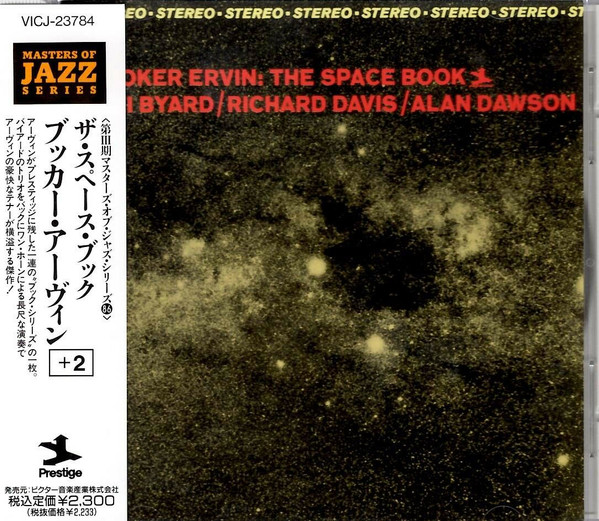
 The title of this album is The Space Book, and the cover art reflects it, with what appears to be a black hole in the Milky Way. The contents live up to the packaging. With this album, Ervin crosses over the bridge to free jazz, and free jazz is the better for it. Certainly with some of the free guys -- not the best ones -- aas with some of the abstract expressionists, or the practitioners of what came to be called L*A*N*G*U*A*G*E poetry, one can't help but wonder if they're doing all this crazy stuff to cover up the fact that can't really draw, can't really play a scale, can't really write a line of poetry that will scan. 


Such is not the case with Ervin. He brings all his chops with him into outer space. It's not the case with the people in his group either. Jaki Byard could play anything, and frequently did. He has as much claim as anyone you can think of to be called the greatest unsung piano player of all time. Bassist Richard Davis, Ervin's longtime collaborator, could play anything, and his discography shows it -- Eric Dolphy and Pharaoh Sanders, Louis Armstrong and Bo Diddley. Drummer Alan Dawson also worked exrensively with Ervin, after which he replaced Joe Morello in the Dave Brubeck Quartet. Outer space, Booker Ervin style, was open range for these guys, and they were home on the range. They can play as fast as any bebopper, and they always know what they're doing.

You can count on it that I don't know enough about music to tell you what's going on in free jazz, so just let me say that this is a great album. It's free, it's structured, it's melodic, it's jagged, it's rhythmic, it's somewhere beyond rhythm. It sounds as fresh and original today as it did when it was recorded. The brilliance of Ervin's solos are matched by Byard and Davis.


Ervin plays two originals and two standards, neither of which you'd expect to find on a free jazz album -- George Gershwin's swing era classic "I Can't Get Started," and "There is No Greater Love." standaed bordering on schmaltz, first recorded by composer Isham Jones in 1936, covered by Guy Lombardo and then Jimmy Dorsey, before becoming, like "I Can'r Get Started," a ubiquitous standard. For both tunes, Ervin gives you enough of the melody that you can recognize it if you're listening for it.

Don Schlitten produced. Two cuts from the session, "The Second #2" and "Bass IX," were held over and appeared on the 1966 album, Groovin' High.


Wednesday, July 19, 2023

Listening to Prestige 697: Lucky Thompson


LISTEN TO ONE:Mumba Neua

 This just goes to show, if you put a solid veteran horn player together with an absolutely impeccable rhythm section, you're likely to get some good jazz out of it.

Thompson had appeared on Prestige twice before. The first time was 1954, when Bob Weinstock was showcasing his newly signed Miles Davis in a variety of situation. Two April sessions were put together in one album, the first featuring Dave Schildkraut, the second Thompson and J. J. Johnson. Horace Silver, Percy Heath and Kenny Clarke anchored both dates. 


Then in 1963, freshly returned from a sojourn in the wilderness which had included making his own furniture on a farm in the country and playing the expat game in Europe, he led his own quartet with Hank Jones, Wendell Marshall and Dave Bailey. The 1963 date, an examination of the Jerome Kern songbook, was notable for his introduction of the soprano saxophone to the quartet sound. John Coltrane had played soprano the previous year, in his Live at the Village Vanguard album, but it didn't really catch on until Trane's definitive "My Favorite Things" in 1966. 

Ballads make up the lion's share of this session, mostly his own (Duke Ellington's "In a Sentimental Mood" and Bronislaw Kaper's "Invitation" are the exceptions), but he does explore some brisker rhythms too, particularly "Mumba Neua," which features the soprano sax and some nifty drumming by Connie Kay.


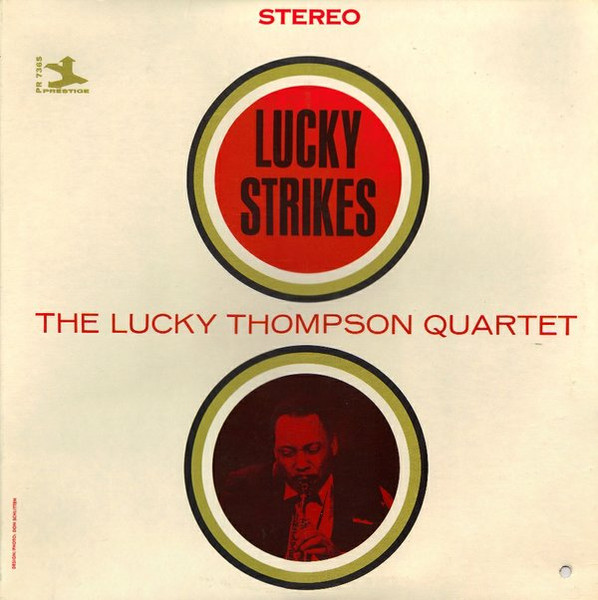
Don Schlitten produced, and the album was titled "Lucky Strikes," with a cover design modeled after the familiar cigarette package.

Tuesday, July 11, 2023

Listening to Prestige 696: Eddie Bonnemere


LISTEN TO ONE: Ankle Bells

 Eddie Bonnemère didn't quite make a major reputation as a jazz musician, but he made musical history of a different sort.

A church pianist in his teenage years in Harlem, a World War II vet, a serious enough student to get a master's degree from NYU. he stayed in New York and stayed with music, drawn toward the Latin rhythms of the 1950s -- in 1953, he and Ray Barretto led a band at the dance-crazed Savoy Ballroom, and by the mid-50s, he was leading a mambo band in the jazz hotbed of Detroit, where he recorded an album that was released on the Royal Roost label.


Returning to New York, now 43 years old, he got a second shot at recording with a jazz label, still very much Latin jazz-oriented. But another passion was growing within him.

Perhaps his interaction with the Latino community had led him to the Catholic Church, but he was drawn to a new movement gaining traction in New York in the 1960s, the Black Catholic Movement, spearheaded by Father Clarence Rivers, a priest who was also a composer of liturgical music that drew on black gospel music as a point of reference. Bonnemère composed a mass, the "Missa Hodeirna" for jazz ensemble and choir, which became, when it was performed at the St. Charles Borromeo Church in Harlem, one of the first jazz masses to be performed in a Catholic Church.

Bonnemère stayed with the church, composing more liturgical music, becoming the musical director of New York's Church of St. Thomas the Apostle.

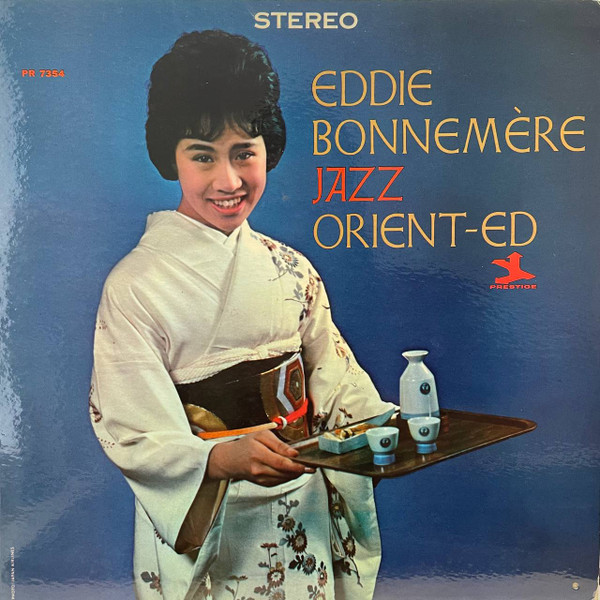
He made two recording sessions for Prestige in September of 1964, with his own group, plus Kenny Burrell, which became the album Jazz Orient-ed. If the title sounds a little gimmicky, that's because it is. We've heard the genuine passion for Middle Eastern music which informs Yusef Lateef's recordings, and this isn't exactly that. The anonymous writer of the album's liner notes doesn't quite know what to make of it, though he does his best: "This fusion is not so strange when we consider that some Oriental Nations were once under Spanish control, and as a result, much of their folk music is based on Spanish Rhythms."


He also singles out Bonnemère's compositions "Roostology," "Oriental Mambo" and "The Spinx" as "very much a part of standard jazz reepertory." I don't believe any of them have stood the test of time, and in the case of "Oriental Mambo," which is on this session, I have to say that's probably just as well. It's an awkward pastiche of Eastern music clichés and mambo rhythms, but once they get beyond the main theme, the playing isn't bad at all. and the rest of the album is quite good. Whatever Bonnemère's connection to the music of the far east may have been, his commitment to Latin jazz is genuine, and his percussion-dominated group is a good one.

"Ankle Bells" was the 45 RPM single from the session, with "Man in a Raincoat" on the flip side. "Ankle Bells" is another sort of Far East/Latino mashup, but this one works, and all in all,  Eddie Bonnemère makes for a good listen.

Cal Lampley produced. 

Another passing oddity. Both Bonnemère and Morris Nanton recorded "The Theme from 'A Boy Ten Feet Tall,'" another song that didn't quite become a part of standard jazz repertory, within a week of each of each other. Written by Les Baxter for a now-forgotten movie, it is not included in the quite extensive list of Baxter compositions on the secondhandsongs website. I listened to both versions, and enjoyed both. I don't think there are any others.


Sunday, July 09, 2023

Listening to Prestige 695: Sonny Stitt, Booker Ervin, Don Patterson


LISTEN TO ONE: Flyin' Home

 What happens when Prestige puts one of its greatest veteran beboppers together with two of its brightest young stars?

Jazz happens. That's all you can say, and that's the very best you can say.

But I'll say a little more. Two saxophones, and Don Patterson's organ making up two thirds of the rhythm section--no piano, no bass. None of them strangers to each other. Patterson and drummer Billy James were close associates; the two of them had worked a number of times with Ervin, and they'd done a previous Prestige recording with Stitt. Ervin and Stitt are a new combination, and why'd it take so long? They have a lot to say to each other.


This is a real collaboration between three remarkable talents, and it would be hard, and ultimately futile, to try to single out one as the dominant voice, but there is a certain nod to Stitt as the old master. Side one of the LP is devoted to two Stitt compositions, "Soul People" and "Sonny's Book," and side two is standards that one would probably associate more with Stitt's era, Duke Ellington's "C-Jam Blues" and a medley of two from the Great American Songbook, "I Can't Get Started" and "The Masquerade is Over." The medley, particulatly, starts with an extended solo by Stitt in the manner of a ballad from the bebop era, but as the idea is developed by Ervin and Patterson, and Stitt again. it becomes very much a mutual exploration, and very much in a contemporary mode.

Those four tracks make up the LP, but there was a fifth tune cut at the session, although it didn't see the
light of day until 1971, when it was tossed on to an album cobbled together from outtakes from Don Patterson sessions. That was "Flyin' Home," the Lionel Hampton tune that was a favorite of swing and rhythm and blues musicians. common ground for these collaborating generations in that it was a part of the repertory of neither, but certainly a tune to have some with. "Flyin' Home" is most famous from its renditions by 1930s-1940s players who the restriction of a 2 1/2-minute 78 RPM record. These guys stretch it out to ten minutes, give it a little bebop, a little hard bop, a little soul, a little swing, and more than a little money's worth for the listener. I love "Flyin' Home," and I'm delighted by what these guys have done with it.

Soul People was the natural choice for an album title in 1964, and Prestige didn't shrink from it. "C-Jam Blues" was released as a two-sided 45, credited to Sonny Stitt and Booker Ervin. Ozzie Cadena produced.

Thursday, July 06, 2023

Listening to Prestige 694: Andy and the Bey Sisters


LISTEN TO ONE: Since I Fell for You

 Andy Bey's work with his sisters occupies a very small part of a long and legendary career (which is not over yet). It covers three albums, one with RCA Victor in 1961 and two with Prestige, and some television appearances, so we have some live work by the trio available on video. But it's an important part of his legacy--and that of Salome and Geraldine Bey, who also went on to have distinguished, if very different, careers.

We'll start with the sisters. Salome, born and raised in Newark, moved to Canada shortly after the trio broke up, and made a life and a career there. She came to be known as "Canada's First Lady of the Blues," and she was all that and more. She appeared on Broadway in Your Arms too Short to Box with God and received a Grammy nomination for the


original cast album; and her own show, Indigo, a celebration of the history of black music, won a Dora Mavor Moore Award, honouring theatre, dance and opera productions in Toronto. Her appearances at the Montreux Jazz Festival were captured in a live album and on video--check out this stirring performance at Montreux of Billy Taylor's "I Wish I Knew How it Would Feel to be Free." After her death in 2020, she was honored on a Canadian postage stamp.

I've written about Geraldine Bey de Haas and her husband before, but I'm going to quote it here again, because it's such a significant story in the history of jazz'

if you are from Chicago, and a jazz fan, you quite likely have heard of the deHaases, for the music and civic involvement that they gave to the City of the Big Shoulders. When they retired in 2103, because of health problems, to go and live with family in New Jersey, here's a part of the tribute columnist Howard Reich of the Chicago Tribune gave to "two artists who have been central to jazz here for nearly half a century":

It was Geraldine de Haas, after all, who led many like-minded spirits in creating the first Duke Ellington celebration concert in Grant Park, in 1974, just after the master's death. The event proved so successful that it became an annual soiree, paving the way for the emergence of the Chicago Jazz Festival in 1979 and setting the stage for all the other city-sponsored music fests that followed.

When de Haas launched her campaign to stage the aforementioned Ellington tribute in Grant Park, she faced widespread resistance, even from fellow jazz musicians.

"The South Side musicians were talking about doing (the Ellington homage) on the South Side of Chicago" in Washington Park, recalls de Haas. "My suggestion was: 'Why don't you do it in the main park (downtown)? Duke Ellington was so important to all of us.'"

"(But) the black musicians were conditioned to think one way, and the white musicians were conditioned another away. They never thought about getting everyone to participate. … I was emphatic about that.

 "They said: 'If you can get it, good luck.'"

Geraldine got it, in spite of resistance from the city parks commissioners, whom one has to assume were white. They told her there had been riots the last time they tried to hold a jazz concert. Riots? Jazz? It turned out they were talking about Sly and the Family Stone.

But if Geraldine wanted to give jazz to the whole city, "bringing jazz to a major downtown setting – and therefore bringing black, white and others together in a dramatic way that reflected both the cross-racial appeal of the music and the unifying characteristics of Ellington's art," she didn't forget the South Side either, creating a new and successful festival, "Jazz Comes Home," in 1981. In her words, again quoted by Reich,

"It was time to expose the music to the young people" where they lived, says de Haas. "The legacy left by a lot of African-American musicians – they needed to know about it. That was one of my missions in Chicago."

Andy Bey is still performing, into his eighties. After a meteoric career as a young man, with and then without his sisters, he slipped into obscurity, never stopped performing, was rediscovered, and is now a living legend, widely considered to be among the first rank of jazz singers. He and his sisters made two LP records for Prestige, so I'll have more to say about him next time. But let's get on to the music.


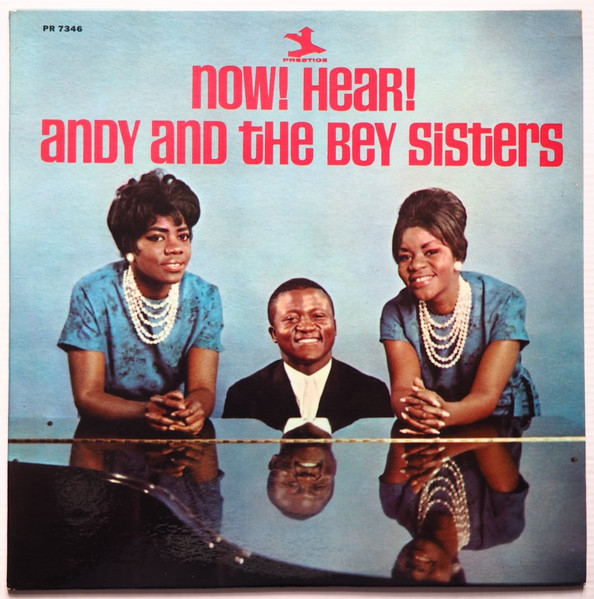
What became one album, Now! Hear!, was recorded in two sessions, three days apart, with Jerome Richardson the only musician to play both sessions. I don't know the reason for the change. Perhaps producer Cal Lampley, was dissatisfied with the first group (he needn't have been -- they are wonderful). Perhaps, new to Prestige, he decided he wanted a younger, hipper sound. All the musicians on the second date represent a different generation from the first group. Perhaps it was just a scheduling conflict. At any rate, it's not cause for complaints. Each group brings a distinctive and satisfying sound. And in any case, the focus is on the Beys, and their tight sound. In any musical field, from country to doo wop to jazz, there is something distinctive about a family harmony group. Andy recognized this from a vantage point of half a century, as he told Chris Slawecki in a 2020 interview for All About Jazz:

I was doing things with my sisters that I'm still doing somewhat, in terms of the tempo and in terms of the rhythmic attack we used to use. I used to sing the lower part, having the male voice. We have a family sound, we basically all sound the same. Like the Cole family, him and his brothers sound basically the same when they sang. They're not identical, but you can hear that family sound.

You can certainly hear that family sound on Buddy Johnson's "Since I Fell for You." The tune was written for his sister Ella, but the group harmony possibilities of it were quickly realized by a number of doowop groups, most notably the Harpton. Andy's Nat Cole-influenced piano anchors this one, with some wonderful guitar fills by Barry Galbraith.

"Willow Weep for Me" provides a good introduction to the second group, with particularly notable work by Richardson and drummer Osie Johnson, and again those family harmonies.

It's good that the Beys went their separate ways. Each of them had a distinctive and important career, contributing so much to American music. But it's also really good that they did this work, and recorded this work, together,

Prestige released two 45 RPM singles. each featuring one song from each session. "Willow Weep For Me" / "Quiet Nights Of Quiet Stars," and the second was "A Taste Of Honey" / "Besame Mucho."    


Wednesday, July 05, 2023

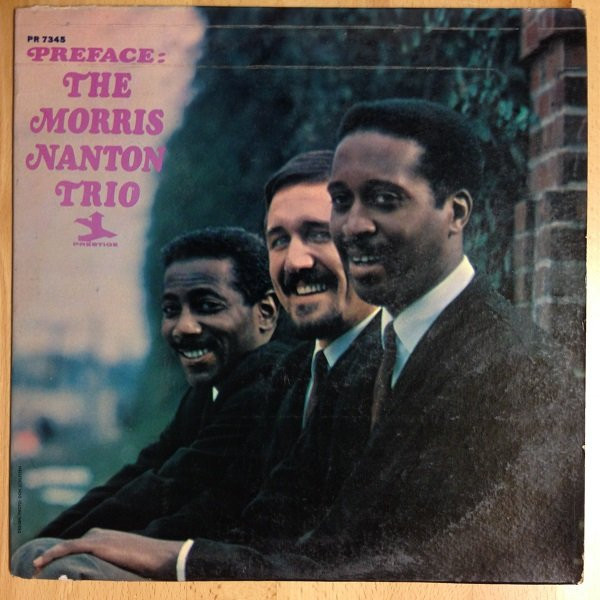
Listening to Prestige 693: Morris Nanton


LISTEN TO ONE: Theme from "Lawrence of Arabia"

 Some jazz musicians never quite get the recognition they deserve. Often it's because they flame out too quickly. Drugs put an end to their career. Or they move to Europe, and whatever reputation they build there doesn't travel across the Atlantic, and while Europe and Japan may have the real dedicated jazz fans, the USA has the tastemakers and the important labels and the reputation builders. Or maybe they just don't click. Their first album fails to sell, and their rccord label decides to move on. And after a while, it's time to get a real job with a paycheck and a retirement package. 


None of those things were true of Morris Nanton. This was his first record for Prestige, but he had made two previous for Warner Brothers, and he would make two more for Prestige, giving him a quite decent catalog of five LPs. He didn't flame out or die young. And he didn't move to Europe. In fact, he lived his whole life in his hometown of Perth Amboy, New Jersey, and he continued to play, and receive the love and approbation of audiences, in New Jersey clubs for six decades, including a 22-year stint with long-time partner Norman Edge at The Cove in Roselle, NJ, where -- according to his obituary in the Newark Star-Ledger, "such jazz greats as Rashan Roland Kirk, Don Elliott, Sal Nistico, Babs Gonzalez, and Joe Morello shared the spotlight with the group." And Nanton didn't need to have Kirk or Elliot on the bill to draw a crowd. A 2004 profile on the All About Jazz website describes a Thursday night at Shanghai Jazz in Madison, NJ, a Chinese restaurant/jazz club:

On this particular second Thursday, the Northeast was swept by record wind-storms. Inside the safe haven of Shanghai Jazz, several regulars blamed the weather for what they considered a poor turnout. While only a handful of seats remained empty, they were used to sitting shoulder to shoulder when the Morris Nanton Trio hits. Most clubs in Manhattan would be delighted with that level of turnout, even on a more hospitable night.

The CD explosion that began in the 1980s, and continued through the early years of the 21st century, gave a career boost to a number of musicians, as labels started repackaging and reissuing for CD much of their catalogs, even recordings that had sat on the shelf for a couple of decades. And here's where Morris Nanton's story really gets depressing. According to that same All About Jazz article, 

Currently, if you want to hear Nanton and Edge, you will have to attend one of their live shows, or spend hours searching used records stores, because none of the five sessions they recorded together is available on CD...Sadly, it is unlikely any of these sessions will be reissued on CD anytime soon. Fantasy Records, owners of the Prestige catalog, has rebuffed Nanton's reissue inquiries and has turned down his offer to buy the session masters. 

Nanton died in 2009, without ever seeing any of his LP recordings released on CD. 

We can't feel too sorry for Nanton. He had a pretty good life in many ways. He had an unusually good rapport with his bass player and musical partner, fellow Garden Stater Norman Edge, whom he met shortly after mustering out of the army (he was a Korean war vet), and with whom he would work throughout his career (Edge had one previous Prestige date, with Gene Ammons).  They easily transcended the racial divide (Nanton was African American, Edge was white), to the extent that, as Edge said, Morris was like a second son to his mom, and he was like a second son to Mrs. Nanton.  They recorded with different drummers (Prestige veteran Oliver Jackson on this session), but throughout most of their careet in the New Jersey club scene, their drummer was Jeff Brillinger, who also played with Stan Geta, Hod O'Brien, and Woody Herman.

And althoigh the CD explosion psssed him by, Roberta, one of his Warner Brothers albums, can be found on Spotify and Apple Music, and various albums, including this Prestige debut, are represented on YouTube.


So what's the music like? It is seriously worth a listen. Nanton was slotted by Warner Brothers for a role that was popular at the time -- jazz interpretations of Broadway shows and movie themes -- and he brings some of that to this session, with the themes from Lawrence of Arabia and Black Orpheus.

Nanton takes a bold, percussive approach to the piano, and while he's respectful of the show tunes that were his bread and butter, he's not afraid to put his personal stamp on them either. "Lawrence of Arabia" is known for the lush orchestral arrangement of Maurice Jarre, and that's something you're not going to duplicate with a piano trio, so a whole different approach is called for. Nanton's version begins with a driving drum intro by Oliver Jackson, and then the piano comes in with an approach that is so percussive I had to check the session log to make sure he hadn't switched in a set of vibes. 

The "jazz versions of well known movie themes" fad wasn't always a rewarding one, but Nanton makes it awfully good listening here.

Two 45 RPM singles came out of these sessions. First was "Theme from 'A Boy Ten Feet Tall'" / "Ja Da," the second side of which became Nanton's closest bid for a hit. Second was  "The Sweetest Sounds" / "The Theme From 'Black Orpheus.'"    

Cal Lampley produced the session. He had been a producer for Columbia for a number of years, and had recently begun branching out to work for other labels. His arrangement/production of "Misty," recorded by Richard "Groove" Holmes, would become Prestige's biggest selling single of all time, reaching #44 on the Billboard charts.

Nanton's album was title Preface. Would that it had been the preface to more of a recording career, and more national acclaim. But Morris and Norman did all right, and I'm glad that Listening to Prestige gave me a chance to hear them.