Tad Richards' odyssey through the catalog of Prestige Records:an unofficial and idiosyncratic history of jazz in the 50s and 60s. With occasional digressions.
This was John Wright's last album for Prestige, before retreating back to Chicago and the inside of a bottle, finally emerging from that trap to become a legendary figure in that neighborhood which he had apotheosized with his first album, South Side Soul, and in doing so he had created a persona that would remain with him for the rest of his life. He was Mr. South Side Soul, and a beloved figure on the South Side of Chicago.
Musical Chicago is probably most associated in the public mind with the guitar and harmonica-based blues of Muddy Waters, Howlin' Wolf, Little Walter, Junior Wells and Buddy Guy, But the piano had its place in Chicago blues, too, with performers
like Memphis Slim, Champion Jack Dupree, Big Maceo Meriwether, and Otis Spann. One of the chief architects of the Chicago blues sound was Willie Dixon, and he got his start playing the bass in a jazz trio led by Leonard "Baby Doo" Caston, a pianist in the Nat "King" Cole style that was so popular in the early 1940s.
The piano jazz faces of Chicago in the modern era were Ahmad Jamal and Ramsey Lewis, and John Wright could well have made them a triumvirate, but for the alcoholism that took so many years from him. Even so, though he never broke out to national recognition like the other two, Chicago knew him, and his Wright Gatherings became a local musical tradition.
Like Jamal and Lewis and Caston, the piano trio was his favored lineup, and for this album, in addition to Prestige regular Wendell Marshall, who had worked with before, he used drummer Walter "Baby Sweets" Perkins, a Chicagoan who had gotten his start with Jamal.
The album features four Wright compositions and one by Esmond Edwards, whose compositional
contributions were extremely rare on the many records he produced, for Prestige and elsewhere. The other three are by composers not close to the center of modern jazz, although "What's New?" by trad jazz stalwart Bob Haggart has become a much-loved standard for a wide range of jazz performers down to the present day. "Our Waltz" is by David Rose and "Blue Prelude" is by Gordon Jenkins, both pop music orchestra leaders. "Our Waltz" is not completely unknown to the world of jazz musicians always with open ears to a good melody with improvisational possibilities: both Gary Burton and Rahsaan Roland Kirk recorded it in the early 1960s. "Blue Prelude" has a little something for everyone. In addition to the many pop singers and
orchestras that have recorded it, it's been country (Bob Wills, David Houston), rhythm and blues (Sam "the Man" Taylor), and Latin (Candido, Jack Costanzo). Outside of Wright, the closest it's come to a modern jazz interpretation is George Shearing, who recorded it twice, once as an instrumental and once with Peggy Lee. Wright finds good things to explore in it, taking it somewhat more percussively and explosively than it's used to being taken--and, in fact, it became the 45 RPM single release from the session, along with his own composition "Strut."
Edwards produced, and the Prestige release was entitled Mr. Soul.
Etta Jones's career followed a familiar arc: Apprenticeship, a breakthrough and a pinnacle of success, a period of decline. For Jones, the toiling in the fields stage was a long one--her first recording in 1944, with Barney Bigard. Her rise was meteoric when it finally came. After recording singles off and on through the 1940s and 1950s, and one little noticed album for King in 1957, she broke out with her debut album for Prestige, 1960's Don't Go to Strangers, which sold a million copies, made Billboard's top 40 with the single, and was nominated for a Grammy. She would remain on Prestige's roster for the next five years, and record eight albums, but would never have another hit like Don't Go to Strangers, would never make a significant dent in the DownBeat and Playboy polls. So...an unusually long gestation period, a brief moment of glory (sadly, not all that unusual) and then a long period of declining popularity. But that long period was super-long, as a core of devoted listeners never went away, as her career spanned six decades, until he death in 2001, just after she had recorded her last album. After leaving Prestige, she began a collaboration with saxophonist Houston Person which lasted 29 years. And while she may never have
gotten the recognition she deserved, there was always enough demand for the music she and Person made to keep her working. Nor was she completely overlooked--there were further Grammy awards in 1981 and 1998.
Jones recorded three sessions for Prestige in April and May of 1962, the middle one of which was logged as a Gene Ammons session.
The two sessions were mingled together on the album, Lonely and Blue. The tunes from the April 13 Ammons session (Bown, Duvivier, Walter Perkins on drums) were included on a compilation album. Soul Summit No. 2, and later added to the CD reissue of Lonely and Blue.
It's a wonderful album. The songs are a mix of standards and little known tunes, ballads and blues, all of them good songs with intelligent lyrics that Jones understands and conveys from the inside out. The songs Ammons's and especially Johnson's tenor sax presage her work with Houston Person, warm, romantic, meticulously phrased and passionately delivered, voice and saxophone meshing and playing off each other.
Because her songs with saxophone and piano/guitar are each so distinctive, I have to give a Listen to Two for this album, and even then it's hard to choose. I went with two of the more obscure cuts. "Gentleman Friend" was written by Richard Lewine and Arnold B. Horwitt for a 1948 Broadway Revue called Make Mine Manhattan, which had a decent run and is best known for being the Broadway debut of Sid Caesar. It was pretty much the highlight of Lewine's an Horwitt's careers, though they both did respectable work in the music business. "You Don't Know My Mind" is by Clarence Williams, prolific tunesmith and one of the first successful Black music publishers.
Jones is featured on the three tracks of the Gene Ammons session, recorded shortly before he began his second prison term. The session was split over two compilation albums also featuring cuts by Jack
McDuff: Soul Summit and Soul Summit, Vol. 2. Among their other significant virtues, these albums showcase how good, and how underused, Patti Bown was. A second Ammons session, the next day, this one with Shaughnessy, was released on Moodsville.
Lonely and Blue was a Prestige release. Esmond Edwards produced both days, and the Ammons sessions. The Jones / Richardson session produced a 45 RPM single, "And I'll Be There" / "In the Dark." The 45 RPM single off the first Ammons session was "The Party's Over / "I Want to Be Loved;" off the second, "On the Street of Dreams" / "You'd be So Nice to Come Home To."
This is a fascinating and nearly unclassifiable piano trio outing with a strange and totally unclassifiable parentage. It was originally part of an album on two British labels, Operators and Stateside. The album was called A Pair of "Naturals," and it was a most unnatural pairing indeed: on the one hand, Walter Bishop Jr., known as a bebop pianist; on the other, the Peter Yorke Orchestra featuring the London Strings and the Top Brass of London. Yorke was, as you may have surmised from his billing, a conductor and composer primarily of light classical music, also noted for his orchestrations for dance bands. So
perhaps they got together when Bishop was over in London playing a gig with a dance band? No, they don't seem to have gotten together at all. Yorke's contributions to the album were recorded in London, Bishop's in New York.
Perhaps a clue in the labels they recorded for? Not much there, either. Operators was a short-lived label that brought out a handful of 45 RPM singles by singers so obscure that I can find no biographical information on them (except one, "Johnny Lindy," only because he gave up singing and became a successful TV producer under his real name). They recorded no other light classical music, no other jazz, and no other LPs. Stateside was more successful, but equally un-oriented toward either light classical or jazz. They basically did the same thing Operators did -- licensing American pop records for British release, but they had quite a few hits, starting with Freddy Cannon's "Palisades Park" and grabbing the early Motown catalog, before Motown established its own British presence.
Peter Yorke had a fine and successful career in Britain, having nothing to do with either jazz or Prestige, but Walter Bishop's contribution, from this and a later session, was eventually brought out by Prestige as The Walter Bishop Trio/1965, although the recordings were made in 1962 and 1963, and the record was released in 1970.
So, nothing more to do but talk about the music itself, and it deserves mention, although I'm not quite sure what to say about it except that it's wonderful. Bishop's main claims to fame are as a bebopper, but this is a long way away from bebop. It's almost jarring and perverse enough to be free jazz, but it can in no way be remotely compared to what Coleman or Coltrane, Dolphy or Ayler or even Cecil Taylor, were doing. Bishop's left hand lays down a solid groove, but this is not remotely soul jazz. So...bebop but not bebop, free but not free jazz, solid groove but not soul jazz, and not exactly a solid groove, either...throw in some block chords and it's sort of like Thelonious Monk, then? Yes, except for not being at all like Monk. Best to take a listen for yourself, and then talk it over with a real musical expert.
Wilbert Hogan, also known as Wilbur Hogan, Granville Hogan and G. T. Hogan, has appeared on Prestige a couple of times before, with Earl Coleman and Jesse Powell. He was working regularly with Bishop in the early 1960s. Butch Warren was a youngster of 22 who had already collected quite a resume. The son of a part time musician in the Washington DC area, he grew up in a house full of musicians, and began playing the bass when an instrument got left behind in his father's music room by Billy Taylor (the Ellington bassist, not the piano player). At 14, he started playing in his father's band. At 19, he was asked to sub for a bassist who didn't show up for a Kenny Dorham gig, and Dorham invited him to come to New York, where he made his first recording on an album initially released on a tiny label as The Arrival of Kenny Dorham, and later, sadly, as The Kenny Dorham Memorial Album. Drug addiction and mental illness cut Warren's career short, and by the mid-1960s he had retreated from the jazz scene.
You have the history of this recording session. Time to check out the music.
Tru-Sound, Bob Weinstock's "modern rhythm and blues" label, was not one of his more successful ventures, although it did hang on until 1963, when Weinstock folded most of his subsidiary labels (Bluesville and New Jazz hung around another year). But there weren't that many releases, and most of them--certainly the most successful--were by King Curtis. Buddy Lucas was one of the last artists to sign with the label, and if Weinstock was looking for a genuine rhythm and blues professional, he had come to the right man. Lucas had been recording R&B since joining Wynonie Harris in 1950, and had started recording with his own combo for Jubilee Records in 1951. An early two-sided hit for Jubilee set the pattern for his 78
RPM singles: a ballad on one side and an uptempo, honking blues on the other. That he was prized for both can be demonstrated by two of the biggest hits he played on: Frankie Lymon and the Teenagers' "Why Do Fools Fall In Love" and Little Anthony and the Imperials' "Tears on My Pillow." He was one of the most in-demand session men for rhythm and blues and rock and roll throughout the decade, and into the 1960s. Around the same time that he recorded this album for Tru-Sound, he played one of his best-known tenor sax solos, on Dion's "The Wanderer."
The 1960s also saw him getting calls for jazz recordings, with Clark Terry, Seldon Powell, Illinois Jacquet, Jack McDuff and others, one of the most unusual being free jazz pioneer Albert Ayler, on New Grass, an album Ayler made for Impulse! to show that he had a more poppish, commercial side, not entirely successfully. Unusually for a saxophone player, Lucas also doubled on the harmonica. He recorded on that instrument with King Curtis, Lou Donaldson, Thad Jones (also jaw harp), Yusef Lateef, Johnny Hodges, George Benson and many others. A number of female singers used his harmonica sound, including Laura Nyro, Aretha Franklin, Roberta Flack, and, most notably, Nina Simone on her recording of "Since I Fell For You." He was even called in to overdub a harmonica part on a posthumous Jimi Hendrix recording.
Lucas recorded his Tru-Sound albums over two Englewood Cliffs sessions in March and April. He
surrounded himself with good players for his first dates as a leader with a jazz label that had prestige in more than just its name, and some remarkable singers. Wally Richardson, Bob Bushnell and Herbie Lovelle were Prestige veterans. Al Williams (piano for the March 31 session) had been playing professionally since the 1930s; his resume included Henry "Red" Allen, Buck Clayton and Johnny Hodges. Robert "Bobby" Banks's career stretched from 1950s to the 1980s; during the period of this recording and through much of the decade he worked with Solomon Burke. He replaced Williams on piano for the the April 22 session. Carl Lynch was one of New York's most sought-after session guitarists from the 1940s through the 1970s. one of the mainstays of Phil Spector's sound, and featured on such anthemic recordings as James Brown's "Say It Loud (I'm Black and I'm Proud)" and Nina Simone's "Young, Gifted and Black."
Both sessions were logged in as Buddy Lucas and the Shouters, but the Shouters, Lucas's vocal trio, were only there for the April 22 date. They were three girl singers better known in those days as members of Cissy Houston's vocal group, the Sweet Inspirations. One of them, Sylvia Shemwell, remained with the Inspirations as they backed up Aretha Franklin and Elvis Presley, among others. The other went on to solo careers. They were a pair of sisters named Warwick -- DeeDee and Dionne.
The Tru-Sound release was titled Down Home Turn Around. It was also released on Prestige's budget label, Status, as That's the Blues Man. Two 45 RPM singles came from the session, "Hocus Pokus" / "Show Down" and "Down Home Turnaround" / "April Showers."
Question: What's the difference between classic rhythm and blues and soul jazz?
Answer: About three minutes.
That's the difference between the Lester Young-influenced, Illinois Jacquet-influenced, Texas roadhouse-bred, Apollo-developed, blues-based sound tenor saxophone wailing and improvising over a rock-solid groove in the 78-45 RPM era, and the LP era. Jazz With a Beat, jazz with a funky beat. And with, in the soul jazz era, a little more room to open up and try different improvisational attacks over that groove.
What about the organ, that distinctive signature sound for soul jazz? Doesn't that make it different?
Not entirely. Bill Doggett, Sil Austin, Doc Bagby and others had had rhythm and blues hits. Jack McDuff had joined the Gator to play rhythm and blues, and when the group signed with Prestige, they brought their saxophone-organ-guitar sound with them, and used it to play the longer form jams--in other words, the ones they had always played on the chitlin' circuit, but had had not been able to bring to the recording studio.
Willis Jackson had brought McDuff into his group as a bass player, and had made the inspired choice to convert him to an organist, so he knew something about nurturing organ talent. That means it's no surprise to find Freddie Roach, on the cusp of a breakout career, joining Jackson's band for this session. Roach had recorded two albums with Ike Quebec for Blue Note, and by midsummer of 1962 he was back at Blue Note to record four albums as leader. He would return to Prestige for a couple more sessions in the late 1960s, after which he stopped recording. He lived in France for a while, then California, by which time his interest had switched from jazz to the theater, where he gained something of a reputation--apparently under another name--as a playwright. He died in 1980.
Roach, along with frequent Jackson collaborators Bill Jennings, Wendell Marshall and Frank Shea, create the groove. Ray Barretto, in his second sax-organ soul jazz gig, adds the extra touch that he always does. And Jackson provided the rest. All of this comes together most emphatically on the Jackson composition "Thunderbird." When you put "Bird" in the title of a jazz composition, it's always going to suggest one thing. Bird With a Beat certainly became a rhythm and blues staple, with "Now's the Time" becoming the basis for Paul Williams's hit instrumental "The Hucklebuck." Here, there's no one Parker tune that "Thunderbird" takes off from, but Bird's improvisations on the blues are a strong inspiration.
Willis Jackson had become a mainstay of Prestige records and would remain so throughout the 1960s. This, produced once again by Esmond Edwards, was his seventh album for the label. It was released on Prestige, as was the 45 from the session, "Thunderbird," also the title of the album, "Thunderbird" was the flip side of Jackson's version of "Jambalaya."
Coleman Hawkins died in 1969, and made his last recording (fittingly called The Greatest Jazz Concert in the World) in 1967, so this was pretty much the stretch run for the Hawk, but he was prodigiously productive. In 1962 alone he recorded eight albums as leader: three for Prestige, two for Verve, and three for Impulse! He also appeared on albums by Kenny Burrell and Shelly Manne. I doubt that there are many jazz musicians who can approach that level of productivity
This is the second of his Prestige outings, like the first one a Moodsville venture, and like the first focused on the Broadway musical. However, while the first (Good Old Broadway, recorded January 2)
featured familiar and beloved tunes from Broadway's storied past, this one focused on a recently opened show, No Strings, with a score by Richard Rodgers which produced no memorable songs at all.
That's a little unfair. Rodgers had not declined as a composer, but the era of Broadway show tunes becoming hit songs was over. While Broadway-to-Top-Forty had still been a common occurrence in the 1950s -- "Hernando's Hideaway," "Hey There," etc. There were crooners like Eddie Fisher and Patti Page and the Ames Brothers still regularly making the charts in those days, and even a rare Rogers and Hammerstein flop, Pipe Dream, could yield a Billboard chart hit with Fisher's version of "Everybody's Got a Home but Me."
By comparison, 1962 saw two successful musicals, No Strings and Stop the World--I Want to Get Off, and one smash hit, A Funny Thing Happened on the Way to the Forum, and the three of them together produced one song, Sammy Davis Jr.'s "What Kind of Fool Am I?" that even dented the charts.
No Strings not only produced no hits, but except for "The Sweetest Sounds," which got a boost from being recycled into the television musical Cinderella, there have been precious few recordings of any of the songs beyond original cast albums, and except for "Sweetest Sounds" and "Loads of Love," which were included on an Original Jazz Classics double CD called Coleman Hawkins -- On Broadway, none of these songs has had an afterlife in the reissue world.
Which doesn't make them bad songs. and doesn't make this any less of a musically satisfying outing from Hawkins and his musicians. It just means you're not likely to find it anywhere, except for YouTube, which seems to manage to find everything,
When you record ten albums in a year, and over two dozen in what is supposed to be your twilight years, a decade that you are supposed to be at best a footnote to, some of the music is going to get lost in the shuffle, even though it has every right to be heard and appreciated. So it's good to dust this one off, and the rewards are there for the listening.
The album was recorded in two sessions, on March 30 and again on April 3, and I suspect that might have been unintended. The March 30 session ends with a version of "Maine" that is marked in the session log as "Rejected by Prestige," and the April 3 session begins with "Maine," so something must have happened to make them cut the first session short.
No Strings was the first show for which Rodgers wrote both music and lyrics. Tommy Flanagan, Major Holley and Eddie Locke had appeared on Hawkins's previous Broadway album for Prestige Moodsville, and they were his regular working band during those days. The album, The Jazz Version of No Strings, was a Moodsville release. Esmond Edwards produced.
This turned out to be the only solo album Honi Gordon ever made. She is categorized, if she is mentioned at all, as one of a number of "one-album wonders," female jazz singers who got that one shot, and then were forgotten, as the Beatles, and the new rock explosion in general, found jazz, and especially jazz vocalists, fading in popularity. Playboy would rename its Jazz Poll the Jazz and Pop Poll (and the Village Voice would mockingly call its music column "Pazz and Jop"). But there's more to her than that.
Her career started as part of a family singing group, The Gordons (her father, two brothers, and her), and if the Gordons never made it quite into public visibility, they were good enough to get the respect of their peers, as evidenced by the company they kept in the recording studio, starting in 1953, when Honi was 15.
Their 1953 debut was on Debut, the Charles Mingus-Max Roach label. They appear on two tracks, and are described in the liner notes as "Max Roach discoveries," although they, and particularly Honi, would become much more closely associated with Mingus. On the Debut album, they perform with Mingus, Roach, and Hank Jones, and they recorded more than those two tracks ("Bebopper" and "Can You Blame Me"), because three more would eventually appear on record. The Original Jazz Classics CD, Debut Rarities Volume 4, released in 1993, has "You Go to My Head," "You and Me," and "Cupid." All but "You Go to My Head" are credited to George Gordon, and throughout her career, Honi would make a point of featuring her father's songs.
In 1954, the Gordons recorded one tune for Columbia with a group that included Al Cohn, but it appears never to have been released.
In 1956, they appeared on a Lionel Hampton session for Jazztone, a record-of-the-month club that was started by two chemical engineer brothers who were offered 20 tons of vinyl resin at a bargain price, and then had to figure out something to do with it. The session featured Hampton, Oscar Dennard, Oscar Pettiford and Gus Johnson, and their version of "Take the A Train" is highly prized by cognoscenti. They are featured on one cut of a 1957 Dizzy Gillespie-Stuff Smith album for Verve.
Honi then went on her own, working twice with Eddie Jefferson. In 1959 they collaborated on three
tunes, two of which were released on 45 by the Triumph label ("Sherry" and "Body and Soul"), and all three (including "Now's the Time") on a couple of Jefferson reissues. They reunited in 1961, again for Triumph, for four songs with a vocal quartet which also included Babs Gonzales. These appear never to have been released at the time (Triumph had probably already gone under), but have appeared on later Jefferson reissues.
1959 also saw her reunited with Charles Mingus for the Mingus Dynasty album for Columbia, which included a version of "Strollin'," the Mingus/George Gordon collaboration. Mingus was one of the two artists who most enthusiastically championed her career.
1962 was her Prestige year, and after that, instead of aggressively pursuing a solo career, she reunited with her family, perhaps because Mary Lou Williams, the other artist who most appreciated her talent, needed a vocal ensemble for her devotional work, Black Christ of the Andes, recorded in 1963. She would record with Williams twice more, both times with devotional music: in 1967, for a live performance at Carnegie Hall, and 1972, on Williams's own Mary label. Mingus and Williams are two artists known for their uncompromising commitment to musical excellence, which should tell you something about Honi Gordon.
Further work with Mingus included a live Columbia recording in 1972 (Charles Mingus and Friends in Concert), and Mingus Moves in 1973, on Atlantic.
Then nothing, although she seems to have kept singing. in 2007, she performed with Andy Bey and Geri Allen at a Fordham University tribute to Mary Lou Williams, which suggests that she must have been based around New York.
Of the Prestige album. a present-day reviewer (for Allmusic.com) wrote that Gordon "had an appealing style that was influenced by Sarah Vaughan, Ella Fitzgerald, and Billie Holiday, as well as Annie Ross. There were also hints of Chris Connor..." while a contemporary of hers (Sidney Falco, who wrote the liner notes for the album) says the opposite: Gordon is "if you will, original: one cannot point to her work, as it is so easy to do in many cases, and say where such and such a phrase or stylistic trick came from." And perhaps they're both right. The one thing you can say for certain about Gordon's singing is that it sounds like jazz.
Part of the uniqueness of her style (and part of the reason why AllMusic's Alex Henderson compared her to Annie Ross) comes from her choice of material--her father's material, especially. George Gordon was a unique composer--and I use "unique" in its original sense. I don't believe anyone else did what he did. "Vocalese" was in its heyday back then, and it meant the same thing for everyone who practiced, from the innovative work of Eddie Jefferson and King Pleasure through the complex arrangements of Dave Lambert to the lyric inspiration of Annie Ross -- who wrote the brilliant "Farmer's Market" and the now-classic "Twisted" in one night, after Bob Weinstock had played her "Moody's Mood" and asked if she could do something like that. It meant writing a vocal line to a jazz soloist's improvisation.
But George Gordon did something a little different. You can listen to "My Kokomo" and start digging through your old wax or your new Spotify to find the "Kokomo" and the improvised solo it came from, but to no avail. Gordon wrote the whole thing, words and music. The only exception is "Strollin'," where Gordon put a lyric to Charles Mingus's "Nostalgia in Times Square." George Gordon was a remarkable composer, and Honi Gordon a fitting interpreter (and, except for "Strollin'," her father's only interpreter).
Honi does four of her father's songs on this album: "Strollin'," "My Kokomo," "Love Affair," and "Cupid." She also stretches her range in other directions. There are standards: "Ill Wind" (Harold Arlen Ted Koehler) and "Why Try to Change Me Now" (Cy Coleman, Joseph McCarthy). There's a song by Esmond Edwards, who didn't write all that many -- "Lament of the Lonely." Both of her champions are included: Mingus with "Strollin'," Mary Lou Williams with "Walkin' Out the Door." "Why" was written by Consuela Lee Moorhead, who had something in common with George Gordon. He wrote for his daughter; she contributed music, and a song, to a movie by her nephew, Spike Lee.
Honi Gordon's adventurous spirit is shown in her choice of musicians for the session, the equally adventurous Jaki Byard and Ken McIntyre (later Makanda Ken McIntyre).
I suspect Frank Wess is best known for his work with Count Basie, but his catalogue encompasses a lot more than that, work with a variety of other musicians and as a leader of his own ensembles. This was his 11th session for Prestige. He had previously recorded with Gene Ammons and with Lem Winchester; he had done three Prestige All Stars sessions, including one with John Coltrane; a Basie alumni session with Joe Newman; and a session with vocalist Etta Jones. He had co-led two remarkable sessions with harpist Dorothy Ashby, and had done a Moodsville session as leader in 1960.
Recording Frank Wess in 1962 is one indication of the eclectic range Prestige was pursuing in these years. The label had embraced the new soul jazz with its organ combos; the new free jazz, or "freedom music" as it was called in those days, with Eric Dolphy; modern takes on the swing era with its Swingville series; the blues with Bluesville; a softer (but still swinging) sound with Moodsville. It had embraced the rhythm and blues side of jazz with King Curtis, Willis "Gator Tail" Jackson and Sam "the Man" Taylor, and Latin jazz with Juan Amalbert's Latin Jazz Quintet -- two genres too overlooked. And it was not overlooking the bebop/hard bop music that had come to fruition in the previous decade, and as it continued through more shifts and permutations of jazz expression would come to be known as "straight ahead jazz."
Frank Wess, with his Basie roots and his modern roots, was as straight ahead as they come, and he has a versatile straight-ahead rhythm section behind him, with Prestige veterans Tommy Flanagan, George Duvivier, Osie Johnson and Ray Barreto, and similar versatility from George Barrow, whose baritone (and occasionally tenor) sax would be featured on a number of Prestige albums, and on Oliver Nelson's The Blues and the Abstract Truth.
New to Prestige is trumpeter Al Aarons, not Detroit-born, but Detroit-bred--a Wayne State graduate, he played with Yusef Lateef and Barry Harris, and had a regular gig at the Flame Show Bar backing up visiting talent from Billie Holiday to Jackie Wilson, before touring with Wild Bill Davis and then joining the Countasie band in 1961, and stayed with the Count for the rest of the decade, and he joined Gene Ammons for one more Prestige session near the end of the label's independent life. Later on he would play jazz fusion with Stanley Clarke and accompany both Ella Fitzgerald and Sarah Vaughan, and record an album with B. B. King and Bobby "Blue" Bland. He also started his own record label in Los Angeles.
And finally, the session had an arranger. Oliver Nelson. A septet isn't quite a big enough ensemble to require an arranger, but it can't hurt to have one, especially when it's Oliver Nelson.
Just as the Prestige Swingville records, featuring swing stars of the 1930s and 1940s, were not duplications or rehashes of those earlier decades, so the music of this session, with Nelson's arrangements, does not sound like something that might have been made seven or eight years earlier. It's straight ahead music, but music of its time. Listen to the extended duet by Johnson and Barretto on "Southern Comfort."
Wess plays both flute and tenor sax for this session. Esmond Edwards produced. There are two compositions by Wess ("Gin's Beguine" and "Summer Frost"), two by Nelson ("Southern Comfort" and "Shufflin'"). "Blues for Butterball" is by a lesser known composer, Bob Bryant (he was Vic Damone's musical director), and it's credited as having lyrics by Maine humorist Marshall Dodge, but I haven't been able to find a vocal version. "Butterball" was Oliver Nelson's nickname. "Blue Skies" (Irving Berlin) and "Dancing in the Dark (Howard Dietz, Arthur Schwartz) are standards.
Dizzy Reece took a long way around to New York and Rudy Van Gelder's studio and the jazz kitchens of Blue Note and Prestige, and the music once known as New York music, later to be given to an unsuspecting and at first unwelcoming world as bebop. By the time that Reece recorded this session for Prestige, other strains of jazz were mixed into his broth, but bebop was always at the center of it.
And it was not exactly his birthrigh at, as it was for his New York and Detroit-born contemporaries. Reece was born and raised in Jamaica. His father was a musician who played piano accompaniment for silent movies. His biographies point out that he took up the trumpet at age 14, switching over from
the baritone saxophone, which is remarkable in itself--a 12 or 13-year old boy would not have been much bigger than than that unwieldy instrument. But the trumpet was where he found himself, and by age 16 he was playing professionally in a swing band. At 17, in 1948, he was ready to expand his musical horizons. and he set sail -- not for New York, but for London.
His first bookings did not take that far from home musically. On his passage across the Atlantic, he made the acquaintance of a calypso band, also England bound, and since they had gigs lined up in Liverpool, he joined up with them. He did not make it to London until the following year, where he first discovered bebop, and was completely won over by the new music on a trip to Paris and the first International Jazz Festival, where he heard Charlie Parker and Miles Davis.
He made his first recordings in London in 1955, and, while still in England in 1958, recorded an album for Blue Note (Donald Byrd played on the session). The following year, with the encouragement of Miles Davis, whom he had met in Paris, he came to New York. He made three more albums for Blue Note before being dropped from the label. He did this one session for Prestige, then pretty much disappeared from the recording scene. He joined Dizzy Gillespie's big band in 1968, and made a few records for small labels in Europe and New York in the 1970s. He remained active, if mostly unacclaimed, into the 21st century, and not only as a musician. He's had exhibitions of his paintings, he's made documentary films. and he told an interviewer in 2019 that he was just putting the finishing touches on a 750-page autobiography.
Asia Minor is solidly grounded in bebop, but it incorporates some of the newer ideas of the jazz
experimentalists of the era, and--as the title suggests--some of the sounds of the Near East and North Africa which were being explored most prominently by Yusef Lateef. All of these influences can be heard on "Spiritus Parkus (Parker's Spirit)," a Cecil Payne composition.
Baritone saxophonist Payne was no stranger to Prestige, having played on a John Coltrane-led Prestige All Stars session, and with Kenny Burrell, Tadd Dameron, Gene Ammons, and mambo jazzer Joe Holiday, in sessions going back to 1953.
Joe Farrell, just 24 when these recordings were made, had recorded with Maynard Ferguson, but was really just embarking on a career that would blossom in subsequent decades, most notably with Chick Corea's Return to Forever. He died young, of myelodysplastic syndrome, in 1986. One his compositions, "Upon This Rock," has been the subject of a series of lawsuits by his daughter against a number of hip-hop artists for unauthorized sampling.
Perhaps Reece's Jamaican background made him particularly conscious of rhythms, a subject that he frequently came back to in interviews -- "Charlie Parker played drums on the saxophone." he told one interviewer, and he prided himself on always working with great rhythm sections, which he certainly has here, with Hank Jones, Ron Carter, and especially Charlie Persip, whose rhythmic inventions go way beyond bebop here. Persip, who worked with swing, bop, and free jazz groups over his long career, was really coming into his own as a distinctive and innovative drummer in these years, as he became one of the most sought-after jazz drummers.
New York proved to be not all that hospitable to Reece. He never quite broke through to major recognition, and his marriage suffered from a resistance to an interracial couple that he had not experienced in England. His wife ultimately left him and took their daughters back home to England. Reece, too, would return to England and Europe for many years, though New York ultimately beckoned him home, mostly to anonymity. When an interviewer found him in 2019, he was greated with, "I'm surprised you didn't think I was dead!"
Asia Minor was a New Jazz release. Jules Colomby produced.
This was Larry Young's third and last album for Prestige, and his last album in the Jimmy Smith soul jazz genre. There would be a couple of years' hiatus, and then when he resumed recording in late 1964 for Blue Note, he had moved in a different direction for himself, and for jazz organ--a much more Coltrane-influenced sound.
As such, it's a somewhat overlooked album, and undeservedly. Young may be better known today for his later work. Only 22 when he recorded it, Young had the chops, and he had the soul, and he had the love of making music that comes through loud and clear. He worked on this session with two familiar musicians, guitarist Thornel Schwartz and drummer Jimmie Smith, his cousin, who usually spelled his name with an "ie" to differentiate himself
from the organist. Schwartz, 13 years Young's senior, had begun his recording career with the organist Jimmy Smith on the latter's debut album in 1956, and had made a name for himself as the go-to guitarist for the organ-guitar sound.
New to the Young orbit, and to Prestige, is tenor saxophonist Bill Leslie, who brings an old school rhythm and blues sound to 1960s soul. Yoked with Young and Schwartz, he adds a third distinctive solo sound, making it the kind of record that elicits an "Oh yeah!" with the start of each new solo.
This session is a stop on the road for Young, similar in style to his earlier Prestige albums. He was about to leave all of that behind--Prestige and soul jazz--so I'll take a little time here to look at Leslie, who doesn't get much attention elsewhere.
Leslie did very little recording. There's this album, and two for Argo (produced by Esmond Edwards). On one he shares co-leader billing with Schwartz, who was his contemporary (Leslie was born in 1925) from Philadelphia--it's likely that Schwartz recommended him for the session with Young. That one is generally billed as a Thornel Schwartz album, and was in fact Schwartz's only album as leader.
The other is Bill Leslie's only album as leader, and his last credited appearance on wax. He was abetted by Schwartz, Tommy Flanagan, Ben Tucker and Art Taylor. The album was called Diggin' the Chicks, and it featured tunes about women, including the Lead Belly classic "Goodnight Irene," and -- surprising and ambitions for a swing-rhythm and blues-soul jazz guy, Ornette Coleman's "Lonely Woman."
He did a creditable job tackling a challenging tune, but it was not to be a harbinger of things to come.
Unlike Larry Young, Leslie does not seem to have followed the trail blazed by Coleman / Colttane / Dolphy. Reports have him staying home and continuing to play soul jazz in the Newark / Philadelphia axis. He died in 2003.
"Groove Street" was the title tune from Young's album, and also a two-sided 45 RPM single. Another original, "Talkin' About J. C.," showed his growing interest in Coltrane. He would record it again for Blue Note with Grant Green, and Green would also put it on an album. Esmond Edwards produced the session.
This is the second Big Joe Williams session to be released on Prestige Bluesville. This is a live album, which is newsworthy for a couple of reasons. First, Prestige very rarely released live albums. Second, it was recorded at Gerde's Folk City in New York's Greenwich Village.
Greenwich Village had a long history as the center of New York's Bohemia, and that was still very much the case in 1962. That meant entertainment for the niche audience that was Bohemia, and for the brave souls from the suburbs and the outer boroughs who wanted to see what life had to offer beyond Connie Francis and Fred Waring's Pennsylvanians. Jazz was represented in clubs like the Village
Vanguard. And folk music -- the music of the people, the music of protest, the music discovered in tiny Appalachian communities by folklorists and brought to the folkies of Bohemia in publications like Sing Out!
And, increasingly, it was the music discovered by folklorists like Samuel Charters and Mack McCormick. The blues explosion of the 1960s had arrived, as New York's Bohemia played host to such blues musicians as John Lee Hooker, who was backed up by a young white guy named Bob Dylan, making his first appearance on the Folk City stage. And such blues musicians as Big Joe Williams.
It was a new experience for New York's Bohemians. A previous generation had learned of the blues through Leadbelly, who was a towering talent, and who was savvy enough to tailor his blues message to his audience, singing about not being mistreated by no bourgeoisie. Or through Big Bill Broonzy, a jazz guitarist who realized he could have a second career if he reinvented himself as a folk bluesman, and reinvented the definition of folk bluesman to include songs about getting together and breaking up the old Jim Crow. The blues was a music of realism in the face of an harsh, unchanging world. The white leftists who made up this new audience believed that the world could be changed, and responded most enthusiastically to songs which reflected that belief.
The new young blues audience of the 1960s was looking for a more authentic experience: the gritty realism of the rural south, and later, especially as it got filtered back to them through British blues enthusiasts, of the urban north. And the blues singers got some new paydays, through clubs like Folk City, college campuses, blues festivals (those came later in the decade) and even European tours.
For the listener of today, it's an opportunity to hear one of the best of the old bluesmen in an intimate live setting. Williams gets a unique sound from his 9-string guitar, and voice is strong and persuasive, and his observations on life trenchant.
The Bluesville album was entitled Big Joe Williams at Folk City.
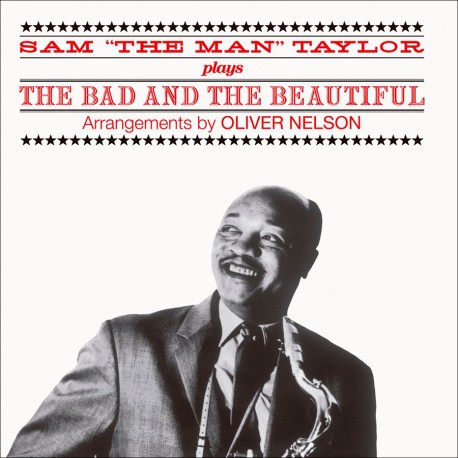
Prestige adds another rhythm and blues giant to its jazz roster, proving once again that rhythm and blues is a legitimate form of jazz, and that these players fit seamlessly into a more bop-oriented context. Up this time is Samuel Leroy Taylor Jr., known as Sam "the Man" Taylor when he led Alan Freed's stage band, but simply Sam Taylor when he recorded in more respectable settings (similarly, Ellingtonian Al Sears was "Big Al" when he performed and recorded with the Alan Freed band).
Taylor had been something of a pioneer in the sax-organ combo business, having recorded an album with Dick Hyman for MGM back in 1957, with a very different approach from the soul jazz sound that had become popular in 1962. But he
eschews the sax-organ sound here, going instead with a quintet. Pianist Lloyd Mayers's carer spanned decades, and twenty years after this session, he would be named musical director of the Broadway revue of Duke Ellington's music, Sophisticated Ladies. Wally Richardson was a very active session guitarist in those days, with a number of sessions for Prestige. Art Davis, whose reputation as one of the finest bassists of his generation, classical or jazz, was matched only by his social conscience, had appeared on two previous Prestige sessions. And that a classical cat can get down with a rhythm and blues cat is as good as any tribute to the breadth of the language of jazz. And add Ed Shaughnessy to the mix and you have a pro's pro, whose best known gig, with Doc Severinsen's Tonight show orchestra, didn't begin to scratch the surface of his range.
The album's format is a little gimmicky--movie themes that celebrate women's names (or attributes, like "The Bad and the Beautiful," and it was released on Moodsville, which was sometimes accused of being a little gimmicky as a label. But I am here to say I see absolutely nothing wrong with this. It was probably a lot of fun coming up with the gimmick, and then finding the movie themes that would work. This included classics like "Laura," and tunes that had immediate popularity and proved to have legs, like "The Bad and the Beautiful," written by David Raksin and recorded by jazz musicians from Barney Kessel (1957) to Bill Frisell (2016). And a couple of sleepers. "Love Song from Suzie Wong" has never been recorded by anyone else that I know of. It was written by George Duning, a frighteningly prolific
composer with 180 film scores to his credit. In 1960 alone, the year of The World of Suzie Wong, he scored six other movies. But someone had a good ear, and "Suzie Wong" came out well enough to be the 45 RPM single release from the session, with "Anastasia" on the flip side.
"Suzie Wong" / "Anastasia" was released as a Prestige single, "The Bad and the Beautiful" as a Moodsville single. The album, with the same name, also came out on Moodsville. "Ruby" (written by Heinz Roemheld for the movie Ruby Gentry) was later released on a compilation album for Prestige's budget label, Status, entitled Lusty Moods, and credited to Sam "the Man" Taylor.
It was a busy few days for Mr. Stitt, and a lot of trips out to Englewood Cliffs. On Friday, recording with Jack McDuff. On Sunday, a Verve recording session, as Norman Granz joined Sonny with Gene Ammons for a mainstream blowing session in Rudy Van Gelder's cathedral of recorded jazz. Then the two saxophonists might as well have booked a couple of rooms on the Jersey side of the river, as they were back in harness on Monday, joining "youngster" McDuff (actually all three were just about the same age, but McDuff was a new star in the jazz firmament, and the two tenormen were solidly established veterans).
These are three guys who really represent three different genres of jazz: Stitt the bebopper, Ammons the old school boppin' the blues, McDuff the soul jazz of the 1960s. So, although "Soul Summit" is a bit of cliche, it's also an accurate description of this gathering. They are three kindred spirits who've meshed well in dyads, and mesh equally well here in a triad, with the propulsive assistance of Charlie Persip on drums. Persip and McDuff are the entire rhythm section, so Brother Jack is largely in a supporting role here, but he makes the most of it. He and Persip provide more than a cushion for the two soloists--their work is complex and provocative.
The set is two standards, two originals by Ammons ("Tubby" and "Shuffle Twist"), one by Stitt ("Dumplin's"), and one more obscure tune from an underrated composer, Jimmy Mundy. Mundy is underrated partly because one of his most famous compositions, "Walkin'," the Miles Davis standard, is not credited to him. On the Library of Congress copyright certificate for the tune, the original title (and
the tune has been recorded under a number of different titles) is wiped out, and the name of Richard E. Carpenter is written in as composer. Carpenter was not a composer, and is best known for cheating and exploiting various jazz musicians. Mundy is credited as co-composer (with Johnny Mercer and Trummy Young) of a gold star standard, "Travlin' Light." And he is the composer, here, of "Sleeping Susan," which proves to be an excellent choice.
You might think that "Shuffle Twist" would have been earmarked as the single, just for the title alone. But instead an edited-down version of "Tubby" was the choice, on the flip side of "Love, I've Found You," from Ammons's 1961 session with Oliver Nelson. The 45 RPM single was issued under Ammons's name.
A month after his January session, Lightnin' Hopkins was back in the studio for two more dates with Mack McCormick,now with an amplified guitar and different members of the band that he customarily used for club dates around Houston for each session. They were:
Buster Pickens on piano (second session). He was one of the west Texas piano players who had roots going back to the 1920s and were known as the "Santa Fe group," but not because they had any connection with that New Mexico tourist mecca. They used to travel to gigs around Houston, Galveston, Richmond and other southwest Texas destinations by hopping freights on the Santa Fe railroad line. He recorded with many blues singers, including Texas Alexander, Hopkins' mentor and perhaps his cousin. Pickens recorded an album of his own in 1960
Billy Bizor on harmonica (first session). After playing on several Hopkins recordings in the early 1960s, he got to do two recording sessions on his his own in 1968 and 1969, but they weren't released for a couple of decades, or long after Bizor's death.
Donald Cooks on bass (second session). He was the go-to bass player for a number of Texas bluesmen, recording with Clarence "Gatemouth" Brown, Smoky Hogg, Goree Carter and others.
Spider Kilpatrick on drums (both sessions). He was raised in the same New Orleans orphanage that Louis Armstrong sprang from him, worked with Hopkins for many years, and was praised in the liner notes to an Arhoolie recording:
Finally here was a musician who could follow Hopkins wherever he went, plus one providing a snappier beat that the guitarist could hang phrases of a bit more aggressive nature than usual on.
One of the reasons Hopkins had such a long and prolific recording career is that he had a vast repertoire. Of course he did repeat himself from time to time, but he also knew a whole lot of songs. had written a whole lot of songs, and was able to extemporize a whole lot of songs. One such, on this album, is "Happy Blues for John Glenn, about which Mack McCormick says in his notes:
Most of them...are lost as the impulse and the circumstances which occasioned them fade away. That "Happy Blues for John Glenn" was caught in a recording session is an accident resulting entirely from the flight having fallen on the date for which studio time had been booked...Ordinarily, he would have forgotten it in a night or two, and as a matter of fact at this writing Lightnin' says he can't remember the song.
Walkin' This Road by Myself was a Bluesville release, producer credit to Kenneth S. Goldstein and Mack McCormick, although McCormick was the only one with actual hands on down in Houston. Three 45 RPM singles were released from the session. "My Baby Don't Stand No Cheating" / "Katie Mae" came out on Bluesville.
Sonny Stitt joins the organ-saxophone combo brigade. He had actually made one such record before: a live album at Chicago's Mckie's DJ Lounge, one of the last clubs standing as Chicago, by the 1960s, was losing its luster as one of the nation's jazz hot spots. That recording, for Chicago-based Argo Records, utilized a group of local musicians, including organist Eddie Buster.
This session brings Stitt together with one of the leading lights of the new organ combo soul jazz movement, and it's interesting to compare the two albums. Stitt was used to touring alone, and picking up groups of musicians in
the cities he visited, as with the Chicagoans on At the D. J. Lounge. Those musicians, whether just playing for the club audience or knowing they were to be recorded, knew that the people in the club had gotten dressed up and come out and paid money to hear Sonny Stitt. This was still a bullish era for jazz in Chicago--Mr. Kelly's was still thriving, and the Regal Theater--and there were first rate jazz musicians available. Eddie Buster's organ playing is excellent, and adds an unusual and satisfying texture to Stitt's bebop.
Playing with McDuff is a little different, but in a way not so different. In this case the city is New York, the mecca of jazz. Sonny Stitt is a stalwart veteran of Prestige's catalog (14 appearances before this one), but Jack McDuff is one of its hottest young stars. But still, it's Stitt coming to town and playing with a group of locals.
And in a way, the effect is comparable. More than is the case with a lot of the organ-saxophone combos, this is a Sonny Stitt session.
Jazz is a music of innovation, and it's easy to think of it as in an almost constant, churning state of out with the old, in with the new, but that's not exactly the way it is. Certainly change is a constant, and "in with the new" will always be the watchword, though not without resistance -- think of Charlie Parker in his day, Ornette Coleman in his. Or the commercial rejection of Miles Davis's nonet sessions that became Birth of the Cool. But that didn't necessarily mean out with the old, which is why jazz careers, health permitting, could last a long time, and Garvin Bushell could play with Bunk Johnson and Fletcher Henderson, and later with John Coltrane and Eric Dolphy.
And it 's why there are not always clear dividing lines. It's why, in the 1950s, we heard swing-to-bop from players like Zoot Sims and Coleman Hawkins. And now, in 1962, are we hearing something similar, with Sonny Stitt going bop-to-funk? You can certainly hear it "Pam Ain't Blue," where Stitt's bebop rides easily along with McDuff's funk, and even more in "'Nother Fu'ther," which seems to capture the essence of bop-to-funk. All of the original compositions on this session are by Stitt, but they're geared to this blend of styles, and one of them, "Ringin' In," is really McDuff's number, and he makes the most of it. The three ballads are very much in Stitt's wheelhouse, with Sammy Cahn and Jule Styne's "Time after Time" getting a particularly beautiful reading.
That producer Esmond Edwards did not intend this to be strictly a jazz funk session is reflected in his choice of sidemen. McDuff regular Eddie Diehl is on guitar, but veterans Art Taylor and Ray Barretto provide the percussion, and they are the right men for the job.
I wondered if all of this added up to an album that would be more to the taste of the real jazz fan than the young crowd hopping on the funk jazz bandwagon. And I meant that to sound as snobbish as it does, when I prepared to write it, but as I got it down, I was changing my mind. Not everyone has to be totally committed to the pure soul of music. There's nothing wrong with being young, and wanting to dance, and caught up in the "what's happening now" spirit of the times. And if that zeitgeist is created at the fingertips of Jimmy Smith, Shirley Scott, Jack McDuff, all the better. Besides, the popular jazz of an era--funk, swing, Peter Gunn--can be a gateway drug, and of the young cats and kitties who pick this up for the organ groove, at least some of them will stay for the complexities of a Sonny Stitt improvisation. For the rest...you're only young once. God bless 'em.
The album was called Stitt Meets Brother Jack, and it was also released--presumably at the same time, with the same album number--as 'Nother Fu'ther, which was also the first single off the album, divided onto two sides of 45 RPM release. Also on 45 were "Pam Ain't Blue" / "Ringin' In," and "Thirty Three Ninety Six," parts 1 and 2.
There's a lot to be said for the thought behind this King Curtis session, but not much to say about it. Take a collection of really familiar chestnuts and give them the King Curtis treatment: the stuttering tenor sax, the red hot rhythm and blues combo, here augmented by Ellington veteran Britt Woodman, which can't be anything but good news. Also joining the group is Carl Lynch, one of the best session guitarists in New York, with mega-credits extending from Pearl Bailey to the Fugs.
This was a gambit frequently used by 1950s rock-and-rollers. Take a song that everybody knows, because everyone sang it in their grade school music classes, and give it a Duane Eddy twangy guitar treatment, and you have "Red River Rock," by Johnny and the Hurricanes. Or take something equally familiar--a Stephen Foster song--and if you're a genius, like Ray Charles, you can turn it into "Swanee River Rock." Or if you're a gifted satirist, like Stan Freberg, you can turn it into "Rock Around Steven Foster." Fast forward to the 1970s, and they're still doing it, with equally familiar, if more classical, sources: Walter Murphy's "A Fifth of Beethoven."
King Curtis and his band are not geniuses like Ray Charles; they are, however, better musicians than Johnny and the Hurricanes, and if they aren't exactly the satirists that Stan Freberg is, they do approach these old chestnuts with a sense of humor. They did the old chestnuts about as well as you could ask for. This isn't an album that's lasted, and that's kinda too bad. It's fun to listen to.
The Tru-Sound album is called Doin' the Dixie Twist. Twist, I guess, because if you stuck "twist" on any any collection of rhythm and bluesy instrumentals, you had a chance of selling a few more copies in those days, so they were definitely not shy about getting the word out there. Dixie, I guess, because a lot of the songs are associated with the South, or because they're associated with Dixieland jazz. That crown jewel of all Dixieland chestnuts, "When the Saints Go Marchin' In," became a Tru-Sound 45, along with "Free for All," from the King's January session.
Etta Jones probably hit her peak of popularity with Don't Go to Strangersand Something Nice. Scott Yanow, in his review on AllMusic, describes this album as "a too-long-forgotten gem," and Jones herself could easily be described that way. She doesn't make UDiscover.com's list of the 25 greatest female jazz singers, compiled by critic Charles Waring representing a younger generation (although Etta James and Norah Jones do). The voters for Ranker.com, who I suspect are mostly younger, have her at number 24 on the day I checked (this is an ongoing vote, and can change), just ahead of Norah Jones, but considerably behind Etta James. Fortunately, she continued to work, and record companies continued to want her musical stylings, right in the mainstream of vocal jazz and always rewarding. She would do four more recording sessions with Prestige, and she would continue to tour, and perform, and record, her last session (a tribute to Billie Holiday) coming just months before her death from cancer in 2007;
Oliver Nelson was back again with her, arranging two different sessions on two days, the first with strings and the second with horns.
The rhythm section was the same for both dates. Pianist Lloyd Mayers had worked one previous Prestige session, in 1956 with Bennie Green; he would become, in 1981, the pianist and musical director for the Duke (by then Mercer) Ellington Orchestra for the Broadway musical Sophisticated Ladies. Wally Richardson had become an active Prestige participant, appearing with vocalist Betty Roché and with several instrumentalists, most recently Johnny "Hammond" Smith just a couple of weeks prior to the Jones date. Bob Bushnell brought his bass to a King Curtis session in 1961, but as the decade rolled on he would figure in many more Prestige sessions. And drummer Ed Shaughnessy played across a wide spectrum of jazz groups and styles, before settling into the solid payday of Doc Severinsen's Tonight Show Orchestra.
The string section on day one is unidentified; the horn players of the second day are all Oliver Nelson veterans.
The songs are standards, and they justify the album's title. The sardonic "Makin' Whoopee" doesn't
exactly come from the heart, and it's not Jones's most effective outing, although it's still a pleasure to listen to. "You Came a Long Way From St. Louis," by John Benson Brooks and Bob Russell, also has a wry comic touch, but the wryness is mixed with warmth, and that's more in Jones's comfort zone.
Of particular interest is listening to Oliver Nelson arranging for the same singer, on successive days, with strikingly different instrumentation. Of the songs with strings, I was particularly struck by "Just Friends," a standard that's perhaps best defined by Charlie Parker, also with strings, but has been done by many vocalists. Oliver Nelson gives it a particularly arresting arrangement, starting with a sort of "Wagon Wheels" clippety clop opening, that then gets swallowed up by lush strings.
For the larger group of songs with horns, it was hard to choose, but I think I'll go with "I'm Afraid the Masquerade is Over," a song that's been done by both Ettas, Jones and James, as well as singers from Sarah to Aretha. The definitive male version is probably George Benson's, and the Cleftones gave it a doowop spin. It's a song that allows for a lot of individuality in interpretation, and Jones and Nelson put their stamp on it, for sure.
From the Heart was a Prestige release, Esmond Edwards producing. "You Came a Long Way from St. Louis" was the 45 RPM single, with "Just Friends" on the flip side.
In his liner notes to this album, Mack McCormick notes that
In a brief three years Lightnin Hopkins has become an international celebrity who receives fan mail from England, Australia, Sweden and Germany. A cascade of recordings, night club, concert and TV appearances have brought him to a glare of limelight of a kind accorded few blues singers.
That fame would date from 1959, when Hopkins was discovered by both McCormick and Samuel Charters. Charters recorded him on January 16, 1959, on a home tape recorder, one mike, in a furnished room in Houston, for Folkways. McCormick followed on February 16 and 26, with the same sort of basic equipment. His recording was released on Tradition, a folk music label started by Patrick Clancy of the Irish folk group the Clancy Brothers, along with Kenneth S. Goldstein, who would later run the Bluesville label for Prestige.
Hopkins, of course, had had a long recording history before being discovered by Charters and McCormick. going back to the 1940s and rhythm and blues labels like Aladdin, Modern, Harlem and Herald. Both Charters and McCormick had the idea of stripping the R&B commercialization from Hopkins, and having him sing the old-style Texas blues he learned from his cousin Texas Alexander and Blind Lemon Jefferson.
It was the right time and right approach for Hopkins, coming at the beginning of the blues revival of the 1960s, although McCormick may have been overstating the case for his celebrity by a bit. He may have gotten fan mail from England, Australia, Sweden and Germany, but Black musicians in America were still not getting the acclaim and adulation that went to Bobby Vinton or Connie Francis--and that's not even mentioning the white tsunami that is just a year away from sweeping in from Britain.
This is Hopkins's fifth album for Prestige, and by no means his last, so I'll digress a little and talk about Mack McCormick's liner notes, probably the strangest I've ever seen,
McCormick could have been a real prototype for the Beat Generation, except that he spent most of his life on the byways of Texas and didn't cross paths with Kerouac and Ginsberg and that crew. A high school dropout, carnival worker, jazz buff, rambler, he stopped into a music store in New Orleans one day in 1946, got into a conversation with the store owner, who was compiling a jazz discography, and was hired on the spot to be its Texas editor. That brought him to Texas and Texas folklore, and the unearthing of many Texas bluesmen, most notably Hopkins and Mance Lipscomb.
But perhaps Hopkins was not sufficiently grateful? There's an undertone in the paragraph quoted above that Hopkins might not deserve all the acclaim, and that note becomes more strident as McCormick goes on: "In acknowledgement of my own position as mentor and monster-maker, I am continually asked, 'Has he changed much?'"
McCormick hastens to let us know that he's not the one criticizing Hopkins, but "in the minds of some critics...college and coffee house crowds have corrupted him."
And McCormick goes on to deliver his verdict--Hopkins didn't even need "Hollywood night clubs, Harvard University and the State of New Jersey" to become corrupt. He has always been "consumed by self-pity and everlastingly trying to persuade the world that it is his valet."
I don't want to denigrate McCormick, whose contributions as a folklorist were enormous, but he certainly seems to have been caught in a mood when asked, probably by Kenny Goldstein, to write these liner notes. And he was very much a product of his time, a time marked, even for people with social and artistic consciences, with a heavy overlay of white privilege.
Does Lightnin' even have a right to sing the blues? His songs may "reflect the mistreatment which has been and, in lesser degree [white privilege creeping in] is the condition of Negro life. But...Lightnin' is not in any real sense subject to it in the way his neighbors are."
McCormick ticks off a few of the advantages that disqualify Hopkins from a right to sing the blues, including being "pursued by women of two races."
Hopkins, McCormick believes, is "free to exercise all but a fraction of the rights of first class cltizenship [but] nevertheless maintains he is victimized from all sides. He sees injustice in the fact that the police continually arrest him for drunk driving" (try explaining that to the families of Michael Brown or Taylor)...He goes to astonishing lengths to maintain himself in a pathetic, blues-producing state."
Lightnin' Hopkins had a right to sing the blues. He had a right to make a little money doing it, and the longevity of his career--he may have made more recordings than any other blues singer--is a tribute to the amount of work and dedication he put into his art form. Many blues singers of the twenties, many rhythm and blues and rock and roll and country and western singers of the 1940s, 1950s and on up, only made a handful of records, were "one-hit wonders," because they really only had one great song in them. This is, in itself, a heroic accomplishment. Most of us don't even have one great work of art in in us. But it puts Lightnin' Hopkins long history of accomplishment into perspective.
Smokes Like Lightning was produced by MeCormick, and he did a creditable job, this time in a professional recording studio (ACA Studios in Houston). McCormick produced a second session in February, which included three songs that filled out this album and enough material for a second album, Walkin' this Road by Myself. The latter session was actually released first, in 1962 (Smokes Like Lightning came out in 1963), so its liner notes found McCormick in a more positive frame of mind.
The album was a Bluesville release. "T-Model Blues" and "You Cook All Right" were released as a 45 RPM single on Prestige.