Monday, November 20, 2017

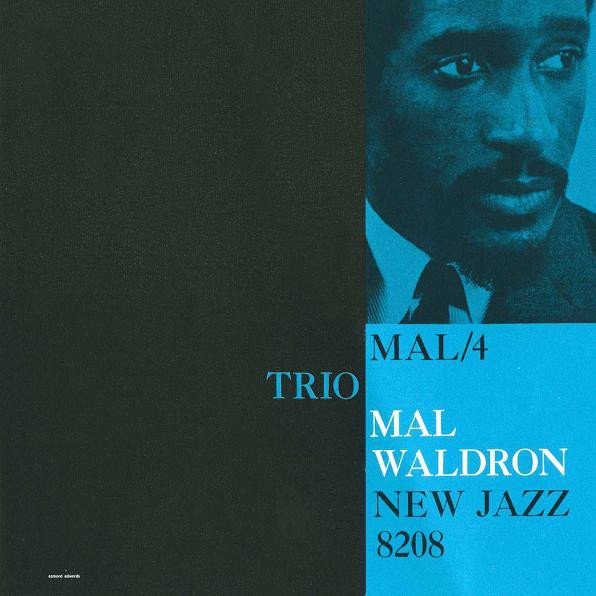
Listening to Prestige 287: Mal Waldron

This is the fourth Prestige session Mal Waldron presided over as leader, and he'd appeared on a whole bunch more as a sideman (I have 28 different references to him in this blog), so I've listened to a lot of his music, with growing admiration of his musicianship, his technical and emotive range, and with growing awe at his abilities as a composer. Looking back on those years, in a 2000 interview (he died in 2002) with jazz writer Ted Panken, Waldron did see himself in exactly the same light (all the quotes from Waldron in this essay are from Panken's interview). To Panken's suggestion, "Your music certainly had its own sound by 1960.  You’re recognizably Mal Waldron ...no one could mistake you for anybody else, Waldron demurred.
Well, I’m not quite sure about that, because I was still learning and putting it together.  I was halfway through the tree.  In other words, I started out with a big tree and I tried shaving and shaving and shaving try to find the perfect toothpick, but I wasn’t there in 1960 — definitely.  I was nowhere near the toothpick at that moment.
This is a startling and original metaphor for an artist trying to find his or her own voice. I've really never read anything like it, and it rings deeply true. Michelangelo may or may not have said (almost certainly did not say) that he took a block of marble and chipped away everything that didn't look like "David." Many teachers of writing, myself among them, have counseled that the most important part of revision is cutting. But this different, and I will be thinking about it for quite a while.

A large part of Waldron's goal of shaving that tree down came from Charles Mingus, who caught him trying to play like Bud Powell and gave him a tongue-lashing, telling him never to try to sound like anyone except himself.

But the first clumsy strokes at that tree are always going be taken with borrowed axes, and one of Waldron's first--he had grown up being forced to practice the piano, and hating it--was Coleman Hawkins. It was "Body and Soul" that first made him fall in love with music, and he immediately went out and bought a saxophone:
...An alto.  I couldn’t afford a tenor.  I got a big, hard reed and an open lay on the mouthpiece so it would sound like a tenor, and I got the music for “Body and Soul” from “Downbeat” and I read it, and for 5 minutes I was Coleman Hawkins!
And after that, of course, with an alto:
I was trying to emulate Charlie Parker!  But I couldn’t arrive, so I hocked the horn and went back to the piano.  Because I found my basis on piano was strong enough at least to enable me to play the changes right.
His enforced training on the piano as a child had been classical, which he found too constraining--"I had to do it the same way every time, otherwise I got my knuckles rapped"--nevertheless remained a part of his musical awareness, as did studying composition at Queens College with the eminent German émigré composer Karol Rathhaus. He discussed the importance of the classical influence with Panken:
TP: Did those lessons stay with you in your composition?

MW: Definitely.

TP: Your classical background never left you, your sense of harmony and shading…

MW: And form and development, how to develop themes, sure.

TP: I think people aren’t aware of how deeply classical music studies permeated musicians of your generation, who then created a lot of home-grown resolutions and utilizations of it.  Can you address that a bit.  I guess the G.I. Bill helped a lot of people.

MW: Sure.  Well, it had to do with the concepts of Bach.  Bach is very basic.  The way he moves from V to I, that concept is very instrumental in how the musicians grew.  They moved from V to I, and they made it with a flat fifth and putting in stuff like extra notes in the chords and changes like that.

TP: In your circle of friends with Randy Weston and Herbie Nichols, etc., were you talking a lot about classical music and listening to…

MW:Yes, we discussed things like “Rite of Spring” and the sounds and things like that.
Waldron is very much of a generation I've discussed a lot. The early beboppers grew up on swing, on Kansas City blues, on the territorial bands, on Basie and Ellington and Lunceford and Erskine Hawkins as well as Goodman and Shaw; Waldron's generation grew up on bebop. But Panken and Waldron make an important point here about this generation that came of age post-World War II, with college and conservatory studies thanks to the G.I. Bill. We know that Charlie Parker listened to everything, and responded strongly to the compositions of Bartok. The fictional Dale Turner, in Round Midnight, speaks for many of his generation when he acknowledges his debt to Debussy.

The last Waldron session I wrote about was one with Gene Ammons, for which Waldron composed all of the tunes, and I began by imagining a conversation with Bob Weinstock:
"Mal, you're playing a gig with Gene Ammons this Friday. Come up with some tunes that'll suit him."

"On it."
And this is probably pretty close to how it went down (including the Friday part: that was Prestige's day in Hackensack).
MW: The way the setup was in those days, they’d tell me who was on the set and then they’d tell me to write six or seven compositions for the date.  So I had to stay up all night long and write the changes, and next morning I’d come in to Hackensack, N.J., and make the records, then I’d go home and write some more music for the next date.

The way I’d write the tunes, the first important thing was to be able to solo on it.  So I’d make my  changes first, nice blowable changes that you could solo on beautifully, and then I’d write a tune over the changes.

TP: Write your melody…

MW: Over the changes, yes...my life was consisting of thinking about the melodies in the daytime, writing them at night, and then recording them the next day.

TP: You’d get a phone call, you’d write some music, a bunch of charts or tunes…

MW: Right, and bring them in.  We’d run them through maybe for ten minutes, or just talk about them, and then we’d make the record.  They were usually all first takes, too.

TP: If you had a date with Gene Ammons and composed “Ammon Joy,” was that based on his…
MW: Yes, on his sound.  They’re all connected.

TP: Or writing for Thad Jones or Frank Wess or John Coltrane.  In each case you had their sound in  mind.

MW: Their sound in mind, sure.  That’s the way you write. 
On many of these dates, like May 2 with Ammons, Waldron was called upon to write the entire session. Here, he only contributes three of eight, the rest being standards. But that's another part of the Waldron story. He was already working as Billie Holiday's accompanist, and he would go on to work with Abbey Lincoln, Jeanne Lee, and other vocalists, so he was spending a lot of time with standards, and that, too, relates over to his work in an instrumental jazz context. As he told Panken:
[Internalizing the lyrics] really helps me to improvise, because the words give it a completely different atmosphere to improvise on.  You can improvise the words alone, instead of just improvising on the changes and the harmony and the melody.
In a way, this is exactly what Eddie Jefferson did with "I'm In the Mood For Love."

Waldron takes four songs from what we now call the Golden Age of American song, and the fifth from the era that surrounded him. Sammy Davis Jr., or his spirit, must have been tap dancing through Hackensack in the summer of 1958, because this is the second "Too Close For Comfort" we've had (Eddie "Lockjaw" Davis/Shirley Scott providing the first), along with one "Mr. Wonderful" (per Red Garland).

Kenny Dennis is new to Prestige with this recording. He broke into the jazz scene with junior high classmate Ray Bryant, played with many of the greats, and is still active as the assistant director of the Lab Band at the Los Angeles County High School for the Arts. Among his numerous recording credits is a session with Langston Hughes.

This came out from New Jazz, with Prestige following its pattern of numbering Waldron's albums. This one was Mal/4--Trio.


Order Listening to Prestige Vol 2


Listening to Prestige Vol. 2, 1954-1956 is here! You can order your signed copy or copies through the link above.


Tad Richards will strike a nerve with all of us who were privileged to have lived thru the beginnings of bebop, and with those who have since fallen under the spell of this American phenomenon…a one-of-a-kind reference book, that will surely take its place in the history of this music.

                                                                                                                                                --Dave Grusin

An important reference book of all the Prestige recordings during the time period. Furthermore, Each song chosen is a brilliant representation of the artist which leaves the listener free to explore further. The stories behind the making of each track are incredibly informative and give a glimpse deeper into the artists at work.
                                                                                                                --Murali Coryell

Saturday, November 18, 2017

Listening to Prestige 286: Dorothy Ashby-Frank Wess


There's a moment during "Bohemia After Dark" when Dorothy Ashby and Herman Wright are doing a harp-bass dialog, and then it's Wright and Frank Wess doing a flute-bass dialog, and you're not quite sure when the crossover occurred. That's how well these musicians play together.

This is the second and last Ashby recording session for Prestige. She would pack a lot of music into it, and she would pack a lot of music, art, writing and performance into her short 58 years on this earth. She was from the jazz hotbed of Detroit, and she would continue to make Detroit her home, although she toured and recorded widely. For five years in the 1960s, she and her husband, John Ashby, had a jazz radio show in Detroit, where they "talked about the new jazz releases, about the problems of jazz, and about the performers" (from an interview with her and Cannonball Adderley). She reviewed jazz records for the Detroit Free Press.

And she and her husband founded a theater company in Detroit, the Ashby Players. John wrote the scripts and Dorothy the songs, music and lyrics. She even performed in at least one of the plays. Unfortunately, none of this work has been released to the public, although it's said to exist on reel-to-reel tapes.


But plenty of her other work survives. She recorded eleven albums as leader of her own group, including one with Terry Pollard, another Detroit woman who broke through jazz's glass ceiling. And she wasn't just a specialty act, either--"Hey, let's build an album around this chick who plays the harp." She was in serious demand as sidewoman, recording with jazz groups (Bobbi Humphrey, Wade Marcus, Stanley Turrentine, Sonny Criss, Gene Harris, Freddie Hubbard) and vocalists (Bill Withers, Minnie Riperton, Stevie Wonder, Billy Preston, Bobby Womack). She recorded with Japanese new age musician Osamu Kitajima. She's been sampled by hip-hop artists.

And if the harp wasn't enough, she brought another unusual sound into jazz: the koto, a Japanese multi-stringed instrument which she played on The Rubaiyat of Dorothy Ashby, a remarkable album released in 1970 on Cadet, a Chess Records subsidiary, an album which also featured an electric harp, and Ashby's vocals.

Ashby was active up until shortly before her death in 1986, but she had some interesting things to say about the era we're looking at now, also in the joint interview with Adderley:
I speak often of the decade of 1950-1960 as being the best for the Black jazzman. The economy of the country was in pretty fair shape. What we missed out on in the way of post-war adjustments, we "made up for" with the Korean venture. The United States was becoming aware of jazz's role in international goodwill. The jazz festivals were born, giving jazz some of its greatest and most diverse audiences. Jazz was used in the films, like Odds Against Tomorrow, No Sun in Venice, and Miles' The Elevator to the Hangman.
Another nail in the coffin of the myth of the 1930s being the golden era of jazz's popularity.

This album features standards, and two compositions by Ashby, "It's a Minor Thing" and "Rascality." One sort of expects a minor thing to be moody and subdued, but this one is rowdy, rambunctious and bursting at the seams. "Rascality" is a hell of a piece of music. It's hard to say what makes one jazz tune into a widely recorded standard, while another doesn't make it beyond its first recording session. Oscar Pettiford's "Bohemia After Dark," which Ashby and Co. start off the day with, is one such standard. "Rascality" is not, perhaps because nobody thinks a melody written by a harpist can translate into other instrumentations. Ashby discussed that in an interview with jazz historian Sally Placksin:


Even arrangers admit that often they don’t know how to write what they’d like to write. What they would be willing to write for harp often doesn’t work, because they’re writing from a pianistic point of view, or maybe another instrumental point of view, and that doesn’t work on a harp, because you can only change two pedals at a time, and various other technicalities…. The harp has complexities that a person has to be able to work out in their head while they’re spontaneously creating jazz on it.


The only other version I've been able to find is one by contemporary jazz harpist Destiny Muhammad, in a concert tribute to Dorothy Ashby. But a great tune is a great tune, and jazz musicians have made a mistake by not picking up on this one.

Detroiter Herman Wright, who often worked with Ashby, contributes, as does drummer Roy Haynes, who is always one to make his presence felt, and who ain't gonna play no chamber music. There's a terrific interplay between Haynes and Wess at the beginning of "Taboo," which is a number one plays only at the risk of slipping into the clichés of exotica. There's no slippage here.
The album was released on New Jazz as In a Minor Groove, and much later (1969) on Prestige as Dorothy Ashby Plays for Beautiful People.


Order Listening to Prestige Vol 2


Listening to Prestige Vol. 2, 1954-1956 is here! You can order your signed copy or copies through the link above.


Tad Richards will strike a nerve with all of us who were privileged to have lived thru the beginnings of bebop, and with those who have since fallen under the spell of this American phenomenon…a one-of-a-kind reference book, that will surely take its place in the history of this music.

                                                                                                                                   --Dave Grusin

An important reference book of all the Prestige recordings during the time period. Furthermore, Each song chosen is a brilliant representation of the artist which leaves the listener free to explore further. The stories behind the making of each track are incredibly informative and give a glimpse deeper into the artists at work.
                                                                                                                --Murali Coryell

Wednesday, November 15, 2017

Listening to Prestige 285: Eddie "Lockjaw" Davis - Shirley Scott

If the tenor sax-Hammond organ combination sounded a bit like a novelty the first time, it surely doesn't by this time. And Scott and Davis are so attuned to each other that they sound like an old married couple (which they aren't, although the later pairing of Scott and Turrentine will be). They can finish each other's thoughts, they can anticipate each other's moods. And they were getting people to listen, on the jukeboxes as well as in the clubs. Four different 45s were released out of this session.

Esmond Edwards is back as producer, as he was for their first session. The songs are standards for the most part. Since they recorded 16 tunes on this one recording date, they had enough for two albums, with a few left over to go onto one of their later Cookbook albums and a Prestige compilation album. The first release, Jaws, was all standards, plus a recent hit, "Too Close for Comfort," from the Sammy Davis. Jr., Broadway vehicle, Mr. Wonderful. It was on the shelves at Sam Goody's and on the jukeboxes around town before the year was out. The title tune of the album was a Davis original, and it wasn't the title tune of the album--"Jaws" was held off until the second release. Smokin', in 1964, which mixed standards with three by Davis and a Randy Weston tune, "Hi-Fly," which would become a jazz standard and was from a later recording session. Steven Spielberg probably did not know about the Davis title, and he was probably happy enough with John Williams, but it would have made an interesting addition to the movie.

It's just the four of them this time. They continue to work with George Duvivier and Arthur Edgehill, and a good thing, too. Duvivier, in particular, makes some striking contributions. This is music that's catchy and soulful and audience-pleasing...just like rhythm and blues, which as we know, is an equally important jazz genre.

The 45s, in order of release, were "Tangerine" / "I'll Never Be The Same," "Old Devil Moon" / "Body And Soul," "I Let A Song Go Out Of My Heart" / "You Stepped Out Of A Dream," "Willow Weep For Me" / "Stardust." I'm a little surprised they didn't release "Too Close for Comfort" as a single.

Order Listening to Prestige Vol 2


Listening to Prestige Vol. 2, 1954-1956 is here! You can order your signed copy or copies through the link above.


Tad Richards will strike a nerve with all of us who were privileged to have lived thru the beginnings of bebop, and with those who have since fallen under the spell of this American phenomenon…a one-of-a-kind reference book, that will surely take its place in the history of this music.

                                                                                                                                                --Dave Grusin

An important reference book of all the Prestige recordings during the time period. Furthermore, Each song chosen is a brilliant representation of the artist which leaves the listener free to explore further. The stories behind the making of each track are incredibly informative and give a glimpse deeper into the artists at work.
                                                                                                                --Murali Coryell

Tuesday, November 14, 2017

Listening to Prestige 284: Basie Reunion

You could say that Weinstock and co. are still marking time, but that would be wrong. Bringing a collection of some of Count Basie's greatest sidemen together, along with pianist Nat Pierce, who did Basie better than anyone except Basie, in a group led by Paul Quinichette, who did Lester better than anyone except Lester, and what you've got is a recipe for nothing less than a soufflé of great music.

And this is one soufflé that doesn't collapse as you're taking it out of the oven.

But...if you're offered a recording of Basie musicians paying Basie's tunes, why not just pass it up and buy a Basie record?

Well, for one thing, you can never have enough good music. And if the musicians are this good, it's always going to be different. Nat Pierce can be Basie the piano player, but he can't be Basie the bandleader, so that role seems to fall to Paul Quinichette, who may not have seniority as a Basie-ite, but who has Prestige seniority as an on-and-off regular. And it's all worth having, and it's all worth listening to, and I am a better, more fulfilled person for having listened to it.

And besides, while this may be a Basie dream band (or dream small group), it isn't the current Basie band, or even precisely any one Basie aggregation.

Jo Jones goes back the farthest. He was already with the band when Basie took it over on the death of Bennie Moten, and remained behind the drums until 1948. Jack Washington, not so well known as the others but with the reputation of a jazzman's jazzman on baritone sax, was with Basie from the beginning, and stayed till 1950. Freddie Green came along just a little later, in 1937, and never left. He anchored the Basie rhythm section for five decades.

Buck Clayton spent some great years with Basie, from 1936 until he was drafted into the army in 1943. Earlier in the 1930s, he had a rather remarkable expatriate career, not in France or Sweden, but in China, where he led a group called the Harlem Gentlemen, and mentored the Chinese composer Li Jinhui, who revolutionized Chinese music before the revolution. After the revolution, Li's music was banned in China as decadent and western, and he became an enemy of the people.

So none of these guys played with Eddie Jones, who joined in 1953 and was the only active Basie-ite when this session was cut, remaining with the band until 1962, after which he went to work for IBM, which means he probably overlapped with me at IBM, though not in the same city. As a Basie-ite, he overlapped with Quinichette (1952-56).

When they get together, latecomers, early-leavers and lifers alike, they all know what to do. As ex-Marines are fond of saying, you're never an ex-Marine, and it seems you're never really an ex-Basie man either. The tunes are Basie classics. With a smaller group, there's more room for soloists, especially compared to the late 1950s version of Basie's group, where the emphasis was more on arrangements and ensemble play. It's hardly necessary to say how good Buck Clayton and Paul Quinichette are. Nat Pierce has some very nice solo moments, where he does more than just play the Count note for note. He has a musical persona of his own. There's just a great drum solo by Papa Jo Jones on "John's Idea."

I'm not exactly sure what qualifies this is a Prestige All Stars session. More like a Prestige Guest Stars session. But they are all stars, and I'm glad to have them.

The album was released on Prestige as Basie Reunion, and was later rereleased on Swingville when Weinstock started branching out into those subsidiary labels that appealed to diverse specialized tastes.


Order Listening to Prestige Vol 2


Listening to Prestige Vol. 2, 1954-1956 is here! You can order your signed copy or copies through the link above.


Tad Richards will strike a nerve with all of us who were privileged to have lived thru the beginnings of bebop, and with those who have since fallen under the spell of this American phenomenon…a one-of-a-kind reference book, that will surely take its place in the history of this music.

                                                                                                                                                --Dave Grusin

An important reference book of all the Prestige recordings during the time period. Furthermore, Each song chosen is a brilliant representation of the artist which leaves the listener free to explore further. The stories behind the making of each track are incredibly informative and give a glimpse deeper into the artists at work.
                                                                                                                --Murali Coryell

Monday, November 13, 2017

Listening to Prestige 283: The Prestige Blues-Swingers

It's those lazy hazy crazy days of summer in 1958, and we're coming close to wrapping up our first decade of recording music for a new label that's come along at the right time, and made its mark in jazz. Look at the musicians who've passed through our door. We brought Miles back to New York and restarted his career. We were the first to record the Modern Jazz Quartet (well, after one tentative start on Savoy). Sonny Rollins and Stan Getz and Lenny Tristano and Thelonious Monk have all made significant recordings with us. John Coltrane is soon to move on--he'll be gone as we start our tenth anniversary--but he's still doing some great stuff for us. We've been an important part of the jazz of the fifties, and that's an era that's giving way to change. What will the new jazz of the sixties be? How are we going to prepare for it, to position ourselves in it?

Meanwhile, who cares? Let's have some fun!

Let's get a bunch of the finest modernists around, and let them loose on some classic trad jazz tunes, and just blow, blow, blow. In fact, that's a good idea for a tune.

Of course, when the dust has settled, and you have six horns, plus a guitar and a rhythm section, you've got a pretty good sized aggregation, and you can't just blow, blow, blow. You're going to need an arranger.

Bob Weinstock brought in a new addition to the Prestige catalog, Jerry Valentine, who had been a trombonist in the Billy Eckstine band, and had arranged for Earl Hines. Valentine's credentials were a bit scattered, but he turned out to be the right man for the job, writing several of the tunes for the session, and finding a sound that was trad and modern at the same time.

The classic tunes were by Andy Razaf (Fats Waller's longtime collaborator) and Will Weston ("I'm Gonna Move to the Outskirts of Town"). Billy Eckstine and Earl Hines ("Jelly, Jelly") and Count Basie with Eddie Durham and Jimmy Rushing ("Sent for You Yesterday"). The ensemble has a Basie feel, except that it doesn't. The musicians are virtuoso modern jazz players, and Valentine has given them a solid ensemble footing and room to wail.

The other newcomer is trombonist George "Buster" Cooper, who generally went just by "Buster,," who knew how to entertain and knew how to swim with the big fish. He had been in the house band at the Apollo Theater, had accompanied Josephine Baker in Paris, and had played with Lionel Hampton (he was with him for the legendary 1953 European tour) and Benny Goodman. He also contributed to jazz history when a friend from the younger days in Florida  arrived in New York, and Cooper took him down to sit in with the house band at the Café Bohemia. The friend was Julian "Cannonball" Adderley.

Later, in the 1960s, he would join the Duke Ellington orchestra, where he would be a featured soloist.

Jimmy Forrest was another one of those guys who played the style of jazz known as bebop and the
style of jazz known as rhythm and blues. He brought the two together when he turned a Duke Ellington riff into "Night Train." He was also the leader of a group which was recorded live in a small club in 1952, with Miles Davis sitting in: to my mind, a significant recording, He gets some solo space on "I'm Gonna Move to the Outskirts of Town," and shows that he knows what to do with it.

Outskirts of Town was the name of the album, and the tune also became the A side of a 45 RPM release, b/w a Valentine original, "Blue Flute."


Order Listening to Prestige Vol 2


Listening to Prestige Vol. 2, 1954-1956 is here! You can order your signed copy or copies through the link above.


Tad Richards will strike a nerve with all of us who were privileged to have lived thru the beginnings of bebop, and with those who have since fallen under the spell of this American phenomenon…a one-of-a-kind reference book, that will surely take its place in the history of this music.

                                                                                                                                                --Dave Grusin

An important reference book of all the Prestige recordings during the time period. Furthermore, Each song chosen is a brilliant representation of the artist which leaves the listener free to explore further. The stories behind the making of each track are incredibly informative and give a glimpse deeper into the artists at work.
                                                                                                                --Murali Coryell

Friday, November 10, 2017

Listening to Prestige 282: Red Garland

Not much available from this album from any of my usual sources, and it's too bad, because from the couple of cuts I was able to listen to, Red Garland and Ray Barretto together just keep getting better and better.

Maybe the folks who select things for streaming gave this a lower priority because Paul Chambers and Art Taylor gave it a pass, but that hardly seems reason enough. George Joyner and Charlie Persip are more than up to the job of giving these guys the rhythmic support they need, and "Ralph J. Gleason Blues" shows that Persip and especially Joyner can deliver original and inventive solos.

"Ralph J. Gleason Blues" and "Mr. Wonderful" were the two cuts I was able to listen to, and I've put up "Ralph J. Gleason Blues" as my "Listen to One" selection because...because, well, everything. The Joyner and Persip contributions I mentioned above, and the ways that Garland and Barretto play off each other -- as always, perfectly balanced by Rudy Van Gelder's sound engineering.

Ralph J. Gleason, the dedicatee of Garland's blues, was one of the leading jazz critics of the 1950s, an associate editor of Down Beat. And as I've mentioned, another term for "leading jazz critic of the 1950s" was "snob."

Gleason, perhaps, less than most. While he might not have been so open as to recognize rhythm and blues as a legitimate form of jazz, because no one was, he was open to the new music that was being created by hippies and rockers of the 1960s, to the extent when in 1967, Jann Wenner started Rolling Stone, Gleason was one of its first editors.

"Mr. Wonderful" was the title song from a Broadway musical of 1956, which starred the Will Mastin Trio. In case you're not quite sure you remember the name, this was an act put together by vaudevillian Will Mastin, featuring his brother, Sammy Davis, and his nephew, who had been given the same name as his father. Yes, mega-star though he was already, Sammy Davis. Jr., continued to perform with, and feature, the vaudevillians who had nurtured them. Family acts from the Everly Brothers to Creedence Clearwater Revival have festered grievances to the point of coming to blows onstage, but Sammy stayed faithful to his two mentors until they retired, and today they are buried alongside each other. I saw Mr. Wonderful on Broadway, and yes, it wasn't much of a show, but yes, Sammy lit up the theater. The song wasn't the hit from the show, because it was sung about Sammy, not by him -- "Too Close For Comfort" got that honor. But it had a sweet melody, and Garland and his group get a lot out of it.


The session log has this as the Red Garland Quartet, but it was actually released under Red Garland Trio plus Ray Barretto (or con Ray Barretto to the Latin market). To either market, it was Rojo.

Order Listening to Prestige Vol 2


Listening to Prestige Vol. 2, 1954-1956 is here! You can order your signed copy or copies through the link above.


Tad Richards will strike a nerve with all of us who were privileged to have lived thru the beginnings of bebop, and with those who have since fallen under the spell of this American phenomenon…a one-of-a-kind reference book, that will surely take its place in the history of this music.

                                                                                                                                                --Dave Grusin

An important reference book of all the Prestige recordings during the time period. Furthermore, Each song chosen is a brilliant representation of the artist which leaves the listener free to explore further. The stories behind the making of each track are incredibly informative and give a glimpse deeper into the artists at work.
                                                                                                                --Murali Coryell

Monday, November 06, 2017

Listening to Prestige 281: Mose Allison

Once again, listening to the Prestige recordings by Mose Allison, I'm reminded that the later recordings, which made him justly a cult legend as a singer-songwriter, are not the whole story. Allison was a brilliant composer, and this album, though it went a long way toward establishing his reputation as a vocalist, both with his own and other songwriters' material, is an excellent place to reflect on just how good he was. "Creek Bank," in particular, is a gem, one of my favorites of his jazz compositions.

But the whole group of composed pieces, the Creek Bank Suite, as it could legitimately be called, although he only gave the name of "suite" to his Back Country compositions from his first album, is worth many listenings. Back Country Suite is a suite because the interlocking compositions are short and gain their power by accumulation. Here, as in Local Color, we have a series of pieces tied to back country Mississippi by their titles and by a certain feeling, to New York by the bebop influence of Bud Powell and George Wallington and Allison's own musical sophistication.

As to the titles, "Dinner on the Ground" is so back country that would be easy for a picnic-fancying Easterner, perhaps accustomed to listening to Mose while spreading a repast on the ground at a jazz festival. I might not have gotten its significance without having listened to Merle Haggard's account of an impoverished family in his song "Daddy Frank":
I don't remember ever going hungry,
But I remember Mama cooking on the ground.

Unlike Back Country Suite and Local Color, this album, as it was pressed, does not lead with the instrumental sequence, although the session log has the  four tunes recorded first. That's relegated to the "B" side, not that "A" and "B" sides are a particularly important concept on an LP. But "The Seventh Son," which did lead off the "A" side of the album, was also the "A" side of two different 45 RPM singles, where the hierarchy of sides does matter, "If You Live," Allison's self-penned song, was on the other side of the first release, and "Parchman Farm" was on the second. Both of these songs are favorites of Allison fans and collectors, and both of them were gradually dropped from his performing repertoire. As he would explain to an interviewer in later years, he started to find that he couldn't really sing about cotton sacks any more, in a world where even the deep South was all mechanized mega-farms. "The Seventh Son" is by Willie Dixon, perhaps the first bluesman to become famous primarily for writing songs for others, in this case Chess recording artist Willie Mabon.

Another difference -- no trumpet track on this one. I miss it. I liked the trumpet tracks. But the trumpet was not Mose's strongest card.

Addison Farmer and Ronnie Free both get some well-deserved solo space here. Farmer, by this time, was primarily playing with Allison, although he did continue to work on and off with twin brother Art, including the first Jazztet album. He would continue with Allison until his death in 1963.

Creek Bank was the name of the album. Allison's material, especially his songs, made it onto various compilation albums. One, of sort of random instrumentals, was called Mose Allison Plays for Lovers, which seems to have been a mid-1960s marketing notion of Bob Weinstock's. He had Yusef Lateef and John Coltrane playing for lovers, too, although in the movie Jerry Maguire, Tom Cruise vehemently rejects Trane as an aid to lovemaking.


Listening to Prestige Vol. 2, 1954-1956 is here! You can order your signed copy or copies through the link above.


Tad Richards will strike a nerve with all of us who were privileged to have lived thru the beginnings of bebop, and with those who have since fallen under the spell of this American phenomenon…a one-of-a-kind reference book, that will surely take its place in the history of this music.

                                                                                                                                                --Dave Grusin

An important reference book of all the Prestige recordings during the time period. Furthermore, Each song chosen is a brilliant representation of the artist which leaves the listener free to explore further. The stories behind the making of each track are incredibly informative and give a glimpse deeper into the artists at work.
                                                                                                                --Murali Coryell

Saturday, November 04, 2017

Listening to Prestige 280: J. C. Higginbotham - Tiny Grimes

I love it that the unexpected keeps cropping up in the Prestige catalog. J. C. Higginbotham was an unreconstructed swing trombonist, best known for his work in Luis Russell's orchestra in the late 1930s,  but also with Chick Webb, Fletcher Henderson and Benny Carter. The late 1950s saw him resuming his career after losing several years to the bottle. He played a regular gig with Henry "Red" Allen at the Metropole Café in Times Square, the traditional jazz club next to which Bob Weinstock had opened the record store which commenced his jazz Odyssey--an Odyssey that very quickly took him away from the Metropole's brand of nostalgia and into the newer world of bebop. But here Higginbotham is, playing with an eclectic group of musicians, and fitting in quite nicely, thank you.

If Higginbotham was unreconstructed, Tiny Grimes was almost continually reconstructed. He played swing, and even sang with a swing vocal group (The Cats and the Fiddle). He played Art Tatum's almost unclassifiable brand of jazz when Tatum, for a short period, formed a trio. He played with Charlie Parker. He played rhythm and blues.

Tiny Grimes came to the guitar late in life--as he put in an interview with Stanley Dance, "when I was very, very old." In other words, about 20. In his youth he had played the drums until they were washed away in a flood, and then the piano. He was self-taught on the guitar. As he told Dance for his book of interviews, World of Swing (quoted in James Lester's biography of Art Tatum. Too Marvelous for Words):
No one ever learned me nothing! ... The way I learned my chords, I used to find sheet music with ukulele diagrams on them. I got my own little system going, found out how to make certain things, and just translated the music my way... I used to lock myself in my room all day, every day... after three months of sitting up in that room day in and day out, I could make little gigs.
Perhaps learning from ukulele diagrams is why Tiny chose the four-string tenor guitar? Perhaps, but it would have been tricky. Tiny played the standard tenor guitar, tuned just like the four high strings on a standard guitar. Ukulele in standard tuning has essentially the same intervals, but three steps higher, so you could more or less transpose the chords, but it would still sound a little different, because the highest string on the uke jumps up an octave. In any case, Tiny was going for a different sound, and he found it, because within a few years, he had taken the place of the Air Force-bound Slim Gaillard in Slam Stewart's guitar-bass duo, and when Tatum decided, in 1943, that it would be to his economic advantage to form a piano-guitar-bass trio along the lines of Nat "King" Cole's, he called on Stewart, which meant he also got Grimes.

In 1944, he had a recording session as leader for Savoy, and his band included a cat who was making his recording debut for Savoy, although there would be a lot more: Charlie Parker.

Eddie "Lockjaw" Davis would be doing a lot with Prestige, both with and without Shirley Scott. His Prestige years coincide with the soul jazz years, but his complete discography is a lot more than that...and here again, I have to go against the accepted wisdom. The writer of Davis's Wikipedia entry, and it's a good, knowledgeable piece of writing, says that "he played in the swing, bop, hard bop, Latin jazz, and soul jazz genres. Some of his recordings from the 1940s also could be classified as rhythm and blues."

So why is rhythm and blues the poor stepsister, hunched up beside the cinders? Why not say "he
played in the swing, bop, rhythm and blues, hard bop, Latin jazz, and soul jazz genres"? Why is the work Wilbur Harden did with Ivory Joe Hunter less important than the work he did with Curtis Fuller?

So put them together, you have three  cats who can play the blues. Two of them could walk into any room in the world where musicians were playing in any blues-based genre, sub-genre, or alt-genre, and sit right in.

And they had the right three guys in the rhythm section, especially Ray Bryant, who was as progressive as they come, but could just as easily be found sitting in with Red Allen and J. C. Higginbotham at the Metropole.

And what would you call this music? I don't know. I'd just listen to it. Although Higginbotham gets co-leader credit, it's Tiny's session--all the tunes except "Air Mail Special" are his--but everyone makes it work. It's got the blues, it's got rhythm, it swings, it bops, it's got some great improvisation, it's got what it takes.

"Grimes Times," "Air Mail Special," "Callin' the Blues" and "Blue Tiny" were all included on the album Callin' the Blues, released in 1958. It would also be rereleased when Weinstock started his Swingville subsidiary in 1960. The other two ultimately were folded into a compilation album called Guitar Soul, on Prestige's budget Status label,


Order Listening to Prestige Vol 2


Listening to Prestige Vol. 2, 1954-1956 is here! You can order your signed copy or copies through the link above.


Tad Richards will strike a nerve with all of us who were privileged to have lived thru the beginnings of bebop, and with those who have since fallen under the spell of this American phenomenon…a one-of-a-kind reference book, that will surely take its place in the history of this music.

                                                                                                                                                --Dave Grusin

An important reference book of all the Prestige recordings during the time period. Furthermore, Each song chosen is a brilliant representation of the artist which leaves the listener free to explore further. The stories behind the making of each track are incredibly informative and give a glimpse deeper into the artists at work.
                                                                                                                --Murali Coryell

Friday, November 03, 2017

Listening to Prestige 279: John Coltrane

In 1955-56 Miles Davis had one foot out the door of the Prestige mansion, and he made his farewell by hurrying through three marathon sessions, playing familiar ballads, getting his contractual obligations out of the way. You certainly couldn't say he was just going through the motions, because this was Miles, and he always played for real, but he was in and out of each tune, then in and out of the studio. And he produced a series of unforgettable masterpieces.

In 1957 and 1958, John Coltrane crossed the threshold to the Van Gelders' living room some 20 times, recording as leader or sideman, and he produced a lot of very great music, not all of which is remembered quite as vividly as those Miles albums. Maybe this is because their release dates are stretched out over such a long period. Maybe it's because a lot of the sessions were sliced and diced and released here and there in various formats. Or maybe it's a function of age (mine). I was just looking at someone's album-by-album discography of Miles Davis on rateyourmusic.com, and he doesn't think anything that Miles recorded on Prestige was any good. But then, he doesn't think Birth of the Cool holds up particularly well, either, so I'll stick with my opinions.

But if Standard Coltrane or Bahia or The Stardust Session don't stick in your mind the way Workin' or Relaxin' do, the reasons are for sure not to do with musical satisfaction. These sessions, for me, come under the heading of discovery rather than revisiting old friends, and the discoveries are rewarding.

Jimmy Cobb is back to fill out the rhythm section along with Red Garland and Paul Chambers, and Coltrane has brought along Wilbur Harden on both trumpet and flugelhorn. Harden had come to New York from Detroit with Yusef Lateef, and he had quickly established a kinship with Coltrane. Before this July session for Prestige, he had recorded three sessions as leader of a quintet and sextet for Savoy, featuring Trane and, for the sextet sessions, Curtis Fuller. For his Savoy recordings, he stuck with the flugelhorn--he was one of the first musicians to introduce this European concert instrument into American jazz.

This is a lengthy session, if not quite as lengthy as the Contractual Marathon sessions, and like them, it leans heavily on standards, albeit an eclectic mix of standards. Four of them, in fact, found their way onto an LP entitled Standard Coltrane, released in 1962. They were:

"Spring is Here," a Rodgers and Hart ballad, originally written for a 1938 musical,  and a favorite of vocalists. Frank Sinatra had just recorded it for his 1958 album Only the Lonely. Interestingly, all the instrumental jazz versions of it up to this point seem to have emanated from the West Coast, most notably versions by Stan Getz/Bob Brookmeyer and Shelly Manne. There's no aid-back West Coast feel to Coltrane's version, and I'm not sure the lonely would take much solace in it either. Trane isn't really doing the sheets of sound in this session, but he comes close here, and Paul Chambers adds his own sheet of sound with some incredibly fleet-fingered bass plucking. Here, as everywhere on this session, Harden is well-matched to Coltrane on the ensemble work. He was a good choice.


"I'll Get By" (melody by Fred E. Ahlert) goes back to the 1920s, but really reached public consciousness in 1944, with recordings by Harry James/Dick Haymes and the Ink Spots. It became a reliable standard for vocalists, but Coltrane was one of the few jazz instrumentalists to delve into it. Coleman Hawkins had recorded it earlier, which made it a serious tenor saxophone vehicle, and oddly enough, it was part of Sun Ra's repertoire. Coltrane treats the head as tenderly as if he were crooning it before he takes off into the stratosphere, and when he returns to it at the end, the tempo is more urgent, but the tenderness is still there. The urgency is well supplied by Jimmy Cobb. Jazz is about excitement, and a master drummer like Cobb never forgets that. Bebop took the beat away from the steady bass drum and gave it to the shimmering ride cymbal, and those who developed the bebop tradition could bring the beat from anywhere, and add so much more.

Henry Nemo wrote "Don't Take Your Love From Me" and the lyrics to Duke Ellington's "I Let a Song Go Out of My Heart," but he was chiefly known as a master of jive talk - perhaps the West Coast version of Harry "the Hipster" Gibson. Again, this was a tune that few jazz musicians had worked with--and again, one of the was Coleman Hawkins. But it drifted over into all sorts of genres, with recordings from country (Faron Young) to heavy metal (Ronnie James Dio).

"Invitation," by refugee German composer Bronislaw Kaper, who like several of his contemporaries fled Hitler and the European classical music scene to become a composer of Hollywood film scores, really did become a widely recorded jazz standard, as did Kaper's "On Green Dolphin Street." This isn't as obviously melodic as the other tunes, and Coltrane's solo work is thoughtful.

Those are the songs that made Standard Coltrane, and that's as good place as any to stop with the details. "Spring is Here" was also included on a compilation album called Miles Davis and John Coltrane Play Richard Rodgers.

Hoagy Carmichael's "Stardust" (great bowed bass solo by Chambers and, of course, great melody) and Richard Whiting's "My Ideal" are the best-known standards from the session. "Stardust" was the title tune on an album that included "Love thy Neighbor" (Mack Gordon, Harry Revel) and also featured music from Coltrane's final Prestige session, in December. It was released in 1963. "My Ideal," along with DaSylva, Brown and Henderson's "I'm a Dreamer, Aren't We All" were on the Bahia album (1965 release). "Stardust" and "Love Thy Neighbor" also came out on 45.


Order Listening to Prestige Vol 2


Listening to Prestige Vol. 2, 1954-1956 is here! You can order your signed copy or copies through the link above.


Tad Richards will strike a nerve with all of us who were privileged to have lived thru the beginnings of bebop, and with those who have since fallen under the spell of this American phenomenon…a one-of-a-kind reference book, that will surely take its place in the history of this music.

                                                                                                                                                --Dave Grusin

An important reference book of all the Prestige recordings during the time period. Furthermore, Each song chosen is a brilliant representation of the artist which leaves the listener free to explore further. The stories behind the making of each track are incredibly informative and give a glimpse deeper into the artists at work.
                                                                                                                --Murali Coryell