Wednesday, January 20, 2021

Listening to Prestige 538: Big Joe Williams


LISTEN TO ONE: Mink Coat Blues

 This is the second Big Joe Williams  session to be released on Prestige Bluesville. This is a live album, which is newsworthy for a couple of reasons. First, Prestige very rarely released live albums. Second, it was recorded at Gerde's Folk City in New York's Greenwich Village. 

Greenwich Village had a long history as the center of New York's Bohemia, and that was still very much the case in 1962. That meant entertainment for the niche audience that was Bohemia, and for the brave souls from the suburbs and the outer boroughs who wanted to see what life had to offer beyond Connie Francis and Fred Waring's Pennsylvanians. Jazz was represented in clubs like the Village


Vanguard. And folk music -- the music of the people, the music of protest, the music discovered in tiny Appalachian communities by folklorists and brought to the folkies of Bohemia in publications like Sing Out!

And, increasingly, it was the music discovered by folklorists like Samuel Charters and Mack McCormick. The blues explosion of the 1960s had arrived, as New York's Bohemia played host to such blues musicians as John Lee Hooker, who was backed up by a young white guy named Bob Dylan, making his first appearance on the Folk City stage. And such blues musicians as Big Joe Williams. 

It was a new experience for New York's Bohemians. A previous generation had learned of the blues through Leadbelly, who was a towering talent, and who was savvy enough to tailor his blues message to his audience, singing about not being mistreated by no bourgeoisie. Or through Big Bill Broonzy, a jazz guitarist who realized he could have a second career if he reinvented himself as a folk bluesman, and reinvented the definition of folk bluesman to include songs about getting together and breaking up the old Jim Crow. The blues was a music of realism in the face of an harsh, unchanging world. The white leftists who made up this new audience believed that the world could be changed, and responded most enthusiastically to songs which reflected that belief.


The new young blues audience of the 1960s was looking for a more authentic experience: the gritty realism of the rural south, and later, especially as it got filtered back to them through British blues enthusiasts, of the urban north. And the blues singers got some new paydays, through clubs like Folk City, college campuses, blues festivals (those came later in the decade) and even European tours. 

For the listener of today, it's an opportunity to hear one of the best of the old bluesmen in an intimate live setting. Williams gets a unique sound from his 9-string guitar, and voice is strong and persuasive, and his observations on life trenchant.

The Bluesville album was entitled Big Joe Williams at Folk City.

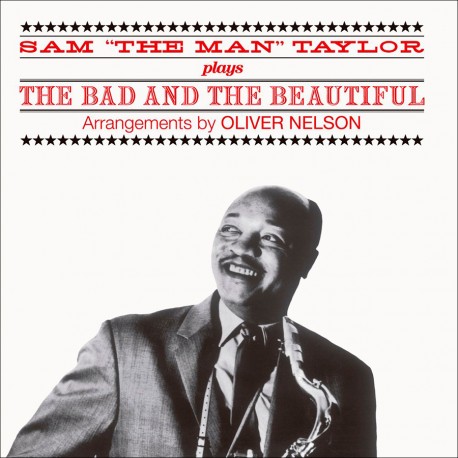
Listening to Prestige 537: Sam Taylor


LISTEN TO ONE: Love Song from Suzie Wong

Anastasia

 Prestige adds another rhythm and blues giant to its jazz roster, proving once again that rhythm and blues is a legitimate form of jazz, and that these players fit seamlessly into a more bop-oriented context. Up this time is Samuel Leroy Taylor Jr., known as Sam "the Man" Taylor when he led Alan Freed's stage band, but simply Sam Taylor when he recorded in more respectable settings (similarly, Ellingtonian Al Sears was "Big Al" when he performed and recorded with the Alan Freed band).

Taylor had been something of a pioneer in the sax-organ combo business, having recorded an album with Dick Hyman for MGM back in 1957, with a very different approach from the soul jazz sound that had become popular in 1962. But he


eschews the sax-organ sound here, going instead with a quintet. Pianist Lloyd Mayers's carer spanned decades, and twenty years after this session, he would be named musical director of the Broadway revue of Duke Ellington's music, Sophisticated Ladies. Wally Richardson was a very active session guitarist in those days, with a number of sessions for Prestige. Art Davis, whose reputation as one of the finest bassists of his generation, classical or jazz, was matched only by his social conscience, had appeared on two previous Prestige sessions. And that a classical cat can get down with a rhythm and blues cat is as good as any tribute to the breadth of the language of jazz. And add Ed Shaughnessy to the mix and you have a pro's pro, whose best known gig, with Doc Severinsen's Tonight show orchestra, didn't begin to scratch the surface of his range.


The album's format is a little gimmicky--movie themes that celebrate women's names (or attributes, like "The Bad and the Beautiful," and it was released on Moodsville, which was sometimes accused of being a little gimmicky as a label. But I am here to say I see absolutely nothing wrong with this. It was probably a lot of fun coming up with the gimmick, and then finding the movie themes that would work. This included classics like "Laura," and tunes that had immediate popularity and proved to have legs, like "The Bad and the Beautiful," written by David Raksin and recorded by jazz musicians from Barney Kessel (1957) to Bill Frisell (2016). And a couple of sleepers. "Love Song from Suzie Wong" has never been recorded by anyone else that I know of. It was written by George Duning, a frighteningly prolific


composer with 180 film scores to his credit. In 1960 alone, the year of The World of Suzie Wong, he scored six other movies. But someone had a good ear, and "Suzie Wong" came out well enough to be the 45 RPM single release from the session, with "Anastasia" on the flip side. 

"Suzie Wong" / "Anastasia" was released as a Prestige single, "The Bad and the Beautiful" as a Moodsville single. The album, with the same name, also came out on Moodsville. "Ruby" (written by Heinz Roemheld for the movie Ruby Gentry) was later released on a compilation album for Prestige's budget label, Status, entitled Lusty Moods, and credited to Sam "the Man" Taylor.


Thursday, January 14, 2021

Listening to Prestige 536: Gene Ammons, Sonny Stitt, Jack McDuff


LISTEN TO ONE: Sleeping Susan

 It was a busy few days for Mr. Stitt, and a lot of trips out to Englewood Cliffs. On Friday, recording with Jack McDuff. On Sunday, a Verve recording session, as Norman Granz joined Sonny with Gene Ammons for a mainstream blowing session in Rudy Van Gelder's cathedral of recorded jazz. Then the two saxophonists might as well have booked a couple of rooms on the Jersey side of the river, as they were back in harness on Monday, joining "youngster" McDuff (actually all three were just about the same age, but McDuff was a new star in the jazz firmament, and the two tenormen were solidly established veterans).


These are three guys who really represent three different genres of jazz: Stitt the bebopper, Ammons the old school boppin' the blues, McDuff the soul jazz of the 1960s. So, although "Soul Summit" is a bit  of cliche, it's also an accurate description of this gathering. They are three kindred spirits who've meshed well in dyads, and mesh equally well here in a triad, with the propulsive assistance of Charlie Persip on drums. Persip and McDuff are the entire rhythm section, so Brother Jack is largely in a supporting role here, but he makes the most of it. He and Persip provide more than a cushion for the two soloists--their work is complex and provocative. 

The set is two standards, two originals by Ammons ("Tubby" and "Shuffle Twist"), one by Stitt ("Dumplin's"), and one more obscure tune from an underrated composer, Jimmy Mundy. Mundy is underrated partly because one of his most famous compositions, "Walkin'," the Miles Davis standard, is not credited to him. On the Library of Congress copyright certificate for the tune, the original title (and


the tune has been recorded under a number of different titles) is wiped out, and the name of Richard E. Carpenter is written in as composer. Carpenter was not a composer, and is best known for cheating and exploiting various jazz musicians. Mundy is credited as co-composer (with Johnny Mercer and Trummy Young) of a gold star standard, "Travlin' Light." And he is the composer, here, of "Sleeping Susan," which proves to be an excellent choice.

You might think that "Shuffle Twist" would have been earmarked as the single, just for the title alone. But instead an edited-down version of "Tubby" was the choice, on the flip side of "Love, I've Found You," from Ammons's 1961 session with Oliver Nelson. The 45 RPM single was issued under Ammons's name.

Esmond Edwards produced Soul Summit.


Sunday, January 03, 2021

Listening to Prestige 535: Lightnin' Hopkins


LISTEN TO ONE: Happy Blues for
John Glenn

 A month after his January session, Lightnin' Hopkins was back in the studio for two more dates with Mack McCormick,now with an amplified guitar and different members of the band that he customarily used for club dates around Houston for each session. They were:

Buster Pickens on piano (second session). He was one of the west Texas piano players who had roots going back to the 1920s and were known as the "Santa Fe group," but not because they had any connection with that New Mexico tourist mecca. They used to travel to gigs around Houston, Galveston, Richmond and other southwest Texas destinations by hopping freights on the Santa Fe railroad line. He recorded with many blues singers, including Texas Alexander, Hopkins' mentor and perhaps his cousin. Pickens recorded an album of his own in 1960


Billy Bizor on harmonica (first session). After playing on several Hopkins recordings in the early 1960s, he got to do two recording sessions on his his own in 1968 and 1969, but they weren't released for a couple of decades, or long after Bizor's death.

Donald Cooks on bass (second session). He was the go-to bass player for a number of Texas bluesmen, recording with Clarence "Gatemouth" Brown, Smoky Hogg, Goree Carter and others. 

Spider Kilpatrick on drums (both sessions). He was raised in the same New Orleans orphanage that Louis Armstrong sprang from him, worked with Hopkins for many years, and was praised in the liner notes to an Arhoolie recording:

Finally here was a musician who could follow Hopkins wherever he went, plus one providing a snappier beat that the guitarist could hang phrases of a bit more aggressive nature than usual on.

One of the reasons Hopkins had such a long and prolific recording career is that he had a vast repertoire. Of course he did repeat himself from time to time, but he also knew a whole lot of songs. had written a whole lot of songs, and was able to extemporize a whole lot of songs. One such, on this album, is "Happy Blues for John Glenn, about which Mack McCormick says in his notes:

Most of them...are lost as the impulse and the circumstances which occasioned them fade away. That "Happy Blues for John Glenn" was caught in a recording session is an accident resulting entirely from the flight having fallen on the date for which studio time had been booked...Ordinarily, he would have forgotten it in a night or two, and as a matter of fact at this writing Lightnin' says he can't remember the song.
Walkin' This Road by Myself was a Bluesville release, producer credit to Kenneth S. Goldstein and Mack McCormick, although McCormick was the only one with actual hands on down in Houston. Three 45 RPM singles were released from the session. "My Baby Don't Stand No Cheating" / "Katie Mae" came out on Bluesville. 


Wednesday, December 23, 2020

Listening to Prestige 534: Sonny Stitt-Jack McDuff


LISTEN TO ONE: 'Nother Fu'ther

 Sonny Stitt joins the organ-saxophone combo brigade. He had actually made one such record before: a live album at Chicago's Mckie's DJ Lounge,   one of the last clubs standing as Chicago, by the 1960s, was losing its luster as one of the nation's jazz hot spots.  That recording, for Chicago-based Argo Records, utilized a group of local musicians, including organist Eddie Buster.  

This session brings Stitt together with one of the leading lights of the new organ combo soul jazz movement, and it's interesting to compare the two albums. Stitt was used to touring alone, and picking up groups of musicians in


the cities he visited, as with the Chicagoans on At the D. J. Lounge. Those musicians, whether just playing for the club audience or knowing they were to be recorded, knew that the people in the club had gotten dressed up and come out and paid money to hear Sonny Stitt. This was still a bullish era for jazz in Chicago--Mr. Kelly's was still thriving, and the Regal Theater--and there were first rate jazz musicians available. Eddie Buster's organ playing is excellent, and adds an unusual and satisfying texture to Stitt's bebop.

Playing with McDuff is a little different, but in a way not so different. In this case the city is New York, the mecca of jazz. Sonny Stitt is a stalwart veteran of Prestige's catalog (14 appearances before this one), but Jack McDuff is one of its hottest young stars. But still, it's Stitt coming to town and playing with a group of locals.

And in a way, the effect is comparable. More than is the case with a lot of the organ-saxophone combos, this is a Sonny Stitt session. 

Jazz is a music of innovation, and it's easy to think of it as in an almost constant, churning state of out with the old, in with the new, but that's not exactly the way it is. Certainly change is a constant, and "in with the new" will always be the watchword, though not without resistance -- think of Charlie Parker in his day, Ornette Coleman in his. Or the commercial rejection of Miles Davis's nonet sessions that became Birth of the Cool. But that didn't necessarily mean out with the old, which is why jazz careers, health permitting, could last a long time, and Garvin Bushell could play with Bunk Johnson and Fletcher Henderson, and later with John Coltrane and Eric Dolphy.


And it 's why there are not always clear dividing lines. It's why, in the 1950s, we heard swing-to-bop from players like Zoot Sims and Coleman Hawkins. And now, in 1962, are we hearing something similar, with Sonny Stitt going bop-to-funk? You can certainly hear it "Pam Ain't Blue," where Stitt's bebop rides easily along with McDuff's funk, and even more in "'Nother Fu'ther," which seems to capture the essence of bop-to-funk. All of the original compositions on this session are by Stitt, but they're geared to this blend of styles, and one of them, "Ringin' In," is really McDuff's number, and he makes the most of it. The three ballads are very much in Stitt's wheelhouse, with Sammy Cahn and Jule Styne's "Time after Time" getting a particularly beautiful reading.

That producer Esmond Edwards did not intend this to be strictly a jazz funk session is reflected in his choice of sidemen. McDuff regular Eddie Diehl is on guitar, but veterans Art Taylor and Ray Barretto provide the percussion, and they are the right men for the job.

I wondered if all of this added up to an album that would be more to the taste of the real jazz fan than the young crowd hopping on the funk jazz bandwagon. And I meant that to sound as snobbish as it does, when I prepared to write it, but as I got it down, I was changing my mind. Not everyone has to be totally committed to the pure soul of music. There's nothing wrong with being young, and wanting to dance, and caught up in the "what's happening now" spirit of the times. And if that zeitgeist is created at the fingertips of Jimmy Smith, Shirley Scott, Jack McDuff, all the better. Besides, the popular jazz of an era--funk, swing, Peter Gunn--can be a gateway drug, and of the young cats and kitties who pick this up for the organ groove, at least some of them will stay for the complexities of a Sonny Stitt improvisation. For the rest...you're only young once. God bless 'em.

The album was called Stitt Meets Brother Jack, and it was also released--presumably at the same time, with the same album number--as 'Nother Fu'ther, which was also the first single off the album, divided onto two sides of 45 RPM release. Also on 45 were "Pam Ain't Blue" / "Ringin' In," and "Thirty Three Ninety Six," parts 1 and 2.

Friday, December 18, 2020

Listening to Prestige 533: King Curtis


There's a lot to be said for the thought behind this King Curtis session, but not much to say about it. Take a collection of really familiar chestnuts and give them the King Curtis treatment: the stuttering tenor sax, the red hot rhythm and blues combo, here augmented by Ellington veteran Britt Woodman, which can't be anything but good news. Also joining the group is Carl Lynch, one of the best session guitarists in New York, with mega-credits extending from Pearl Bailey to the Fugs.

This was a gambit frequently used by 1950s rock-and-rollers. Take a song that everybody knows, because everyone sang it in their grade school music classes, and give it a Duane Eddy twangy guitar treatment, and you have "Red River Rock," by Johnny and the Hurricanes. Or take something equally familiar--a Stephen Foster song--and if you're a genius, like Ray Charles, you can turn it into "Swanee River Rock." Or if you're a gifted satirist, like Stan Freberg, you can turn it into "Rock Around Steven Foster." Fast forward to the 1970s, and they're still doing it, with equally familiar, if more classical, sources: Walter Murphy's "A Fifth of Beethoven."

King Curtis and his band are not geniuses like Ray Charles; they are, however, better musicians than Johnny and the Hurricanes, and if they aren't exactly the satirists that Stan Freberg is, they do approach these old chestnuts with a sense of humor. They did the old chestnuts about as well as you could ask for. This isn't an album that's lasted, and that's kinda too bad. It's fun to listen to.


The Tru-Sound album is called Doin' the Dixie Twist. Twist, I guess, because if you stuck "twist" on any any collection of rhythm and bluesy instrumentals, you had a chance of selling a few more copies in those days, so they were definitely not shy about getting the word out there. Dixie, I guess, because a lot of the songs are associated with the South, or because they're associated with Dixieland jazz. That crown jewel of all Dixieland chestnuts, "When the Saints Go Marchin' In," became a Tru-Sound 45, along with "Free for All," from the King's January session.


Thursday, December 10, 2020

Listening to Prestige 532: Etta Jones


LISTEN TO ONE: Just Friends


LISTEN TO ONE: The Masquerade is Over

Etta Jones probably hit her peak of popularity with Don't Go to Strangers and Something Nice. Scott Yanow, in his review on AllMusic, describes this album as "a too-long-forgotten gem," and Jones herself could easily be described that way. She doesn't make UDiscover.com's list of the 25 greatest female jazz singers, compiled by critic Charles Waring representing a younger generation (although Etta James and Norah Jones do). The voters for Ranker.com, who I suspect are mostly younger, have her at number 24 on the day I checked (this is an ongoing vote, and can change), just ahead of Norah Jones, but considerably behind Etta James. Fortunately, she continued to work, and record companies continued to want her musical stylings, right in the mainstream of vocal jazz and always rewarding. She would do four more recording sessions with Prestige, and she would continue to tour, and perform, and record, her last session (a tribute to Billie Holiday) coming just months before her death from cancer in 2007;

Oliver Nelson was back again with her, arranging two different sessions on two days, the first with strings and the second with horns.


The rhythm section was the same for both dates. Pianist Lloyd Mayers had worked one previous Prestige session, in 1956 with Bennie Green; he would become, in 1981, the pianist and musical director for the Duke (by then Mercer) Ellington Orchestra for the Broadway musical Sophisticated Ladies. Wally Richardson had become an active Prestige participant, appearing with vocalist Betty Roché and with several instrumentalists, most recently Johnny "Hammond" Smith just a couple of weeks prior to the Jones date.  Bob Bushnell brought his bass to a King Curtis session in 1961, but as the decade rolled on he would figure in many more Prestige sessions. And drummer Ed Shaughnessy played across a wide spectrum of jazz groups and styles, before settling into the solid payday of Doc Severinsen's Tonight Show Orchestra.

The string section on day one is unidentified; the horn players of the second day are all Oliver Nelson veterans.

The songs are standards, and they justify the album's title. The sardonic "Makin' Whoopee" doesn't


exactly come from the heart, and it's not Jones's most effective outing, although it's still a pleasure to listen to. "You Came a Long Way From St. Louis," by John Benson Brooks and Bob Russell, also has a wry comic touch, but the wryness is mixed with warmth, and that's more in Jones's comfort zone.

Of particular interest is listening to Oliver Nelson arranging for the same singer, on successive days, with strikingly different instrumentation. Of the songs with strings, I was particularly struck by "Just Friends," a standard that's perhaps best defined by Charlie Parker, also with strings, but has been done by many vocalists. Oliver Nelson gives it a particularly arresting arrangement, starting with a sort of "Wagon Wheels" clippety clop opening, that then gets swallowed up by lush strings. 

For the larger group of songs with horns, it was hard to choose, but I think I'll go with "I'm Afraid the Masquerade is Over," a song that's been done by both Ettas, Jones and James, as well as singers from Sarah to Aretha. The definitive male version is probably George Benson's, and the Cleftones gave it a doowop spin. It's a song that allows for a lot of individuality in interpretation, and Jones and Nelson put their stamp on it, for sure.

From the Heart was a Prestige release, Esmond Edwards producing. "You Came a Long Way from St. Louis" was the 45 RPM single, with "Just Friends" on the flip side.


Tuesday, December 08, 2020

Listening to Prestige 531: Lightnin' Hopkins


LISTEN TO ONE: T Model Blues

 In his liner notes to this album, Mack McCormick notes that 

In a brief three years Lightnin Hopkins has become an international celebrity who receives fan mail from England, Australia, Sweden and Germany. A cascade of recordings, night club, concert and TV appearances have brought him to a glare of limelight of a kind accorded few blues singers.


That fame would date from 1959, when Hopkins was discovered by both McCormick and Samuel Charters. Charters recorded him on January 16, 1959, on a home tape recorder, one mike, in a furnished room in Houston, for Folkways. McCormick followed on February 16 and 26, with the same sort of basic equipment. His recording was released on Tradition, a folk music label started by Patrick Clancy of the Irish folk group the Clancy Brothers, along with Kenneth S. Goldstein, who would later run the Bluesville label for Prestige.

Hopkins, of course, had had a long recording history before being discovered by Charters and McCormick. going back to the 1940s and rhythm and blues labels like Aladdin, Modern, Harlem and Herald. Both Charters and McCormick had the idea of stripping the R&B commercialization from Hopkins, and having him sing the old-style Texas blues he learned from his cousin Texas Alexander and Blind Lemon Jefferson.

It was the right time and right approach for Hopkins, coming at the beginning of the blues revival of the 1960s, although McCormick may have been overstating the case for his celebrity by a bit. He may have gotten fan mail from England, Australia, Sweden and Germany, but Black musicians in America were still not getting the acclaim and adulation that went to Bobby Vinton or Connie Francis--and that's not even mentioning the white tsunami that is just a year away from sweeping in from Britain.

This is Hopkins's fifth album for Prestige, and by no means his last, so I'll digress a little and talk about Mack McCormick's liner notes, probably the strangest I've ever seen, 


McCormick could have been a real prototype for the Beat Generation, except that he spent most of his life on the byways of Texas and didn't cross paths with Kerouac and Ginsberg and that crew. A high school dropout, carnival worker, jazz buff, rambler, he stopped into a music store in New Orleans one day in 1946, got into a conversation with the store owner, who was compiling a jazz discography, and was hired on the spot to be its Texas editor. That brought him to Texas and Texas folklore, and the unearthing of many Texas bluesmen, most notably Hopkins and Mance Lipscomb.

But perhaps Hopkins was not sufficiently grateful? There's an undertone in the paragraph quoted above that Hopkins might not deserve all the acclaim, and that note becomes more strident as McCormick goes on: "In acknowledgement of my own position as mentor and monster-maker, I am continually asked, 'Has he changed much?'"

 McCormick hastens to let us know that he's not the one criticizing Hopkins, but "in the minds of some critics...college and coffee house crowds have corrupted him."

And McCormick goes on to deliver his verdict--Hopkins didn't even need "Hollywood night clubs, Harvard University and the State of New Jersey" to become corrupt. He has always been "consumed by self-pity and everlastingly trying to persuade the world that it is his valet."

I don't want to denigrate McCormick, whose contributions as a folklorist were enormous, but he certainly seems to have been caught in a mood when asked, probably by Kenny Goldstein, to write these liner notes. And he was very much a product of his time, a time marked, even for people with social and artistic consciences, with a heavy overlay of white privilege.

Does Lightnin' even have a right to sing the blues? His songs may "reflect the mistreatment which has been and, in lesser degree [white privilege creeping in] is the condition of Negro life. But...Lightnin' is not in any real sense subject to it in the way his neighbors are."

McCormick ticks off a few of the advantages that disqualify Hopkins from a right to sing the blues, including being "pursued by women of two races."

Hopkins, McCormick believes, is "free to exercise all but a fraction of the rights of first class cltizenship [but] nevertheless maintains he is victimized from all sides. He sees injustice in the fact that the police continually arrest him for drunk driving" (try explaining that to the families of Michael Brown or Taylor)...He goes to astonishing lengths to maintain himself in a pathetic, blues-producing state."

Lightnin' Hopkins had a right to sing the blues. He had a right to make a little money doing it, and the longevity of his career--he may have made more recordings than any other blues singer--is a tribute to the amount of work and dedication he put into his art form. Many blues singers of the twenties, many rhythm and blues and rock and roll and country and western singers of the 1940s, 1950s and on up, only made a handful of records, were "one-hit wonders," because they really only had one great song in them. This is, in itself, a heroic accomplishment. Most of us don't even have one great work of art in in us. But it puts Lightnin' Hopkins long history of accomplishment into perspective.

Smokes Like Lightning was produced by MeCormick, and he did a creditable job, this time in a professional recording studio (ACA Studios in Houston). McCormick produced a second session in February, which included three songs that filled out this album and enough material for a second album, Walkin' this Road by Myself. The latter session was actually released first, in 1962 (Smokes Like Lightning came out in 1963), so its liner notes found McCormick in a more positive frame of mind. 

The album  was a Bluesville release. "T-Model Blues" and "You Cook All Right" were released as a 45 RPM single on Prestige.


Sunday, November 29, 2020

Listening to Prestige 530: Jaki Byard


LISTEN TO ONE: Blues in the Closet

Jaki Byard’s importance was always recognized by the jazz community, not l.ways by the general public. That he was so widely recorded — at least 35 albums as leader, more than 50 as sideman - are a testimonial to the willingness of jazz record labels to want to record the best people, even if not many people are buying those records. That almost all of these records were made for tiny labels suggests that maybe the majors and major independents aren’t all that willing to record artists who don’t sell a lot.

That the sole exception to that generalization was Prestige—12 albums over 8 years, from 1961 to 1969–is a pretty solid testimonial to Bob Weinstock’s

commitment to excellence in jazz. And one should include the Prestige front office team in general—5 more of Byard’s albums were made for Muse and High Note, labels started by Joe Fields, who had been an executive with Prestige through most of the 1960s (although the three High Note albums were only released after Byard’s death).


This was Byard’s second Prestige album as leader (there had also been two with Eric Dolphy and one with Don Ellis). Like the first, it was a trio album, and like the first, it featured Ron Carter on bass. For this session, Pete La Roca replaces Roy Haynes on drums, for his only Prestige session.

La Roca was in demand as a drummer throughout most of the decade. Later, he decided he would no longer work as a sideman, and since opportunities to record as a leader were sparse, he also followed other pursuits, including studying for a law degree. This education came in handy when a record company which had released one of his two dates as leader rereleased it under Chick Corea’s name. He sued them and won.

This session was made up of three originals, four covers, and one sort of odd attribution. I'll concentrate for today on the non-originals, because they tell a story of their own.

The odd attribution is "Excerpts from Yamecraw." Yamecraw was a symphonic piece written in 1928 by James P. Johnson, orchestrated by Willian Grant Still, and premiered with Fats Waller as pianist. Byard, interviewed by Nat Hentoff for the liner notes, describes being approached by music publisher Perry Bradford, who had been making the rounds trying to find a jazz pianist interested in doing the piece, with no takers. 

That was perhaps not surprising. Bradford had been an important figure, as a performer and composer, but primarily as one of the first Black music industry executives. It was Bradford who convinced Okeh records to take a chance on recording his song, "Crazy Blues," with a Black singer, when the conventional wisdom of the day was that no one would buy a record by a Black singer. Mamie Smith's recording of "Crazy Blues" was a surprise hit, and ushered in the recorded blues craze of the 1920s.

But by the 1960s, Bradford was a hanger-on, a forgotten figure, and no one was much listening to him. It's probably more surprising that Byard did. But Byard was one of the great students of piano jazz of every era, and Johnson and Waller were two of his heroes. The curiosity is that "Excerpts from Yamecraw," which is described by Hentoff as "Jaki excerpted a 12-bar phrase from the suite and constructed his own absorbing variations on that base" is listed as a Byard composition.

And there's nothing wrong with that. Brahms did the same thing, and his "Variations on a Theme by Haydn" or "Variations and Fugue on a theme by Handel" are unquestionably the work of Brahms. But isn't this pretty much what all jazz musicians do? Coleman Hawkins famously ushered in the modern jazz era with his recording of "Body and Soul," where he basically never plays the melody. But it's "Body and Soul," and Johnny Green gets composer credit and royalties. Eddie Jefferson's "Moody's Mood For Love" is his lyrics to James Moody's improvisation, not to the original tune, but Jimmy McHugh sued and won a share of the composer credit and royalties. 


Often jazz musicians have successfully gotten around the royalty issue by taking the chord changes to a song they liked and building a completely new melody around them -- much the same as what Hawkins did with "Body and Soul," except that they also changed the name of the piece, like Charlie Parker's "Ornithology." built on the changes to "How High the Moon," or the dozens of pieces written to the chord changes of George Gershwin's "I Got Rhythm." 

So when does the invention of a jazz musician (or a classical composer, like Brahms) become a new composition? It does matter, because songwriters get screwed out of royalties all the time. But it also sorta doesn't.

What's important about "Excerpts from Yamecraw" is Byard's homage to Johnson and Waller. And the other outside compositions in Hi-Fly provide insights into his mind and his musicality, starting with the title track, composed by Randy Weston. 

About "Lullabye of Birdland," Byard told Hentoff, "I know it's fashionable to put down George Shearing, but I feel he's made a contribution, and this tune of his has certainly lasted." Shearing had come over from England as one of the most original modern jazz pianists around, had jammed with Charlie Parker, and had gradually tempered his style to more accessible "cocktail jazz." At the time, with modern jazz so identified with rebellion, playing in a cocktail lounge was considered the very definition of selling out. Ahmad Jamal had the same label hung on him, until Miles Davis revealed that he was a fan of Jamal's rich improvisational skills. So it's no surprise that Byard, who listened to everything, picked up on Shearing.

"Round Midnight" is Monk, and here's what Byard had to say about the great pianist/composer:
For me, the most astounding thing about Monk as a composer is his lyric sense. Monk's pieces could be show tunes. You take a bunch of his originals, and you'd have a good musical. His melodic sense is so strong that you can sing anything he writes, and always, you know it's him.
"Blues in the Closet" was written by Oscar Pettiford, but it's still a tribute to another piano hero of Byard's--Bud Powell, for whom it became a signature piece. Of Powell, Byard told Hentoff:
Bud was the main influence for all of us in terms of showing what could be done with single-line playing,

So many influences--and in Byard's case, "influences" doesn't do his art justice. Generally an influence is one overriding master whom the artist works through to find his or her own style. Byard absorbed and used and created something new and original and constantly changing, out of so many different voices.

I've chosen "Blues in the Closet" for my "Listen to One." Each piece on the album is a distinctive look into Jaki Byard, but "Blues in the Closet' also showcases Carter and La Roca effectively.

Was Byard always destined to be underappreciated? Nat Hentoff seemed to think so as early as 1962, when he wrote this on the liner notes to Hi-Fly:  "Whether or not it is true that the thunderbolt of sudden fame has missed Jaki...."

Hentoff goes on to hedge his bet a little:
I expect that his reputation will continue to grow on so solid a base of accomplishment that in a few years, it will suddenly occur to many jazz listeners that Jaki has been a major jazz figure for quite a long time, no matter what the polls have said.

And still today, "Jaki Byard" and "underappreciated" seem to be almost synonymous. On one recent online list of the 50 greatest jazz pianists, this one compiled by a critic, Byard is listed at #41, and critic Charles Waring had this to say:

Though revered by the critics, Byard’s unique sound was less well-received by the public.

In Ranker.com. reflecting today's jazz listening public, with votes open to everyone who chooses to participate, Byard is nowhere to be found, in a list of 150 piano players. One might question the collective judgment of the Rankers (Bill Evans #72?), but it is what it is. Much of today's jazz audience has forgotten Jaki Byard. Rateyourmusic.com's voters are often quirkier and more perspicacious than Ranker's, but they rate Hi-Fly well below the top 200 albums of 1962 (again, voter  polls on the internet are always subject to change, especially on the lower levels).

Should he have been higher than 41 in the critic's judgement? Higher than whom? It's not for me to say. In the 530 entries I've written to Listen to One, you've never seen me use the word "overrated." I never have, and never will, deprecate the contributions of any of the gifted and dedicated musicians who have contributed to this great American art form. But surely Jaki Byard was one of the very best. 

 Hi-Fly was released on New Jazz. Esmond Edwards produced.

Friday, November 27, 2020

Listening to Prestige 529: Jack McDuff - Gene Ammons


LISTEN TO ONE: Mellow Gravy

 One day after Smith and Powell shook the cathedral rafters of Rudy Van Gelder's New Jersey studio. another organ-sax combo took up residence, with no sign of slackening the intensity. And these were two of Prestige's top moneymakers. Jack McDuff was challenging Jimmy Smith for pre-eminence in the organ department (sexism still held Shirley Scott back, as good as she was and as popular as she was). Gene Ammons was probably the most popular artist in Prestige's history. Drugs were to catch up with Ammons before the year was out, and he was back in prison, this time for seven years. When he was finally


released in 1969, he signed again with Prestige, the most lucrative contract Bob Weinstock had ever given to an artist. And even after Weinstock sold Prestige to Saul Zaentz of Fantasy, and it became strictly a reissue label, they put out a couple of new Ammons albums.

So these guys were not going to let any other organ-sax combo steal a march on them. Smith and Powell had unleashed a killer album? Kill this, motherfuckers!

I'm making that up, of course. But it was one day later. Esmond Edwards was at the controls for both sessions. And McDuff and Ammons were smoking hot.

McDuff used the group that he had made into a super-tight ensemble. Harold Vick and Joe Dukes had been with him for a few albums, and would be sticking around for a while -- especially Dukes, regarded by many as the ideal jazz-funk drummer. Eddie Diehl would be around for a while longer, before getting  off the road and entering a new career as a guitarmaker. He had also worked before with Ammons, so they were no strangers to each other, either. 
The album. Brother Jack Meets the Boss, was a Prestige release. "Mellow Gravy" was a two-sided 45 RPM release, and the album was also released as Mellow Gravy, with a different cover but the same catalog number.


Thursday, November 26, 2020

Listening to Prestige 528: Johnny "Hammond" Smith - Seldon Powell


LISTEN TO ONE: Upset

 Johnny "Hammond" Smith was one of the most hard-driving, no holds barred jazz funk organists out there, and it's no surprise that when teamed with rhythm and blues veteran Seldon Powell, he churns up some high-powered excitement on this session. Perhaps a little more surprising is that they included a vibes player in the mix, and that he adds another dimension of heat to an already combustible mix.

The vibes player was Clement Wells, and although Powell would work again with Smith on a number of occasions, this is Wells's only recording date with the organist, and apparently his last recording session altogether. He seems to have been one of those who preferred a settled life to the vagaries of the road.


Wells's settled life was in Washington, DC, which must have had a pretty decent, if unheralded jazz scene in those days. Guitarist Charlie Byrd was the best known Washingtonian. He became nationally known while playing a regular gig at the Showboat Lounge in Washington, much the same as Ahmad Jamal at the Pershing Lounge in Chicago. But others who had gotten out of the rat race chose Washington as their home, including another Prestige veteran, trumpeter Webster Young. Percussionist Buck Clarke, who did actively pursue a career (including several Prestige sessions with Willis Jackson) was another Washingtonian, and he used Wells on his Argo album Drum Sum, the vibist's only other record date.

Wells did live on, however, in the form of a tune given to Oscar Peterson by Seymour Lefco, best known as "the jazz dentist," among whose many musical patients were Peterson and Ray Brown. "You Look Good to Me" became a staple of Peterson's repertoire, It's credited to Lefco and Wells, but it's pretty certainly Wells's tune.


Guitarist Wally Richardson was a versatile player whose credits included jazz, rhythm and blues, funk, and even Motown. As an on-call session player for Prestige, he recorded with  Oliver Nelson , Sam “The Man” Taylor, Buddy Tate, Al Sears, Groove Holmes, Etta Jones and Betty Roche. Leo Stevens was Smith's regular drummer.

The album was titled Look Out!  and it came out on New Jazz. Esmond Edwards produced. 

Monday, November 23, 2020

Listening to Prestige 527: Walt Dickerson


LISTEN TO ONE: It Ain't Necessarily So

 It's been said that jazz is the only musical genre in which the vibraphone is used as a lead instrument, and that's probably not exactly true, especially if you extend the discussion to all mallet-played melodic-percussive instruments. French composer Camille Saint-Saëns was perhaps the first classical composer to write for the instrument (in his case a xylophone) for his 1874 Danse Macabre. Handel and Mozart (most famously The Magic Flute) wrote parts for the glockenspiel, which is similar to the vibraphone but tuned to a higher pitch. Modernist composer Darius Milhaud wrote a Concerto for Marimba and Vibraphone in 1947. The marimba, probably African in origin, further developed as an instrument in Latin America, has become a staple of Japanese music, particularly in the work of composer Keiko Abe.


But the instrument certainly has a special prominence in jazz, starting with Lionel Hampton. Hampton, the story goes, was playing a gig on drums in the NBC radio studios. NBC always had a vibraphone on hand to make the three-note NBC call signal; Hampton noticed it, started fooling around on it, and was hooked.

After Hampton, Milt Jackson created a new vibraphone model for the bebop era, and the instrument has stayed relevant in jazz, as Gary Burton brought it into the jazz fusion era, and Stefon Harris (also a renowned classical musician) into the 21st century. 

Burton, Dickerson and Bobby Hutcherson were probably the three most prominent vibraphonists of the 1960s. Dickerson, signed to Prestige as they lost their vibe star Lem Winchester in a handgun incident, was the first of the three to gain prominence, as he was named New Star of the Year by DownBeat. But Burton's and Hutcherson's careers extended longer, and Dickerson has faded into an undeserved obscurity, as he left the jazz scene in the mid-1960s, and never recovered that lost momentum. On his return, he focused a lot on solo playing and music as part of an ongoing spiritual quest, the latter following the example of John Coltrane, with whom he had played as a young man in Jimmy Heath's big band. Coltrane's and Philly Joe Jones's recommendations had gotten him his recording deal with Prestige.


Dickerson used a special kind of mallet that gave him what he described as a "plush" sound, softer than that of most vibraphone players. He described the sound in more detail in an interview with Mike Johnston:

My approach has always been to be physically close to the instrument, very close. This is different than the approach that is taught on the instrument. I was unable to play intricate things on the instrument with the commonly taught approach. The music that the creator sends me is not of a cosmetic nature; it seems to come as streams of intricate passages of flowing imagery. This means that I can’t use the common approach to the instrument in order to perform these passages. So I’ve modified a complete personal style or technique so I can play the music I receive. So, in adapting my personal approach to playing my instrument my sound has adapted as well. Both are a part of the projection.

That unique sound is heard to excellent advantage on this album, consisting of three standards (one by Gershwin, two by Vernon Duke) and four originals. Dickerson is the principal voice throughout, but the musicians playing with him are awfully good, and very attuned to him. Austin Crowe is sensitive throughout. His work with Dickerson is so good that one can only wonder why he didn't do more--Dickerson in a later interview suggested that the jazz life on the road may not have agreed with him. Ahmed Abdul-Malik has a wonderful solo on "It Ain't Necessarily So," and Andrew Cyrille is consistently arresting, but I'll single out his work on "Relativity," the title track.

Relativity was released on New Jazz. Esmond Edwards produced.


Tuesday, November 10, 2020

Listening to Prestige 526: King Curtis


LISTEN TO ONE: Low Down

 King Curtis made his reputation with his thrilling solos to recordings by Atlantic rhythm and blues and doo wop performers in the 1950s. Then, later in 1962, he made a recording, "Soul Twist," for Harlem entrepreneur Bobby Robinson's Enjoy label, which hit Number One on the Billboard R&B charts, number 17 on the pop charts, and established Curtis as a star in his own right, with several more chart singles,  culminating in the monster hit, Memphis Soul Stew, for Atlantic in 1967. 

In between, he made six albums for Prestige, three of them for the "contemporary rhythm and blues" label, Tru-Sound. He worked on a number of other sessions, including several backing up singers for Bluesville. He worked with jazz musicians like Nat Adderley, or with his own working group, as here. This is the second of two sessions to include another rhythm and blues tenor legend, Sam "the Man" Taylor.


It was his association with the twist that brought stardom to Curtis, but really, "Soul Twist" was just a rhythm and blues number, and a good one--Curtis was one of the best R&B tenormen around. You could actually do the twist to any peppy tune with a back beat--it wasn't like the samba or the rhumba or the mambo, or even the bunny hop.

And the same with the tunes on this album. "The Twist" is the most Pavlovian response-inducing cultural phenomenon in American history. Hear Chubby Checker's voice singing "Come on bab-eeee..." even today, and a roomful of people will start gyrating and moving their arms as if drying their butts with an imaginary towel. Same probably with the Isley Brothers of the Beatles singing "Shake it up baby." Not so much with King Curtis's instrumentals, although I'm sure people were twisting the night away to them back then. Now they could still be for dancing to, if you chose, or you could just sit back and listen and snap your fingers and tap your feet. It's King Curtis's regular band, tight as can be, with a second star of the rhythm and blues firmament, Sam "the Man" Taylor (on all but two tracks).


These tunes all went onto the Tru-Sound album It's Party Time, along with four tracks from July 11, 1961, which utilized the same personnel, including Taylor. "Free for All," with "When the Saints Go Marching In" from a session in February 1962, was the first 45 RPM single to come from the session, followed by "Low Down" / "I'll Wait for You."

Thursday, November 05, 2020

Listening to Prestige 525: Coleman Hawkins


LISTEN TO ONE: That's All Right

 This Moodsville collection finds Coleman Hawkins bringing the Hawkins touch to Broadway, and a collection of show tunes plucked from, for the most part, not the most obvious of sources, but from some very good composers, and, given Hawkins's ear and chops. some very good results.

Sigmund Romberg. composer of old-fashioned operettas, seems an unlikely source for jazz inspiration, but he's proved surprisingly fertile, particularly from The New Moon, his final Broadway production, in 1928. "Lover, Come Back" has proved an enduring standard, and "Softly, as in a Morning Sunrise" has been nearly as popular an inspiration. The other best known composition from The New Moon is "Stout Hearted Men," and it would take indeed a stout


hearted jazzman to try to make something out of that one. "Wanting You" has been pretty nearly completely passed over. Roger Williams, not exactly a jazz pianist (although he did study with Lennie Tristano and Teddy Wilson) recorded it, as did Mario Lanza, who drew much of his repertoire from operetta. And no one else.

Except Coleman Hawkins, and he makes you wonder why it hasn't found more champions. It's a very good melody, and Hawkins finds all the right ways of developing it.

Another lightly recorded song from a powerful composer is Kurt Weill's "Here I'll Stay" from a 1948 musical, Love Life, which had a not-terrible run on Broadway in 1948-49, 252 performances. It sounds as though it would have been worth seeing. Book and lyrics by Alan Jay Lerner, directed by Elia Kazan (who knew he directed musicals?), choreography by Michael Kidd. And an intriguing plot: a couple get married in 1791 and stay married through 1948, during which time they never age, but undergo marital differences that reflect different times and mores.

"Here I'll Stay" was the most successful song from the show, unless you count the number that Lerner reworked, with new music by Frederick Loewe, for the 1958 movie Gigi -- "I Remember it Well." And it's had a modest but continuing life as a vehicle for pop singers, but no jazz artist had ever taken it on between its inception in 1948 and this 1962 recording. Gerry Mulligan must have liked what he heard from the Hawk, because he recorded it in 1963, after which it mostly fell back into jazz oblivion.


Most of the rest of the tunes were recognizable standards, as befits a tribute to Broadway, although one is a ringer -- the Harold Arlen/Ira Gershwin "The Man that Got Away," from the movie A Star is Born. 

This was an exciting time for jazz, with Ornette Coleman and John Coltrane and Eric Dolphy--tremendously exciting to hear sounds that pushed the envelope, that took music to places it had never been before. But there's always a place for great old tunes, played by a master.  Two masters, as Tommy Flanagan takes the piano chair for the date.

And we have two newcomers to Prestige, both seasoned veterans from the jazz cauldron of Detroit. Major Holley was an instrumental prodigy from a musical household and a graduate of Cass Technical High School, which bred so many jazz greats. Holley took up the bass in the Navy, then jumped right into the mainstream of jazz upon his return to


civilian life, playing with Dexter Gordon, Charlie Parker and Ella Fitzgerald, doing duets with Oscar Peterson, The 1950s were an expat time for him, but not Paris or Sweden like many others: he moved to London, where he worked at the BBC for a few years before returning to America. Though he developed a trademark sound of vocalizing along with a bowed bass (a style pioneered by Slam Stewart), he was also much in demand because he could work as an asset to any musicians in any situation. As he put it, 

When I was in Duke Ellington’s band, I sounded like Duke’s bass players. I remained applicable to the circumstances of where I was - whether it was Coleman Hawkins or a Broadway show or Judy Collins.″


 Eddie Locke came to New York in 1954, worked with a number of swing and trad musicians, became a protégé of Jo Jones, then joined Roy Eldridge in 1959. His associations with Eldridge and Hawkins are what he is best known for, as he, Flanagan and Holley became Hawkins's regular partners for the next several years, after which Locke returned to work again with Eldridge.

Esmond Edwards produced Good Old Broadway for Moodsville.


Thursday, October 29, 2020

Listening to Prestige 524: Wrapping up 1961

 First an apology. A regular feature of my year-end wrapup is a discussion of the DownBeat poll winners for the year.   I usually count on the amazing folks at the NY Public Library music division, but they are on skeleton staff for the duration of the pandemic. And once again, as I do every year, I bemoan the fact that the DownBeat archives have not been digitized. This is a national treasure. What's wrong with the Smithsonian?

When I am able to get hold of them, I will add an addendum to the wrapup. Meanwhile....

The year in Prestige saw the addition of a couple more short-lived Prestige subsidiaries that had nothing to do with jazz or blues, so I'll list them here briefly for the record. 

On Prestige International, Spero Spyros and His Modern Greek Ensemble. I have no further information on them. And--oddly for the International imprint -- Ramblin' Jack Elliott, the Brooklyn cowboy and Woody Guthrie follower who became a beloved elder statesman of American folk music, accompanied by brilliant folk instrumentalists Ralph Rinzler and John Herald.

On Prestige Lively Arts, two albums. One was by Hermione Baddeley, a British actress best known, according to Wikipedia, for playing "brash, vulgar characters," and for her boisterous parties which included mixed naked bathing in the goldfish pond. Her songs included "I Changed My Sex a Week Ago Today" and "Poor Little Cabaret Star." The other was by Billy Dee Williams, a decade before he became Gale Sayers in Brian's Song, and two decades before he was Lando Carissian in The Empire Strikes Back, He was breaking in to theater and television then. If he had a singing career other than this album, there's no record of it that I could find, and his stage work did not include musicals other than an appearance with Lotte Lenya at age ten. Probably concentrating on dramatic roles was the right decision, although his singing voice isn't bad, his style owing debts to Sammy Davis Jr. and Mel Tormé. Some very good jazzmen, including Frank Socolow and longtime Nina Simone accompanist al Schackman, back him up.

Back to jazz. The year some greats from the old guard passing, including New Orleans' Alphonse Picou and Nick LaRocca, and trombone pioneer Miff Mole. Also Wilber Sweatman, one of the first black bandleaders to have hit records (going back to the beginnings of recorded music, in the first decade of the 20th century), and the executor of Scott Joplin's estate.  And Stick McGhee, whose "Drinkin' Wine Spo-Dee-O-Dee" was an early rhythm and blues hit for Atlantic records.

A couple were taken before their time. Bassist Scott LoFaro was 25. He died in an auto accident on July 6, four days after appearing with Stan Getz at Newport, but his closest musical collaboration was with Bill Evans, with whom he had played a two week engagement at New York's Village Vanguard in late June (the albums Sunday at the Village Vanguard and Waltz for Debby, both on Riverside, came from those sessions). Evans was so distraught at the young bassist's death that he could not play again for several months.

Booker Little died of uremia on October 5 at age 23. His performances with Eric Dolphy at the Five Spot in the summer of 1961 were captured on two New Jazz releases, Eric Dolphy at the Five Spot Vols. 1 and 2, which promised greater things to come...a promise never fulfilled.


1961 was a year in which the bifurcation of jazz was in full flight. The new sounds of modal jazz, or free jazz, which moved away from bebop's structure of improvising around a series of chords in a certain key. allowed for a music that some found liberating, others confusing. But it was here to stay, and artists who chose this experimental route were producing records that could not be ignored. And the funky sounds of soul jazz provided an earthy and satisfying alternative. Jazziz magazine, looking back and choosing the five most important albums of the year, shows this bifurcation in action.  Their top spot goes to John Coltrane's My Favorite Things, followed by Ornette Coleman, Free Jazz, Oliver Nelson, Blues and the Abstract Truth, Eric Dolphy, Out There, and Art Blakey, A Night in Tunisia.

David Brent Johnson, in his Night Lights blog for Indiana Public media, sums up the years highlights like this:

Pianist Bill Evans and saxophonist John Coltrane led groundbreaking groups at the Village Vanguard in New York City, saxophonist Stan Getz and trumpeter Dizzy Gillespie recorded challenging orchestral LPs, and clarinetist Jimmy Giuffre and pianist George Russell fronted small, progressive ensembles, while West Coast bop hero Dexter Gordon returned to the scene, and jazz giants Louis Armstrong and Duke Ellington teamed up for a memorable studio encounter.

He adds:

Tenor saxophonist Sonny Rollins began to re-emerge from his self-imposed two-year sabbatical, just as avant-garde pioneer Ornette Coleman began a long retreat from the recording studio... 

The Village Vanguard would play host to another notable gig later in the year, by tenor saxophonist John Coltrane. Coltrane was pushing musical boundaries with a quintet that included the cutting-edge, liquid-flame sound of alto saxophonist, bass clarinetist and flutist Eric Dolphy. The group would inspire one of the most famous, or infamous, critical attacks in jazz history, when writer John Tynan. In the November 23, 1961 issue of Downbeat, Tynan wrote:

Go ahead, call me a reactionary. I happen to object to the musical nonsense currently being peddled in the name of jazz by John Coltrane and his acolyte, Eric Dolphy. They seem bent on pursuing an anarchistic course in their music that can but be termed anti-jazz.

The article provoked such a pro-and-con storm that Coltrane and Dolphy sat down with Downbeat several months later to respond at length to the charge that they were out to destroy swing, tonality, and other elements of the music.

Johnson's entry is so good it should be read in its entirety. He touches on the Armstrong/Ellington collaboration, albums by Dizzy Gillespie and Stan Getz "with orchestral backing that ventured into the realm of the Third Stream" (Gunther Schuller conducted the brass ensemble for Dizzy); Jimmy Giuffe's trio with Paul Bley and Steve Swallow within which, as Giuffre told DownBeat, "traditional functions of the instruments have been eliminated...what we do is a matter of collective improvisation wherein individual roles are constantly shifting from dominant to subordinate;" Dexter Gordon's return to jazz with a new, forward look; and George Russell's 1961 album Ezz-thetic, featuring (once again) Eric Dolphy.

And although I can't do the DownBeat poll, with its snapshot of what jazz fans were thinking then, I can look at the rateyourmusic.com list of the top albums of 1961. There are a lot of top this and top that fan-voted lists on the internet, and they don't all demonstrate good taste, but rateyourmusic's is consistently the quirkiest, most eclectic, and most interesting. It's a contemporary take on music made 60 years ago, as voted on by Lord knows who. Well, who knows who voted in the DownBeat poll, or the Esquire poll, or the Playboy poll, back then? Rateyourmusic lists all genres of music together in one glorious hodgepodge, but jazz enthusiasts tend to dominate. Here are the top forty, with other genres culled out, and only the jazz remaining. Since this is an ongoing vote, the rankings can change from day to day, but the ones at the top have enough votes that they stay pretty stable. 


1 My Favorite Things, John Coltrane (Atlantic)
Coltrane was starting to emerge as The Man even then. His reputation has only grown in succeeding years.


2 Olé Coltrane, John Coltrane (Atlantic)
As I said, his reputation has only grown. Rateyourmusic's subscribers really like Coltrane. With Freddie Hubbard, McCoy Tyner, Reggie Workman, Elvin Jones.

3 Africa / Brass, The John Coltrane Quartet (Impulse!)
They really really like Coltrane. With a large ensemble.


5 Free Jazz, The Ornette Coleman Double Quartet (Atlantic)
The double quartet, one in each stereo channel. 


6      We Insist! Max Roach's Freedom Now Suite
A collaboration with Oscar Brown Jr. Roach was one of the first to use jazz to make an overtly political statement.


7 The Blues and the Abstract Truth, Oliver Nelson (Impulse!}


10 Out There, Eric Dolphy (New Jazz)


11 A Night in Tunisia. Art Blakey & The Jazz Messengers (Blue Note)
With Lee Morgan and Wayne Shorter, one of his best groups. But they were all good.

13 Out of the Cool, The Gil Evans Orchestra (Impulse)
Surely showing this group of voters' gift for eclecticism (and their good taste).

14 Explorations, Bill Evans Trio (Riverside)

16 This Is Our Music, The Ornette Coleman Quartet (Atlantic)
Ornette, Don Cherry, Charlie Haden, Ed Blackwell. This is the Ornette I remember, from the Five Spot.

17 Thelonious Monk With John Coltrane (Riverside)
Not just Coltrane. You also get Coleman Hawkins and Gigi Gryce.

18 Roll Call, Hank Mobley (Blue Note)

20 Ezz-thetics, George Russell Sextet (Riverside)

21 The World of Cecil Taylor (Candid)

22 Steamin' With the Miles Davis Quintet (Prestige)
 From the Contractual Marathon sessions.

23 Leeway, Lee Morgan (Blue Note)
Perhaps the Lee Morgan bio on Netflix and other streaming services influenced contemporary voters.

24 Percussion Bitter Sweet, Max Roach (Impulse!)

25 Charles Mingus Presents Charles Mingus (Candid)

26 Out Front, Booker Little (Candid)

28 Ella Fitzgerald Sings the Harold Arlen Song Book (Verve)

29 Whistle Stop, Kenny Dorham (Blue Note)

30 Flight to Jordan, Duke Jordan (Blue Note)

31 Undercurrent, Kenny Drew (Blue Note)

32 Straight Ahead, Oliver Nelson with Eric Dolphy (Prestige)

 33 Time Further Out, The Dave Brubeck Quartet (Columbia)

35 Motion, Lee Konitz, Verve

36 Bags & Trane, Milt Jackson & John Coltrane (Atlantic)

39 Green Street, Grant Green  (Blue Note)

40 João Gilberto (Odeon)
 You can bet that this wouldn't have been on a list of the top 40 jazz albums of the year back in 1961. Even the greatest Latin jazz musicians like Tito Puente were not getting any consideration from DownBeat readers (not even in the dance band poll). And Gets/Gilberto was still two years in the future. Probably Giberto's death in 2019 resulted in a spike of interest in him that held over to 2020--if I check this page two years from now, good chance he will have slipped back down. But this is terrific music in the Brazilian style which came to be so defined by Gilberto and Antonio Carlos Jobim.

What's missing from this top 40 that surely would have been part of a comparable list in 1961? There are no organ combos. That was such a hot sound back then, but its popularity faded. For 2020's jazz enthusiasts, the top organ album--something of a surprise to me--is Baby Face Willette at number 66. Hard to believe he's remembered today ahead of Jimmy Smith or Jack McDuff, but Smith only rates 74 and again 85 on the list, and after him Richard (Groove) Holmes at 141 (with Gene Ammons), McDuff at 143 (with Roland Kirk). Grant Green is featured on the Willette album.

Here are some other names in jazz and blues that were worth a mention by the newer generation of listeners in 2020: 
Freddie Redd, Django Reinhardt, Nina Simone, Henry Mancini, Booker Ervin. Dexter Gordon, Blind Gary Davis, Steve Lacy, Wes Montgomery (surprised he's not higher), Dizzy Gillespie. Frank Sinatra, Stanley Turrentine, Coleman Hawkins, John Lee Hooker, Straight Ahead, Louis Armstrong & Duke Ellington, Jimmy Reed, Lightnin' Hopkins, Gunther Schuller & Jim Hall, Jimmy Giuffre, Jimmy Smith, Charles Mingus, Freddy King, Gerry Mulligan and Johnny Hodges, Buddy Rich, Sarah Vaughan, B. B. King, Roy Eldridge, Jo Jones, Ray Charles, Hampton Hawes, Jackie McLean, Robert Pete Williams, Cannonball Adderley, Paul Desmond, Clark Terry, Mal Waldron, Pink Anderson, Etta James, Carmell Jones, Ahmed Abdul-Malik, Bo Diddley, Gil Evans Orchestra, Mark Murphy, Slim Harpo, Johnny Griffin, Joe Harriott, Ron Carter, J.J. Johnson, Lou Donaldson, Eddie Harris, Art Taylor, Kai Winding, Jimmy Heath, the Jazztet, Peggy Lee, Paul Gonsalves, Latin Jazz Quintet, Helen Humes, Pepper Adams, Donald Byrd, Howard McGhee, Don Friedman, Ahmad Jamal, Duke Pearson, Teddy Edwards, Wynton Kelly, Dorothy Ashby, Terry Pollard, Pee Wee Russell...

and a lot more.


A side note on the incredible cross-pollination of jazz at mid-century. An album called Newport Rebels (Candid) is described as "avant garde jazz." It features Charles Mingus, Max Roach and Eric Dolphy, all with impeccable avant-garde credentials...and Roy Eldridge and Jo Jones.

On to 1962!