Sunday, April 06, 2014

The Rocklins

This is the preface to The Rocklins, by Harvey Fite and Tad Richards.


 During the early 1930s, Harvey Fite was moving away from his longtime dream of a career in the theater. But a passion still burned in him—as he wrote in his journals, “I must find a way to leave my footprint in the sands of time.”
He was moving inexorably toward sculpture. The epiphany had come to him when he was acting with a touring troupe called the Jitney Players, performing melodrama. While he was waiting backstage one night for his cue to go on, a wooden spool discarded by a seamstress rolled under his chair, and he picked it up.
 Good Texas farm boy (and jack of all trades for the theater company) that he was, he usually carried a jackknife with him, and on this night, he unclasped it and began whittling the spool.
 What he whittled that night is buried under the sands of time, as is that spool, but the impact it had on Fite, and on American art in the 20 th Century, was profound.
 But like the hero that his friend Joseph Campbell wrote about in his seminal Hero With a Thousand Faces, Fite was at first hesitant about accepting the call. He tried painting, And he wrote. He had written plays in college; he tried some short stories now,
 But soon Sculpture became his only muse, and he gave up writing, even in journals, until 1948, when he found himself drawn back to ink and paper again to create the character of a little boy who finds adventure and self-knowledge in the World of Stone, and through the spirits of the great stone-carving cultures.
 He named the boy after his young stepson—me—but Tad is really Harvey Fite himself, a young sculptor in awe of the classic traditions of stone-carving. Harvey was then nearing the end of his first decade of work on Opus 40, the great earthwork project in stone that was to consume the rest of his life.


 He looked briefly for a publisher, but he came to realize that the story was not quite developed, and he left to return to the stone in which he found his true voice, and in which he spoke so eloquently.
The Rocklins is a unique and invaluable look into Fite’s developing—and developed—philosophies of sculpture, including his love-hate relationship with the mastery of Michelangelo, his guarded optimism about the future of American art, and a vision of that footprint he hoped to leave in the sands of time, especially powerful now that carving in stone has become almost a lost art. Harvey Fite left his footprints, all right. But he left them in stone.
 I’ve done some work with plot and continuity, and a little of the adult Tad has crept into the character of young Tad, but the story is Harvey’s.

Tad Richards
Saugerties, NY
2009


Opus 40 is now in the middle of a fund drive to begin the crucially important work of restoring the hurricane-damaged portion of the sculpture.  Please donate to this campaign -- click the link here.

Monday, March 24, 2014

Barbara Fairbanks comes to Opus 40


We may not know exactly what Harvey Fite's first thoughts were when he saw the abandoned quarry which was to become his life's work, but we do know Barbara Fite's first thoughts, because she told a friend, years later.

 Barbara Fairbanks Richards, recently divorced and with two toddlers, had moved from Washington, DC to New York, where her mother lived, and then up to the small village of Woodstock, because (well, this was 1943) friends had told her it was a cheap place to live. She didn't know much about its reputation as an artists' colony, but her father had been a well-known artist, and she soon met some of the local arts community, including, at a couple of parties, Harvey Fite.

 In a world of odd ducks, Harvey Fite was a particularly odd duck -- a self-taught sculptor, a Texas plainsman, part of the arts scene but separate from it, building something no one knew much about, in a wilderness of his own. He had lived on the Maverick, that center of Woodstock's creative community, but now he had separated himself from it, living some ten miles away in a time when roads were rough and flivvers were lucky to average 30 miles an hour-- if you had one. As Henry Morton Robinson wrote, "Some of the local artists cocked a supercilious eyebrow, others called him 'bluestone crazy.'" But for the beautiful young mother, with a background as a model and and actress in Rome, a debutante's life in Italy and New York, then marriage into the strait-laced formal world of the US diplomatic corps, there was an instant attraction. They crossed paths at a few parties in town, and one night he asked her to come see his place in the moonlight
.
  Whatever else that invitation may have meant, it was certainly an invitation to see his place in the moonlight. This was 1943. The amount of work that had already been done was amazing; the rubble that surrounded it, the work that was still to be done, staggering.

  As Barbara stood on the balcony of Harvey's beautiful but primitive house, still without such amenities as plumbing or electricity, the one thought that went through her mind was:

  "There'll never be room in this man's life for me."

  And I've always imagined Harvey standing next to her, saying to himself, "I'll never be able to get this beautiful, elegant woman to come and share my rough and ready life."

  And also, perhaps, less romantically: "Two little boys? Running around here? No way."

  But love, as it has a way of doing, conquered all. Barbara became not only the love of Harvey's life, but his aesthetic collaborator. They were to spend many more evenings, over the next 37 years, standing on that balcony, or sitting before the picture window, looking out on the work, as "month in and year out Harvey Fite continued to lift, cut, drag and chisel bluestone, until an enormous stage had been built against the backdrop of pines and mountains," and then as that stage became a sculptural work of unprecedented ambition and beauty.


  It was love that inspired Opus 40: love of a man and a woman, love of art, love of humanity. And we have a chance, now, to give some love back, by donating to the cause of restoring the hurricane-damaged area. Please consider a donation to our IndieGoGo campaign. You can make it here.


Sunday, March 23, 2014

Harvey Fite and Opus 40, circa 1945


(This is believed to be the first article ever written about Opus 40. It's by Henry Morton Robinson, Harvey Fite's close friend and a major novelist of his time. We don't know where it originally appeared. There are a few minor errors -- Fite began his work in 1939, he taught full time at Bard -- but all in all, this is a fascinating look at Opus 40's early days.)

From an abandoned stone-pile, an American sculptor is quarrying immortality.
by
Henry Morton Robinson

Harvey Fite has a dream. Being a sculptor, his dream naturally follows the contour of stone -- preferably American bluestone. He is familiar, of course, with the classic sculptural materials -- Italian and Belgian marbles carrying imported traditions of beauty and durability. But it is bluestone, the native rock of Ulster County, that excites him most deeply, and has sustained him in the gigantic task of building, single-handed, a modern Acropolis at High Woods, New York. 

Fite combines with his passion for sculpture a desire to found an American craft colony. Two men have been his tutors: Hervey White, pioneer idealist of Woodstock, and Thomas Hart Benton, the noted American artist. From Hervey White, Fite learned the not-so-simple trick of living virtually without money. From Thomas Hart Benton, he drew the inspiration of an American Acropolis -- literally a "high citadel" in which sculpture could be exhibited on an outdoor stage worthy of its permanence and grandeur. 

The cornerstone (figuratively speaking) of Fite's Acropolis is his ability to stretch tiny sums of money a long, long way. This ability is not unique among artists. In Woodstock, as elsewhere, painters, poets and sculptors all live very close to the ground. Instances of a man subsisting on $200 a year are not uncommon. Food, shelter, and clothing are reduced to bare levels of simplicity. Corn-meal, lentils, home-grown vegetables and small game such as rabbit and squirrels, are augmented in the summertime by fishing; sometimes a few chickens are kept. Plumbing is unknown. Leaky roofs are patched with sod or tar paper; fuel is obtained by cutting down trees and sawing them into drumstove or fireplace lengths. Canvas paints and brushes make up the single greatest item of expense in a Woodstock artist's life. 

Fite's vision is as spacious as his life is simple. Always he has despised dusty indoor museums run by fussy curators; it was his ambition to build a platform on which the work of contemporary sculptors could be exhibited in the sunlight against a backdrop of rugged mountains. 

Harvey Fite had no capital but a pair of muscular hands and two eyes which never ceased to search for the ideal pediment on which to base his dream. Walking one day through a second-growth forest near the Hudson River he found an abandoned bluestone quarry, a vast man-made gash in a terrain of desolation. Actually, it was nothing more nor less than a dump, heaped high with jagged rubble. But Fite saw the horizon of round-shouIdered Catskills framing the quarry dump. “Here,” he said, I will cast my first stone." 

The asking price was high: $325 for twelve acres of rock that no one else wanted. He paid the owner $25 then and there; to earn the remaining $300 he taught sculpture at Bard College, directly across the river. With nothing short of immortaility in view, Fite began to clear his property in the spring of 1940. Before he lifted the first stone he planned exactly what he intended to do. In his own words he wanted “to create a sculptural landscape at the foot of Mount Overlook." To accomplish this he lifted with his own hands thousands of tons of bluestone rubble—not only lifted the jagged pieces, but carried them distances up to 100 yards to fit them into his scheme. Pieces too big to be lifted were either mounted on homemade wooden rollers or laboriously broken by sledge hammer. It was a titanic operation that a traveling crane might well have quailed at; Fite lost 30 pounds that first summer, but developed, incidentally, the finest pair of shoulders in Ulster County. And in the meantime he had transformed the chaos of rubble into a series of level terraces which were to be the pedestals for individual pieces of sculpture; his own, as well as the work of others.

Some of the local artists cocked a supercilious eyebrow, others called him "bluestone crazy." A few mockers seeing him stripped to the waist dubbed him Superman. But month in and year out Harvey Fite continued to lift, cut, drag and chisel bluestone, until an enormous stage had been built against the backdrop of pines and mountains. 

Then, on that stage, he placed three gigantic statues of bluestone, each a masterwork of the sculptor's art. The stone for these figures had been quarried in huge blocks by hand, using tools that Fite had picked up at local auctions. These figures each weigh upwards of a ton; the largest is 12 ft. high and weighs 6000 Ibs. They were lifted into place by a primitive but ingenious "chain-and-tackle" -- an indispensable part of Fite's equipment. The tripod of this hoisting mechanism consists of three enormous logs hewn from Fite’s own trees; the chain and blocks were salvaged from his quarry dump. When this contraption takes hold of a piece of stone it lifts! Fite swings a stone into its desired position, then rests a ladder against the face of the stone and begins to carve with chisel and mallet. A wealthy sculptor once presented Fite with a pneumatic chisel, but after giving it a fair trial Fite cast it aside as mechanical and unsatisfactory. He spends a great deal of his time restoring the blunted edges of his chisels, sharpening them in a homemade forge and by means of a foot-driven grindstone.
What was the allure of this stone that had so charmed the young American sculptor? Well, in the first place it iss really a tough rock -- the toughest of all American stone says the Petographic Survey. Marble, that classic of materials, begins to wear away under the caress of the elements after 30 years. Limestone about the same. Granite, dubbed the "rock of ages,” begins to crumble back to dust after 80 years. But bluestone, say petrologic authorities, outlives man's ability to calculate its permanence. It's natural bluish color modulates to weathered gray and silver as the years pass. The only drawback to working with this ageless stone is the fearful challenge it hurls at the sculptor. Says Fite, “The man who carves bluestone must create a design of lasting dignity, or his work will live to mock him.”
Fite's first experience in carving a statue worthy of standing against the huge spaces of mountain and sky, was somewhat disillusioning. What had seemed in the studio a heroic figure of a sunworshipper with upraised arms, became strangely miniature when silhouetted against the iron knees of Mount Overlook. Ruefully Fite admits that the sunworshipper must come down; it just doesn’t possess the necessary dimensions to stand exposed under the blue canopy of the sky. 

But with subsequent pieces Fite has been more successful. The landscape has forced him to expand his ideas of magnitude and he now composes with all outdoors in mind. 

Hardy though he is, Fite could not live outdoors through the severe New York winters. He had to have shelter, and with characteristic ingenuity set about building a structure worthy to stand on the fringe of his Acropolis. He found an old barn in a nearby field, made a deal with its owner, took the barn apart timber by timber and hauled it to the rim of his glorified quarry dump. He pulled the old nails from the barn timbers, pounded them straight and began building a combined workshop and temporary gallery for sculptural pieces he had already completed. In a two months vacation from Bard, where he teaches part-time, he flung up the skeleton of the building, roofed it tight, then turned again to his bluestone dream. 

Summer and winter the project of the bluestone Acropolis goes forward., Thus far, only a single acre has been retrieved from chaos; in his mind Fite carries blueprints for the development of the remaining eleven acres. It is really a frightening undertaking. With the plan still in its infancy, Fite has been accused of trying to emulate Pharoah and his ten thousand slaves in one lifetime. But this young sculptor, just 40, has no touch of megalomania. He is well aware that the endurance of one man may be insufficient to complete the work, and is looking for other young men to assist him in his task of exploiting bluestone's loveliness. Part time helpers from Bard College occasionally lend a hand. Fite's hope is to establish a permanent school in which young American sculptors can carve native rock under his direction. 

The terraces and pedestals of the bluestone Acropolis are open to the work of any sculptor who can create a stone worthy of a place there. And to assist those needier than himself, Fite has established out of his meager funds the Bluestone Fellowship which will be awarded for the first time this year.
Fite occasionally exchanges a day's work on nearby farms for milk, eggs or a little cash. The sale of a carving to a museum or private collector, sometimes brings in a lump sum of money which is carefully husbanded. His teaching job at Bard College pays him a small salary -- three-fourths of which he plows back into his bluestone project. 

The Fellowship is within his modest means, since it provides only tuition and lodging in a neat shack adjoining the quarry. The recipient (preference will be given to a war veteran) will have to forage for his own food. 

Harvey Fite, though not a big man, is tremendously strong -- not muscle-bound despite his bulging biceps and extensors, but graceful in his carriage and movements (he is one of the best square dancers in the country and formerly earned a little money by giving exhibitions of country dancing with an organization known as the "Cheats and Swings. ") Exposure to the elements has bronzed his skin; his flesh tones and bone structure give him some resemblance to an Indian. His hands have callouses though as an armadillo. 

Until recently a bachelor, Flte has now complicated his economic existence by taking a wife. This romantic step obliges him to work harder than ever; he is now on a hard and fast schedule of seven hours a day with mallet and chisel preparing for an exhibition of his sculpture this summer. He works the whole seven hours without stopping for food. 

Fite's Acropolis is strictly non-commercial. He will not sell a foot of his ground and no amount of money would tempt him to exhibit a piece of statuary he didn't think worthy of a spot. He has twisted stubborn beauty out of the most recalcitrant stone, only because he is more stubborn than the stone itself. And he has transformed a quarry-dump into a minor wonder of the world because he had the vision to see beauty where others saw only a heap of ugly debris.

Harvey Fite’s work will be open to public inspection for the first time this summer.

Friday, December 06, 2013

Free stuff

Thinking today about conservs' claim that Obama won because he handed out free stuff. Wouldn't it be great if that were true? Suppose instead of spending half a billion dollars on stupid campaign ads, a candidate would just say, "If I'm elected, I'll pay for the health insurance of everyone making under $200,000 a year for the next four years."

Wednesday, October 16, 2013

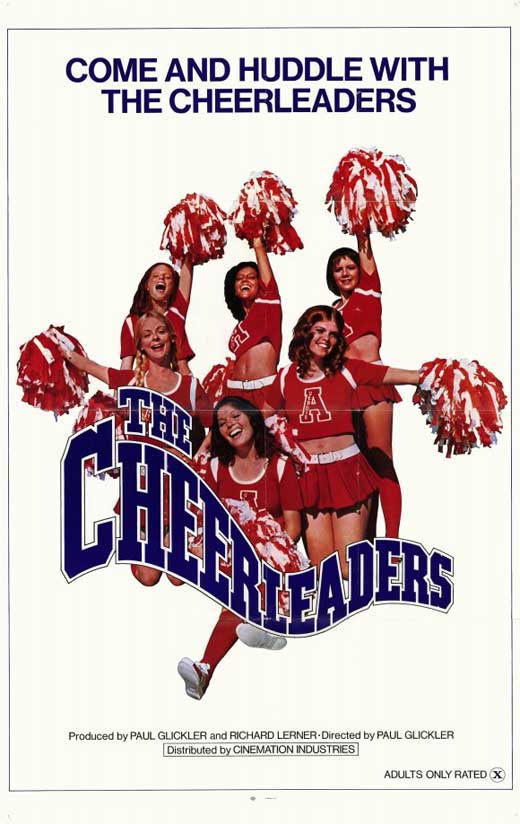
The Cheerleaders

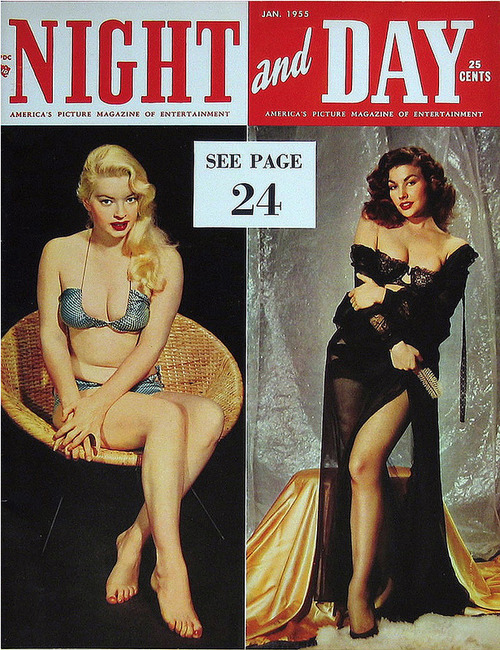
A little history, as best I remember it. In New York, in the 50s and early 60s, there were theaters on 42nd Street between 6th and 7th Avenues that showed skin flicks. These were mostly sunbathing and health movies, with lots of volleyball, but they also showed some amazing foreign films, like "Smiles of a Summer Night," because at the time, European films could show bare breasts but American films couldn't. (Some people will remember this. Here's something no one will remember except me, because at the time -- 1954 -- I was 14 and impressionable, and was occasionally able to get hold of magazines like "Night and Day" which featured pictures of Lili St. Cyr and Tempest Storm and the like. Anyway, one of them had a brief item that starlet Peggie Castle, in the new Western "The Yellow Tomahawk," with Rory Calhoun, would be wearing a flesh-colored bikini that would make her appear topless. I vowed to see "The Yellow Tomahawk," but it never came to our local theater.)


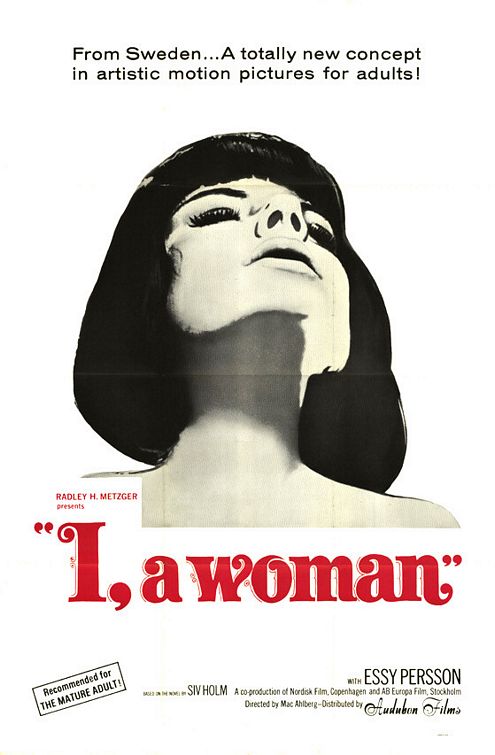
Back to 42nd Street -- not the well-known block between 7th and 8th, but its second banana to the east. Because some very good foreign films with nudity played the block, nudity came to be associated with dramatic seriousness -- that is, you could get away with it if you had some heavy drama. So the first real skin flick to hit America in a big way was the Swedish import "I, a Woman," in 1965, followed by "I am Curious (Yellow)" in 1967, which actually should have been banned in America for its open embrace of socialism rather than its open embraces (it and its sequel, "I am Curious (Blue)" were named after the colors of the welfare-state Swedish flag). The Swedish films were hugely successful at the box office, and of course hugely controversial.

By this time, Russ Meyer was making movies in America, including classics like "Faster, Pussycat, Kill, Kill," and things were opening up a little, but just a little. Meyer's films were not, at that time, widely distributed, certainly not in major theater chains. In 1969, an American film called "The Stewardesses" came out. I remember going to see it, although I remember absolutely nothing about it, except that I saw it with a group of friends. We were sitting in the middle of the theater near the front, and at some point in the middle I had to go to the bathroom, which meant standing up and working my way past the row of moviegoers. I did so, clumsily, then turned and announced loudly, "I've never been so offended in my life. You told me we were going to see Mary Poppins!" and walked out.

But I digress. "The Stewardesses," to the best of my recollection, was a sort of "Where the Boys Are" with lots of skin, the sex-and-retribution theme so deeply entrenched in American Calvinist culture.

And at about that time, Paul Glickler, Richard Lerner and I had gotten financial backing to make a modest-budget skin flick, and responding to the box-office success of "The Stewardesses," we decided to call it "The Cheerleaders."

But we found we couldn't do the pseudo-heavy drama of "The Stewardesses," or even the somewhat better pseudo-heavy drama of "I, a Woman" or the not entirely pseudo-political message of "I am Curious (Yellow)." Our minds just didn't work that way. We ended up writing a flat-out comedy.

Which, it turned out, got us in trouble with our financial backers, who wanted the proven success formula of sex and melodrama (also, it was still believed that you could get away with more sex if your movie had "redeeming social value," which comedy clearly did not). So they ordered us, on pain of withdrawing financial support, to take out all the comedy and make it more like "I, a Woman."

Which we could not bring ourselves to do. But we had to sneak the comedy in, which meant taking out some of the funniest scenes in the original script. But we got a bunch of them in. One thing I always liked about "The Cheerleaders" script -- usually in sex comedies, the setups -- seductions, seductions foiled, etc. -- are the comedy scenes. In "The Cheerleaders," we played the actual sex scenes for comedy, which I believe had not been done before.

Anyway, our financial backers were horrified by the finished product -- until they saw the audience reaction. People loved it, and they loved it for the comedy. So they pulled back the movie, and retooled a whole new advertising campaign -- the comedy smash of the year! -- and released it as a double bill with Ralph Bakshi's animated movie of R. Crumb's "Fritz the Cat." "The Cheerleaders" was the hit movie that carried the double bill, and it opened to national release in a major theater chain, Red Carpet Theaters, following "Man of La Mancha."

And became a minor cult classic. Got some good reviews, with the exception of the Boston Phoenix. Their reviewer hated it so much that for the next several months, every other movie he hated got an "at least, it's not as bad as 'The Cheerleaders.'" It is even mentioned in a John Grisham novel.

And that's pretty much the whole story, except that in the late 70s, the great New York art film house, Bleecker Street Cinema, did a retrospective of classic skin flicks, including "I, a Woman," the "I am Curious" movies, and "The Cheerleaders." I went to see it, figuring rightly that it would be my only chance to see a movie of mine in an art film house. As I was walking in, a couple were walking out, and I overheard this snippet of conversation.

He: I really liked that movie.
She: Yeah, you would.
He: No, I mean I really liked the writing. I thought it was incredible well-written.

It was all I could do to keep from grabbing him and saying, "Honest? Honest to God?"

Saturday, September 28, 2013

You like me, I like you

Interesting article in today's NY Times about likeability as a desirable characteristic in fictional characters. Mohsin Hamid says
I’ll confess — I read fiction to fall in love. That’s what’s kept me hooked all these years. Often, that love was for a character: in a presexual-crush way for Fern in “Charlotte’s Web”; in a best-buddies way for the heroes of “Astérix & Obélix”; in a sighing, “I wish there were more of her in this book” way for Jessica in “Dune” or Arwen in “The Lord of the Rings.”
In fiction, as in my nonreading life, someone didn’t necessarily have to be likable to be lovable. Was Anna Karenina likable? Maybe not. Did part of me fall in love with her when I cracked open a secondhand hardcover of Tolstoy’s novel, purchased in a bookshop in Princeton, N.J., the day before I headed home to Pakistan for a hot, slow summer? Absolutely.
What about Humbert Humbert? A pedophile. A snob. A dangerous madman. The main character of Nabokov’s “Lolita” wasn’t very likable. But that voice. Ah. That voice had me at “fire of my loins.”

Zoe Heller says 

When the novelist Claire Messud rebuked a reporter earlier this year, for asking if Messud would want to “be friends with” the protagonist of “The Woman Upstairs,” her latest book, I was among those who applauded. It’s always cheering to have someone stand up for the not-nice in literature. Messud’s citation of various mad, murderous or otherwise unpleasant literary characters who have managed, despite their moral handicaps, to enthrall readers, was apt and enjoyably furious.

I grew a little uneasy, though, when in subsequent Internet discussions a consensus seemed to emerge that caring at all about “likability” was an embarrassing solecism, committed only by low-rent writers and hopelessly naïve readers. This struck me — and strikes me still — as faux-highbrow nonsense.

But likeability is a quality inexperienced readers use as a shield or security blanket when they don't know quite what to say, or what to think about, something they're encountering for the first time, and not on their own turf -- a classroom is never the student's own turf.

I used to bring this up a lot in my intro to lit classes. It was fairly common that a student, in a paper or a class discussion, would dismiss a book, or try  to get out from under dealing with it, by saying the characters weren't likeable enough, or that the theme of a poem wasn't upbeat enough. In one such class -- this would have been in the 90s -- I asked 

"How many of you are Guns 'n Roses fans?" 

A bunch of hands went up. 

"And what's the theme of most of their songs?" 

The answer I got, which was a good one: "Life sucks, so let's get fucked up." 

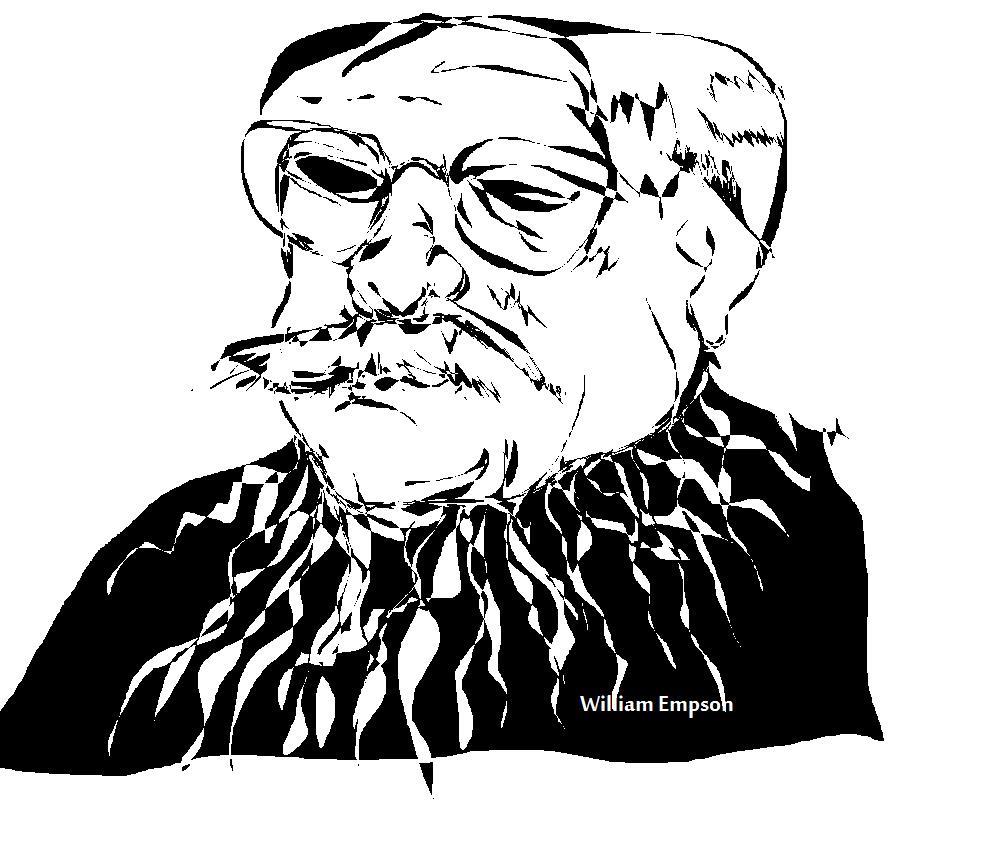
I also used to say -- your obligation in approaching a piece of literature is to be as smart as you really are in the rest of your life. You don't have to be told that you can get emotional satisfaction out of Guns 'n Roses even though they have a negative attitude toward life. You don't have to be a student of Empson to recognize the ambiguity in conversations in your real life. 

At this point I'd tell a student in the front row to ask me how I was doing.

Student (a little nervously): How are you doing?

Me (snarling): FINE!

So how was I doing? Did anyone believe I was really fine?

No one needs to tell us, in our lives, to have the kind of sensitivity to nuance that we're asked to bring to literature. But our lives are our home turf.


Saturday, September 07, 2013

A Great Blog for Local History

Check out D.J. Boggs' new blog of memories of High Woods and Wilgus's General Store, owned and operated by her grandfather, the legendary Henry Wilgus.

Sunday, August 18, 2013

Historical Fiction and the real world


Very nice blog post by Michael K. Reynolds on the ways that one can interface fiction and history. He offers three possibilities – The Rosencrantz and Guildenstern Strategy (“if your lead character is Winston Churchill in the early 1940’s, you are going to have a difficult time with it not being swallowed up by World War II themes. However; if you shift your lead character to a young man from India who happened to immigrate to England at the onset of the war, then this can take on a much different path”), The Monet Approach (“the idea that blurred detailing can actually provide a powerful and succinct image”), and The Character Pigeon (“use a minor character (or characters) to carry the weight of the prevalent, but non-centric theme. That way you’re not ignoring it, but you’re freeing your lead characters to swim in the main waters of your story”).

It started me thinking about some of the ways I’ve dealt with history in my own work. In my most recent, Nick and Jake, the era – and the specific year, 1953 – are central to the story. Bringing Nick Carraway and Jake Barnes into 1953 was important in that it gave a new perspective on the seminal characters of a key period in American literature, but it was also important in that it gave a new perspective on that year.

But for all that history was important, we still had to play fast and loose with a few odd details. The overthrow of Mohammed Mossadegh in Iran, which was the first CIA exercise in overthrowing the government of another country, changed the history  of the Middle East irrevocably, and not the way the CIA expected it to.

We wrote Nick and Jake partly in response to the Bush administration’s post-9/11 foreign policy, resulted in America having and then losing the sympathy and support of international opinion. We were struck by how much this mirrored the 1950s, when America went from being the country that had saved the world from the Nazis, to being The Ugly American. The thing that made the Iran coup so devastatingly successful was that no one believed the Americans would ever do such a thing. So it was a perfect metaphor for us.

But it had happened in the fall of 1953, and the action of Nick and Jake is in the spring of 1953. But it was too good for our plot to leave out…so we moved it up a few months.

Our ingénue  moves to New York from the Midwest and undergoes some significant changes. Where would she stay in the big city, a young, innocent girl? Why, the Martha Washington Hotel for Women. And nothing says Martha Washington Hotel for women in the 50s like Valley of the Dolls. Only trouble is, no one really remembers, or cares about, the characters in Valley of the Dolls any more. Not that that would have bothered us so much, except that we didn’t remember or care about the characters either. Jacqueline Susann, the novel’s author, interested us as a colorful character and a symbol of a certain literary/political zeitgeist. Only trouble there was, unlike her characters, Jackie Susann was over fifty, married, and living a totally different life from that of her characters. This might have bothered us more than it did, if we hadn’t discovered it only after we had begun writing her into the book. By the time we knew that she wasn’t really one of her characters, we liked her too much to let her go. So we shaved thirty years off her age – historically inaccurate, but that’s really the time and place she’s associated with.

Here’s a character we pulled from history out of necessity. When we went to do the audio dramatization of Nick and Jake, we were fortunate enough to have Valerie Plame Wilson offer to play a role, but there was no role for her. Who was important in the politics and cultural politics of 1953? Clare Boothe Luce! She was perfect for the story, and perfect for Valerie – and of course, since Valerie was playing her, we twisted history a little and made her an undercover CIA agent. And who’s to say she wasn’t?


More on history, and other historical novels, next time.

Friday, August 16, 2013

Artists Studio Tour

Saugerties Artists Studio Tour was this past weekend. I opened my studio for two days -- actually opening my studio only involves lifting the lid up on my laptop, so I compensate by turning the Barbara Fite Room of the House on the Quarry into a showroom.
Lizard
 Anyway, I met a nice bunch of people -- probably about a hundred visitors on each day, and a few sales. I don't really show my work in galleries very often, so the Art Tour is my main showcase.
Bunkhouse Guitar

Nude with Flower


 Here are a few pieces from this year, representing the different styles of work that I do. "Lizard" is 21st century pointillism, done with mouse and Microsoft Paint, background in Photoshop.
  "Bunkhouse Guitar" is my black and white faux-woodcut style, also with mouse and MS Paint, using the freeform shape too and the invert command.
  "Nude with Flower" is iPad, ArtStudio and finger.


In a conversation during the tour, I found myself remembering when I lived in New York in the 70s, and I'd find myself late at night on the subway, starting to notice some simple stick figures that someone was drawing on the black empty spaces where posters had not yet been put up. I was blown away by how good they were, and I kept telling myself I was going to come down one night with a razor blade and cut one of them out, to keep for my own. But I never got around to it. That's why I don't have an original Keith Haring in my collection.